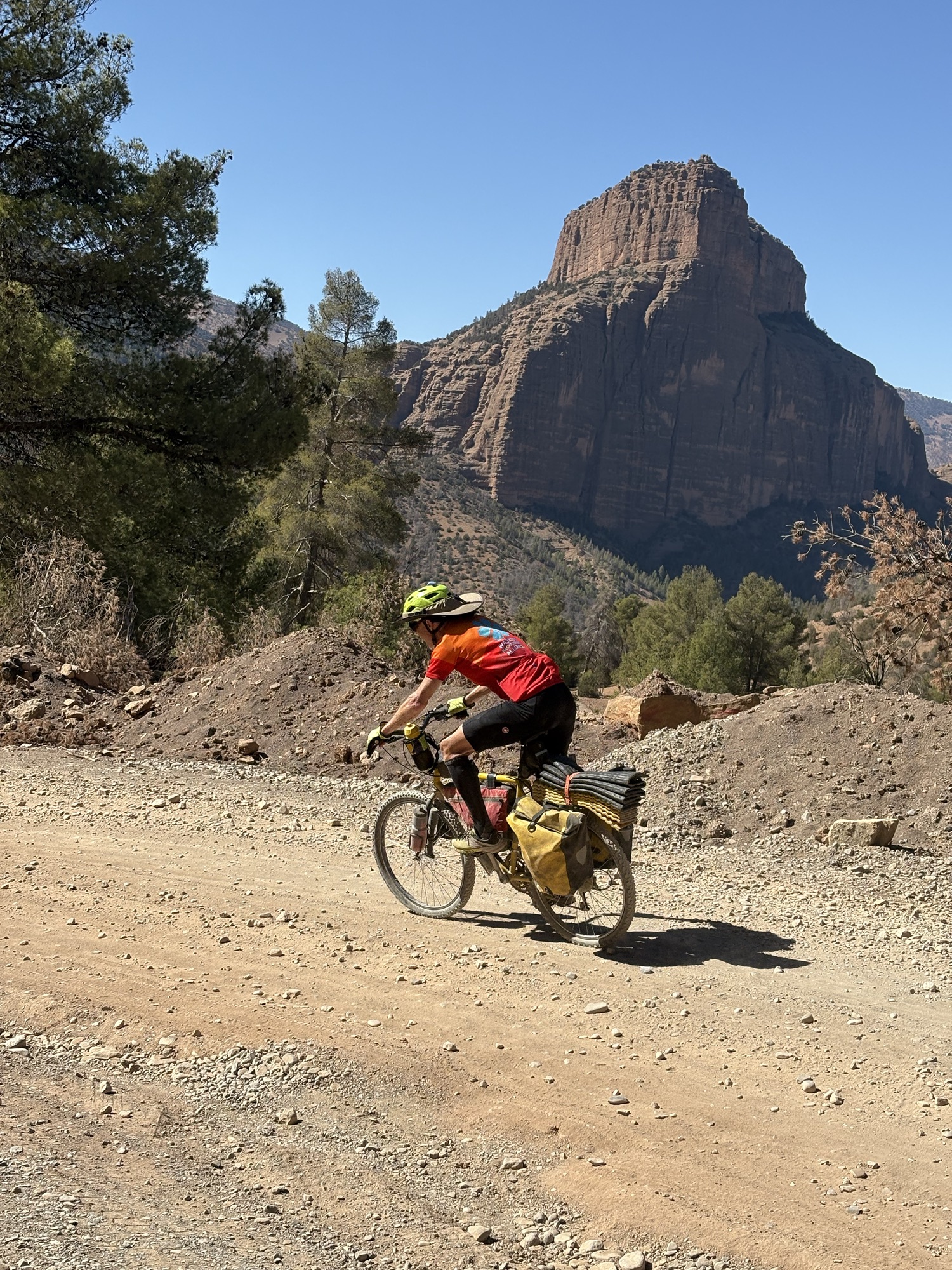
Almost exactly a year ago I put up a post about my latest “Beast” of a bike: a 26-inch-wheeled Scott with a steel frame, rigid fork, strange caliper brakes, bar-top ratcheting shifters, and a triple Biopace crankset that I bought from a rangy old auctioneer at a police auction for the unusually-fair price of $10. I boldly proclaimed that – despite having a perfectly fine 29”, steel Kona with hydraulic-disc brakes and a modern 1×12 drivetrain that was specifically designed for bikepacktouring (a “bikepacking beast” according to the website) I was gonna fix up that old Scott and take it on the biggest trip that we’d ever attempted both in terms of length, vertical, remoteness, and terrain. Optimistic? Definitely. Audacious? Most people would say “definitely” to this as well. Stupid? Most people would probably agree to that also! So now here Ashley and I are, a year hence, with our Grand Tour now behind us, and it’s time for a follow up review: how’d the Scott go?

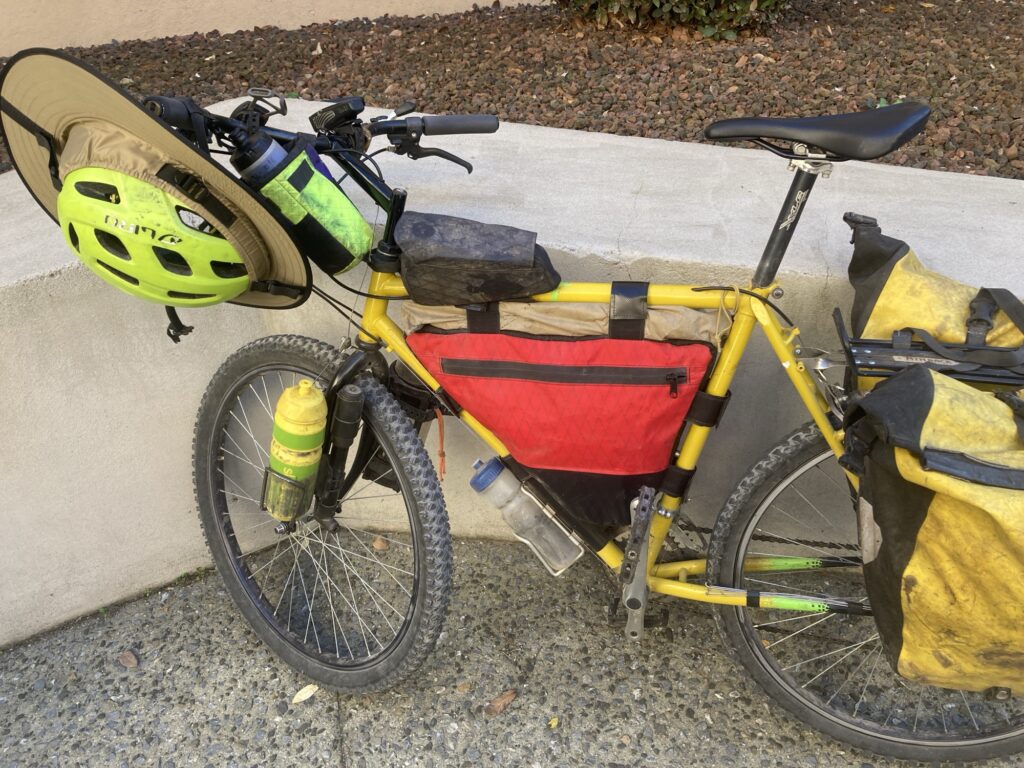
First, the prep for the trip. I took the Scott in to my trusted mechanic Willy at the Bicycle Center in SLC knowing that Willy would not give me shit about my bike-stupidity and would do all that was necessary to prep that venerable beauty for a long and rugged journey. The things that I was most concerned about were the bottom bracket and headset; both critical components that can and do fail catastrophically and I didn’t have the old and esoteric tools for….because I’d thrown them away?!! What was I thinking? But both bb and headset were in fine shape; Willy said the races were fine and the bearings were okay, but he replaced those just in case.
My old pal, bikepack legend and custom wheel builder Mike Curiak told me in no uncertain terms that trying to take rims that were made approximately twenty years before any cyclist used the word “tubeless” would take my bicycle-stupidity to a new level, so I just pumped up them Schrader-valved tubes inside them there tires that it came with (old Kendas with lugs that formed a center strip for decreased rolling resistance); not only were the tires not rotten but the tubes held air, and the Scott was literally ready to roll.
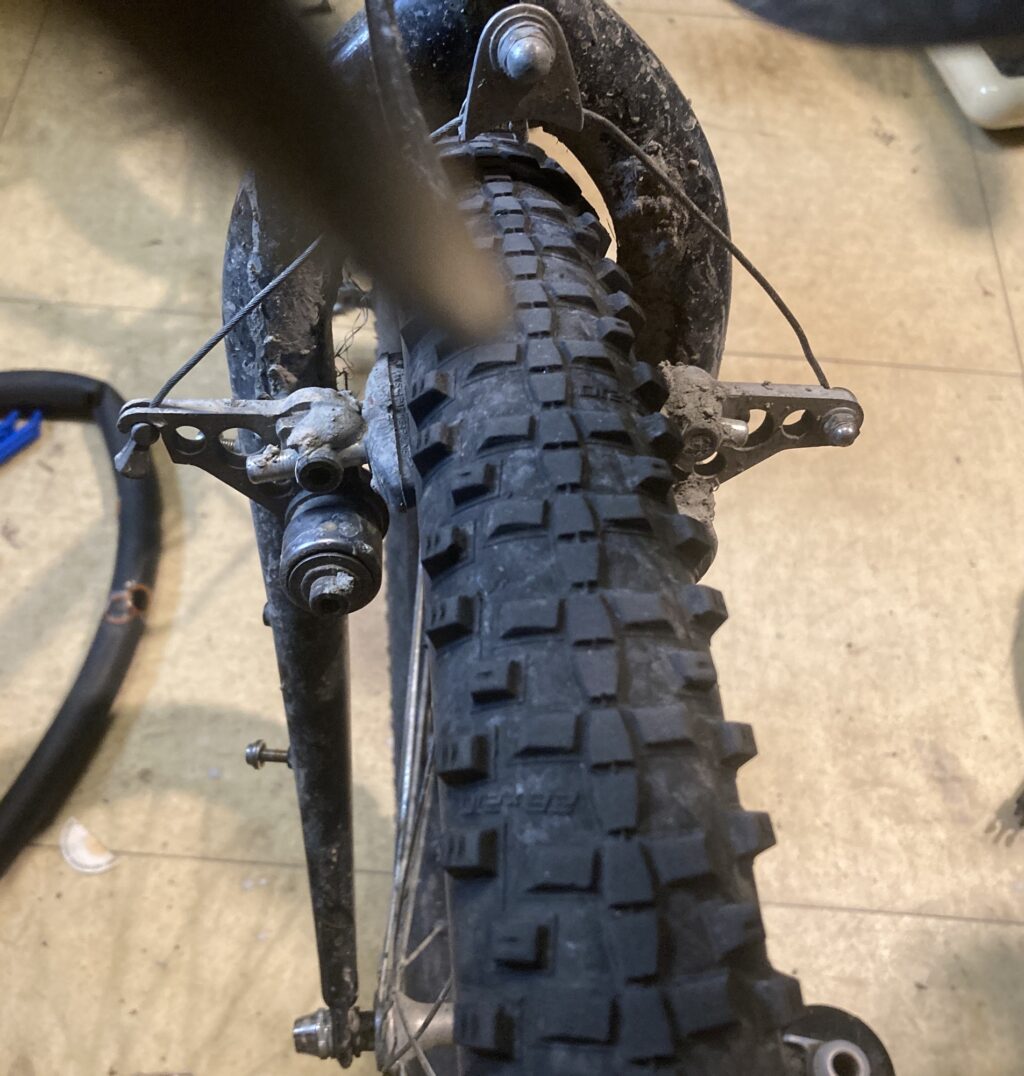
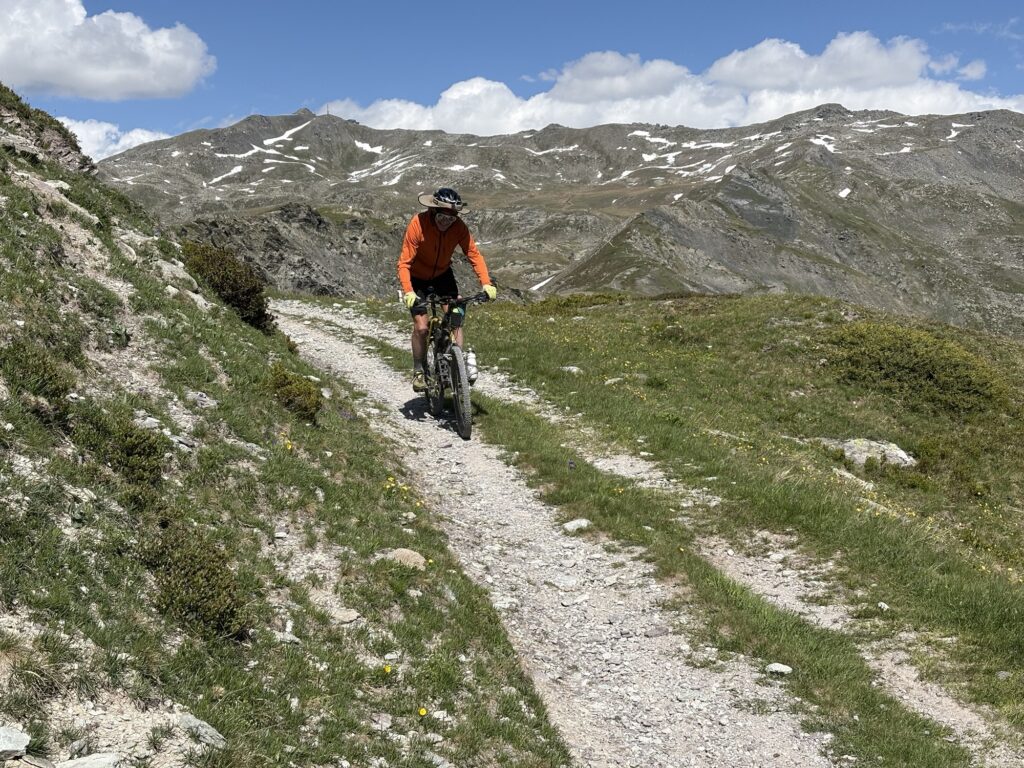
On my first test ride, on a single track near our house in Salt Lake with Ashley and our visiting friend Mike Elovitz, I was impressed: the rigid fork was a nimble as any small rigid fork out there and provided great “feel” for the terrain, those 1.95” Kenda tires gripped powdery dirt like….the velcro on old Teva sandal straps that are held on by rubber bands, and the brake were amazing: I squeezed the levers, the pads pressed against the rims, and….the bike slowed! I squeezed harder and I went slower yet, and ultimately…..the bike stopped. Amazing. The pedals went ‘round and ‘round, and the three ovalized Biopace chainrings did their thing: pulled the chain around the cassette cogs and propelled the rear wheel forward; incredible! My yellow Scott and I were ready for the rocky and remote wilds of Morocco, the singletracks of Switzerland, Italy’s Strada Bianche, and the varied-surface steeps of the French Alps.

At the auction last July I also bought an RD bike that was an old cop bike that was barely used (only a few donut crumbs on the top tube),
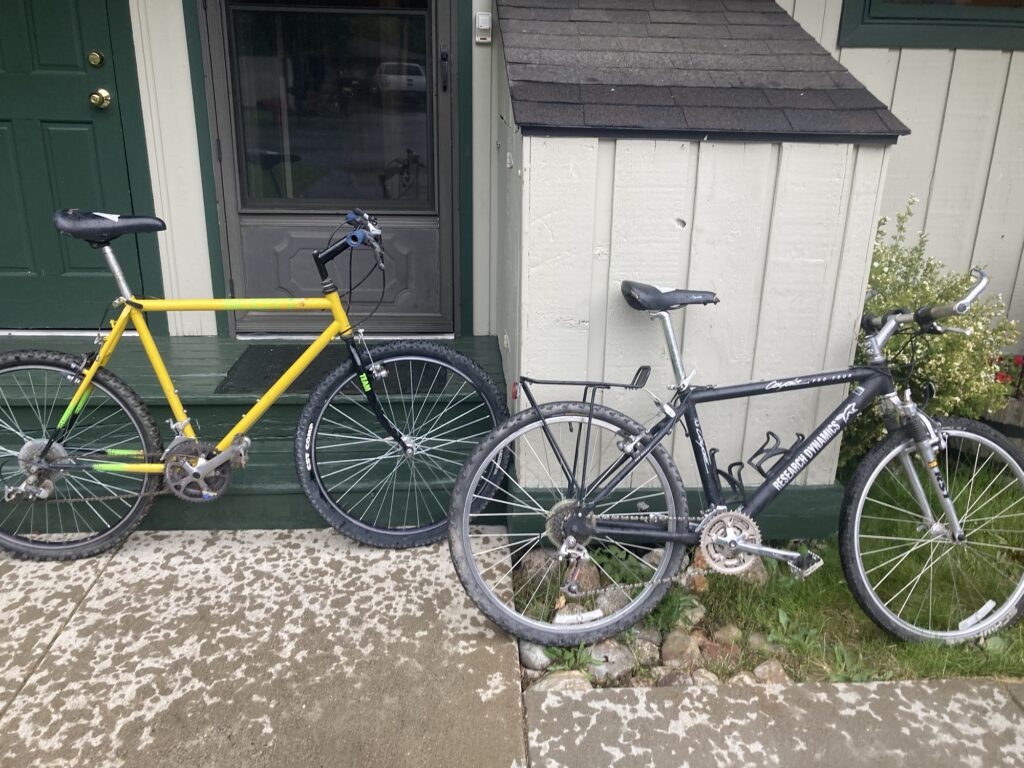
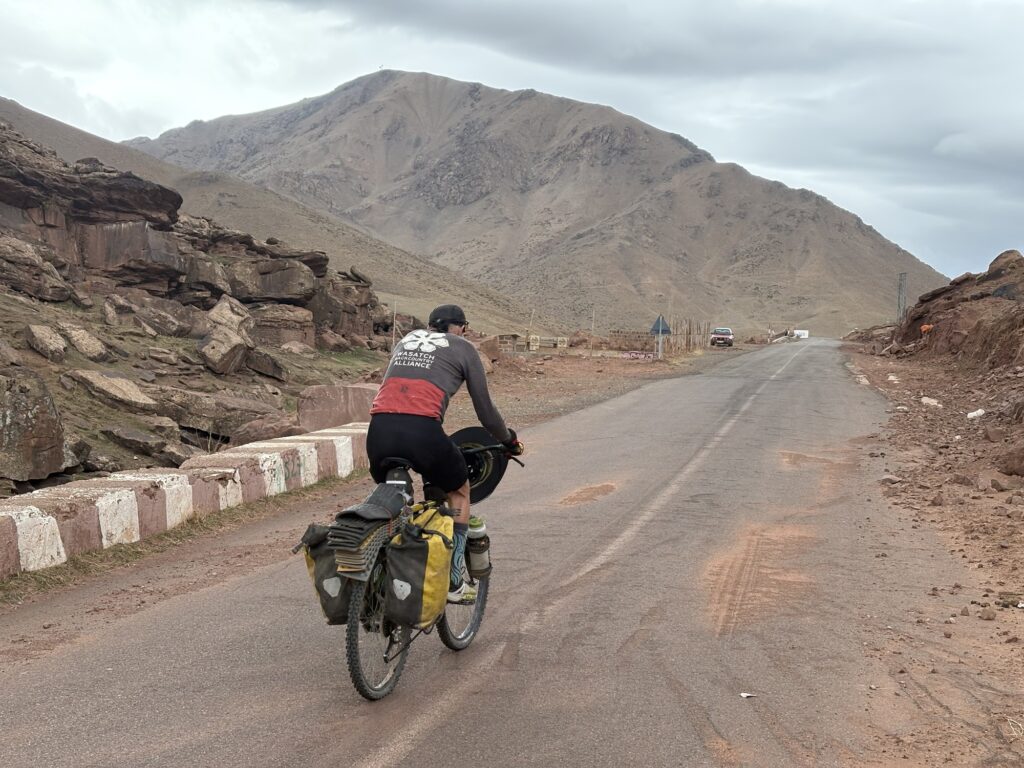
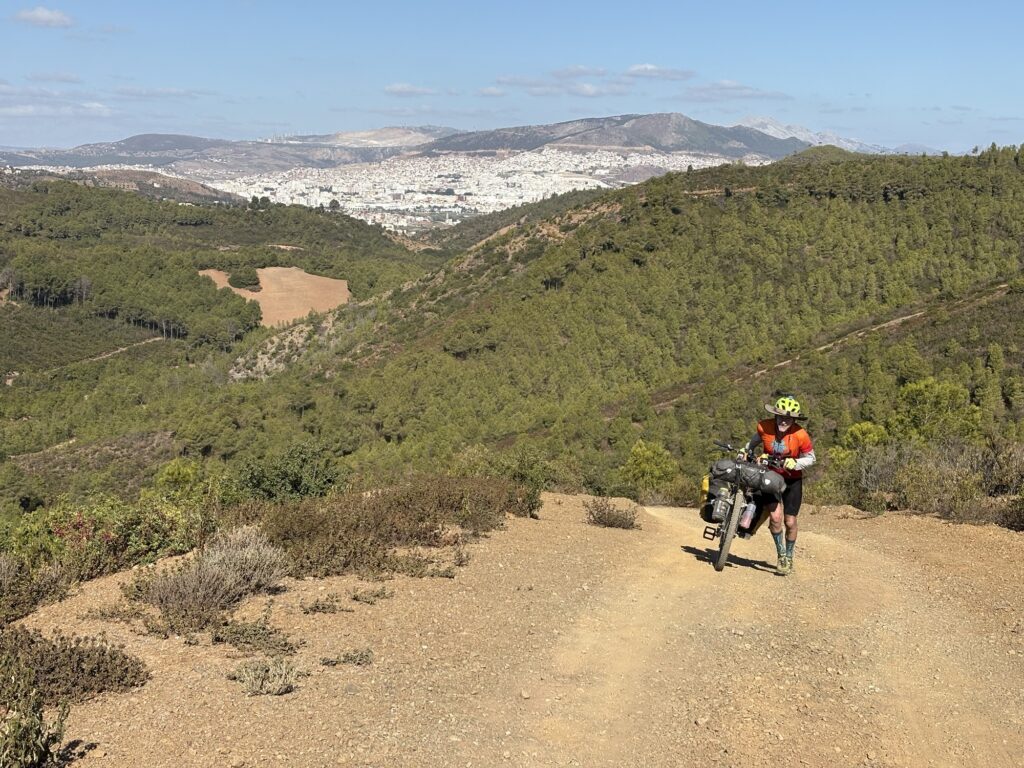
with the idea that I would poach some parts off it to shore up the Scott. But as it turned out the only “part” that I used was the old school Blackburn rear rack that was sure to hold my panniers solid whilst bouncing down 5000 feet of babyhead-rock-strewn “roads” in the High Atlas mountains. And it worked! Rack still intact.
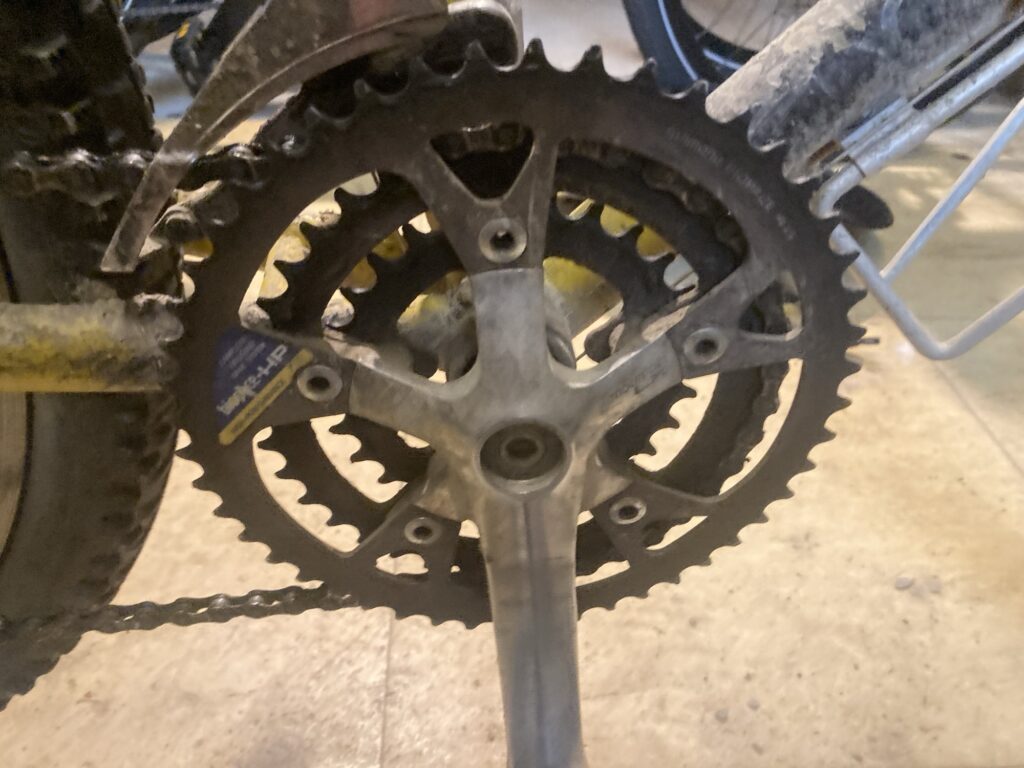
I mentioned the chainrings above; as most people know, the bike industry has moved from three to two and now to even one front chainring, which is a shame: everyone knows that 3 is bigger and better than 1! And when combined with 7 speeds in the rear, that means twenty-one big gears to choose from. I don’t need to mention how much higher 21 is than a measly 12, but I will: clearly it’s 1.5 times better. And with just enough SGO (Superfluous Gear Overlap) you also have plenty of IBG (Integrated Backup Gears), which is a critical aspect of high end bikepacktouring.
I also mentioned 26” wheels as the predecessor to 29” wheels; the cognoscenti (we traveled through Italy quite a bit, so I feel justified in throwing that word in) like to talk about the “angle of attack” of a 29” wheel, but they seem to forget/neglect that skilled riders and their worthy steeds don’t rely on “attacking” the terrain; they deftly wriggle through and fly over obstacles, which of course the Scott was wont to do. And it’s easy to understand that a 26” wheel rotates around faster than a 29” wheel with more revolutions, therefore, simple physics shows that it’s a faster bike!
It’s a svelte beast; it weighs…about 416 ounces. In Euro terms: 11.7 kgs. How many pounds is that? No one knows….but it’s light! Maybe not quite as light as a Specialized Carbon gravel bike, but in the grand scheme of relative weights, it’s light.
These days there’s a lot of talk about “slack angles” in bikes; what is up with this? I don’t ride my bike to simulate lounging in my LayZ-boy! I need to be up front and on it for stompin’ on the pedals on 25-percent climbs and droppin’ into a high-speed tuck screaming down from the French cols. The seat tube angles and head angles on this yellow rocket are steep…. to go fast:
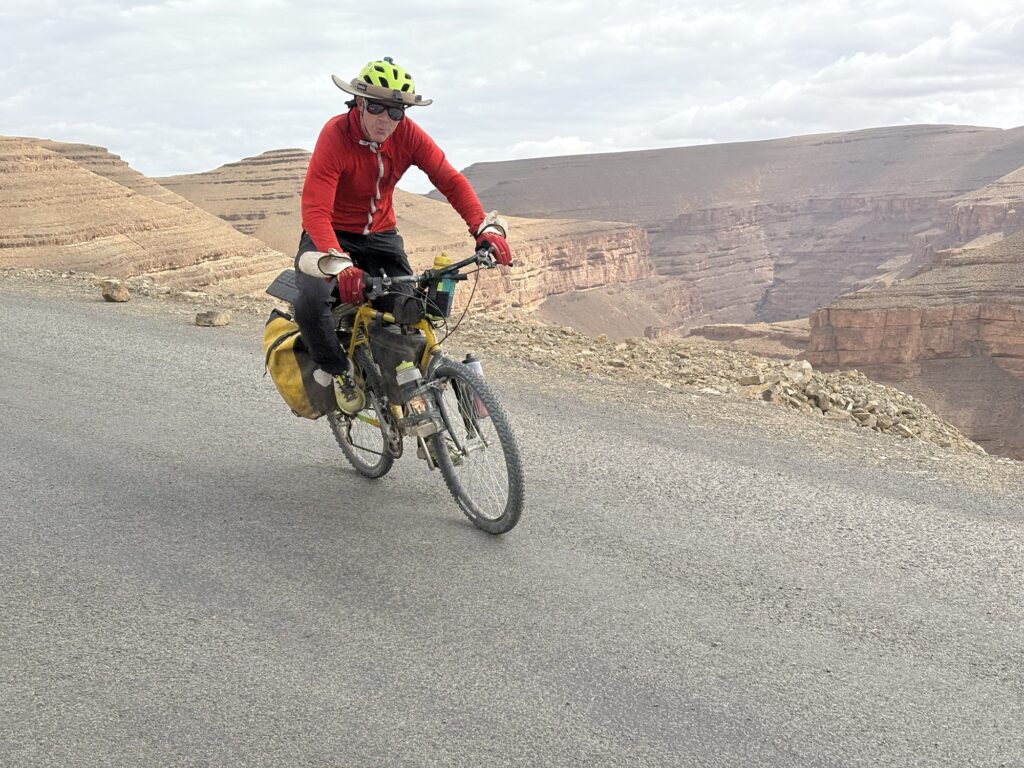
And believe you me, between this light weight that no one knows, the aggressive, fast-forward posture, and the rippin’-rollin’ smaller wheel size, I was definitely far faster than my many imaginary European cycling competitors in my imaginary races!

So here’s the real deal: despite everyone’s better judgement, that Scott (which is at least 30 years old, and likely 35) did great! I had to replace the old school bar-top ratcheting shifters in Italy since one of them failed, and I got both front and rear shifter/brake combos, installed (including derailleur re-adjusted), for less than $80. I replaced the chain a few times; a couple before I torched the cassette cogs and a couple after they were too worn: the chains were about $15 and the cassette was about $20. I changed out tires a few times: the most I paid for a 26” tire was $30. Basically, any parts I needed were available anywhere, in any country, and even if I hadn’t been able to find a shop/parts, for $20 I coulda probably bought parts off some dood’s bike. As Willy had anticipated, the old skool unsealed-bearing bottom bracket and headset held up just fine. Coincidentally, when I returned a few weeks ago and started riding my Kona it’s sealed bottom bracket was basically cooked and had to be ordered by a local shop and pressed in with the fancy Park tools; had that happened in Morocco an abandoned Kona would still be there.
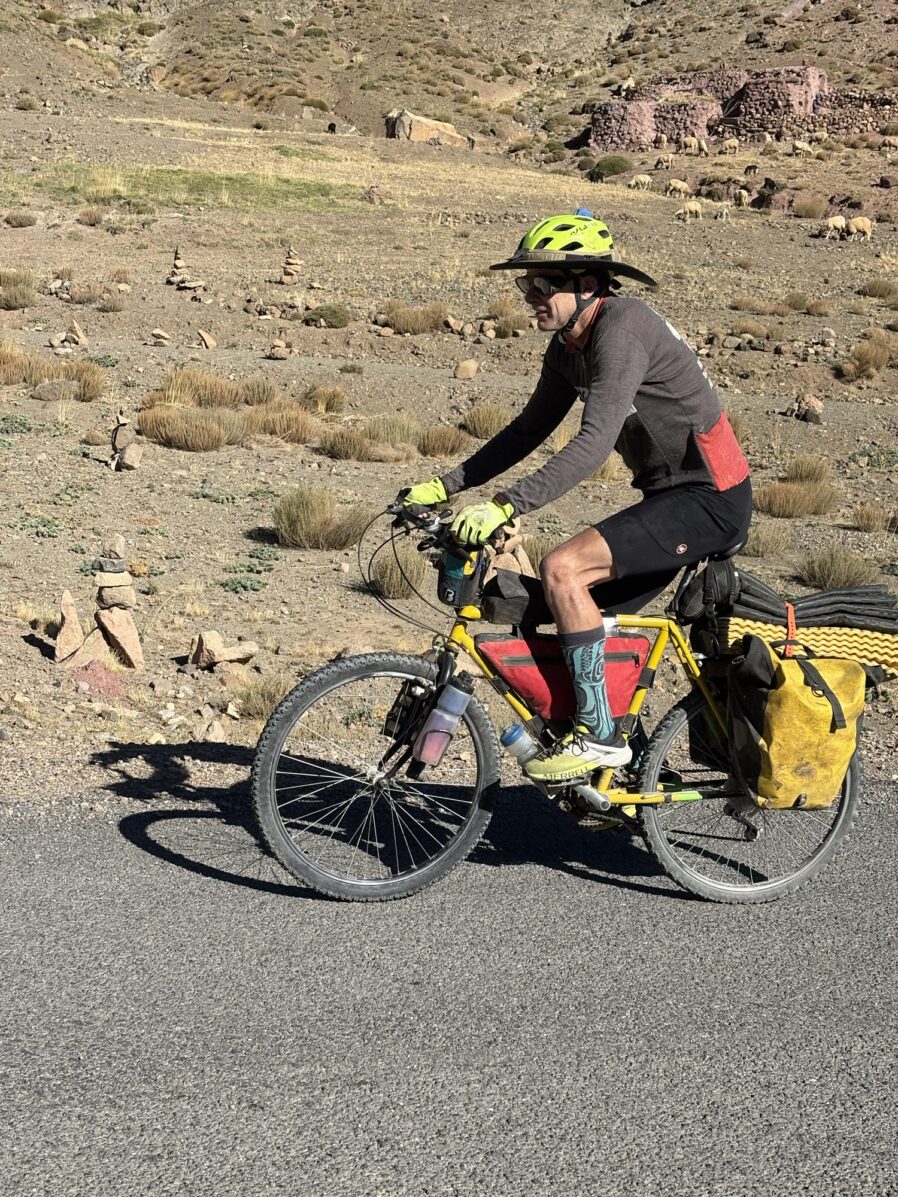
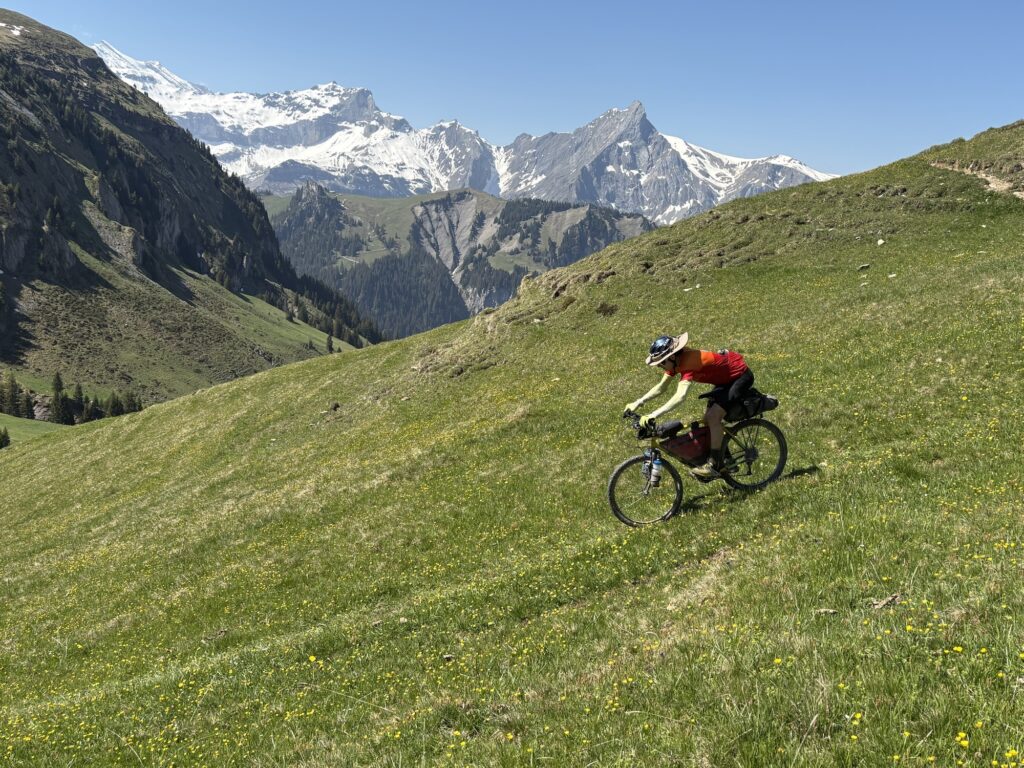
I rode the Scott somewhere in the neighborhood of 8000 miles on buffed asphalt, chip seal, buffed gravel, and rough gravel roads as well as plenty of surprisingly-burly singletrack, with virtually all of it being done with between 10 and 30 pounds of gear on the frame and the rack. With the bike being $10 with another hundy or so into it, I was at a pretty reasonable price of about 1 cent per mile; if I’d gotten carried away and ridden those miles on the phattest new Specialized gravel bikes it’d be $2 per mile!
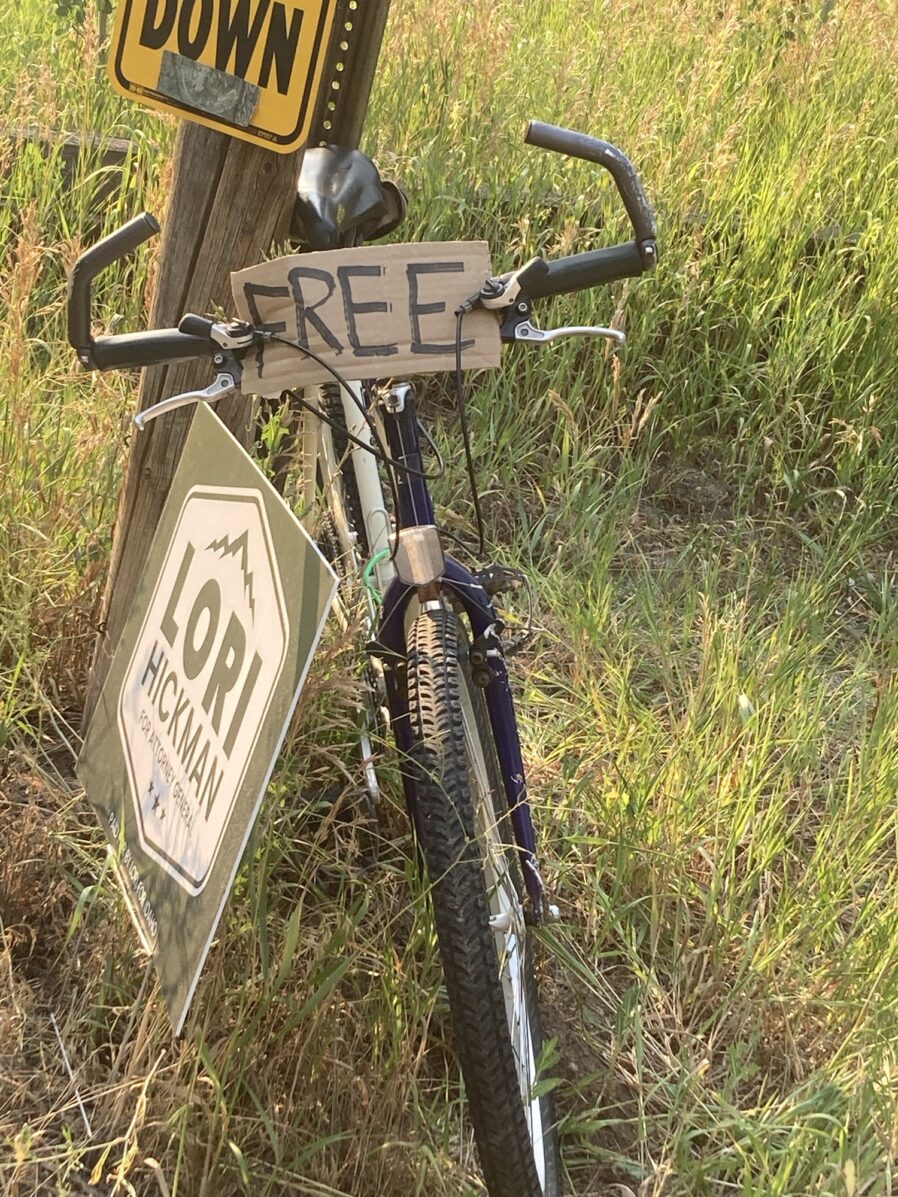
The only flats I got were one Schrader valve stem internal mechanism came unscrewed (apparently that happens?) and then two more mystery flats within literally 5 miles of the end of our ride. Despite many back to back full days in the saddle (near the end we were averaging over 7000 feet of verties/day) I was completely comfortable (aside from a coupla saddle sores) and even after a hard crash into pavement that resulted in a broken helmet and a torn thumb tendon the bike was unscathed.
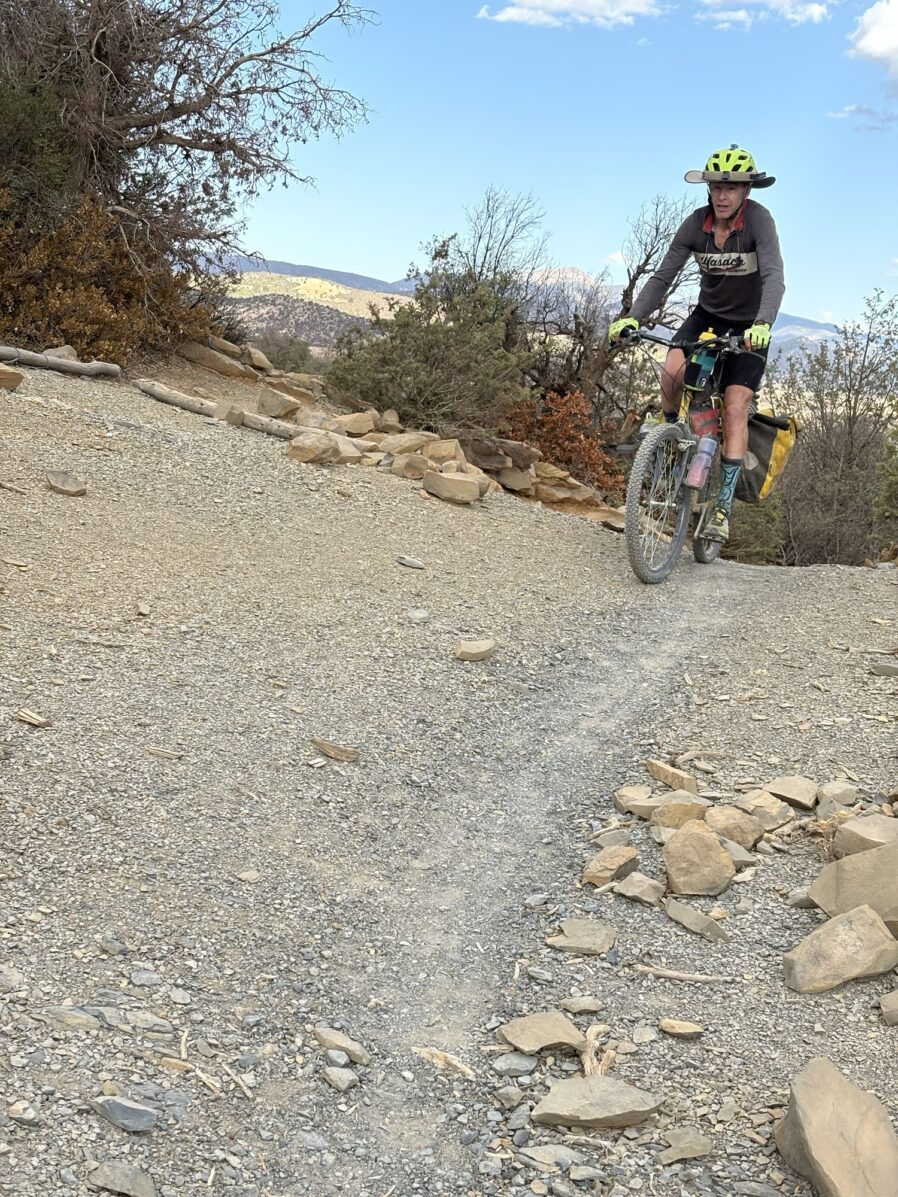
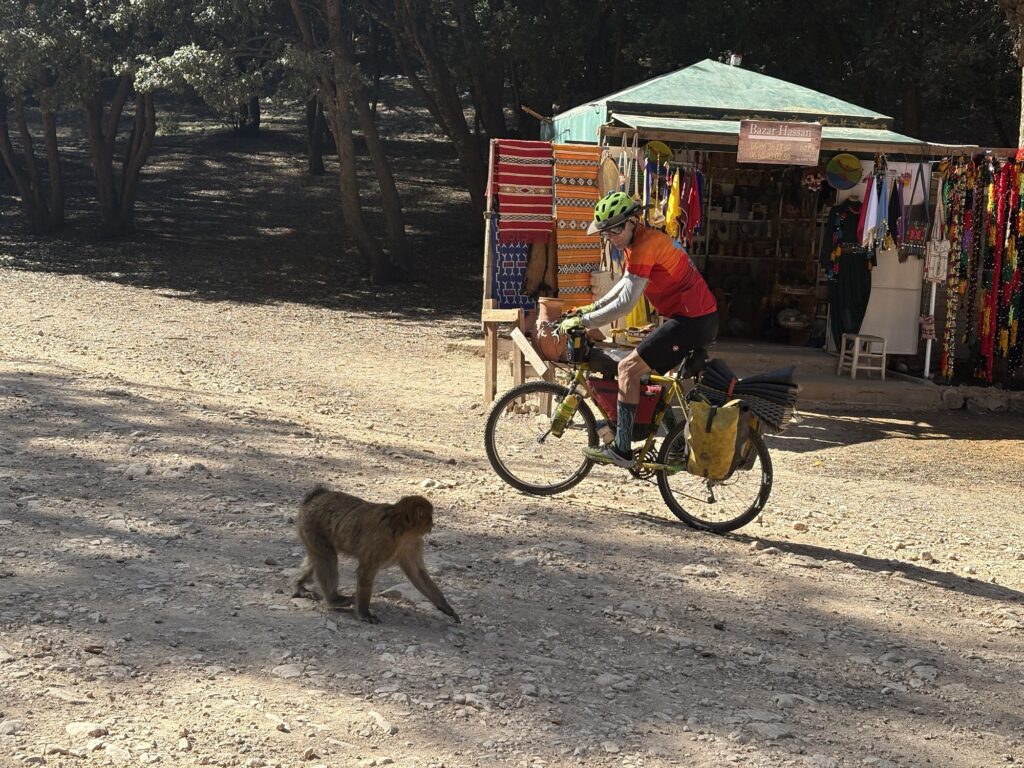
When we were rolling out of Garmisch, Germany one morning we met a bikepacker dood who asked us about our plans, and we told him we were heading for Switzerland’s famous (at least, in the tiny bikepacktouring world!) Hope 1000 route. He stared in amazement first at Ash’s bike: “with no suspension?!!?” then at mine: “with rim brakes?!?!” and shook his head, as if we were riding straight into The Pit of Despair. But here’s the truth: they are just bikes, and they all work, and while all the cool gizmos of bikes of today are helpful, many times it’s the simplest stuff that simply works.
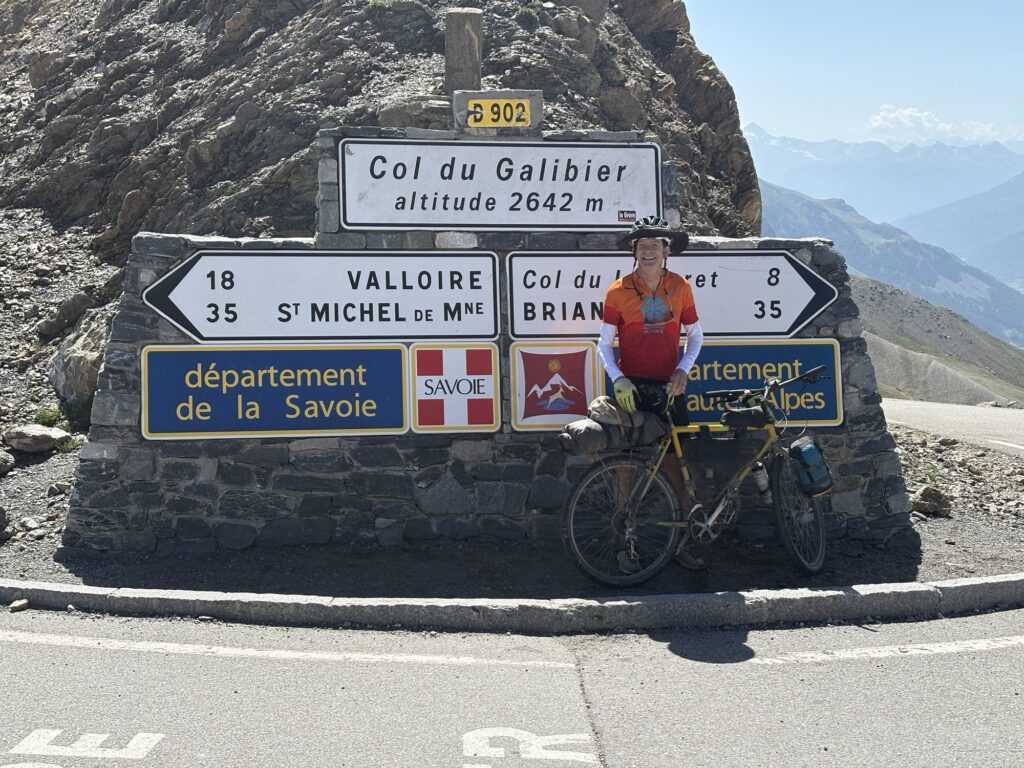
The Scott is now resting after its 8000 mile journey in a bike locker in our friends’ apartment building in Chambery, France. I typically like to give these Beasts away to folks who need them, but as Ash said: “what, are you gonna give that bike to some poor Swiss kid?” No doubt I coulda tried to actually do so, but we do have a return plane ticket, and if anyone even close to my size wants to go over and ride the Alps and beyond, there’s a fine yellow steed there awaiting another trip!
Brilliant….. and most importantly it’s a dangerously fanciful color-yellow!
definitely another draw to the bike for sure! (note another exclamation point)
Touche!
This review is a model of exclamation point usage.
Hah Chris – I read your comment to Ash and she said “you are indeed good at using exclamation points!” (note the use there as well)
Typical Diegel blawg, enough details to enthrall the mechanically inclined and enough word play to satisfy those of us entertained by your sense of humor (“just a few donut crumbs on the top tube”) and laid back approach. I fully agree with your “simple” approach, they are just bikes after all and you sure as hell can’t beat a $10 “steed” that gave you 1 cent per mile! BTW, to whom do we owe gratitude for the fine pics of you in action, Ash? Well done.
Hey Dave – thanks for the good comment, and indeed I was remiss in giving Ashley credit for the (better) pics!
Tom – I am very impressed with your adventure, and especially impressed that your wife accompanied you on all of this. However, knowing that you did this on a $10 bike and looking at some of the pictures of you with your modified bike helmet with the large brim makes me wonder if you were off your meds when you thought this trip up.
Welcome back. You were gone a long time but Millcreek Canyon, which was closed for construction when you left, remains closed for construction.
Hey Del yes, a bit whacky in approach and gear, but overall it worked out okay. I am planning on riding up MCC this week to see how much damage has been done in order to save the canyon!
Tomster, good yarn about the bike. I love the old biopace stuff. I’m sure that will come back into fashion and all the trendies will be spending thousands on the latest biopace gears, but, which orientation do you align the oval with? I totally agree with all your comments on 26″ wheels , 21 gears over 12 etc. Until a few weeks ago my main bike was a 26″ wheeled demon with *gasp* 30 gears, tubes in the tires (sp tyres) but with disc brakes. The amount is sh*t I got from the likes of Kiwi, Parker and my Scottish friends I finally upgraded to one of those fancy dropper posted, 12 gear, slack geometry, tubeless carbon affairs, recommended by none other that your partner in adventure, Ash. I bought me a new Ibis Ripley with a big big padlock to stop it getting pinched! The engine is still the same old over lubricated clapped out model though. Catch up soon I hope.
right on Steve. Glad you got a new bike; they are fun! But the old shit still works surprisingly well, and has a place in the quiver depending on your current or future needs! (note use of exclamation points!)
The story is right out of “Free Country.” You rode on a $10 bike!! I just love it. There are folks who would tell you that cannot be done. Must have a $4000 bike. I used my commuter bike. Bought it new for $1,400 12 years ago. It worked great (with a few tweaks/repairs along the way). Just goes to show.
For context – Eric and I did a tour of the UK together in nineteen hundred and eighty seven, and he recently took a much-needed sabbatical from a very successful legal career to realize a dream by riding across the US! And Eric turned me onto the book “Free Country” which is a hilarious must-read book about a coupla blokes riding the length of the UK starting with – literally – nothing!
Yes, a hilarious book. I think, though, the authors each started with a pair of tighty whitey underwear. However, in their case, the underwear wasn’t white. Had the picture of the Union Jack on it. And then had to ask folks for stuff. In 1987, Tom and I were not above asking folks for free stuff (usually a place to throw our tent), but we started fully clothed and with true and mostly white tighty whiteys.
Tom, as always I’m chuckling away here on the couch as I did not ride today. Only golfed which afforded perhaps 100 feet of vert.
Still think you overpaid!
Very entertaining read! Makes me wish I wasn’t such a sucker for new and shiny bikes!
I keep hearing Tom Diegel stories by the likes of Mike Curiak and your own brother Paul. Now Ken Bender is sending me links to your blogposts. I might need to meet this legendary cycylist, skier, adventurer, and storyteller one day! Enjoyed reading this one!
Hah! most – including mine – are exaggerated! indeed hope to mame it
back out to lovely Orygun soon and am keen to meetchu as well!