For many folks around the world there are a few Big Events that happen that seem to captivate the world. This year there have been a few in quick succession: the Winter Olympics, the World Cup that is finally getting going in North America, and of course the annual spring events like the recently-completed NBA finals and Stanley Cup. Added to those is the imminent start of one of the granddaddies of annual events: the Tour De France. Granddaddy in that its been going on for 120 years and it spans three weeks; kind of like if the Knicks were playing the Spurs not just best of seven, but a game every night for 20 nights! A spectator’s dream? AT this point it’s not really necessary to describe the Tour; it’s transcended from geeky cycling fans to mainstream even in the US, and every July millions of folks around the world keep up with the daily sufferfests up the extraordinary climbs of the French Alps. And even the most casual of fans have heard of some of the classics: Alp du Huez, Tourmelet, Ventoux, Izoard, etc. But the highest – and bestest? – col of them all is the Col du Galibier.
The Galibier has been a staple of the Tour since the beginning: it was first climbed in 1911 and has been part of the Tour 66 times since, and many of those climbs have determined the final outcome of the entire three week race.
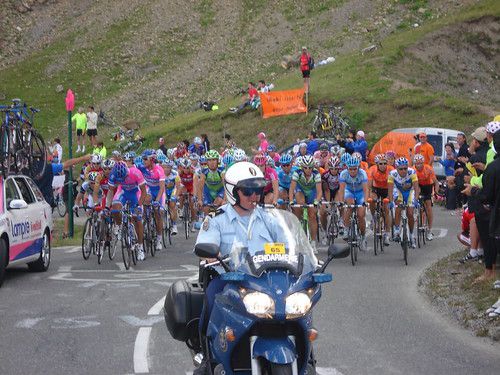
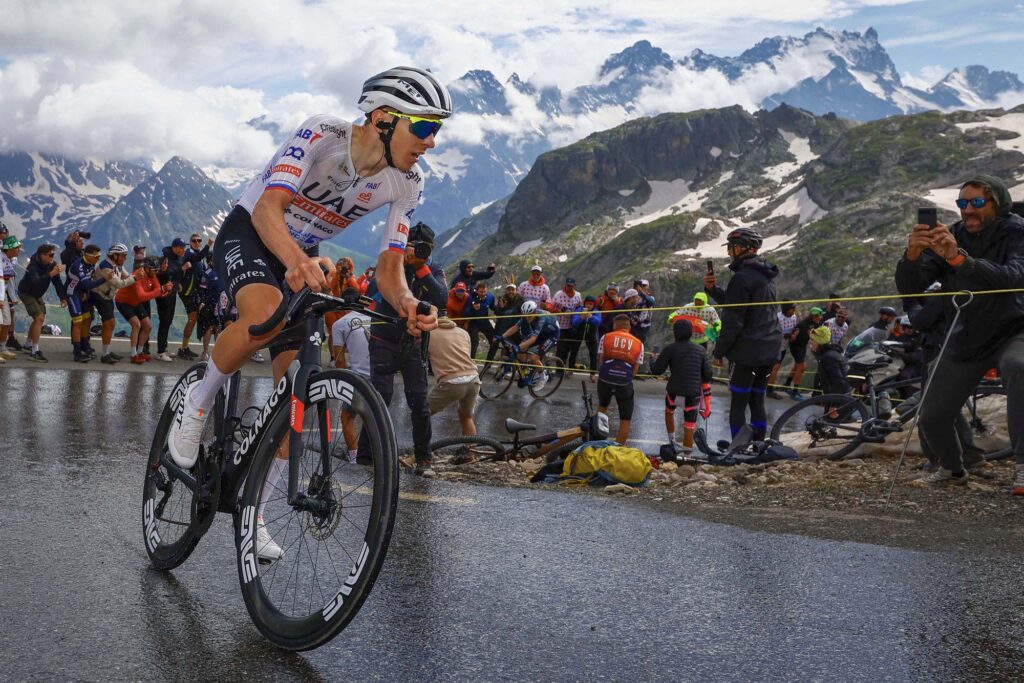
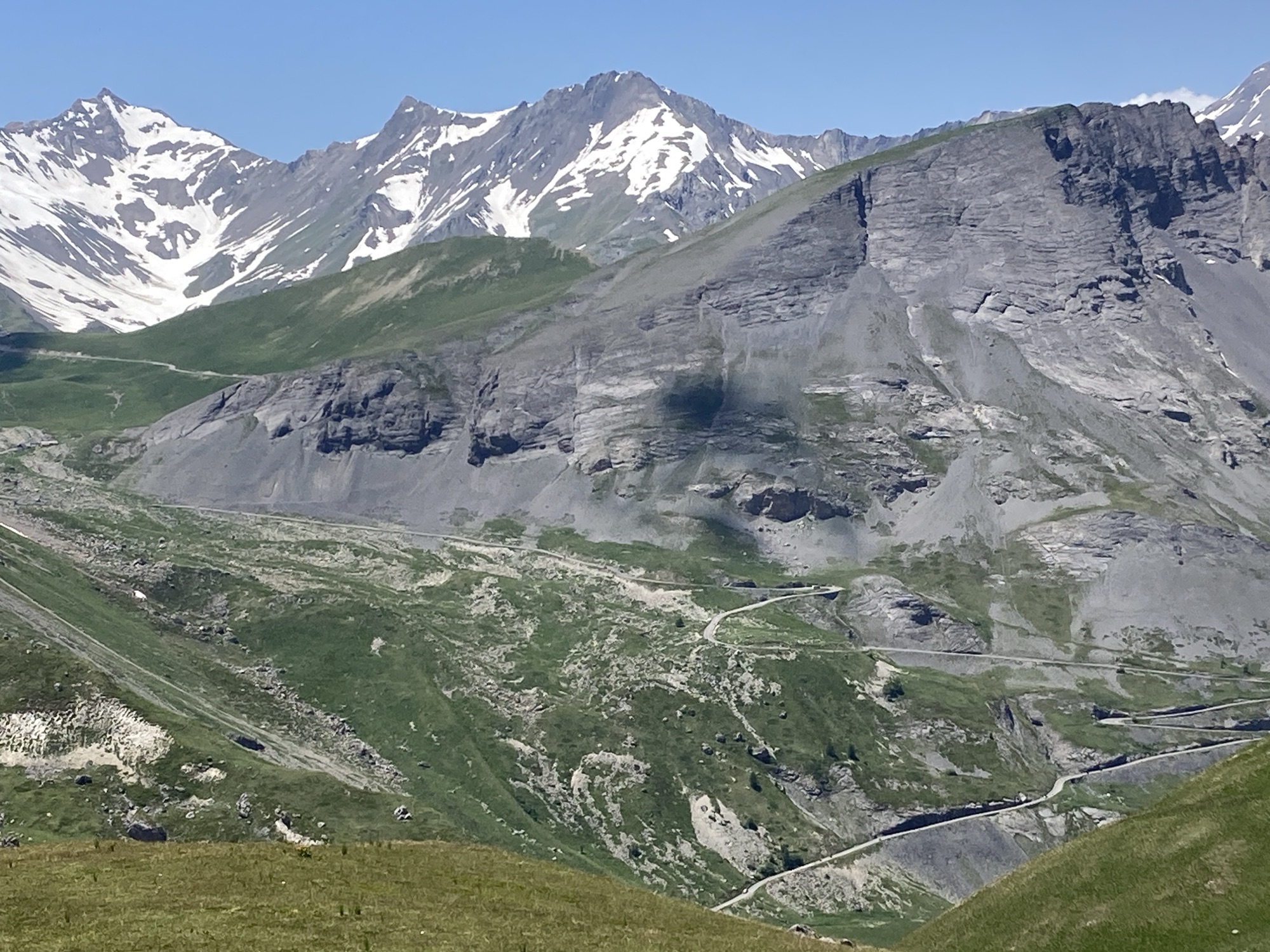
The 8800-foot col has multiple ways up: coming up from the small city of Briancon it’s a 20 mile climb up to the lower pass of the col du Lauteret at 6700 feet where a right turn branches on up to the Galibier is one way up (or down). Another is achieving the Lauteret from the west, where the big valley that Grenoble is in lies at a humble 700 feet, before climbing up past the base of the roads up to the Alp d’Huez and Les Deux Alps, passing the rugged, kinda backcountry and glacier-riddled ski hill of La Grave for a grand total of 6000 feet of climbing, and the last is to climb up from the Arve valley at 2300 feet to the top (going over the modest Col du Telegraph, where the road quickly drops 1700 feet mid-climb), for a en-total -very-daunting 7700-foot climb. Though those numbers are impressive, actually by Alp standards they aren’t unique; the Galibier is the eighth highest paved pass in the Alps and any one of those ascents have an average gradient of less than 7 percent; a pretty modest grade. But the Galibier is never the only climb; it’s in a dramatic mountain setting with mountains and cols all over the place, so it’s usually The Big One of an otherwise-huge day, and this year’s race is no different (more on that later).
Many years ago – when I, like many folks, was only a casual/occasional TdF watcher I was driving along in a late-fall rain on a highway and shot past an exit that said “Col du Galibier”. Ah, I know that one, sort of! I’d like to ride that someday! Then four years ago on a big Tour of Europe Ashley and I were in nearby Chambery and Chamonix, but we had a bit of a different agenda (work our way east through the Alps instead of focusing on the classic climbs concentrated in the western/French Alps), so I missed it again. Then this spring we finally got a chance to ski the nearby La Grave with Andrew and Cortland Parker (which was as great as we anticipated):
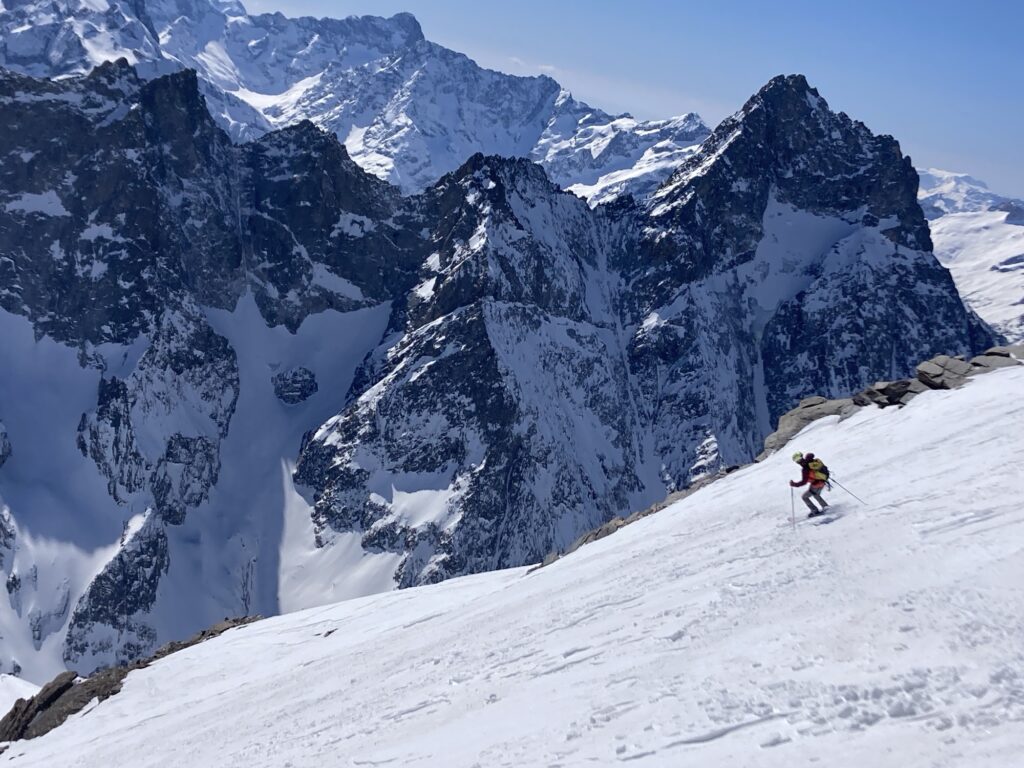
And once again I saw the sign for the Galibier as we left La Grave and blew past the turnoff at the Lauteret in the car. Sigh. Would I ever get a chance to climb this classic?
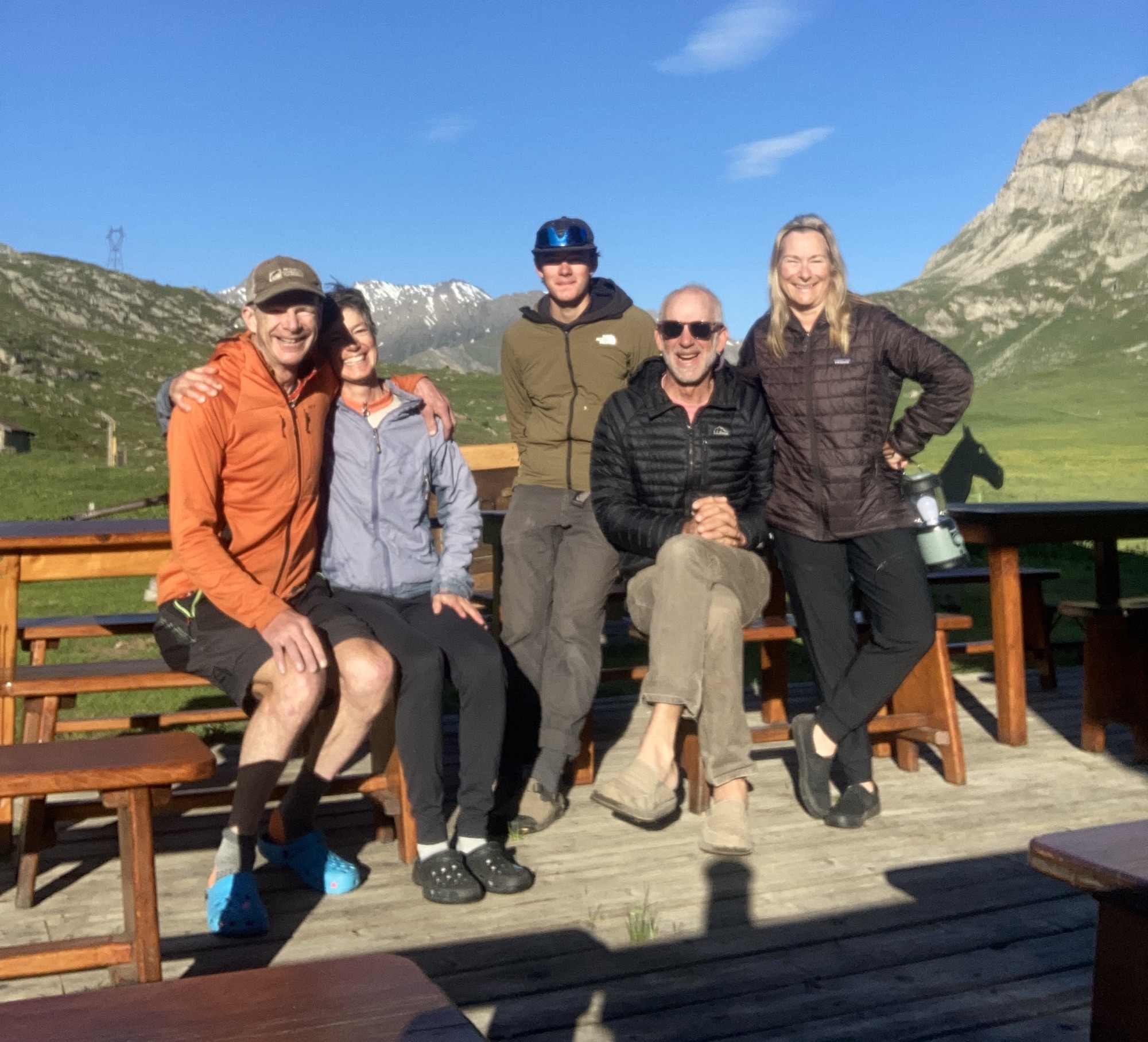
But as we got back on our bikes in April we loosely created a route and a plan that would indeed take us on our bikes into the French Alps where we would be able to spend some time going up, down and around the prolific mountains and passes that lie there, partly – to our surprise and pleasure – with Andrew, Cortland, and Michelle:
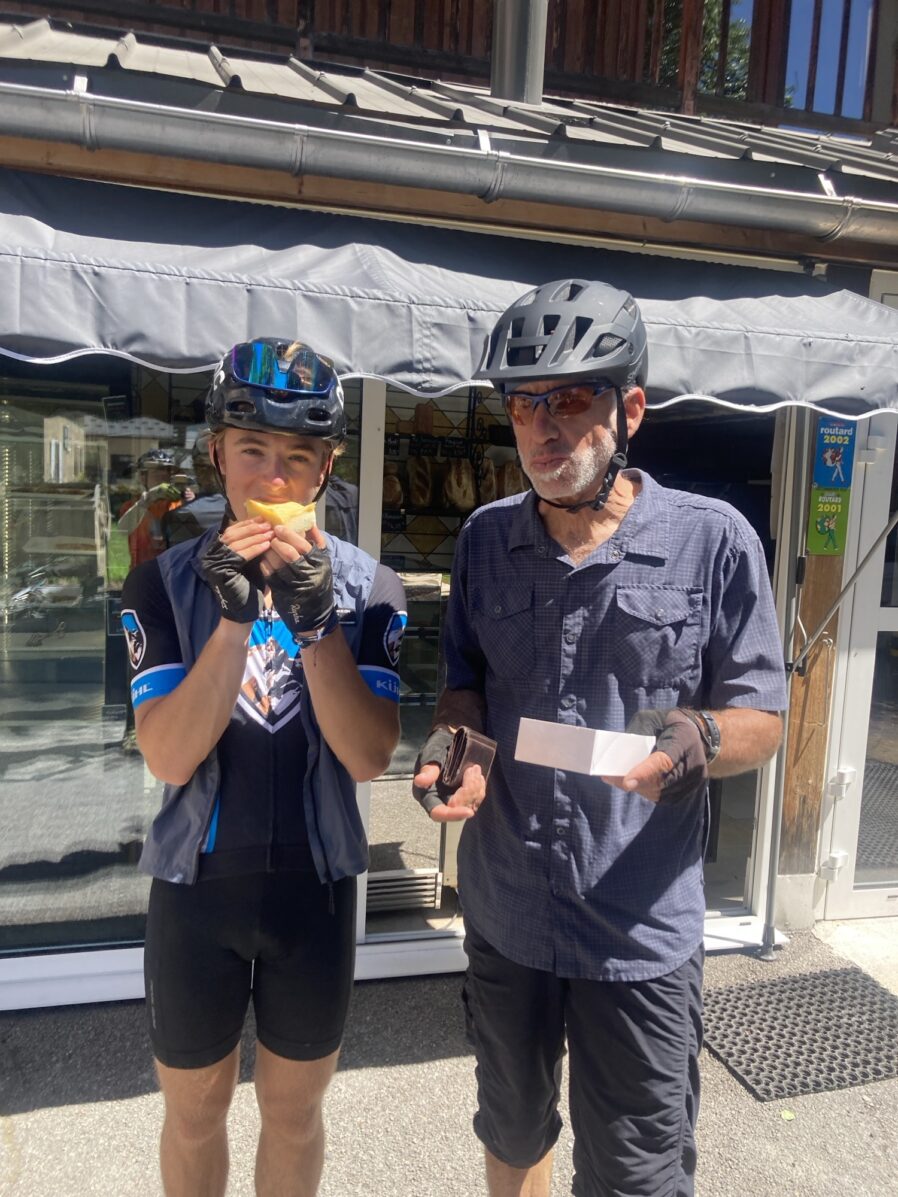
There’s a route called the “Route de Grand Alps” that is a well-known road bike ride, but a lesser-known route is the “Ultra Gravel Tour des Alps” that Ash had found that focused on more of the obscure passes, some of which were paved and some were gravel. As I looked it over I saw that indeed, this might be the time I get to actually ride over the Galibier!
The route is amazing: there’s just as much climbing as Switerland’s Hope 1000 over 15 passes, and we had a blast grinding up and flying down all of them:
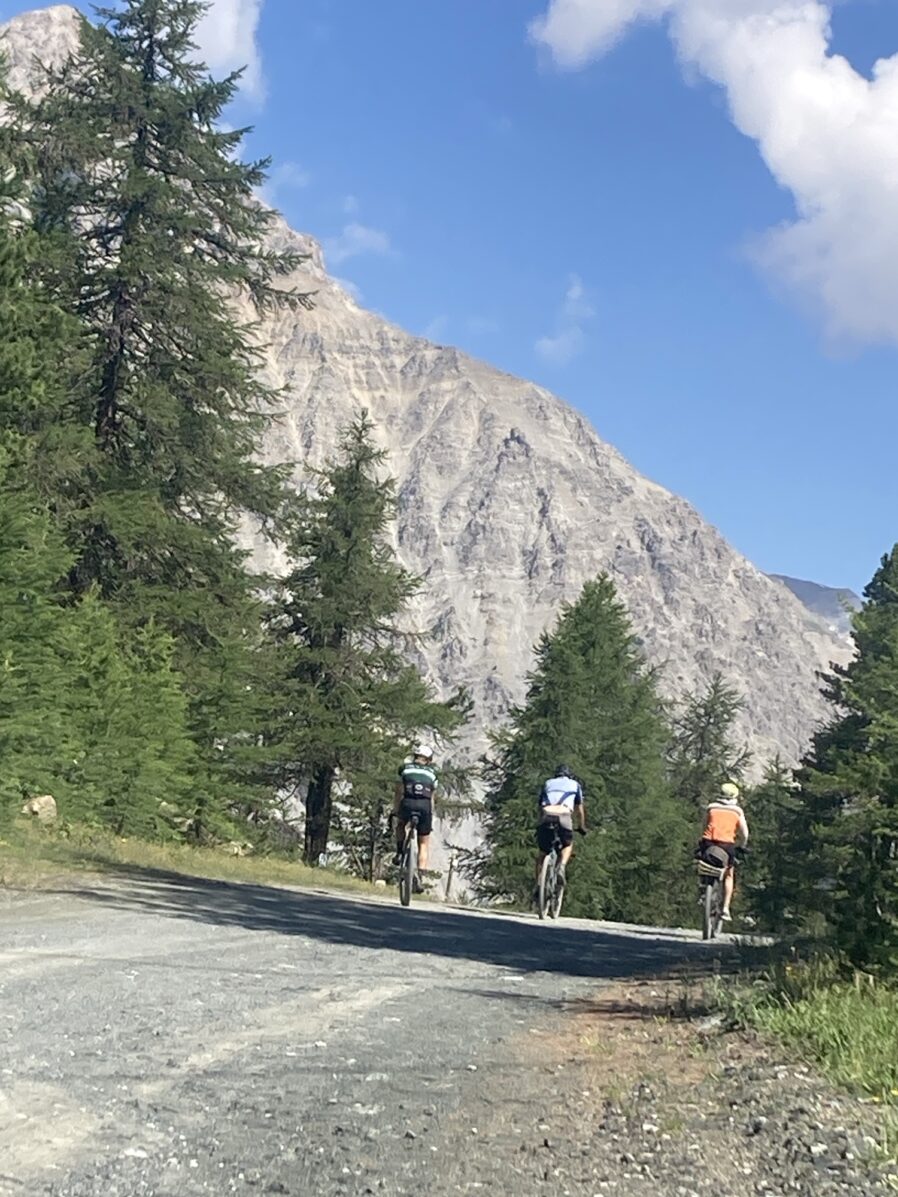
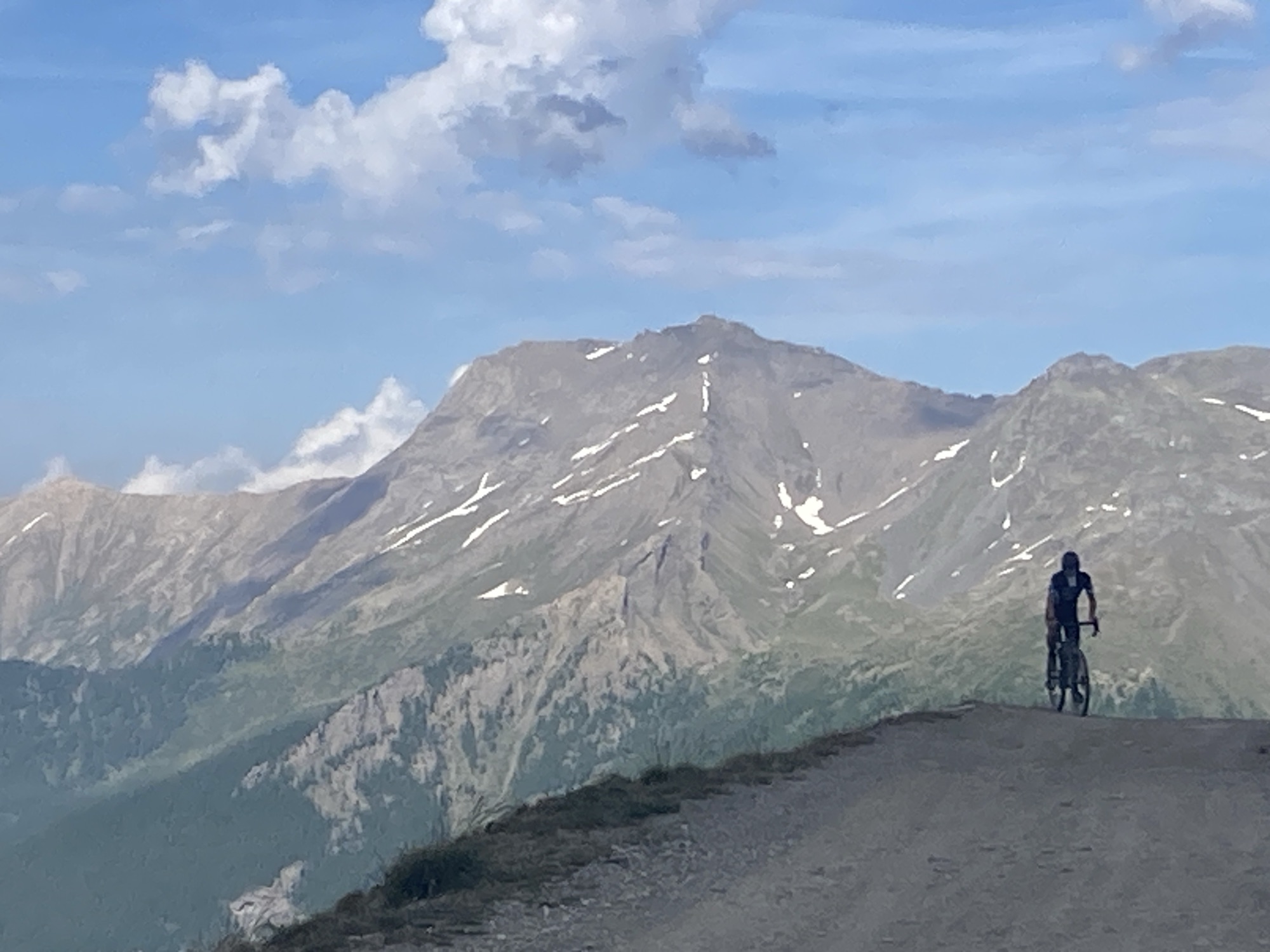
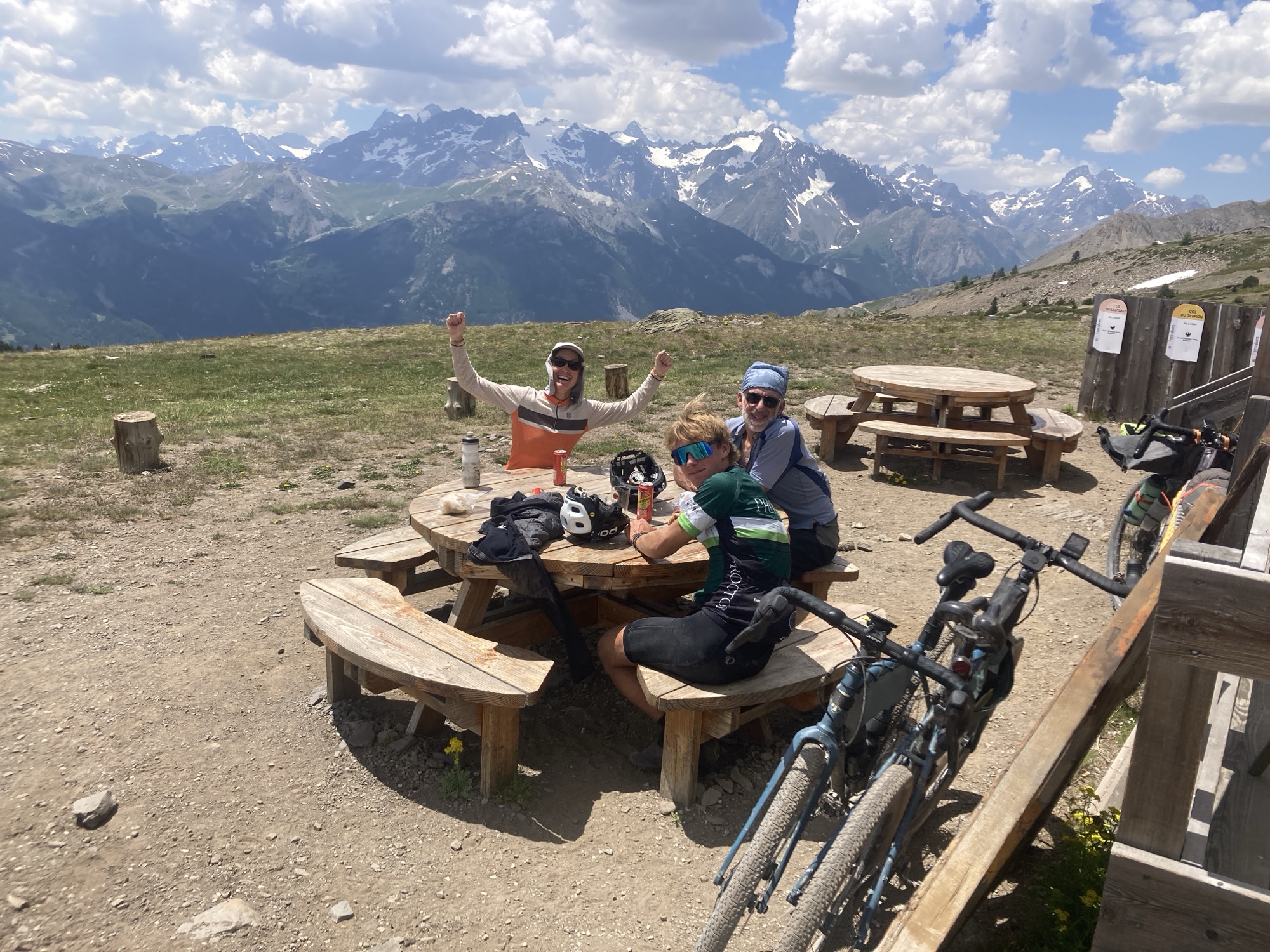
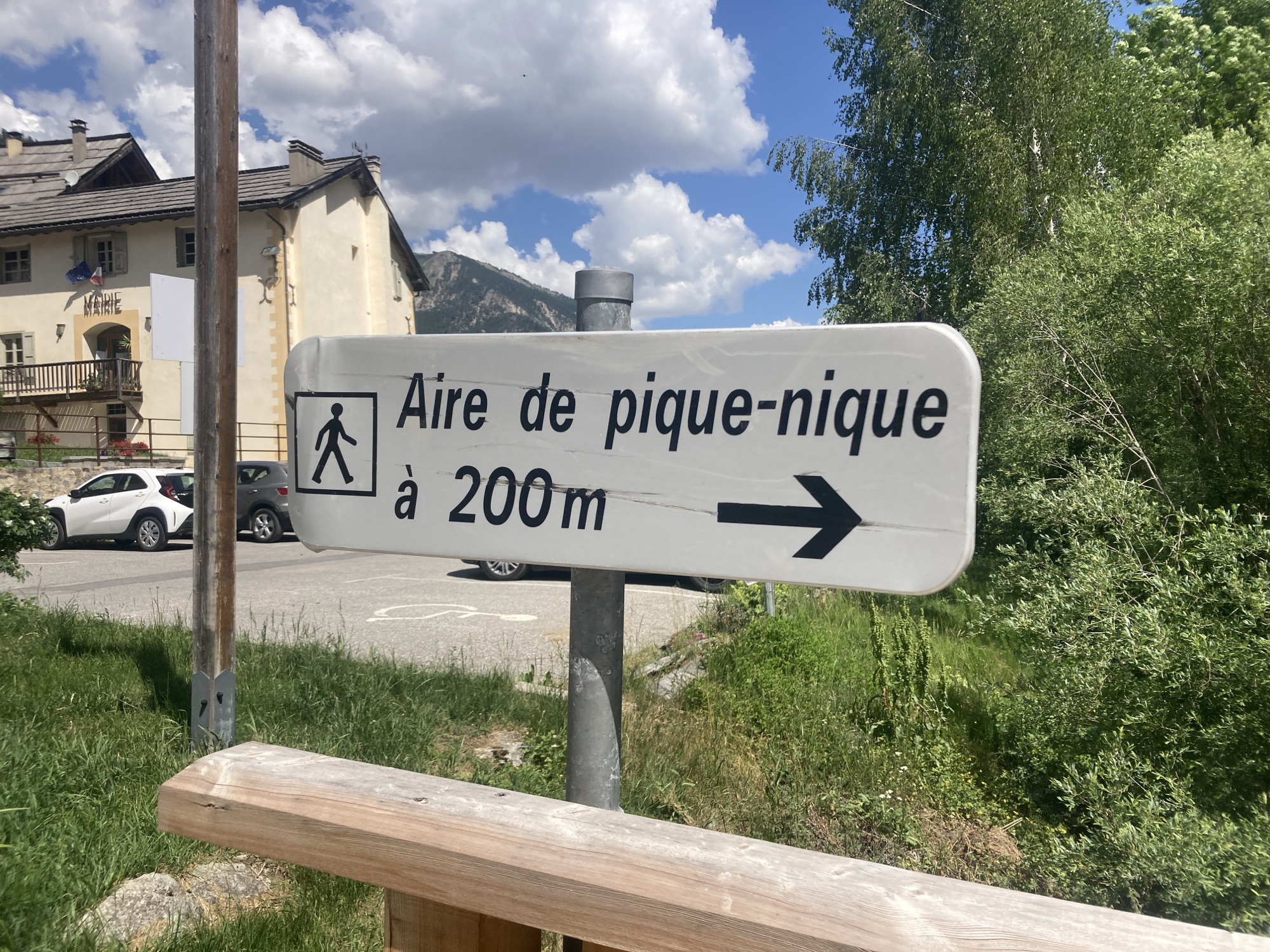
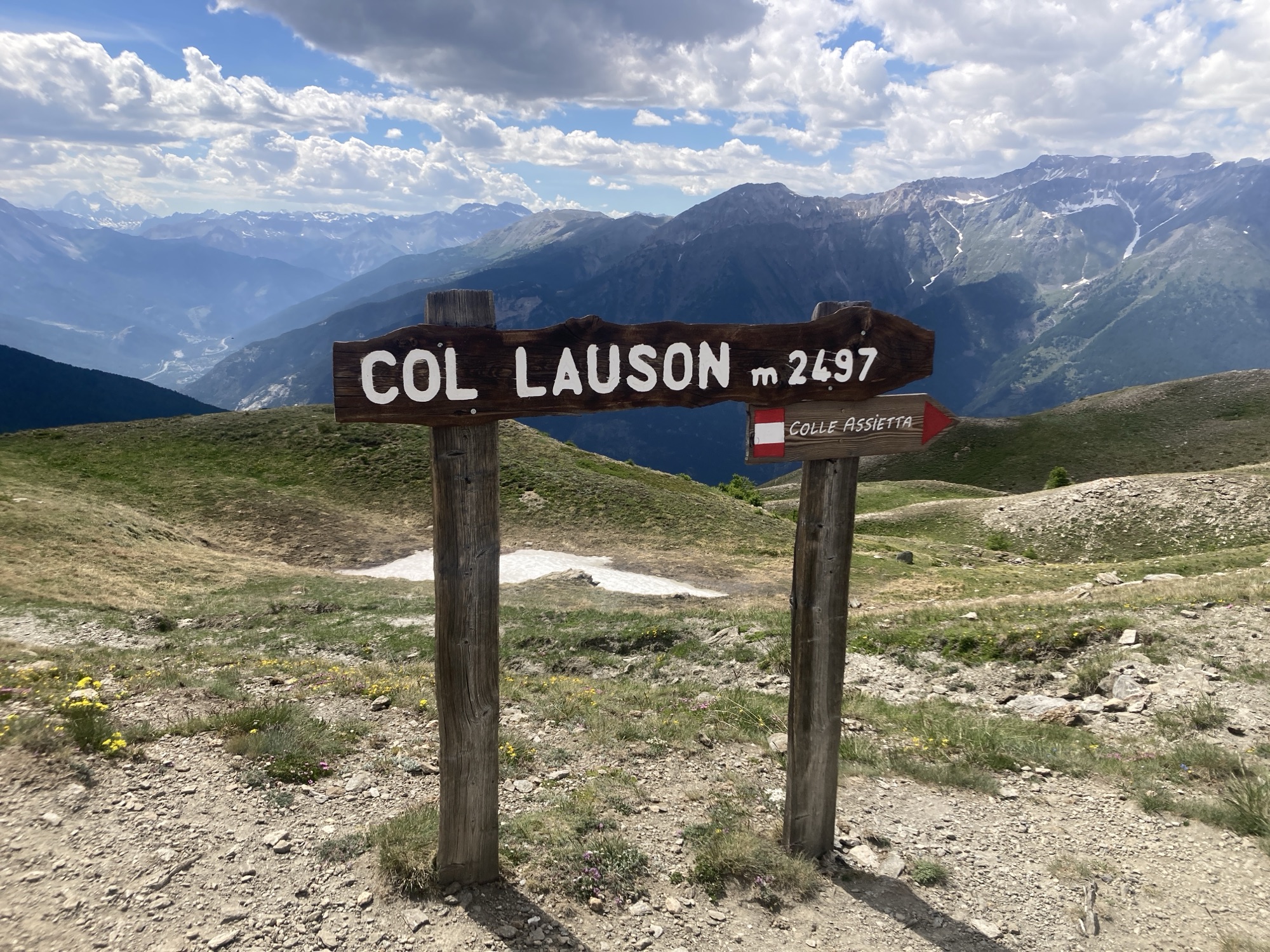
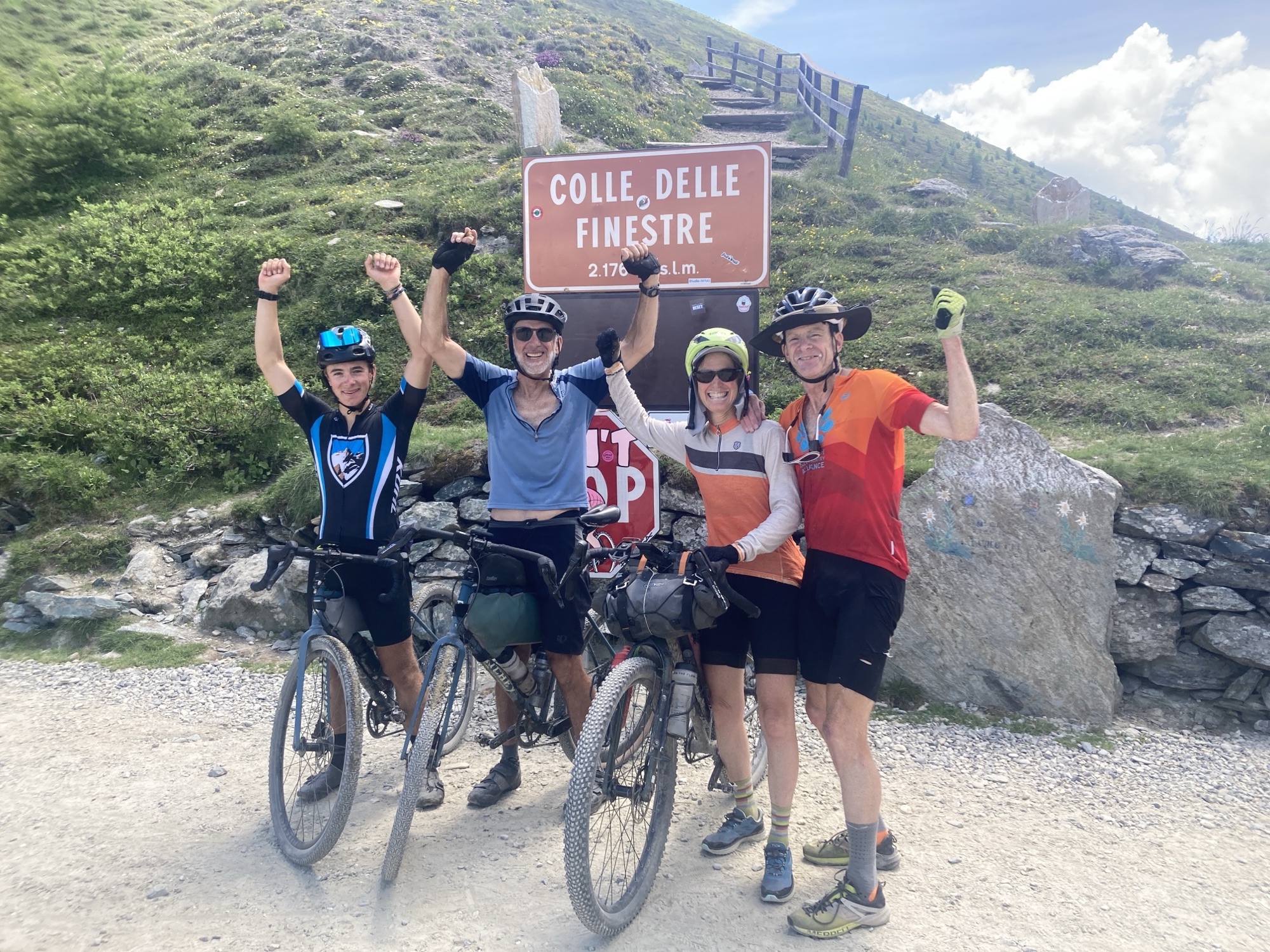
Finally we found ourselves in Briancon (a place our new Bavarian friend Chris felt is one of the “special” places in the Alps) and were well-staged for our own climb. We worked our way up the valley to a great little Bed and Breakfast a few clicks below the Lauteret and dropped our gear, went for a hike from the Lauteret into the Ecrins national park:
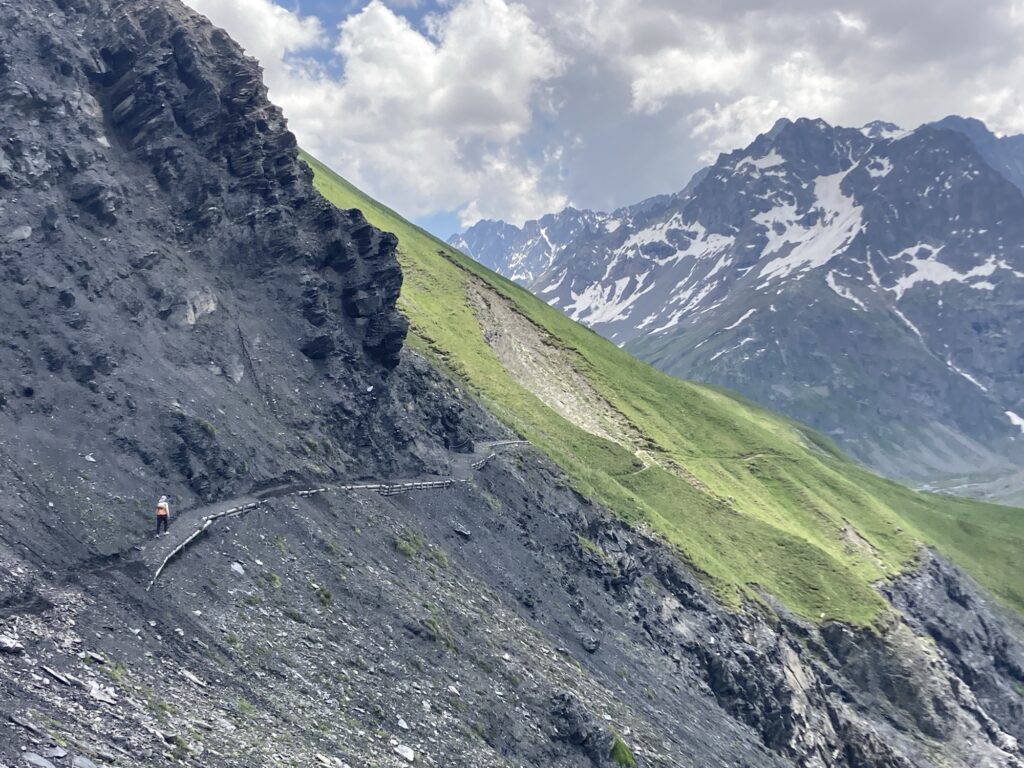
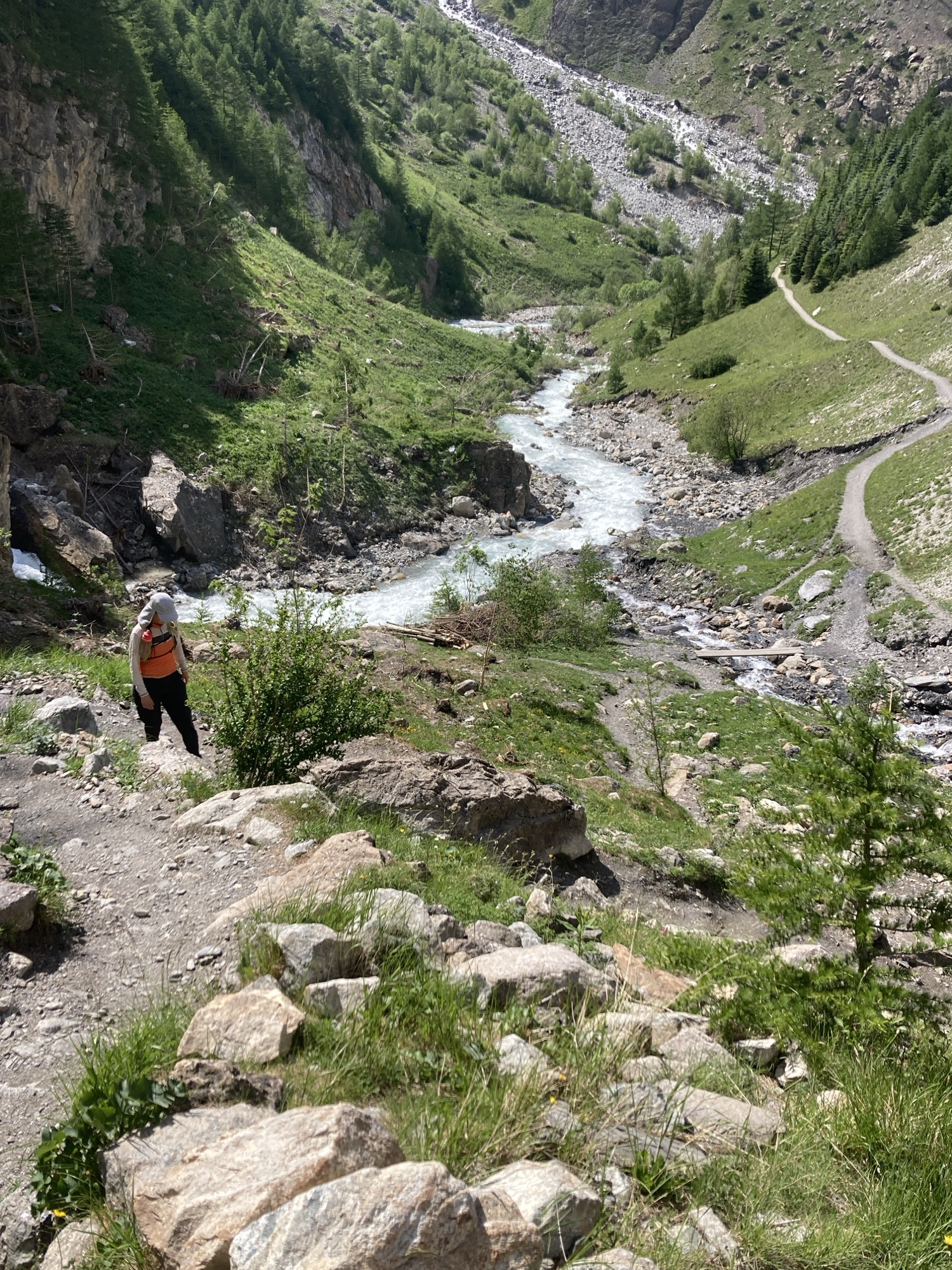
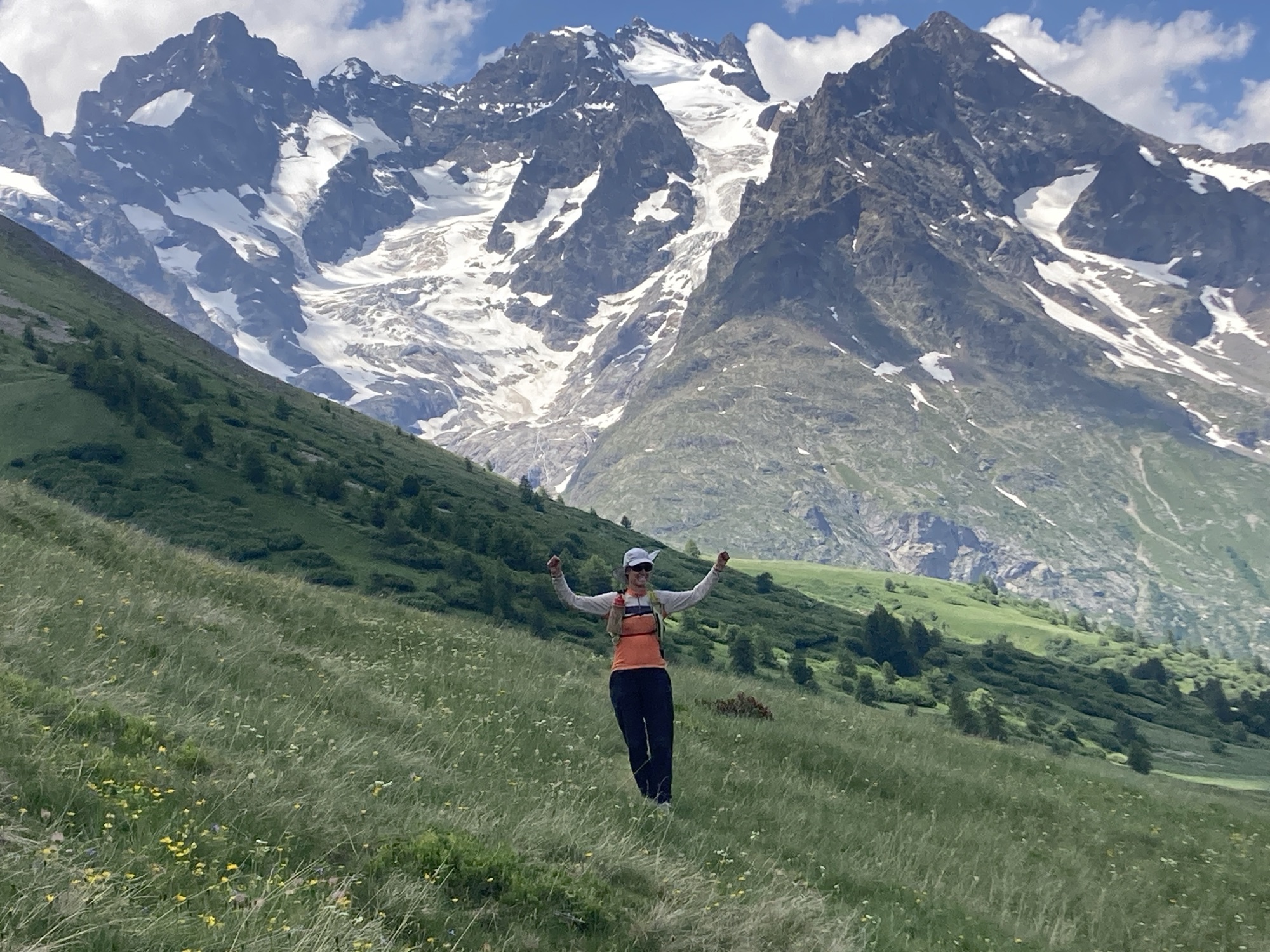
And the next morning headed up the Galibier.
But of course, the “gravel” route did it differently, as gravel routes tend to do. The current paved road is a modern version of the original and was carved and blasted into the adjacent mountains in the 1930’s, so until 1938 the route up the to pass was a gravel track that averaged a 10% grade versus the “new” road that averages less than 6%. In 1911 only 3 guys were able to make it up the climb without walking, and those three were the Tour’s overall winners.
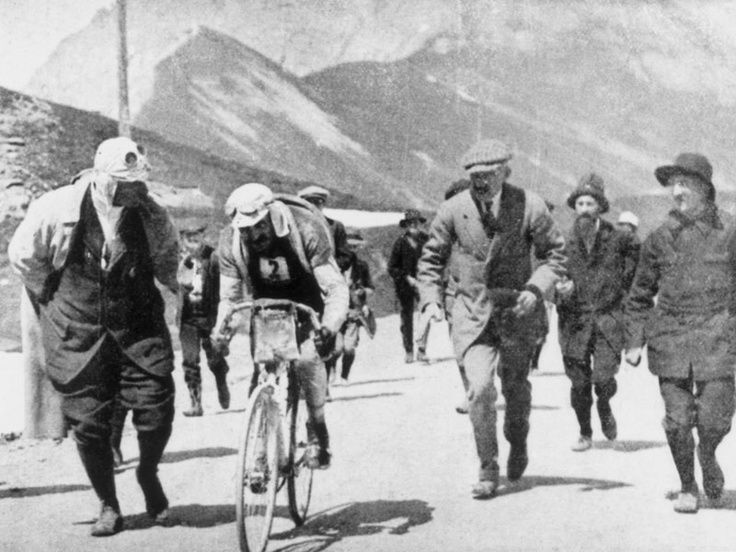
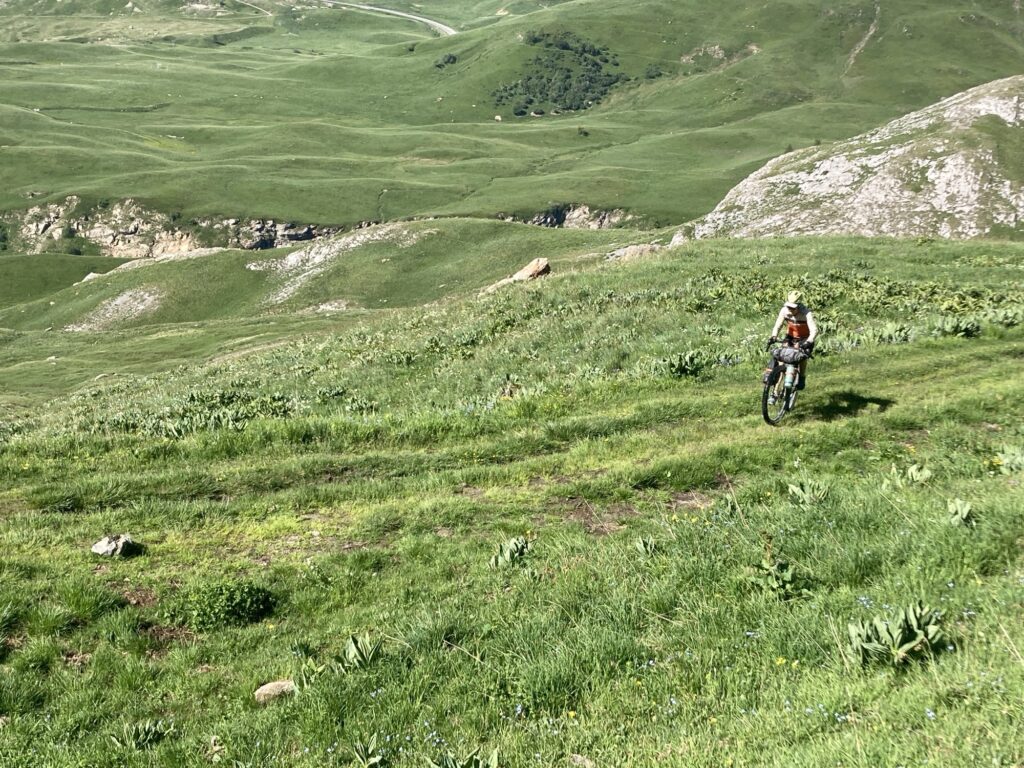
Fortunately, that track still exists, and it’s a nice option for today’s (minority) of riders who want to bounce up the gravel track:
of the majority of folks on (mostly fancy!) road bikes charging up the road to compare their times with the tour champs:
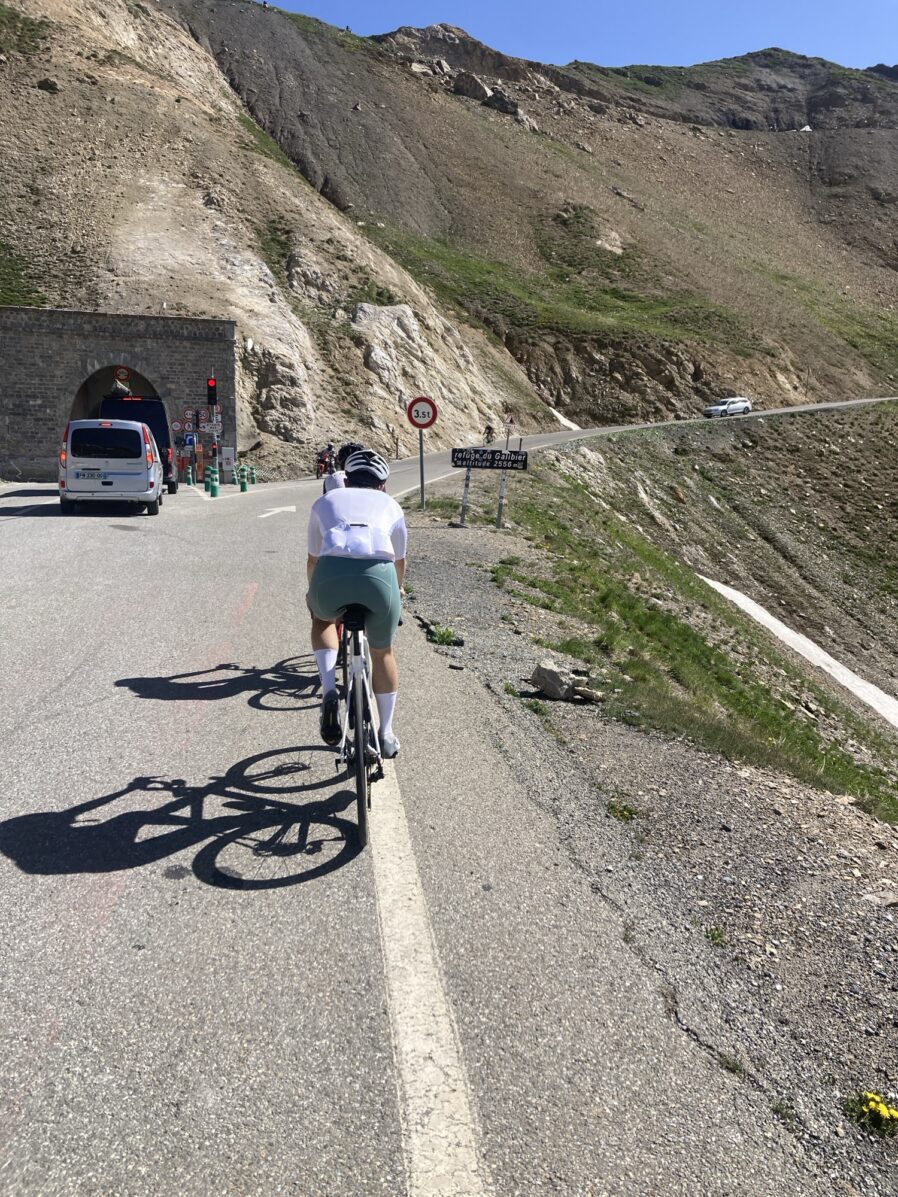
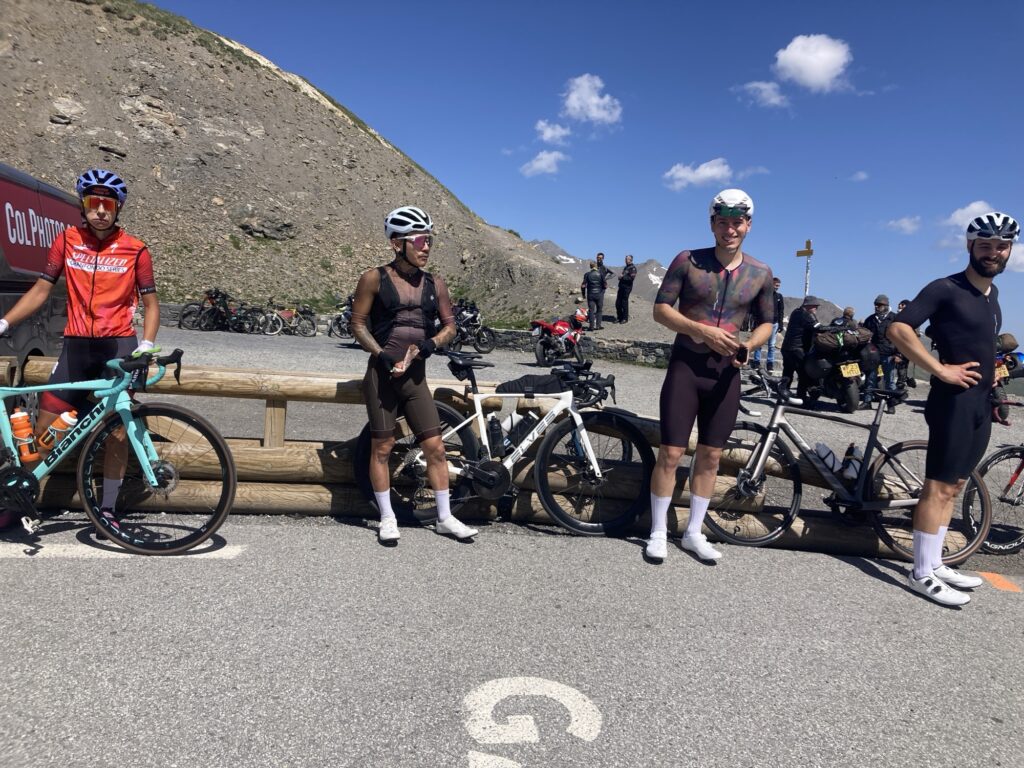
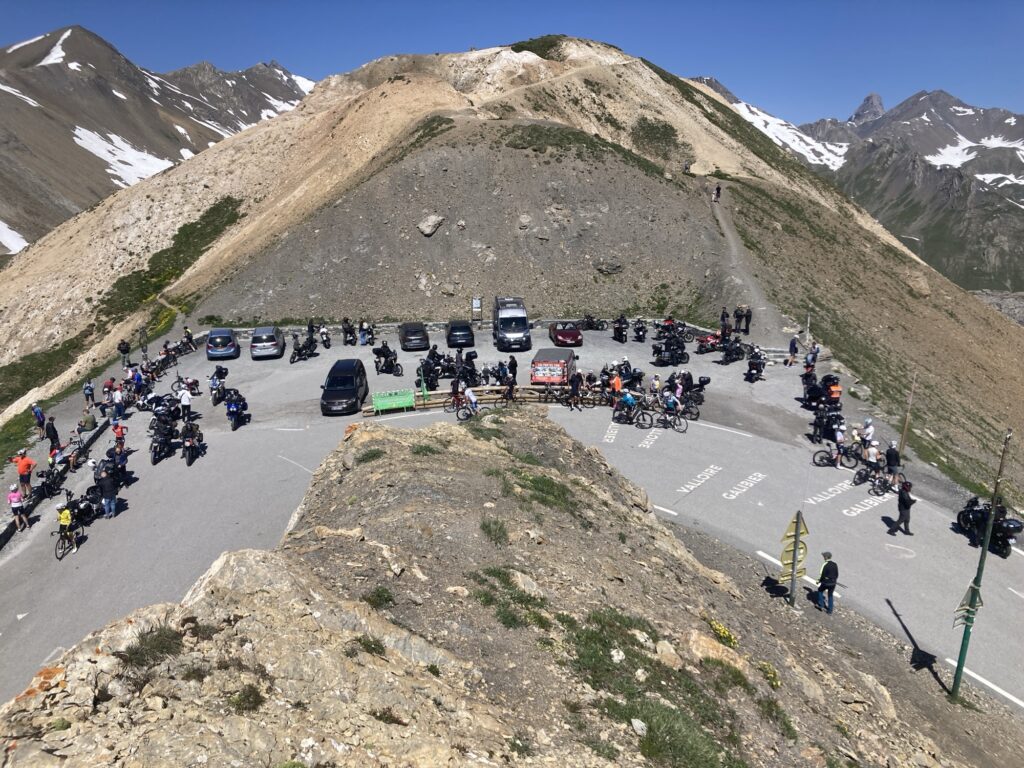
the high passes from the Pyrenees to the Alps to the Dolomites are have always been popular for drivers, but it seems that they’ve gotten extraordinarily popular with the moto crowd as well:
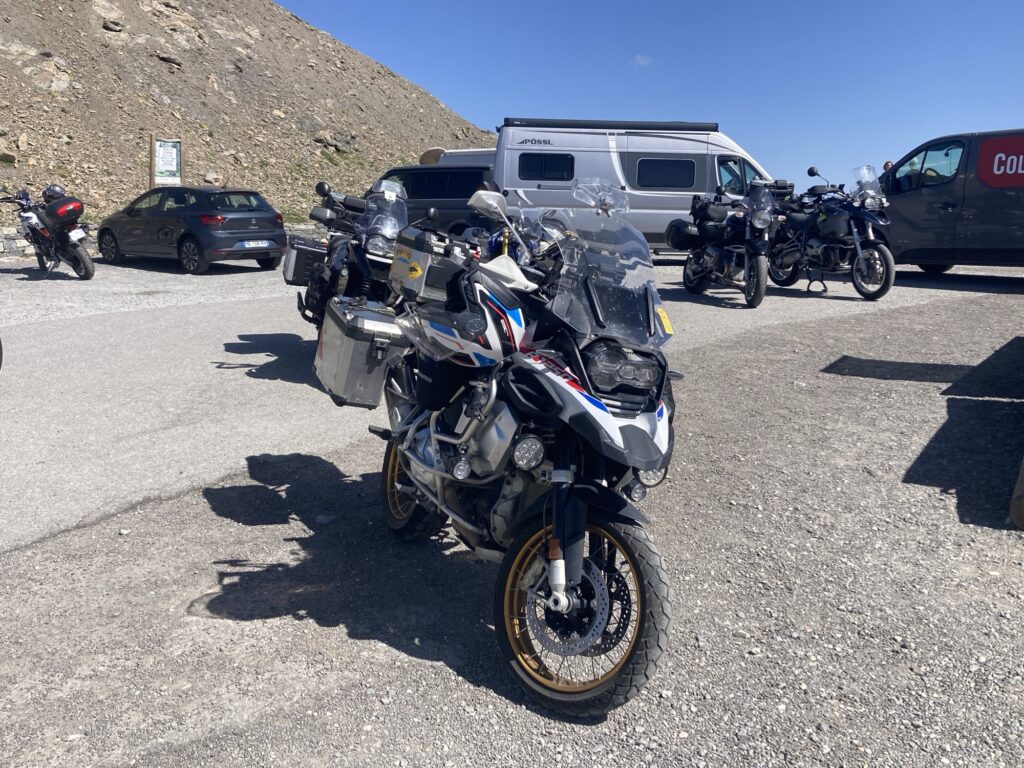
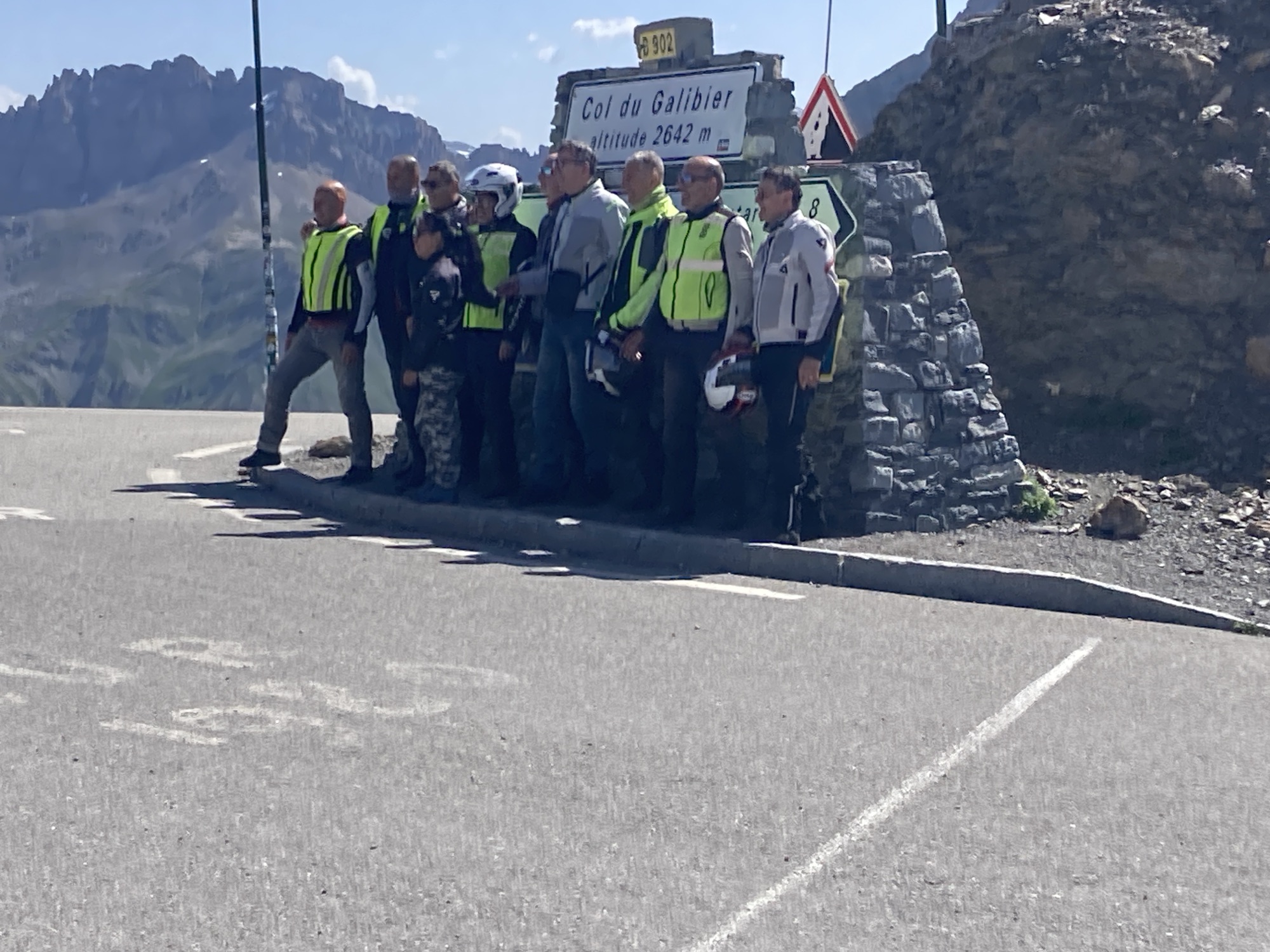
The old route may be more challenging, but super fun, beautiful, and quiet; and we happened to hit it on a sunny weekend not long after it opened, so the main road was quite busy!
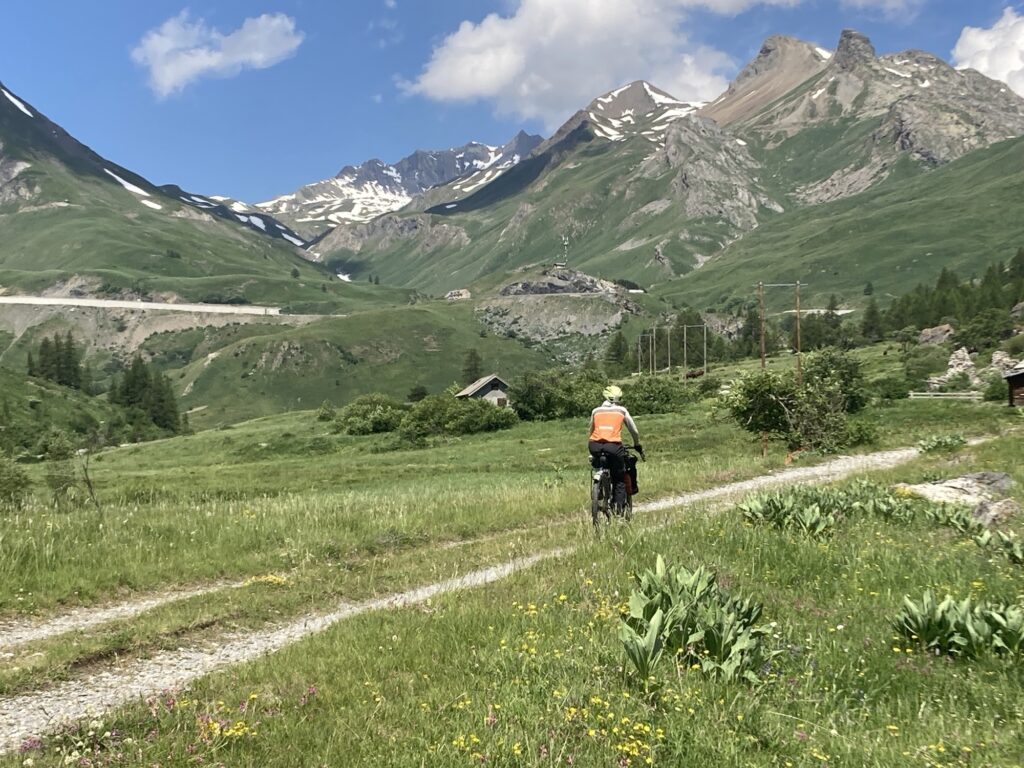
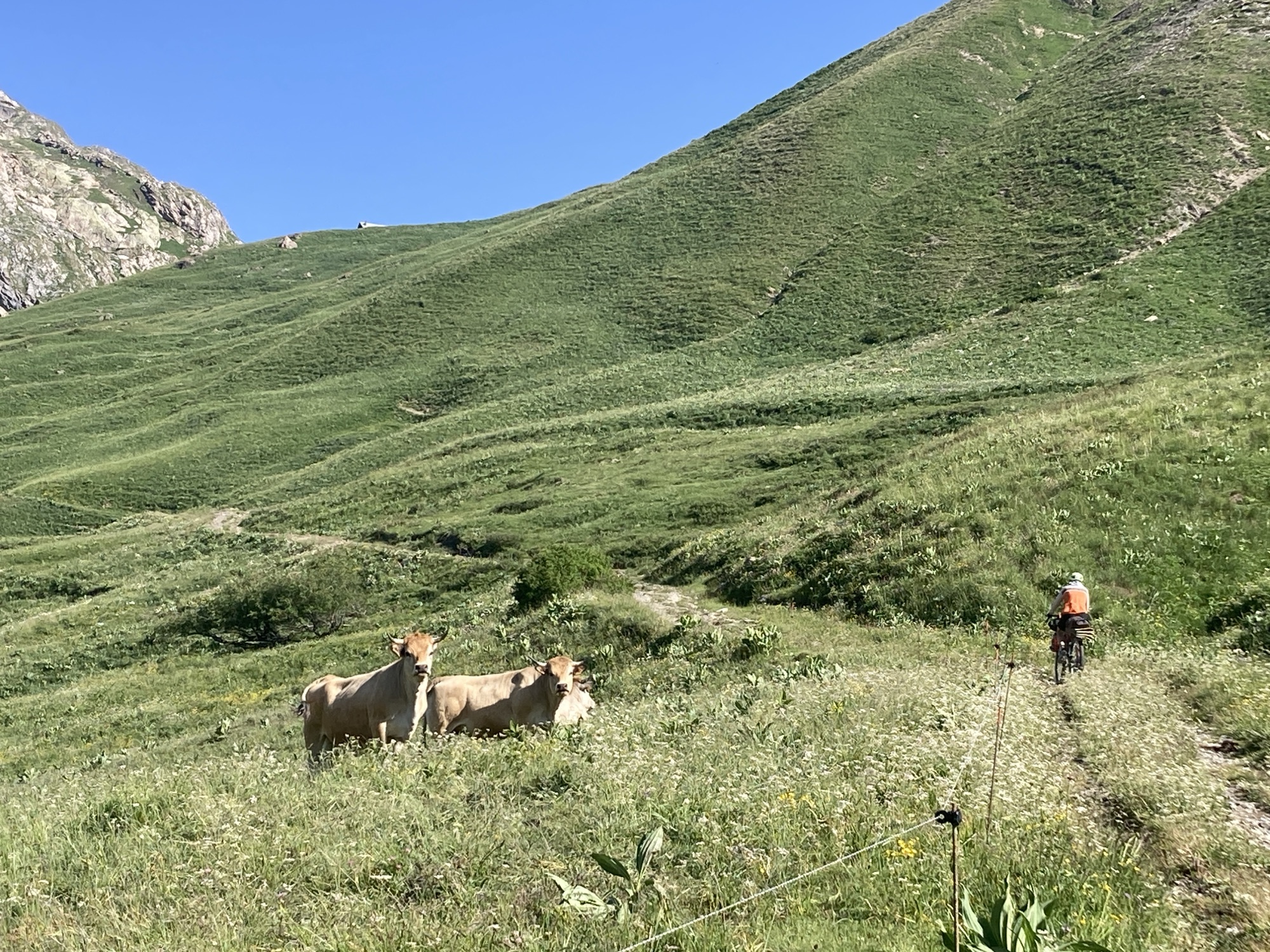
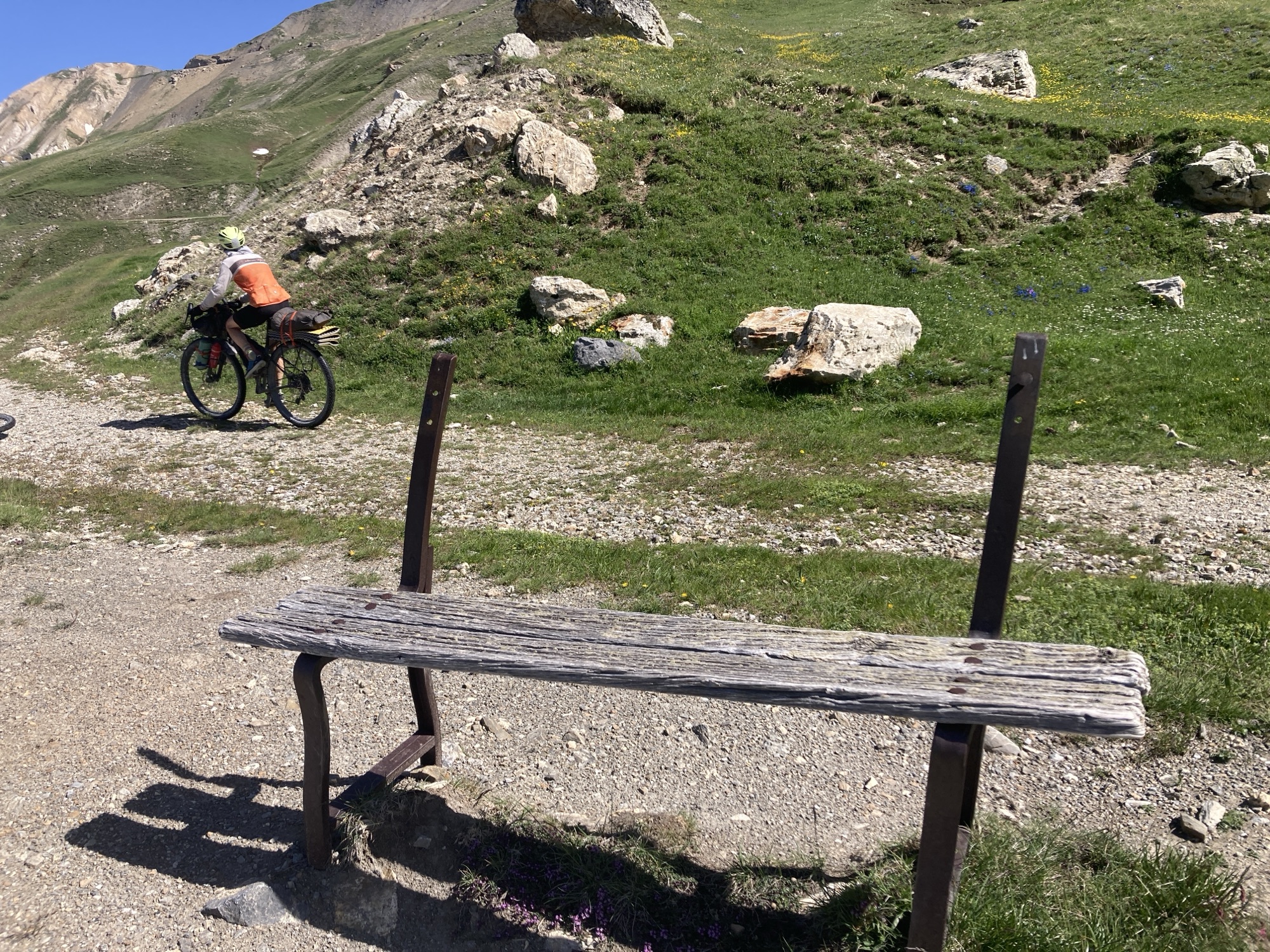
But we had the old “road” to ourselves:
Two days prior we had a fairly decent thunderstorm in Briancon, and as it turns out that storm was strong enough to have a substantial blowout that took big boulders across the road, blocking the main road up to the Lauteret:
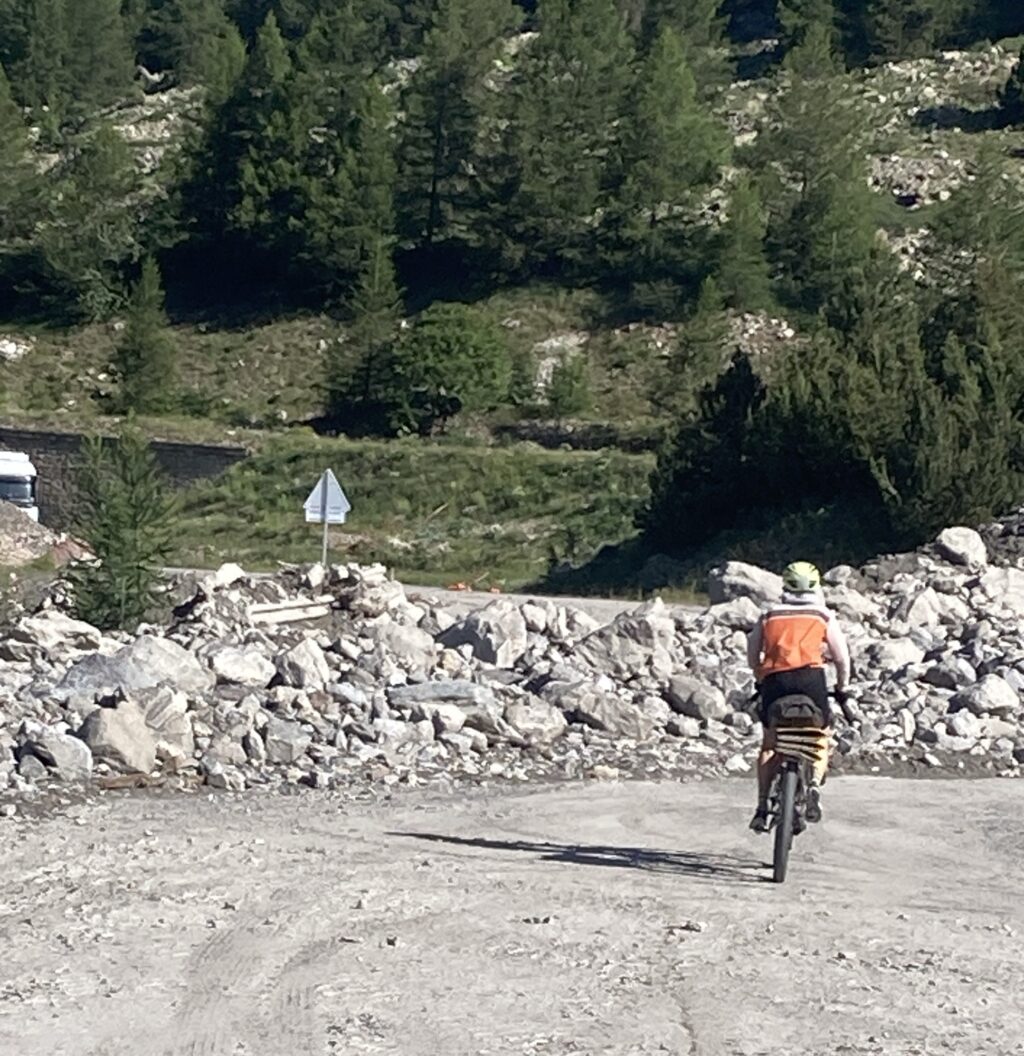
But amazingly, the old road was relatively unscathed!
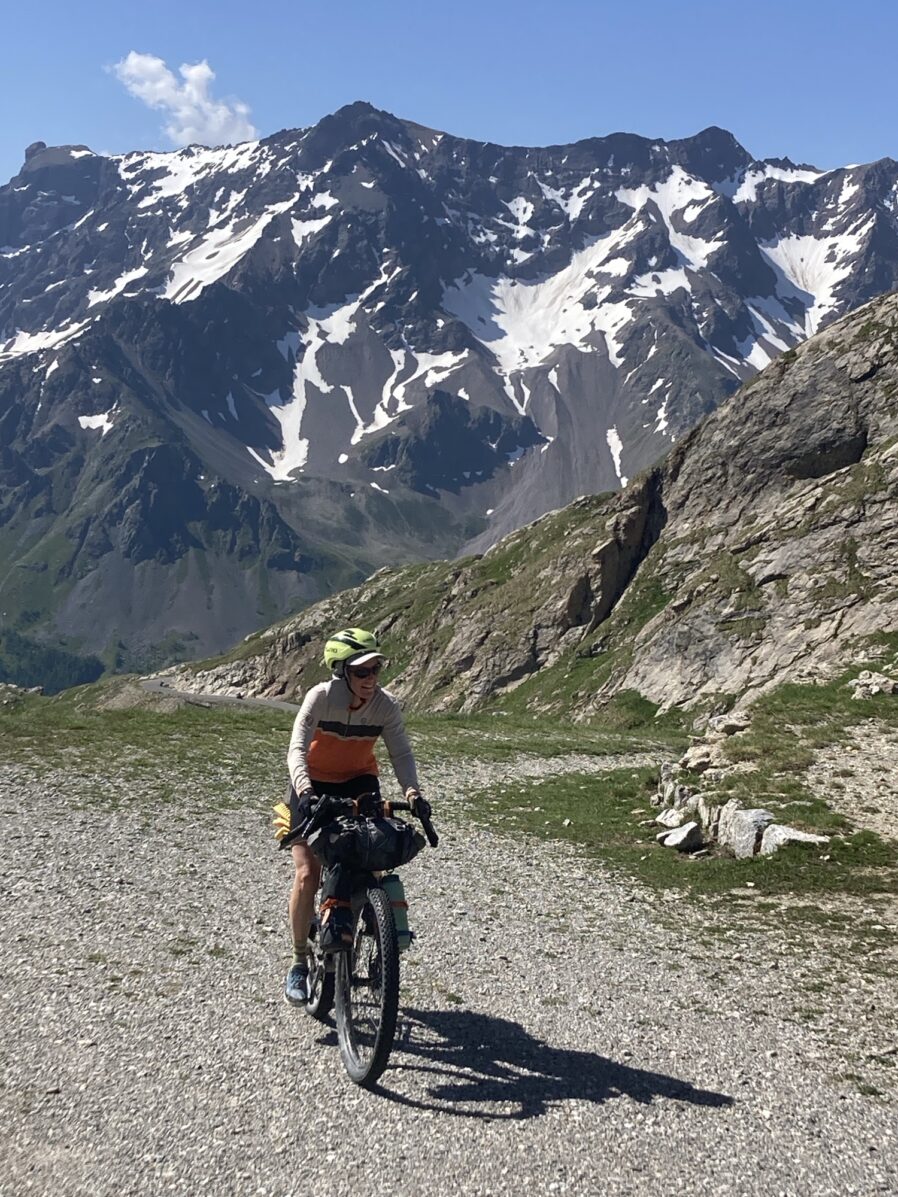
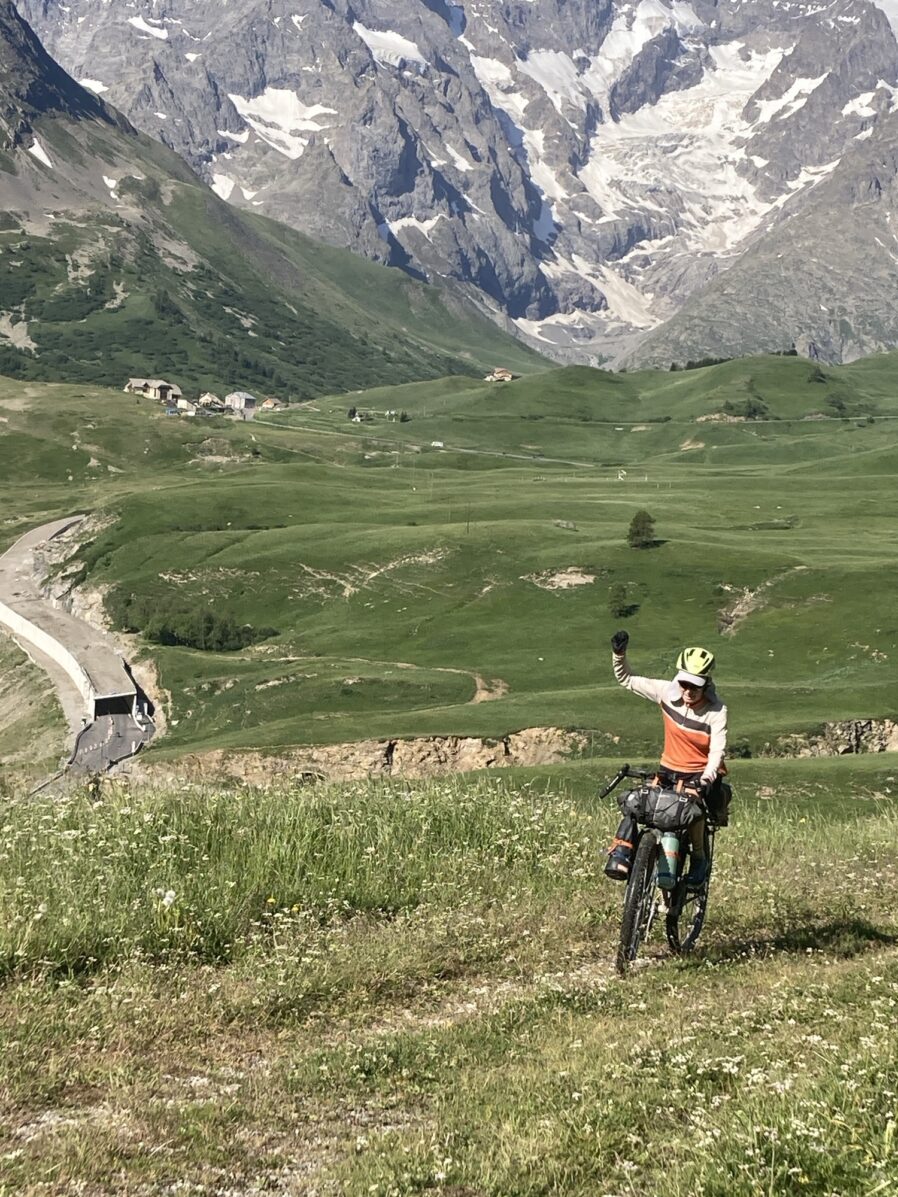
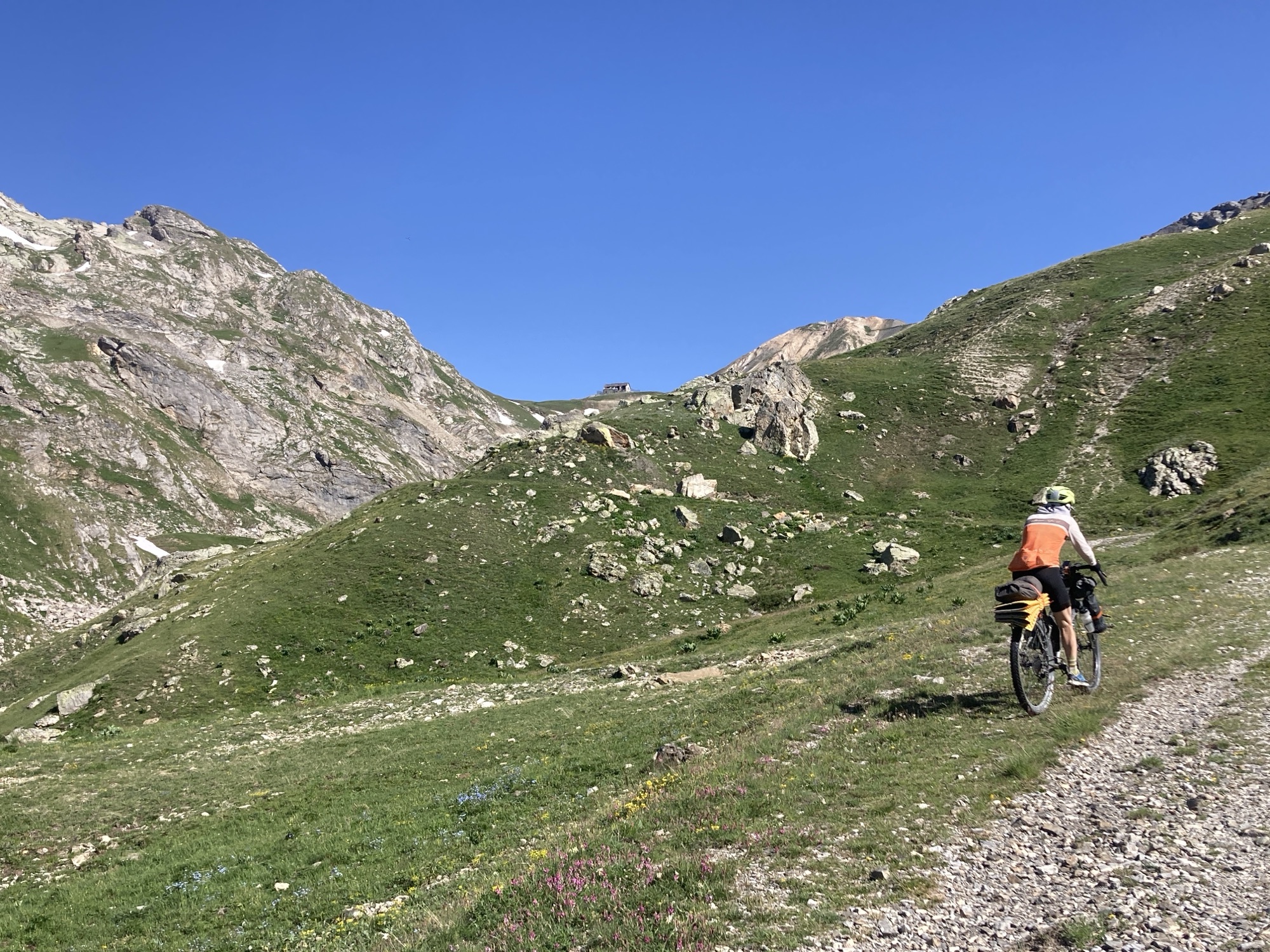
It’s maybe a shame that the TdF riders – in their hypoxic state – don’t get a chance to ogle at the incredible views!
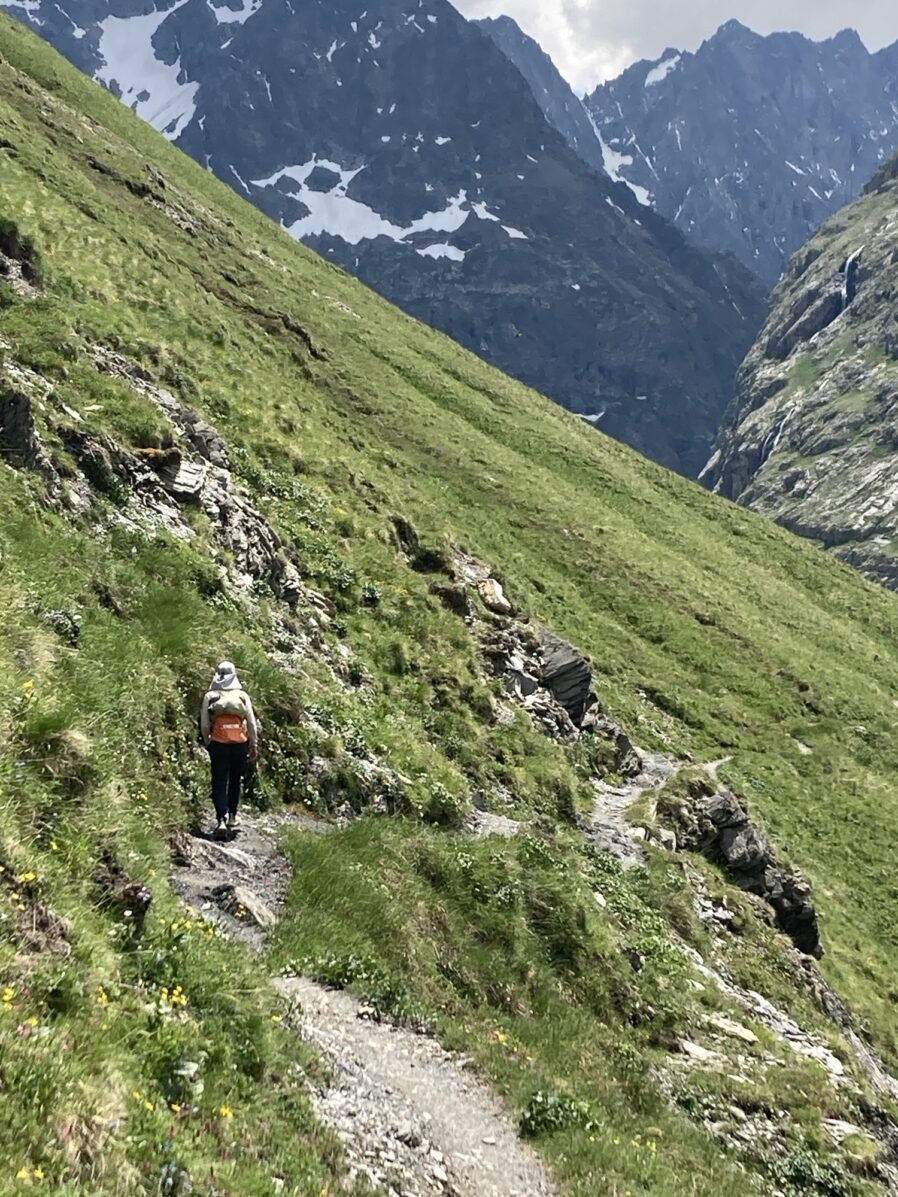
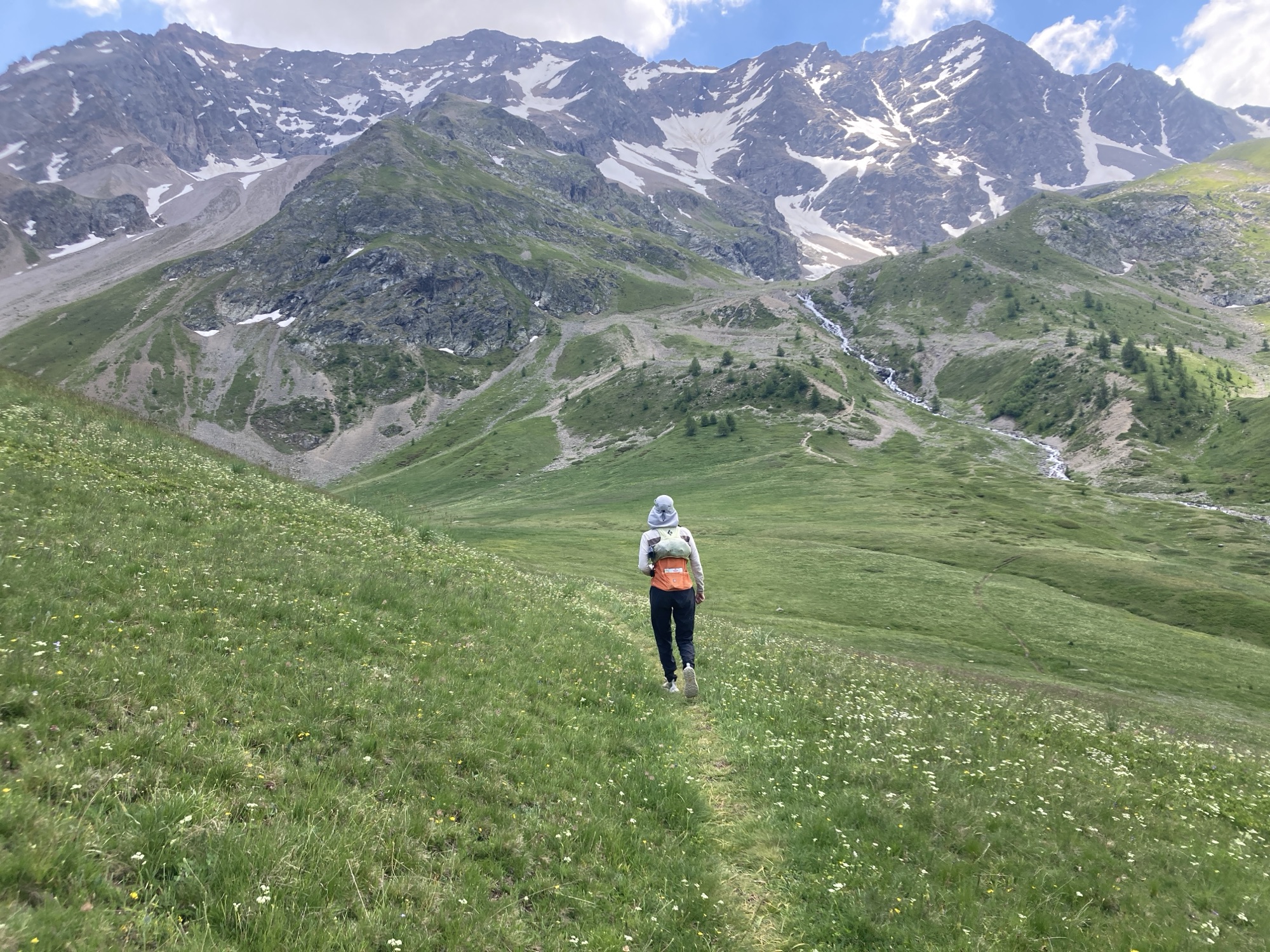
Like a lot of French cols, there are nice hikes going both directions that get very little play:
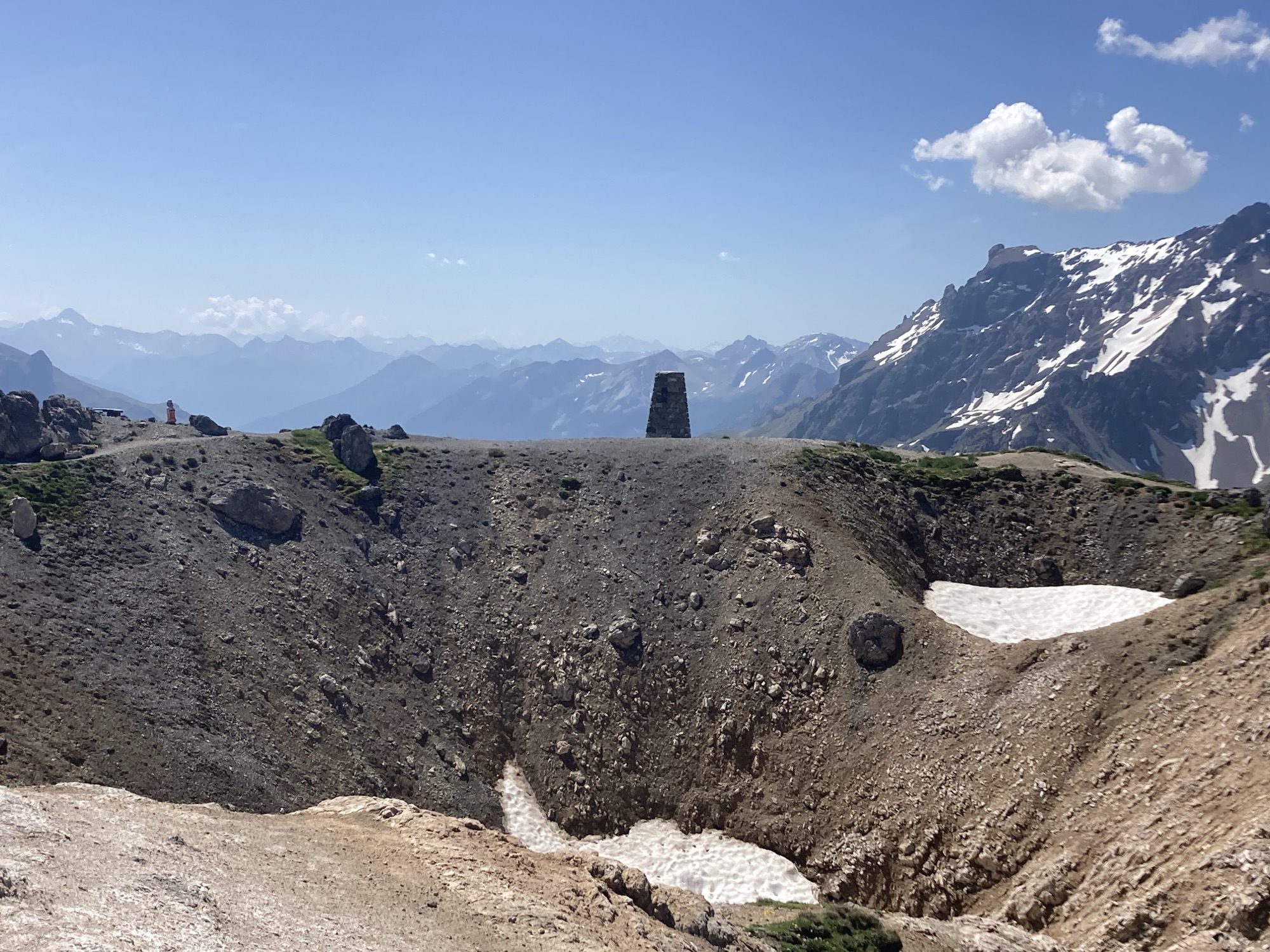
the moto doods and doodettes are all wearing big stiff moto boots, most people in RV’s and cars who go up there aren’t hikers, and most road cyclists are in awkward road cycling shoes that are barely walkable, much less hikeable. Fortunately we are geeky enough that we can wander a bit from the cols:
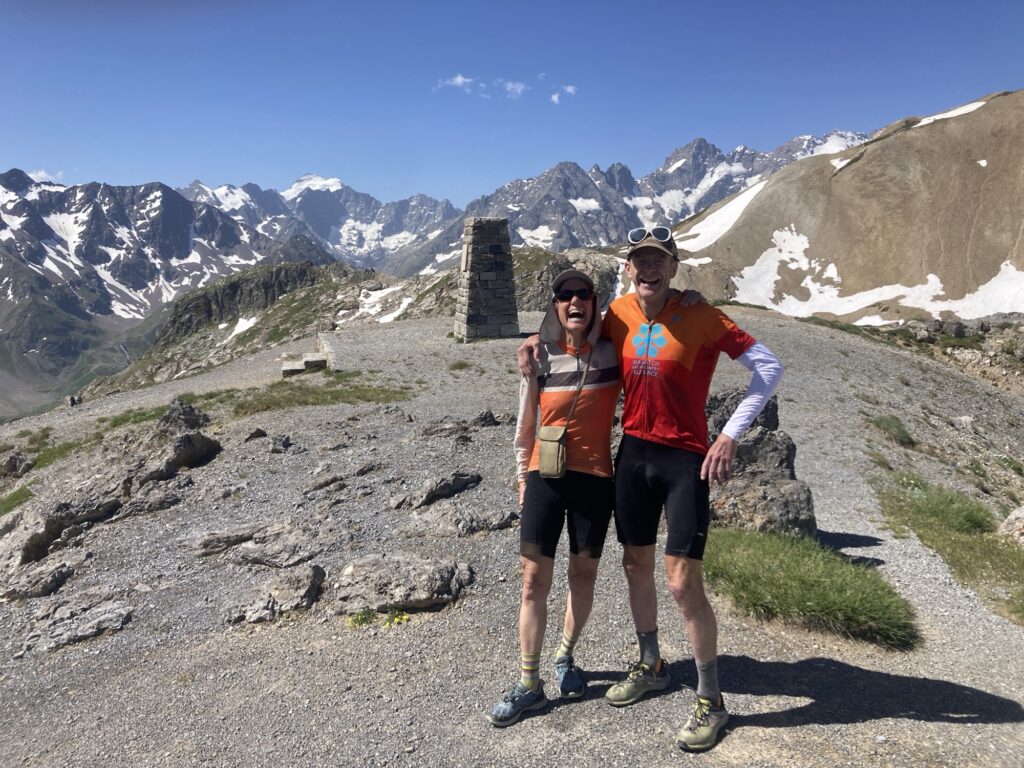
Then there is the descent. As much as Ash and I (and other cyclists) love the big climbs, the descents are incredible; quite fast, swoopy, and longgg! Below the pass are a coupla statues: one is for Henry Desgrange, the guy who was basically the founder of the Tour De France and is the namesake of a 5000 Euro prize for the first TdF rider over the high point of each yar’s tour (this year, of course, it’s the Galibier). The other statue is of Marco Pantani, who famously broke Jan Ullrich in the 1998 Tour.
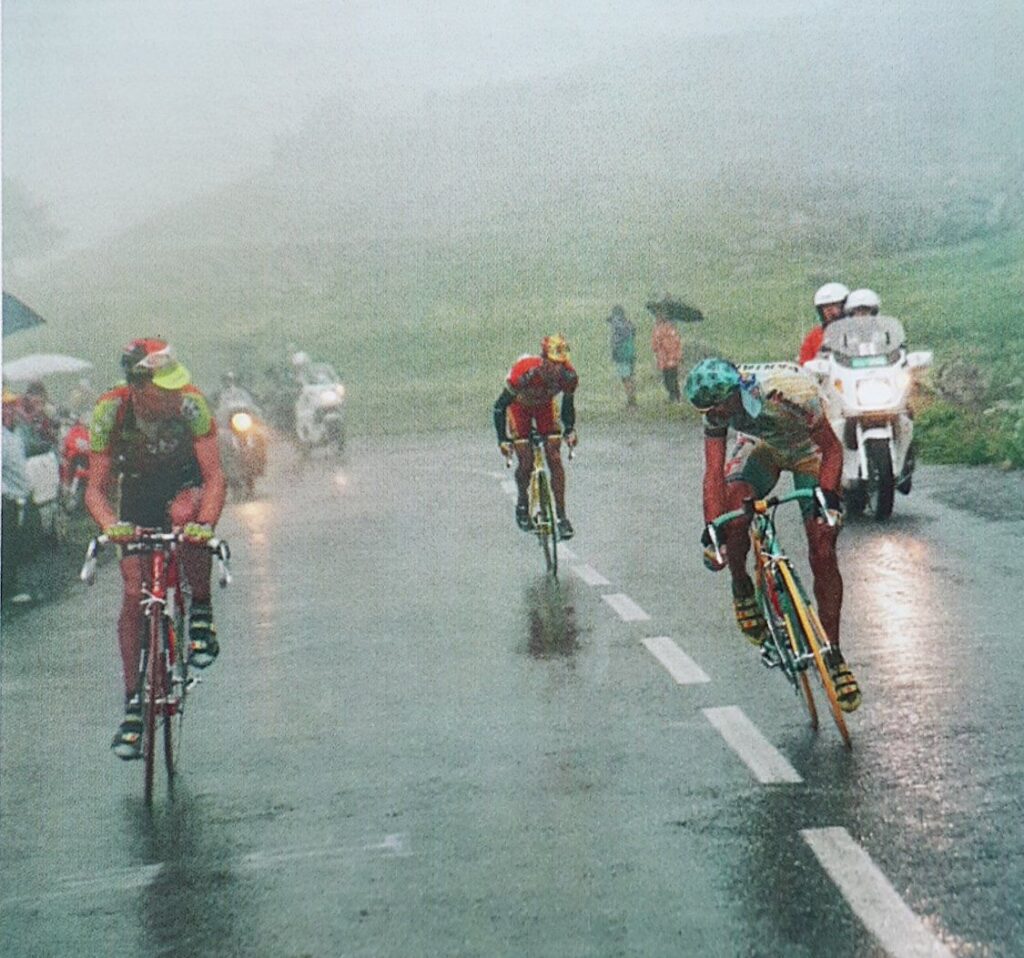
Thre’s another statue of Pantani on the Passo Mortadolo near Bormio, Italy; perhaps it’s heresy to say so, but I find it interesting that he seems to be such a hero of the Grand Tours when it’s pretty well known that he was as much of a doper as Lance Armstrong et al in that era and died of a cocaine overdose, but whatever.
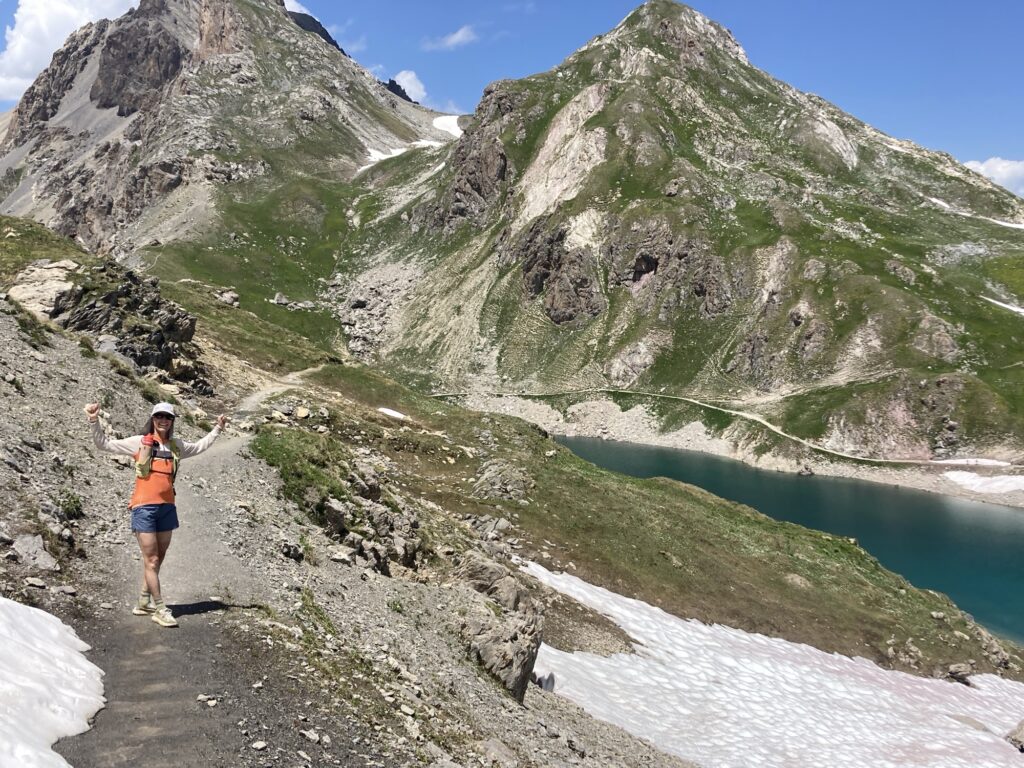
Below the switchbacks that mostly end a few clicks below the pass there’s a nice little refuge (in lieu of one on the pass) and a gravel track to the east leads to a little lake and a great loop hike:
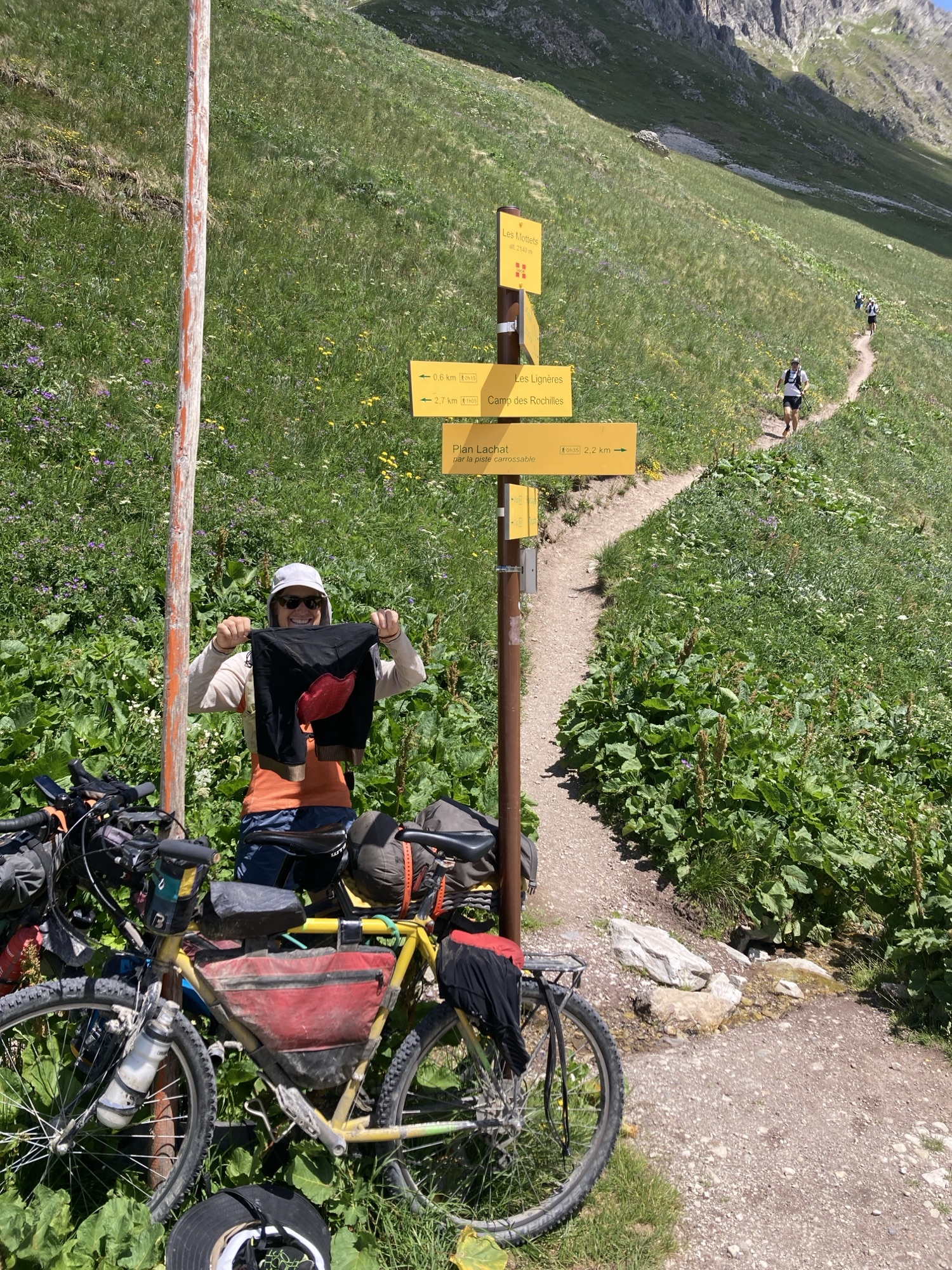
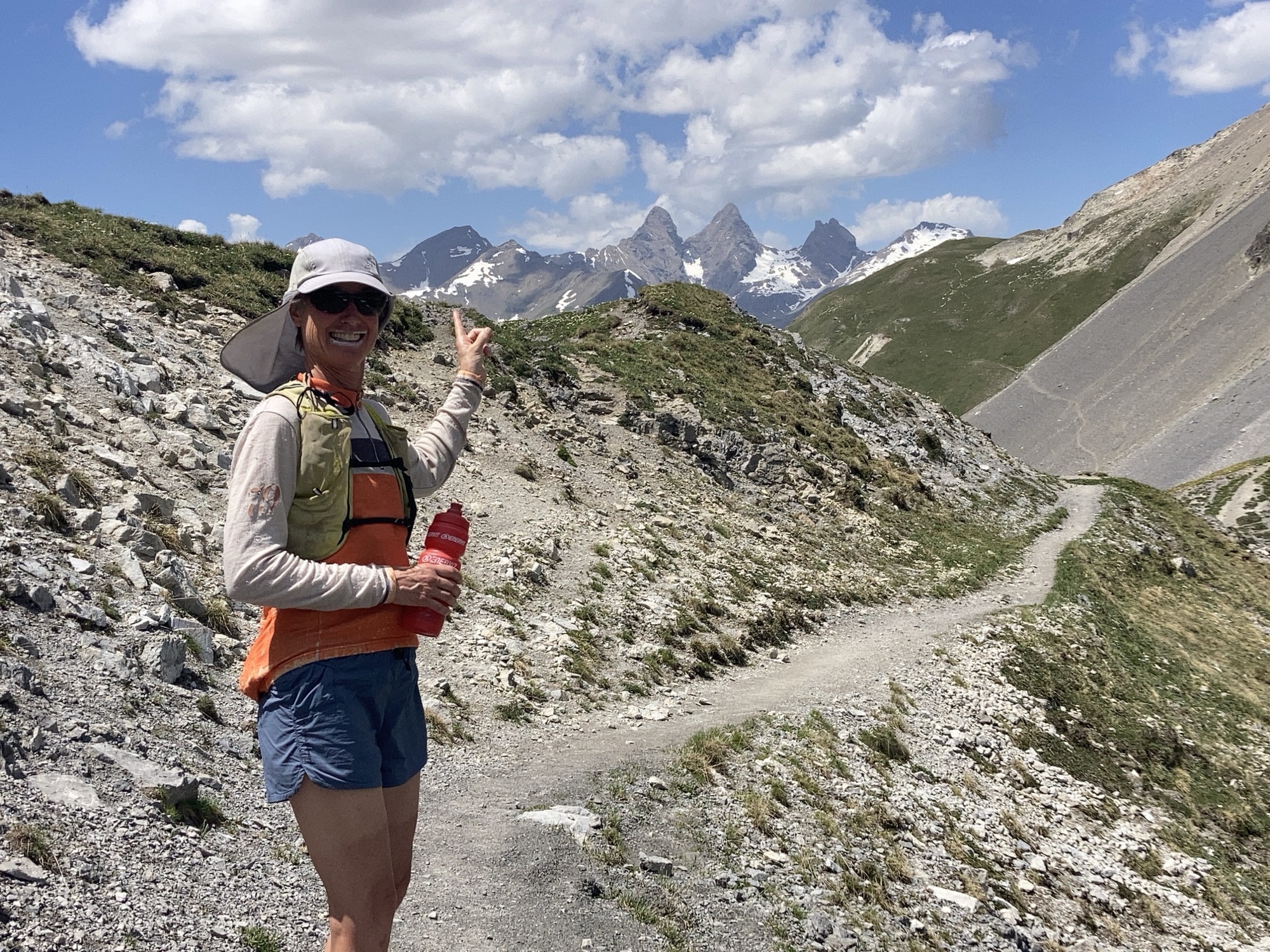
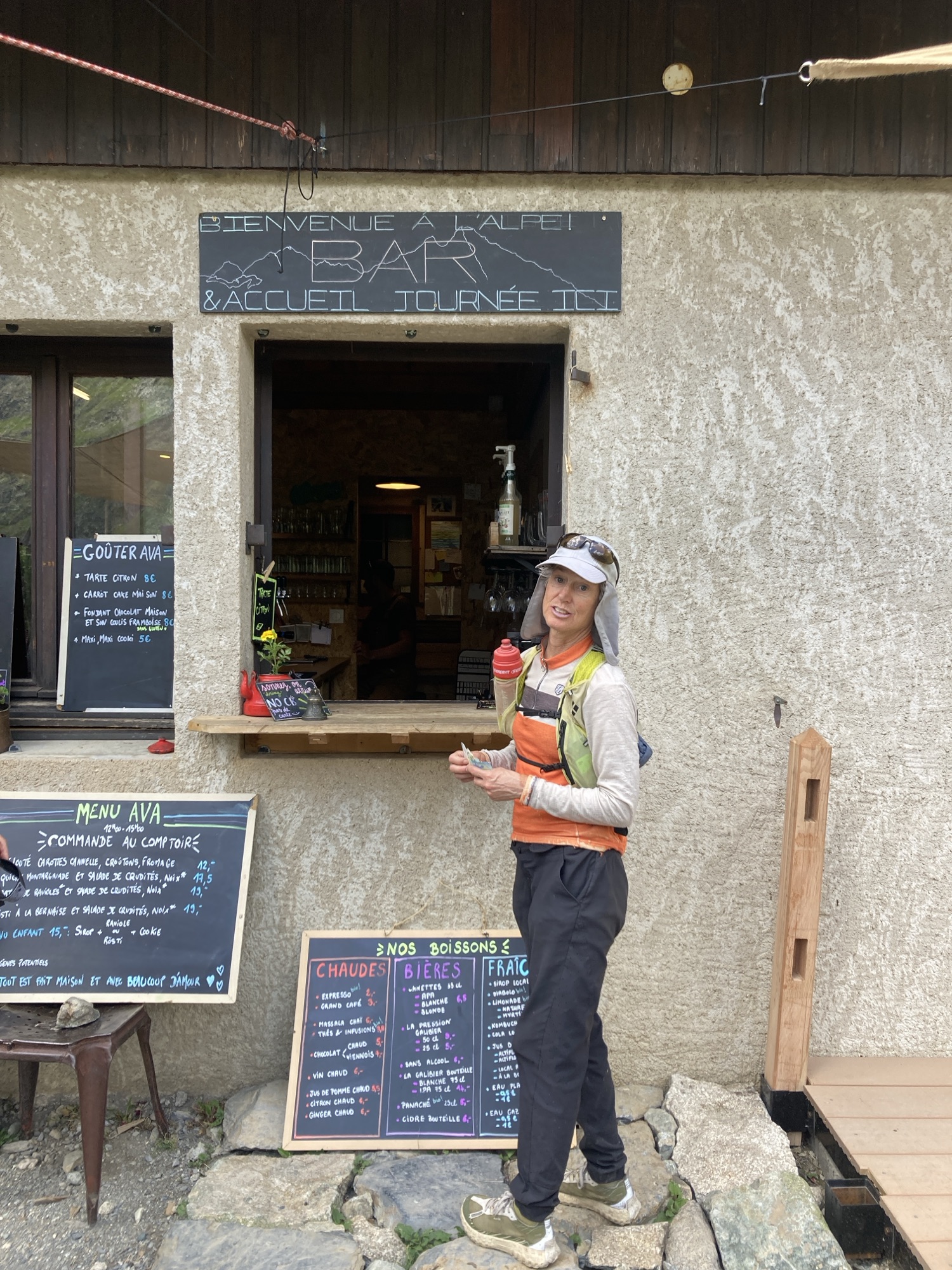
Below that is the very nice, and very mellow ski resort town of Valloire:
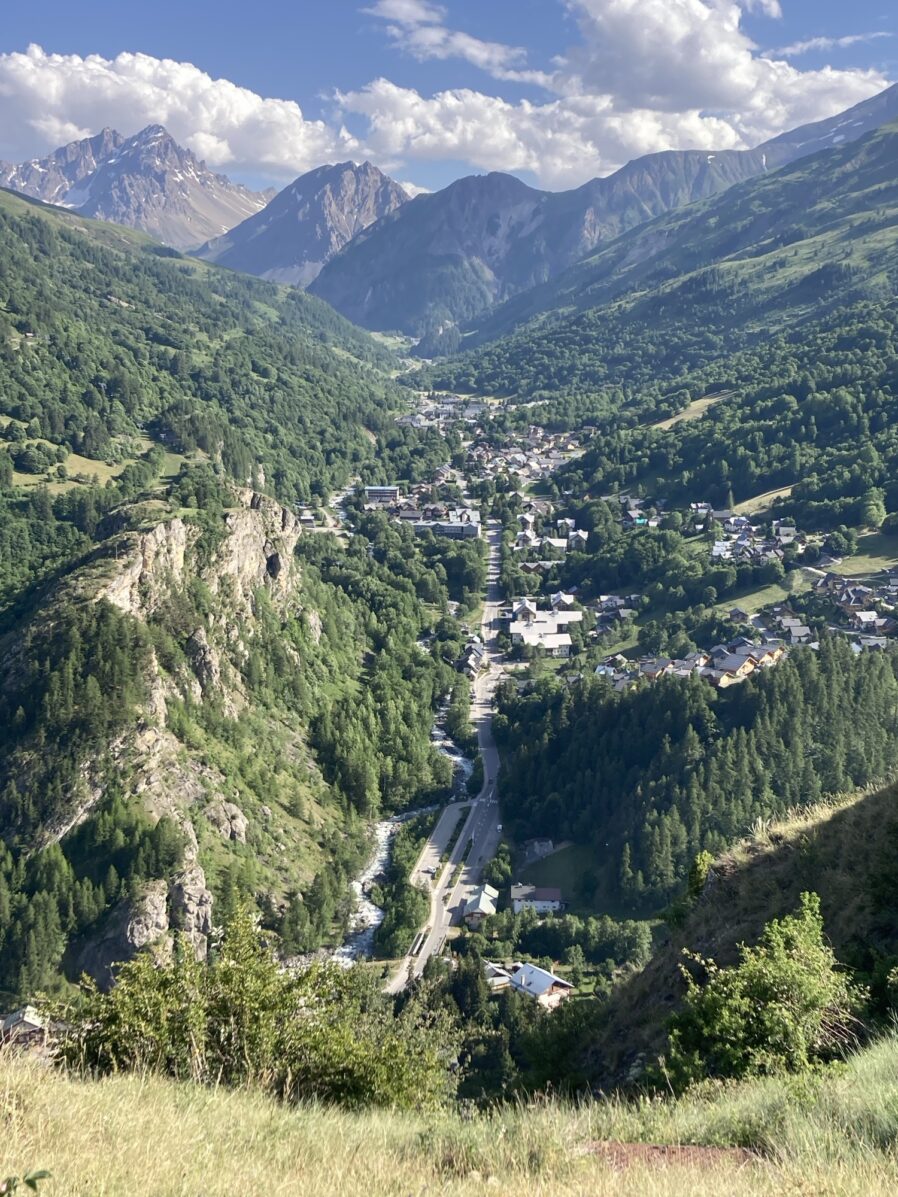
where there’s a fun via ferrata route literally on the edge of town:
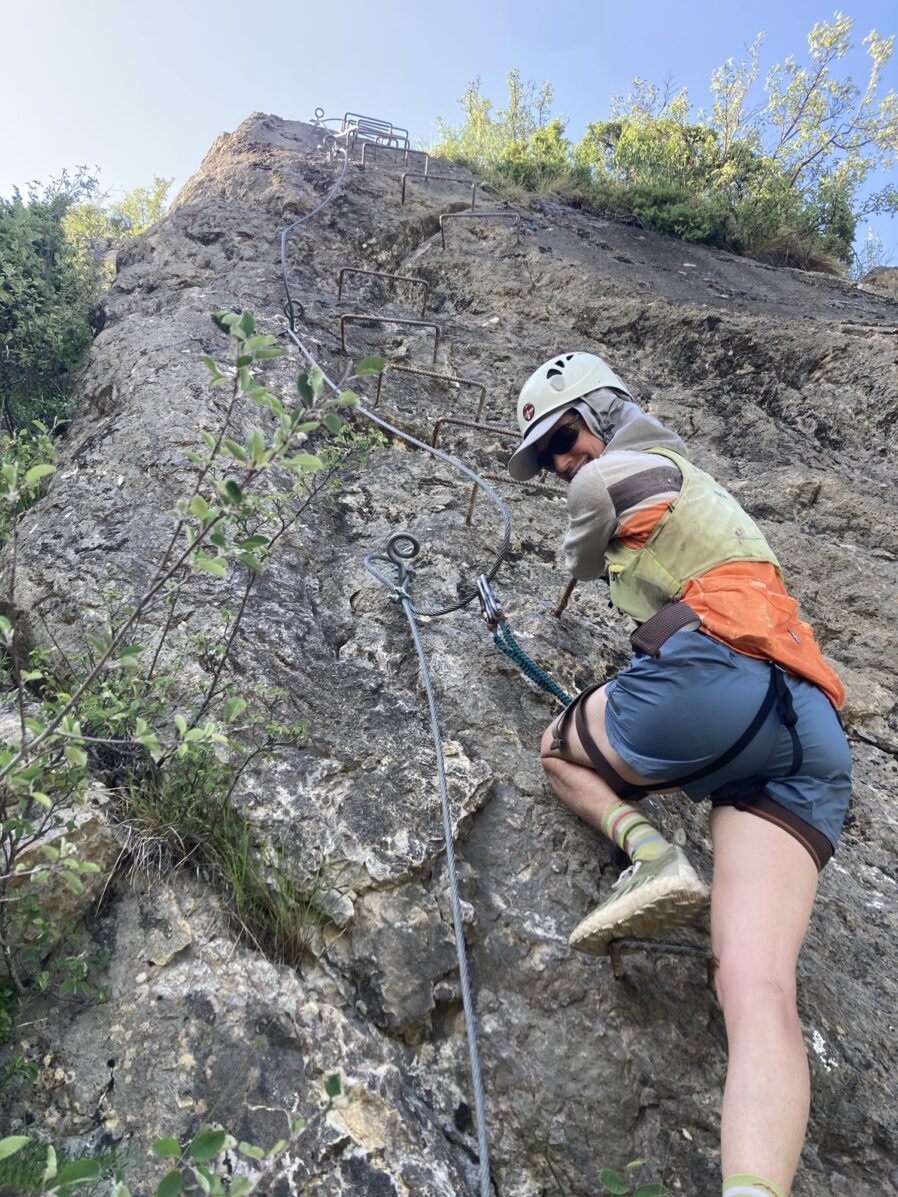
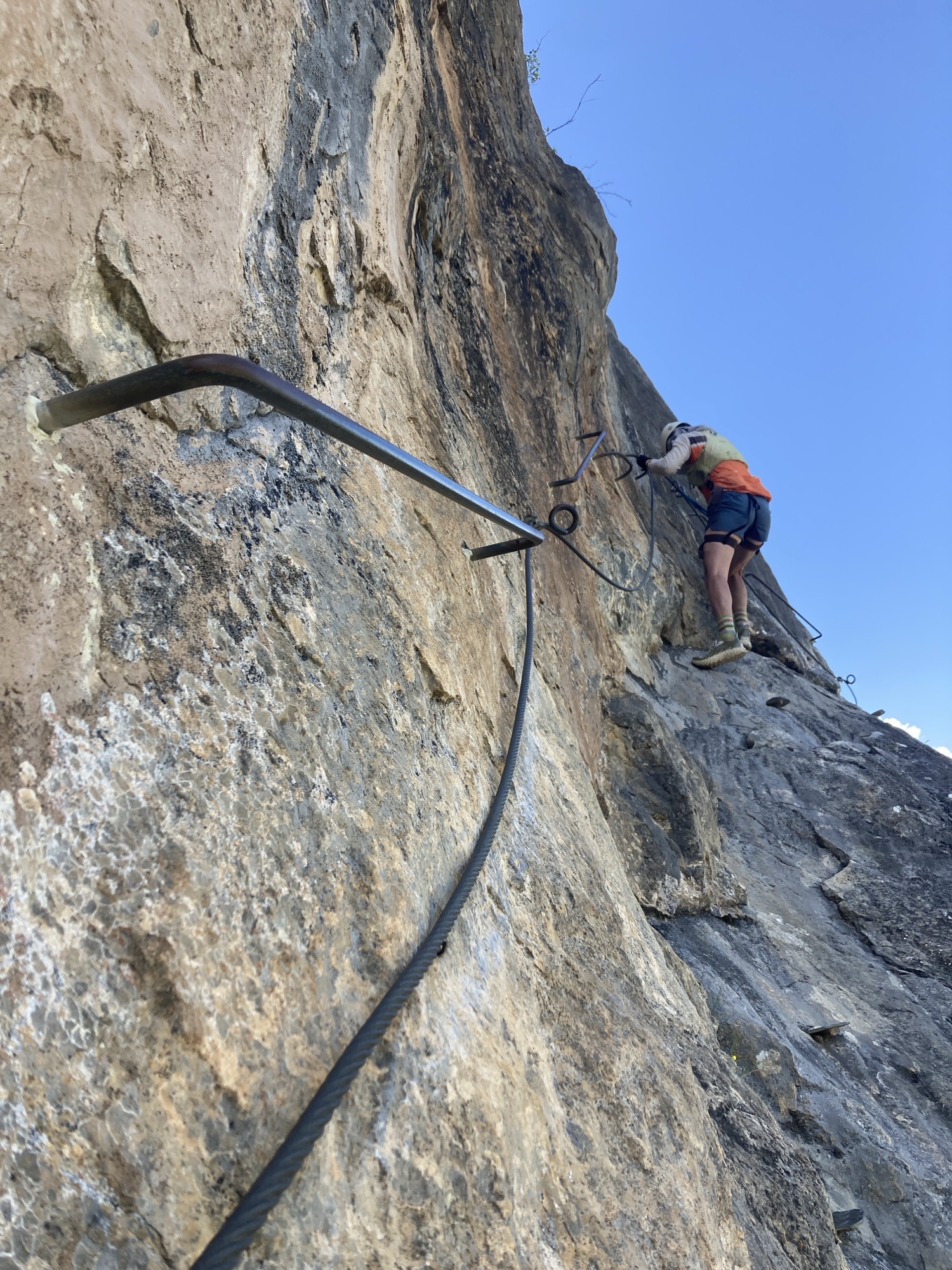
from Valloire it’s a small climb to the col du Telegraph then a super long, fun, twisty descent through the woods down to the valley bottom.
In this year’s Tour the race organizers decided to go big on the “Queen Stage” (most difficult) of the tour, and on July 25 stage 20 – they are making the 19 mile climb of the Telegraph/Galibier as the 2nd climb of the day, then finishing up the nearby Col De Sarenne for a total of over 18,000 feet of vertical, which seems extraordinary, even by TdF standards. And if the July weather is anything like we experienced this past week, the heat will be a huge factor since they typically run the stages through the middle of the day.
All that being said, the glorification of the Galibier is – like a lot of known, famous things around the world – may be a bit much? We went over a slew of passes that were just as “good” with long great climbs, swoopy descents, huge scenery:
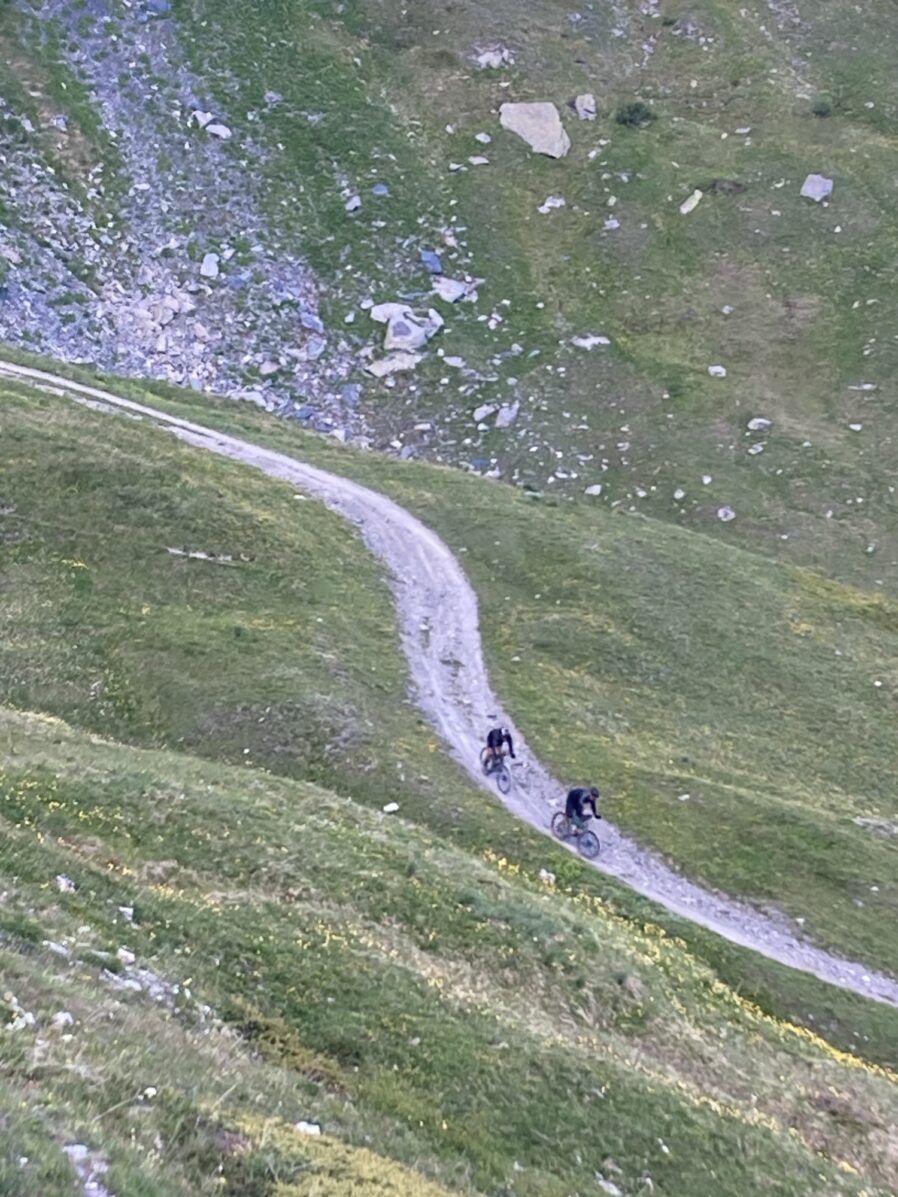
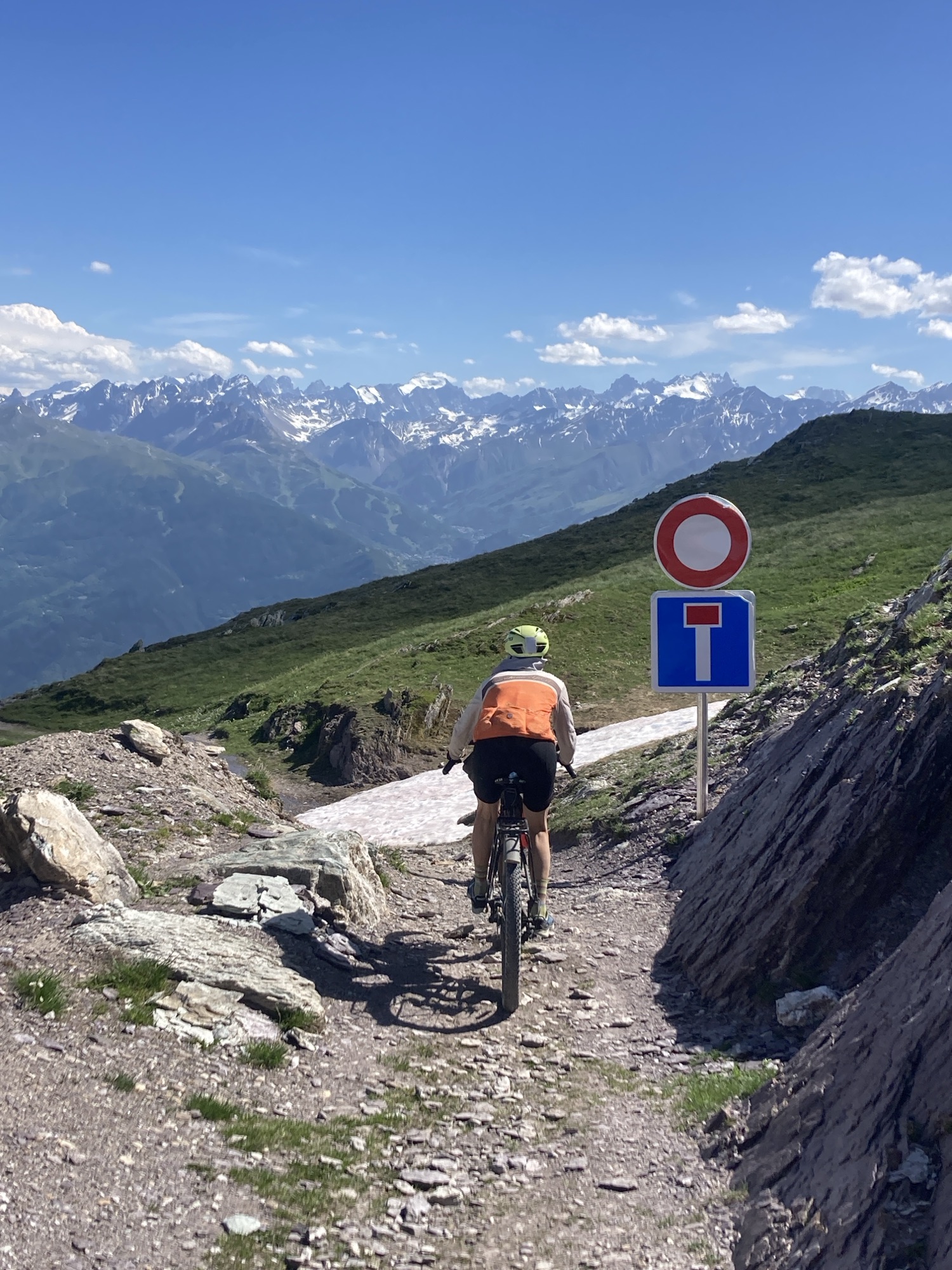
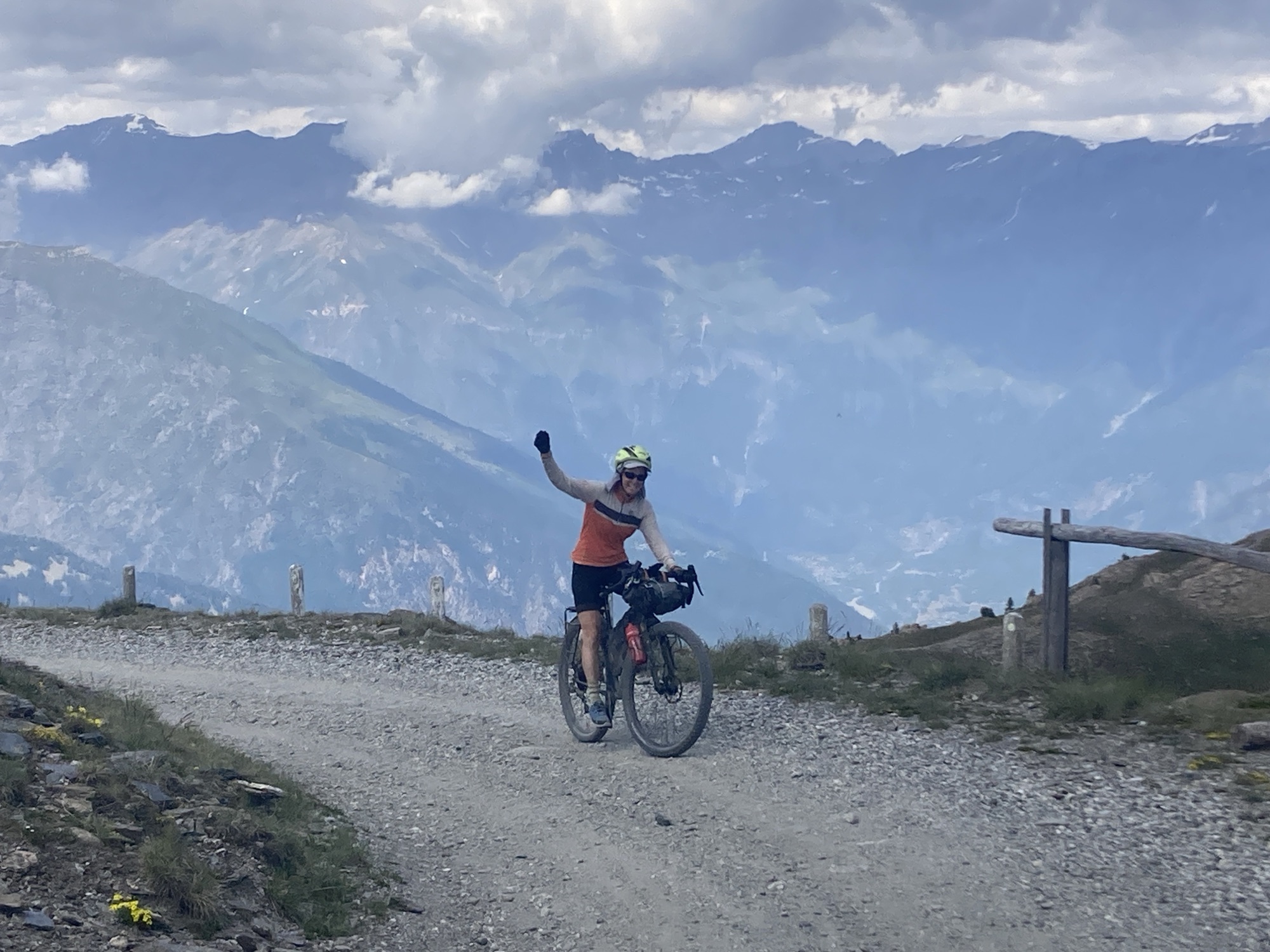
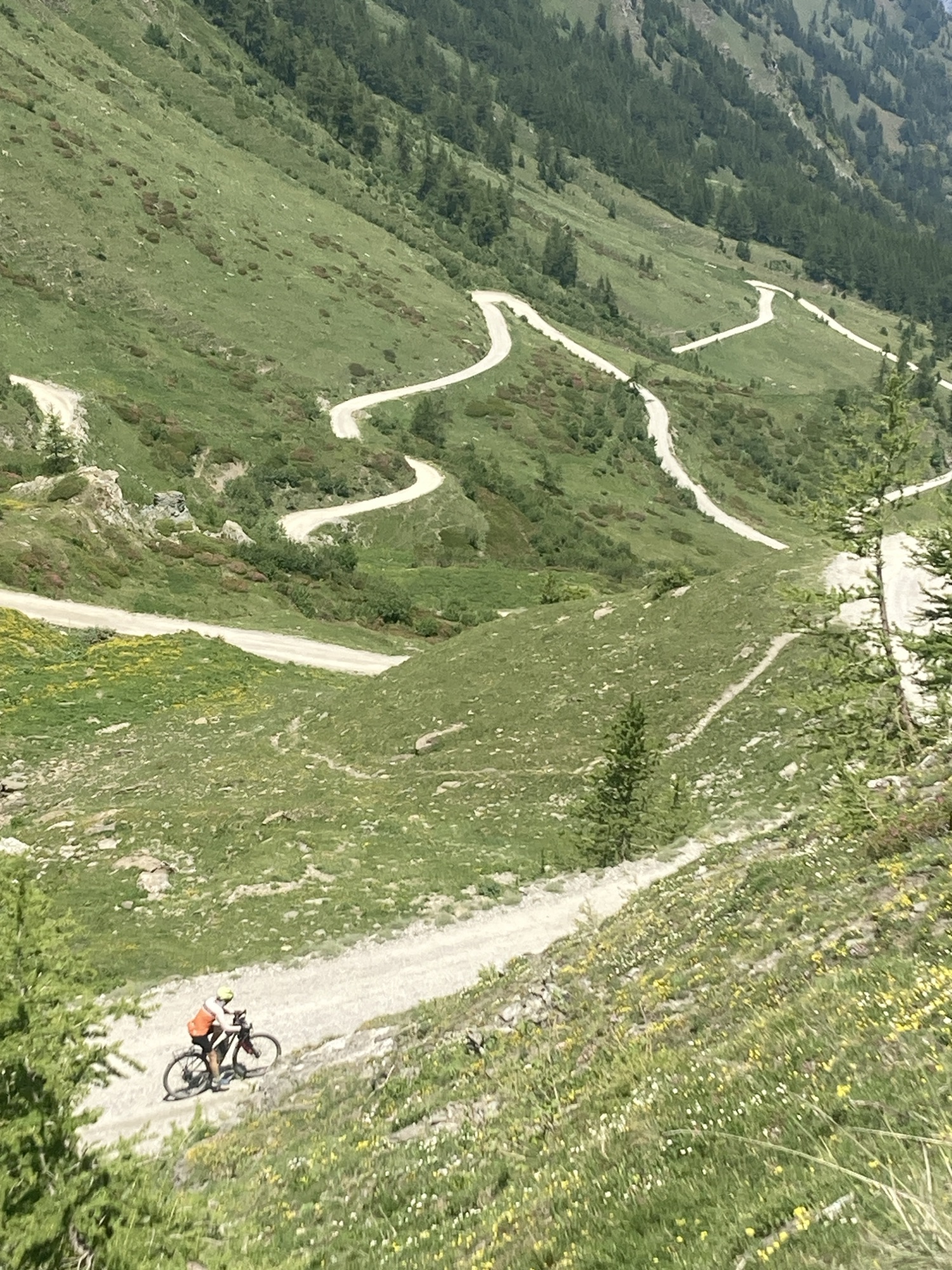
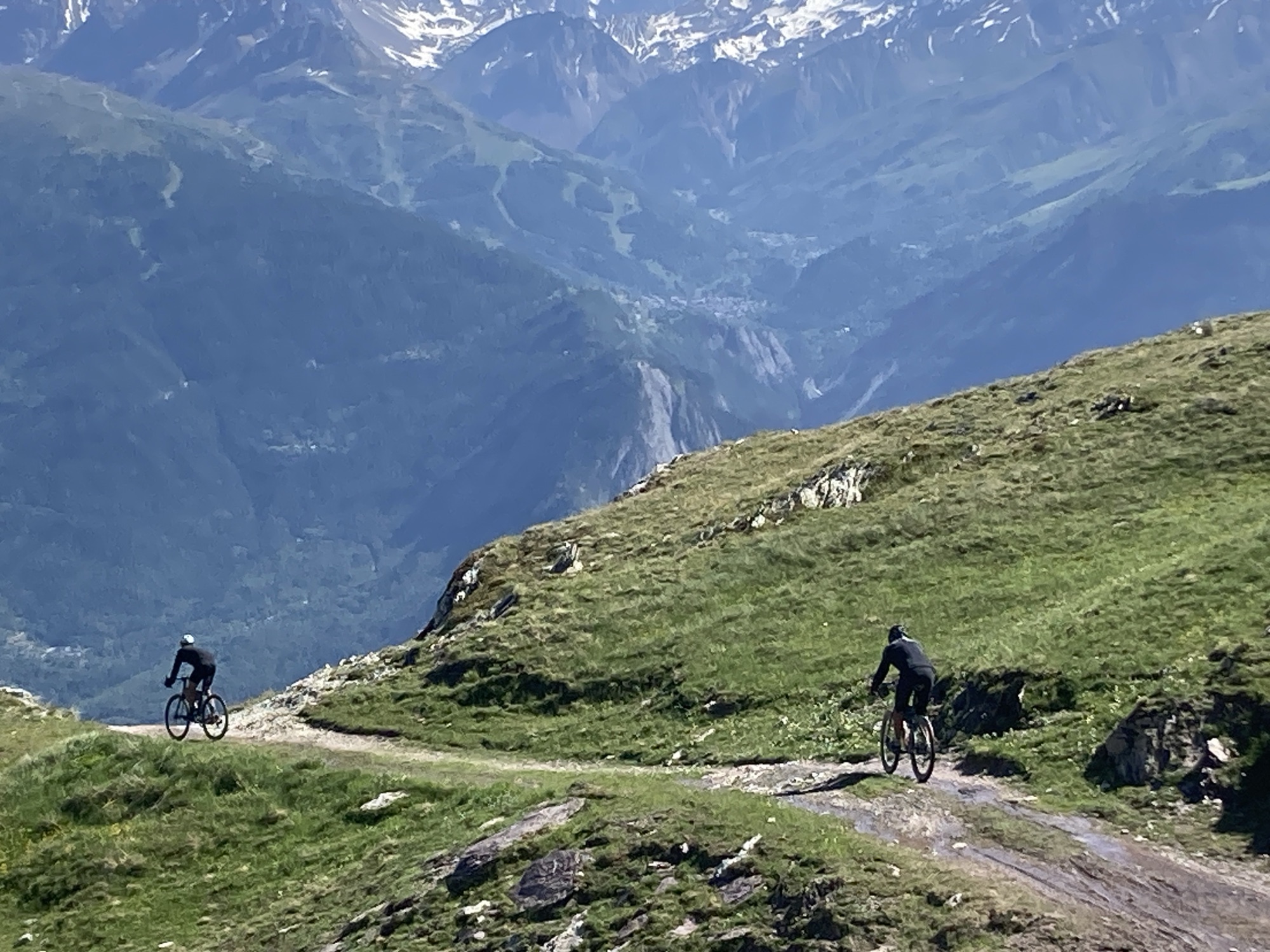
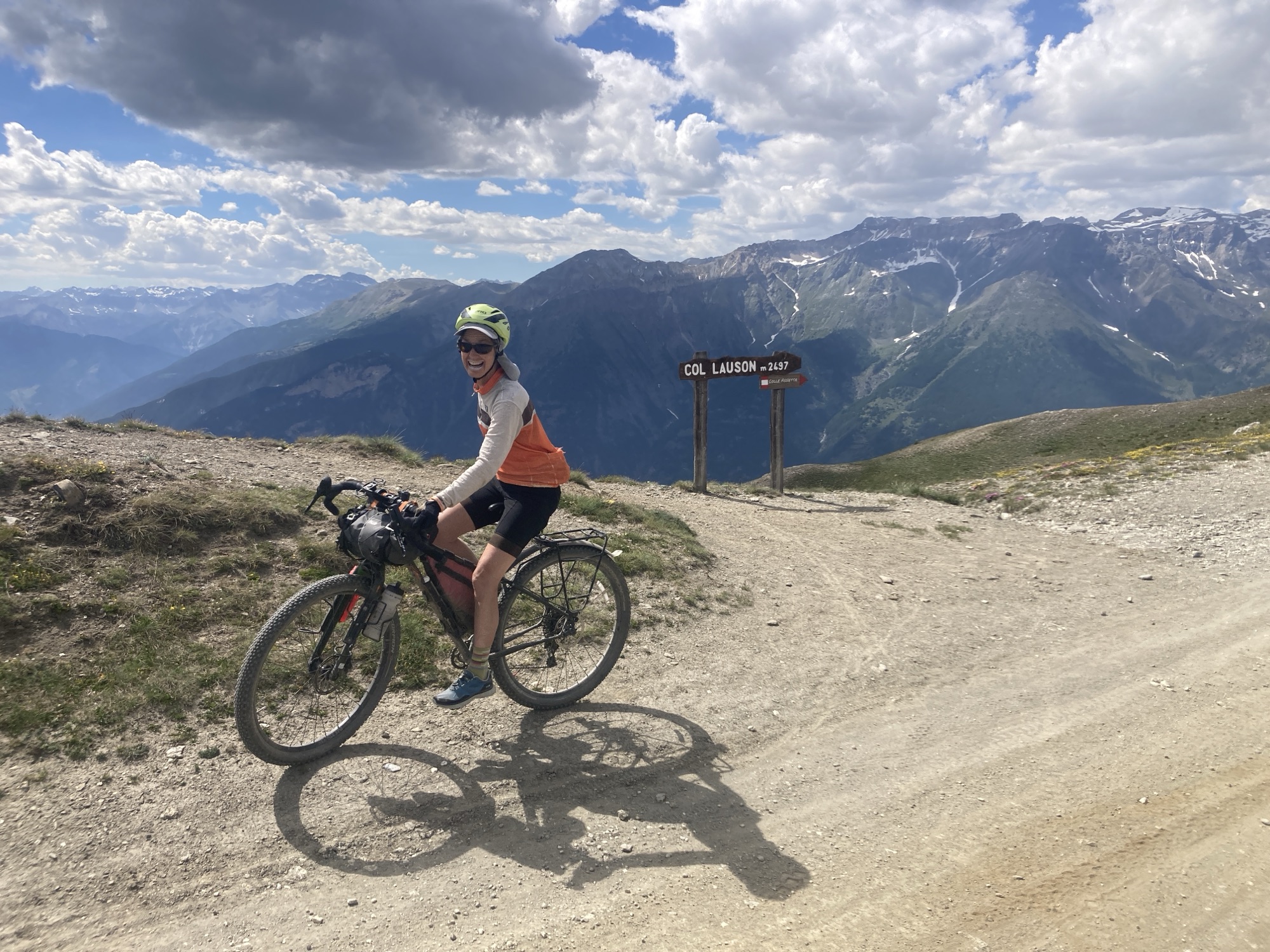
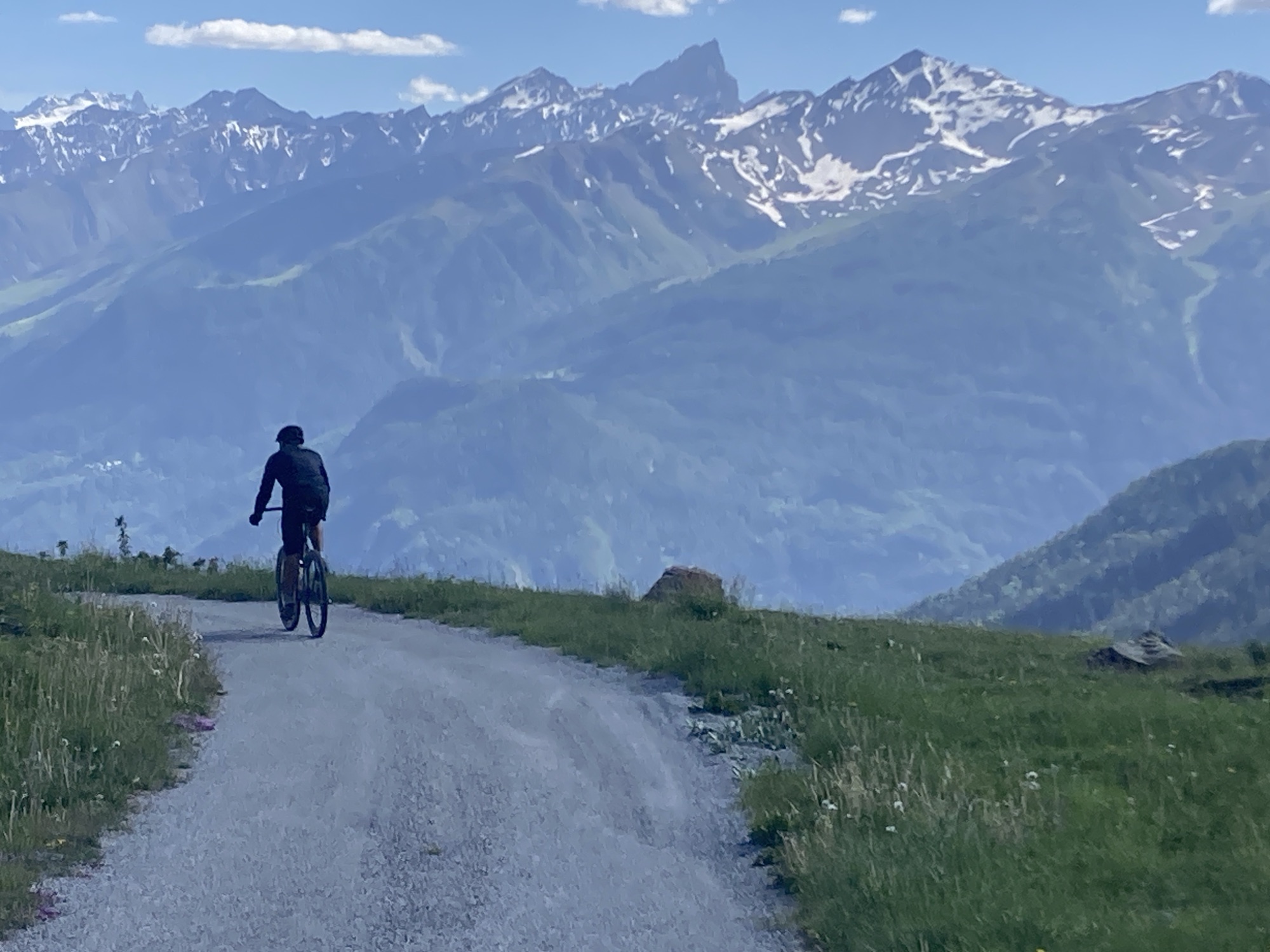
and had virtually no traffic, or at least a fraction of the scary motos/Porsches/etc that raged up them.
That said, I was excited for the opportunity to finally see and do the mighty Galibier myself, and happy that not only did it live up to my expectations but also had the added bonus of a quiet gravel climb and coupla fabulous hikes; perhaps not what you’ll see on July 25 but something to look forward to and plan for when you hopefully go yourself!
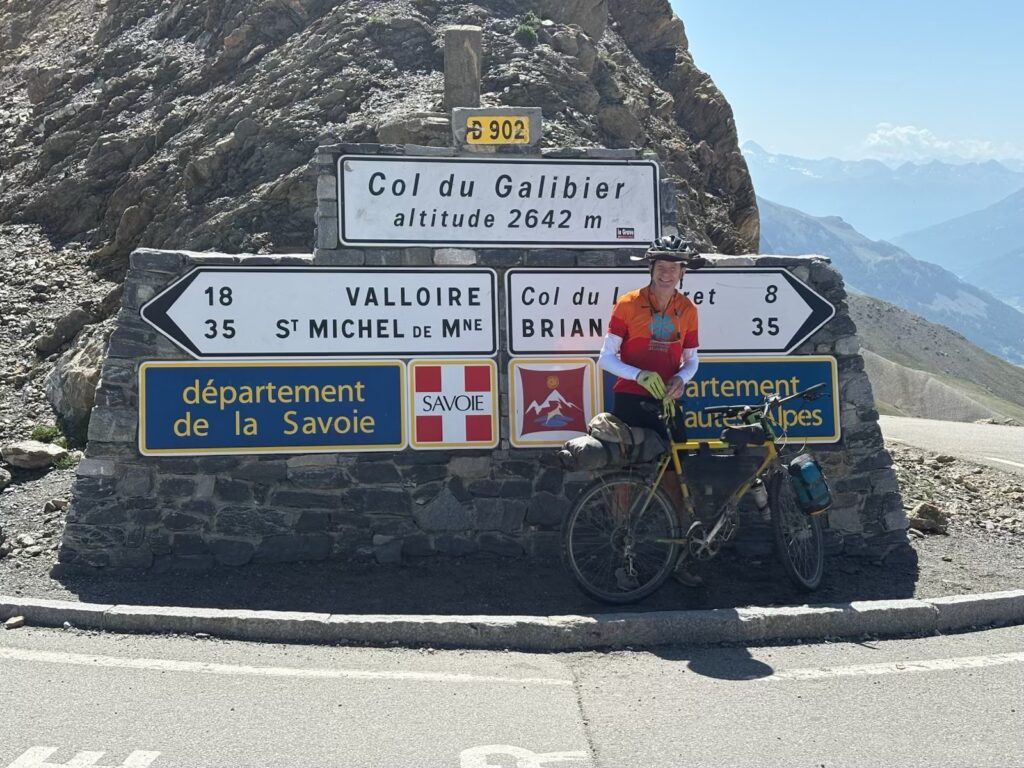
Wow!
Tom,
As usual an excellent blog post that I somehow overlooked until now. Briancon is a fantastic place with some outstanding class III to V rivers in the area. Accumulated over summer kayaking trips with our university canoe club I must have spent several weeks in and around Briancon for the boating. One year I took our shuttle bike off the trailer and rode down from the Galibier to the Briancon valley. All those memories are kind of fuzzy now being so far in the past. I need to get back there again one day. In fact for my 50th birthday I once had a grand plan of combining a boating and biking trip in that region. As it happens I ended up just having people over for drinks on that 50th birthday.