In 2022 Ashley and I had the good oportunity to do a pretty extensive bike tour through Europe: we started in Scotland for 5 weeks, worked out way through England to the south coast, ferried to France, wiggled our way through the (underrated!) Voge and Jura mountains in NE France to the Chamonix area, then through a bit of Switzerland to Austria, and finished up in Italy. At some point in this trip we met someone who told us about the Hope 1000, a 1000km (600mile) bikepack across Switzerland that was about a 50/50 split between pavement and gravel (with some part of that 50/50 being singletrack) and were impressed by the description: a lot of the famous Swiss mountain scenery, and A LOT of climbing. Something like 10,000 feet every 60 miles; yowza! By the time we realized that it was A Thing that we might want to do we were already tracking a different direction, but we kinda made a soft vow to return and give it a go.
This was the year. We had the time, we were in the neighborhood, and we had 6 weeks of post-ski season riding to get our legs in shape during our tour that took in Italy, Croatia, Slovenia, Austria, Czechia, and Germany. And the timing seemed about right: like Austria (and the US West!) Switzerland had mostly missed out on the good snowstorms that had pummeled the Western Alps, therefore the snow melted out fairly early relative to the typical “season” for the Hope 1000, and even at that the highest elevations of the route only topped out at a pretty modest 6500 feet (“modest” considering that there are 72 peaks in the Alps that are over 4000m/13,000 feet) and the highest elevation passes were in the 2nd half of the trip as well, giving us another week of snowmelt. We took a few days to ride to the start (south of Basel) from Garmisch, Germany (in the Bavarian Alps) after I got some surgery on my ear in Munich, and found ourselves on the shores of Lake Constans, a huge lake that forms a good chunk of the boundary between Germany and Switzerland.
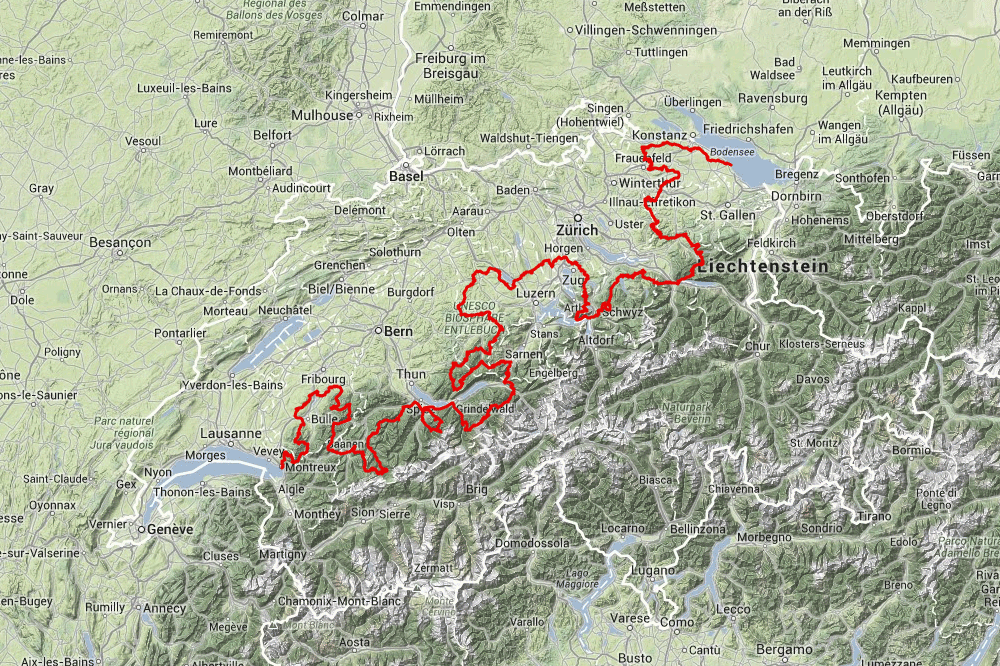
The creator of the route – a guy named Willi – puts on the Hope 1000 race every year, and he goes out prior to check/confirm it (and then does the race himself!) so it was nice to have some good up-to-date details (but, as we later learned, not quite 100% up to date!) He also broke the route up into 11 “sektors” (must be Deutsch!) and was kind enough to send Ashley the separate gps tracks for each sector (which is handy; trying to reload long-routed maps every time bogs your navigation device down, which can be frustrating even in good-coverage-everywhere Europe).
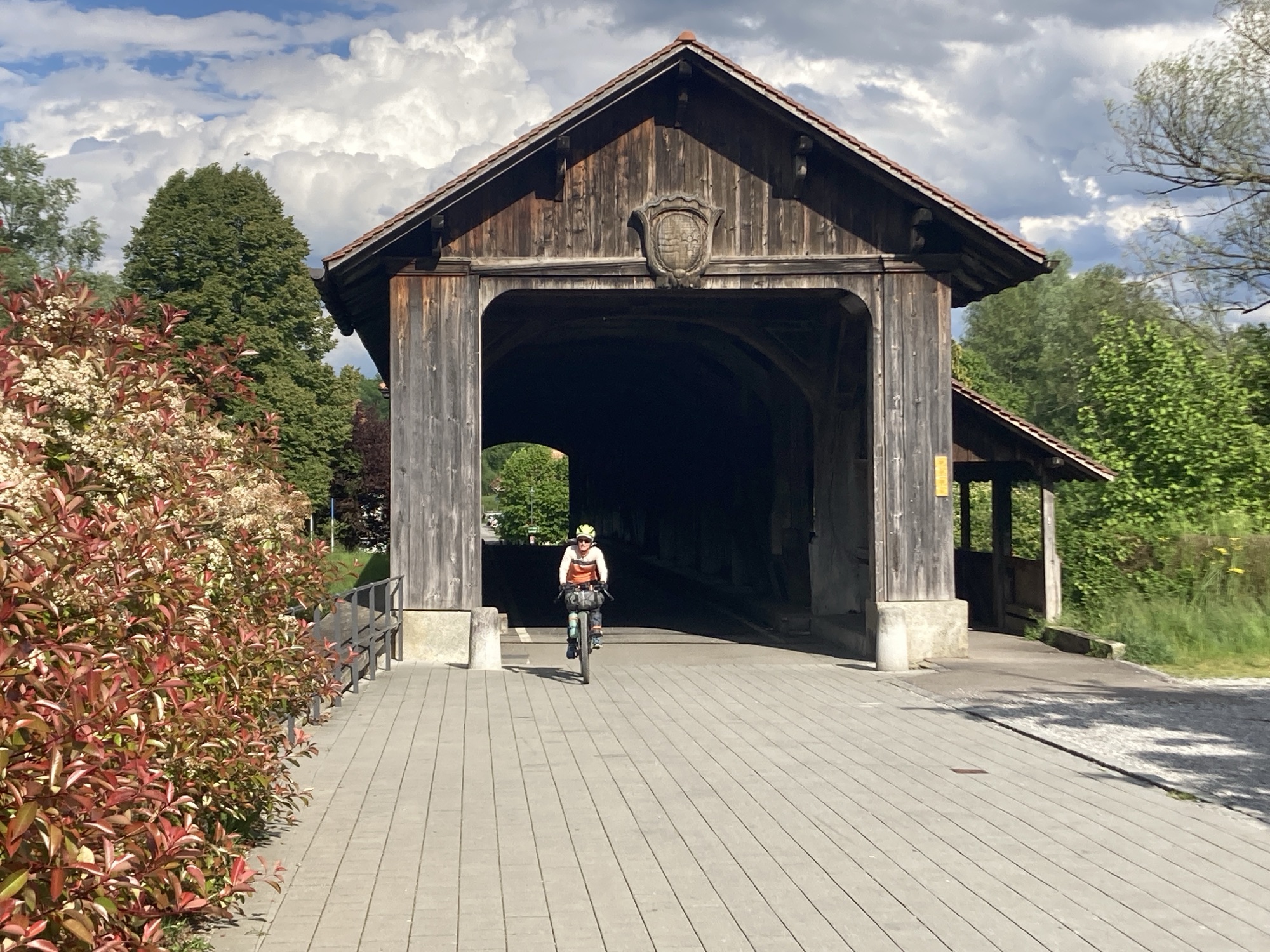
The first day was pretty reminiscent of the Trans-Germany and Romantic Road routes that we had recently done; rolling woods and hills with tiny paved and gravel roads dotted by plenty of quaint villages.


But “rolling” kinda added up; we got in something like 50 miles and 6000 feet of vertical. Generally we have found that many days we do 10% of the mileage in vertical feet: eg. 50 miles and 5000 feet. So the first day was fine, but was still enough to feel it in our legs! And that was just the warmup day, and the rest of the trip’s days were almost going to double that ratio; eek!


As we got closer to the Alps (getting our first glimpses of snowcapped craggy peaks jutting into and above the clouds) the “rolling” hills got bigger; the sub-Alps may be diminutive by comparison to their craggy neighbors, but were now going up and down 3000 foot peaks, and the road and trail builders in these hills didn’t really bother too much with making the grades elegantly 6 or 8 percent; they got steep! We were grinding up and skittering down 12-20% grades all the time, and it was early in the trip where there are a couple of memorably-long hike-a-bikes (ironically, there are more hike-a-bikes in the “easier” terrain than later in the big mountains). And even at that, Willi (and his good compatriot, the legendary bikepacker Lael Wilcox, who just started a planned 78-day ‘round-the-world “tour!”) designed the route specifically go go from east to west to enable more ride-a-bility, which ensured challenging descents as well as climbs.


We had a brief interlude to the very nice city of Lucerne, where I got an appointment with yet another ENT to take out the various things buried in my ear that were left over from the surgery, which gave us a chance to go to the Lucerne transportation museum:

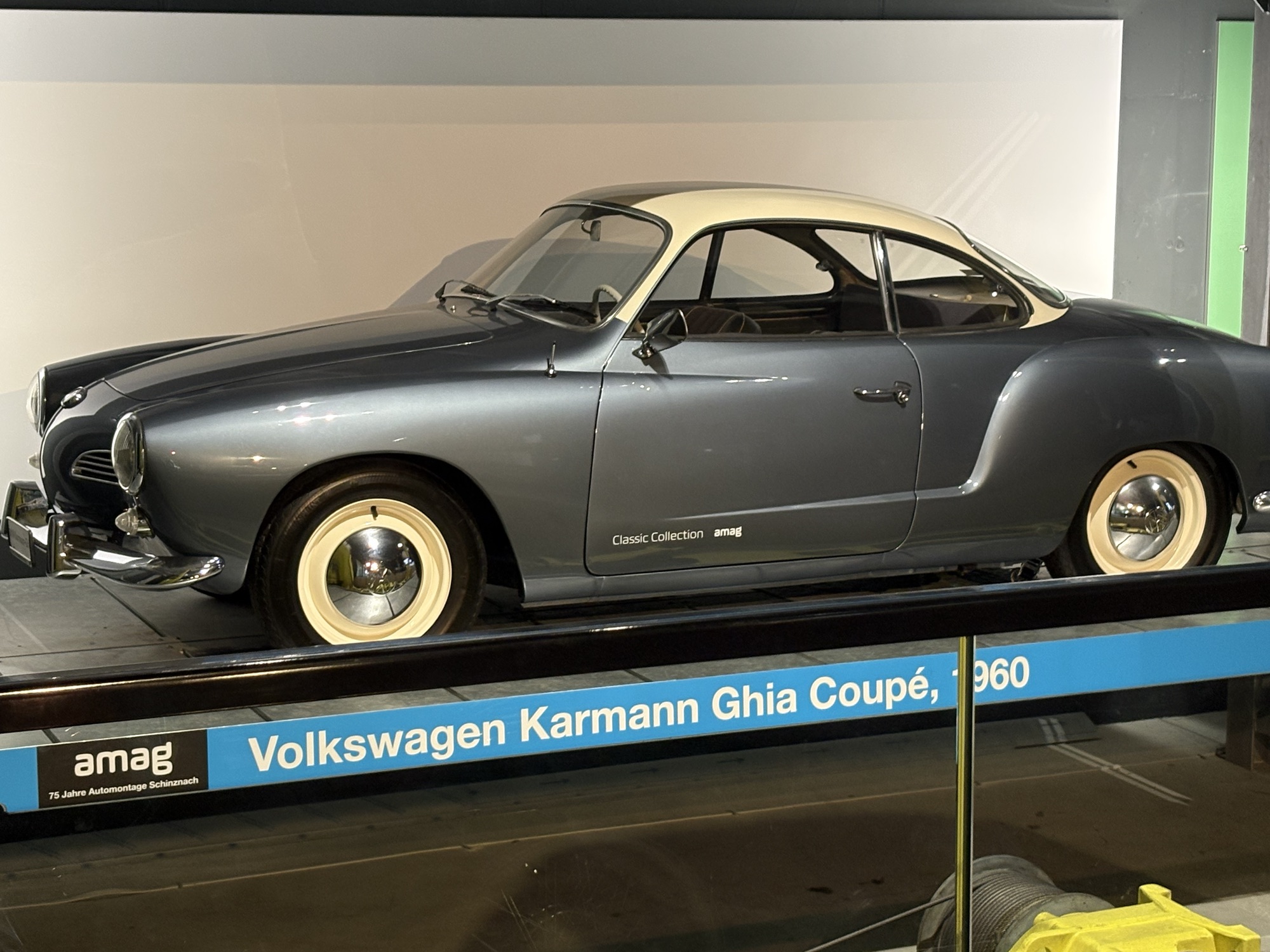


we agreed it was an unusually interesting and well-organized museum – as one might expect in Switzerland, where most things are at least exceptionally well-organized – with great sections on rail (Switzerland – with its lack of coal and lack of wood to create steam – was kind of late to the Euro train game, but once they got electricity-powered trains, were determined to win it, which they invariably did!)
and car, bike, and even a Red Bull-sponsored extreme shit exhibit:

We were able to visit our friends Thomas and Martina in Oberarth, a ways south of Zurich in what I would have to call Switzerland’s Lake District, which has a lot of huge, beautiful natural lakes in addition to their mountains:


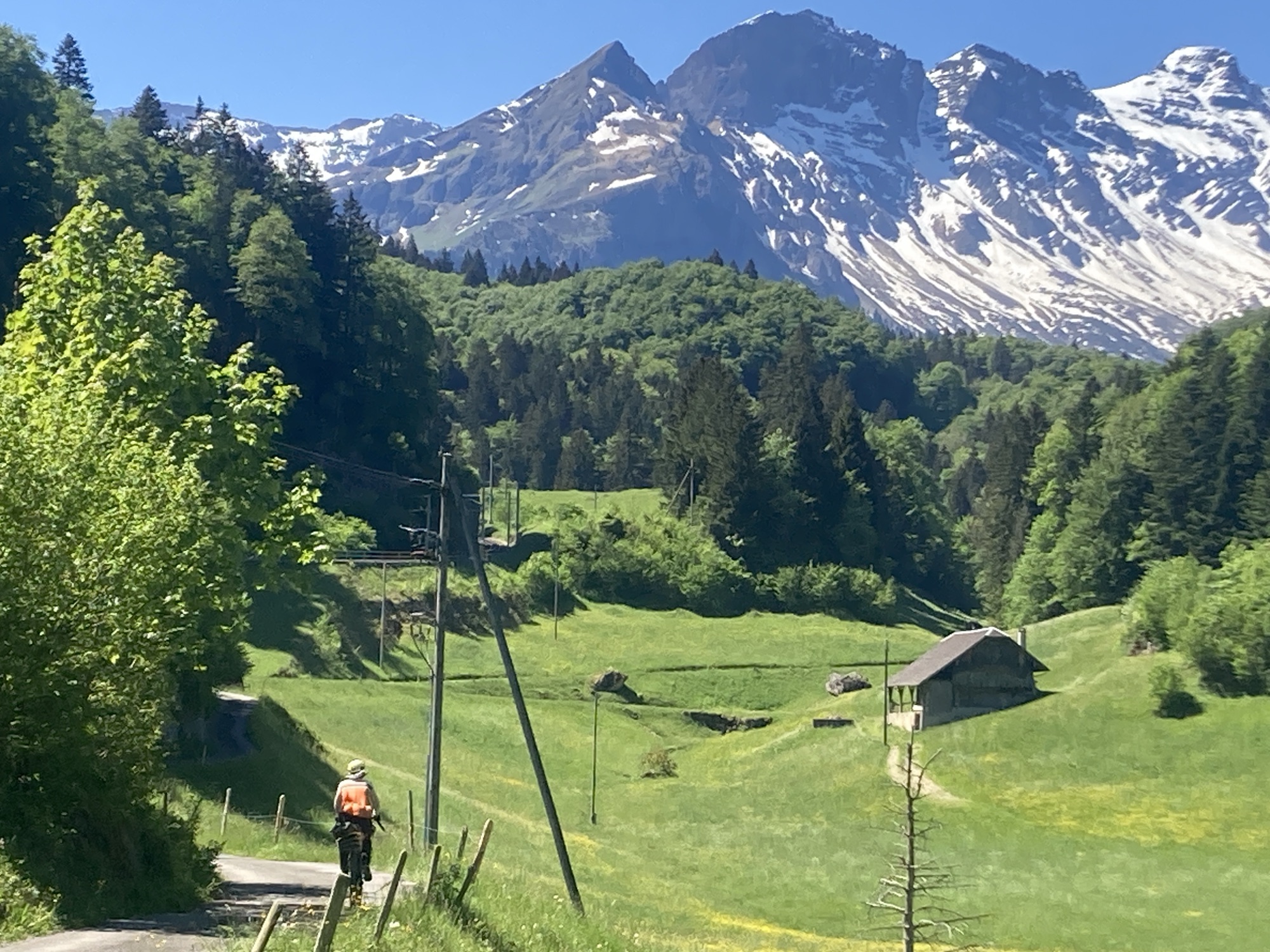
The first real mountains we saw from a distance were some biggies: the Jungfrau, Eiger, and Monch, which are the three iconic mountains that soar above the little hamlet of Grindelwald, which accordingly is one of the biggest tourist destinations in the Alps! The ride there was great, with a car-free road going over the Gross Schediegg pass:


We got good pizza in Grindelwald and a decent night of sleep before going up to the Klein (small) Scheidegg pass, which is the start of the final train that amazingly goes through the Eiger and the Jungfrau to a high pass; it’s iconic for sure, with an equally-impressive price tag: about $200!

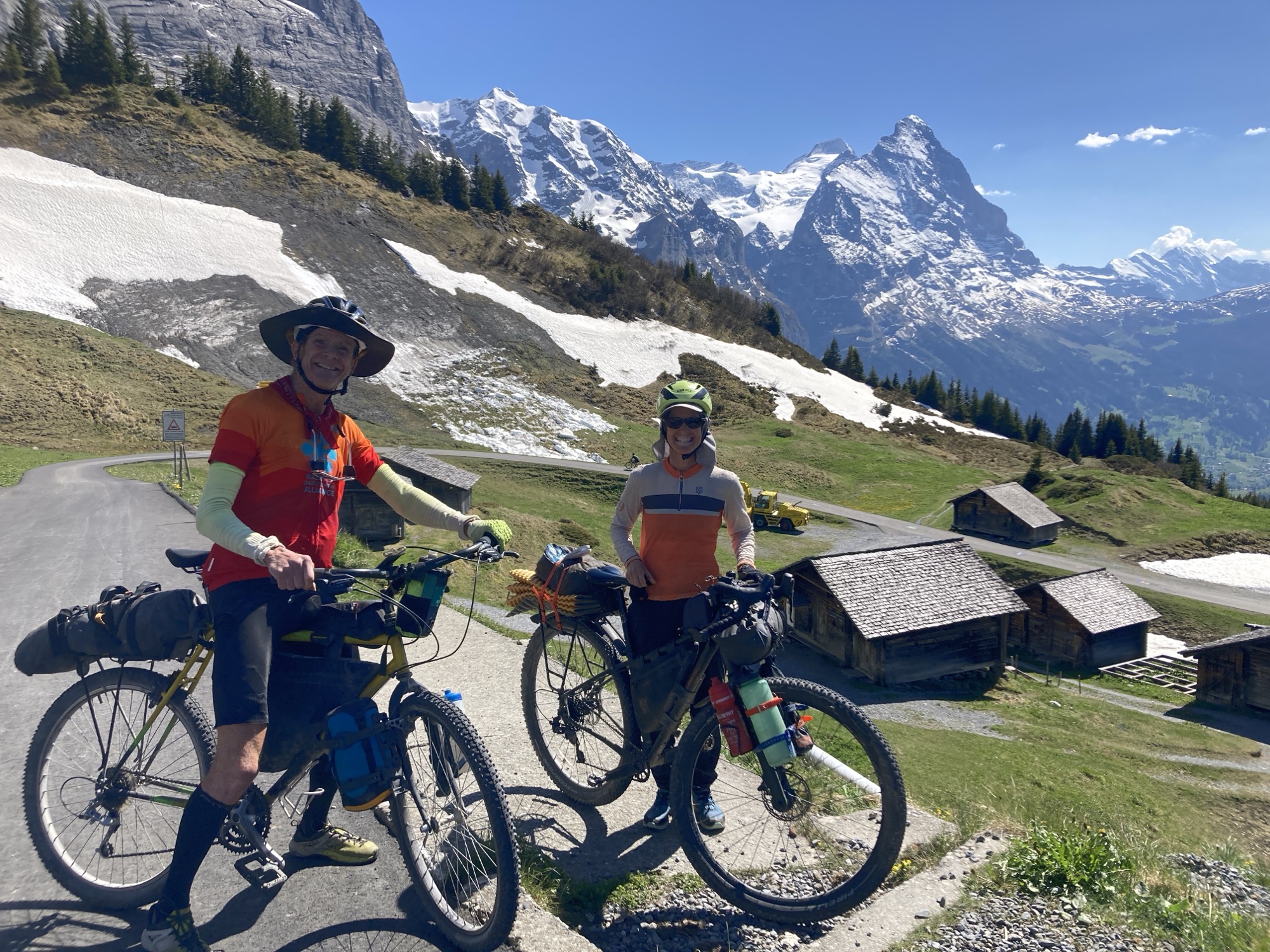

We decided to get our thrills by a high speed descent down the backside into the adjacent Lauterbrunnen valley and to Interlaken; a total descent of…lots of meters!

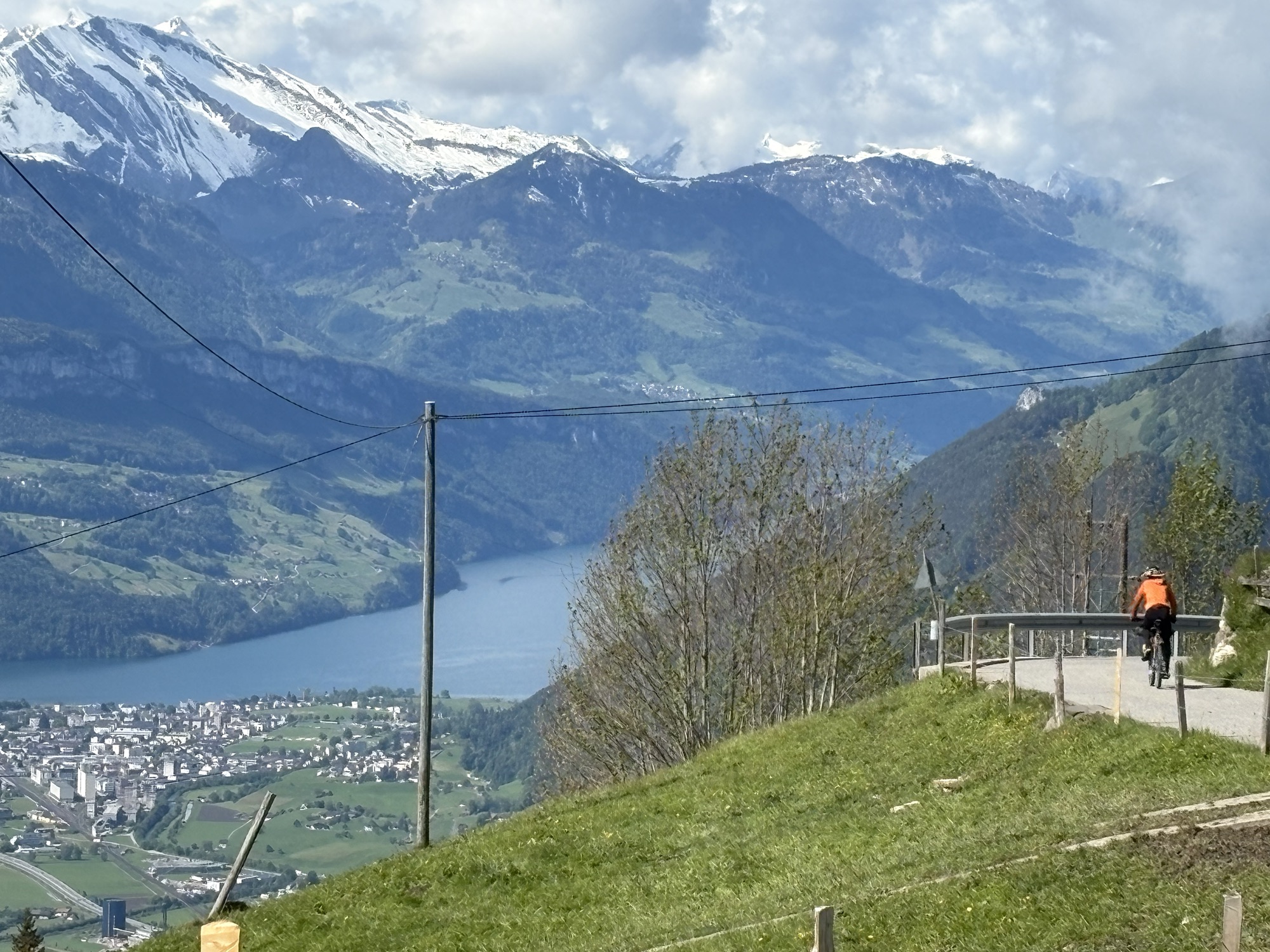
A fun aspect of our travels through Switzerland was reading the book “Swiss Watching”, a fascinating book written by an English bloke who emigrated to Switzerland and was captivated by the quirks of his adopted country.
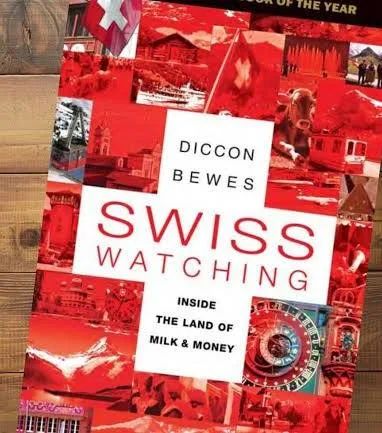
A few salient points:
There are as many as four elections per year, and virtually all laws come about as citizen petitions that – with only 100,000 signatures – get on the ballot for a vote. A true democracy?
There is a parliament, but their task is mostly to see to the implementation of the laws that the people create and vote on. They do assign 7 people to what is essentially the “cabinet.” And the job of being President rotates between those 7 folks so that there’s someone to greet visiting dignitaries and give a rousing speech on their National Day.
Switzerland has been famously neutral: they stayed out of World War I and World War II, despite being surrounded by warring countries and – in WWII – wholly surrounded by the Axis powers. Apparently one of Hitler’s doods had a full plan worked up in the early 1940’s to invade Switzerland and he expected another “Anschluss” (easy annexation ala Austria), but Hitler and others apparently knew that the Swiss had a formidable army, their abilities for mountain warfare was quite strong and there were – and are – plenty of mountains to (literally) execute, and even then the Swiss banking and monetary system was quite strong and could be an asset. So in the midst of all the awful bloodshed and mayhem, Switzerland was able to stay out of the fray.
As it turns out, Switzerland used their unique position to help finance both sides of the war, and it’s long been rumored that the country was a repository for Nazi money and gold stolen from the Jews, which the Allies didn’t appreciate. But not being dummies…..Switzerland also helped finance the Allies!
After the war and the ensuing Cold War, Switzerland decided it needed to ramp up its military yet again to maintain their neutrality, so they built hundreds of super-fortified,high tech (for the era) bunkers absolutely stuffed with ammunition. These were kept secret unitl the 1990’s after the fall of the Soviet Union and the wall, and we got a tour of one that was pretty amazing. For a neutral country, they were clearly ready to be bellicose!
Still today, military service is (almost) mandatory for young males; 18 months, and there’s a bit of the US National Guard deal where they periodically have to go in for a quick refresh or in an emergency. And they all get to keep their guns for….The Future. And the guards at the Vatican in the goofy clown suits:

are Swiss military, and not just military, but they are the Top Gun Seals Ranger doods of the Swiss Military. A lot of training to stand absolutely still at the gates of the Vatican for a coupla hours a day…..
Switzerland is not in the EU, but is a player in the United Nations, and is the host country for the WTO, WHO, and European Trade Union, among others.
Some important Swiss contributions to society: they invented cellophane, Velcro, and LSD, aluminum foil, the electric toothbrush (again, taking advantage of the newfangled electricity back in the day), were the first to add milk to chocolate (to make it go farther and make it creamier with their cowbell-sweetened milk), and of course knives. Okay, knives came much earlier, but not Swiss Army knives! A guy named Elsner came up with the idea and patented it in the 1890’s, and they got popular in the US in the 1940’s when US GI’s came home from the war with them. Yes, corkscrews were an original implement for thirsty Swiss soldiers, and the parent company (Victorinox) still makes 28,000 of them per day, and get their customers going early; here’s a great passage from the book:
“the strangest member of the Victorinox family is the one aimed at children. Whereas in other countries kids have my first bike, my first Sony or my first Little Pony, Switzerland gives its children My First Victorinox. It comes in red or blue with two tools: a large blade and an all-purpose affair that opens bottles or cans, strips wire and drives screws. Admittedly the blade has a rounded tip rather than a point, but it’s still rather disconcerting to see two wholesome children on the box proudly displaying their first potentially lethal weapons. Then again, Swiss children are far too sensible to do anything silly with their penknives.”
And while they didn’t invent clocks and watches, they are the masters; the country is run top to bottom very punctually, the average price of a watch is over $600, and they export something like $25B worth of watches each year! The Red Cross also was Swiss-born; a guy started it and eventually got kinda forgotten until he later was awarded the first-ever Nobel Peace Prize, but though he was practically homeless, he gave the substantial financial award to people who couldn’t afford health care.
A fun book for anyone interested in Switzerland.
But back to the Hope1000…… As much climbing as we felt like we had done early in the trip – and it felt like a lot – the 2nd half was purported to increase th climbing by a notable amount. Oy! When we had gone for a ride in the Bavarian Alps with our new German friend Chris he told us at the start of the day that it was going to be a two-hour climb it sounded like a lot, but as we ground through Switzerland the two-hour climb became the standard, not the exception.
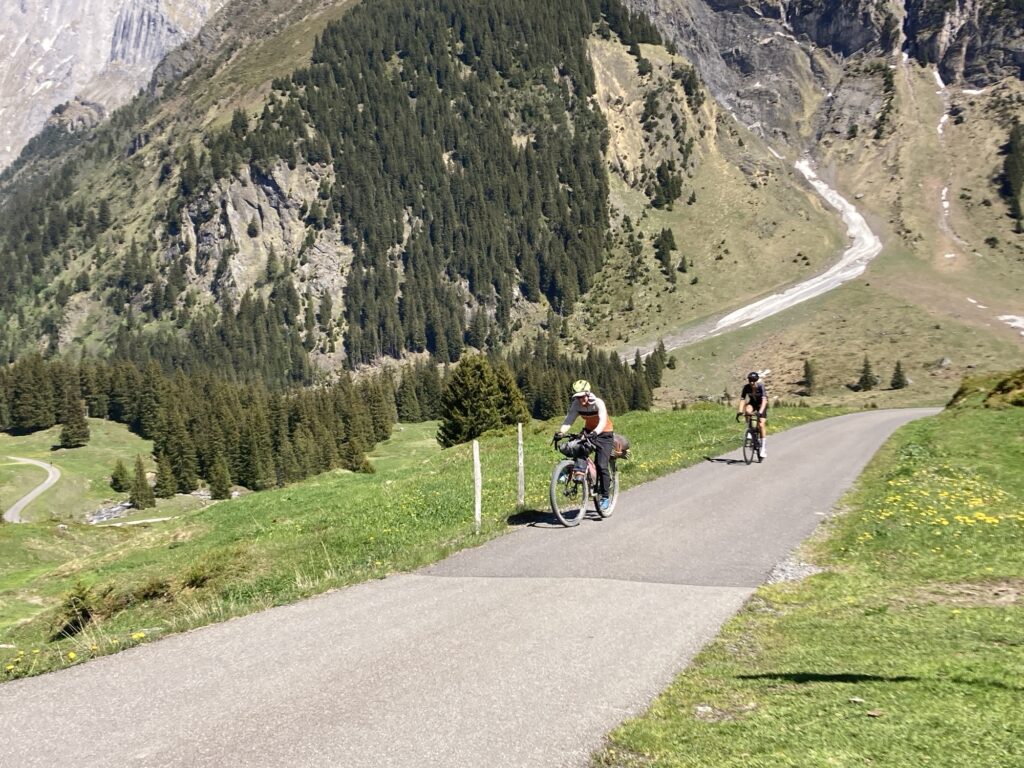


But the route master(s) were amazing; we stayed almost exclusively on one-lane roads (some paved, some gravel tracks) and it pretty much felt like we were on bike lanes that were sometimes used by cars. And along with the two hour climbs came the (much faster!) super fun, super long descents from ridges and passes down into the deep valleys.
I had the realization that the Alps are as much about deep, dramatic valleys as they are about the mountains that soar above them.
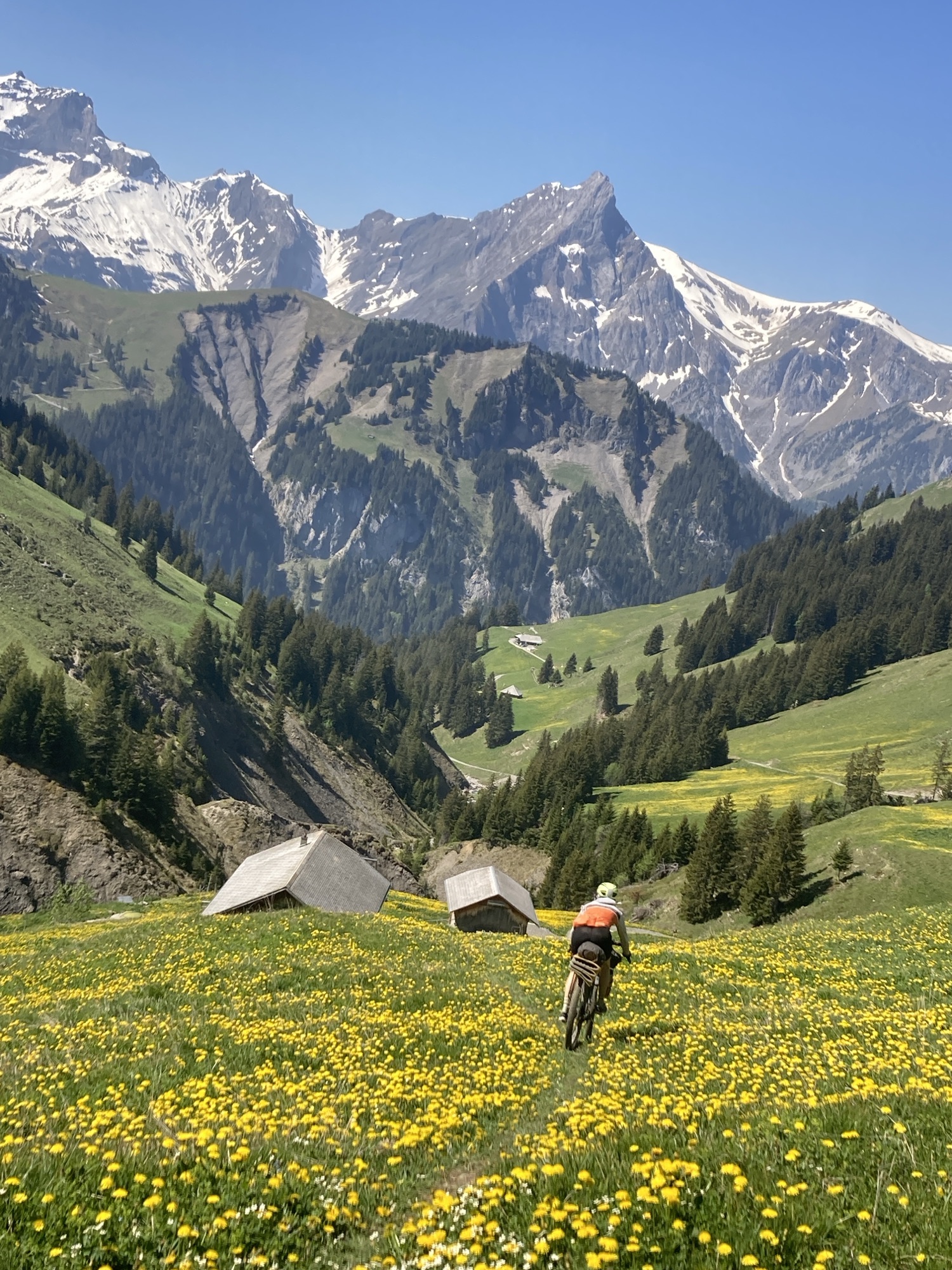

We did get stymied on the route a couple of times: in one memorable section we climbed a few thousand feet up to the top of a ski resort on small roads then transitioned to fun singletrack:


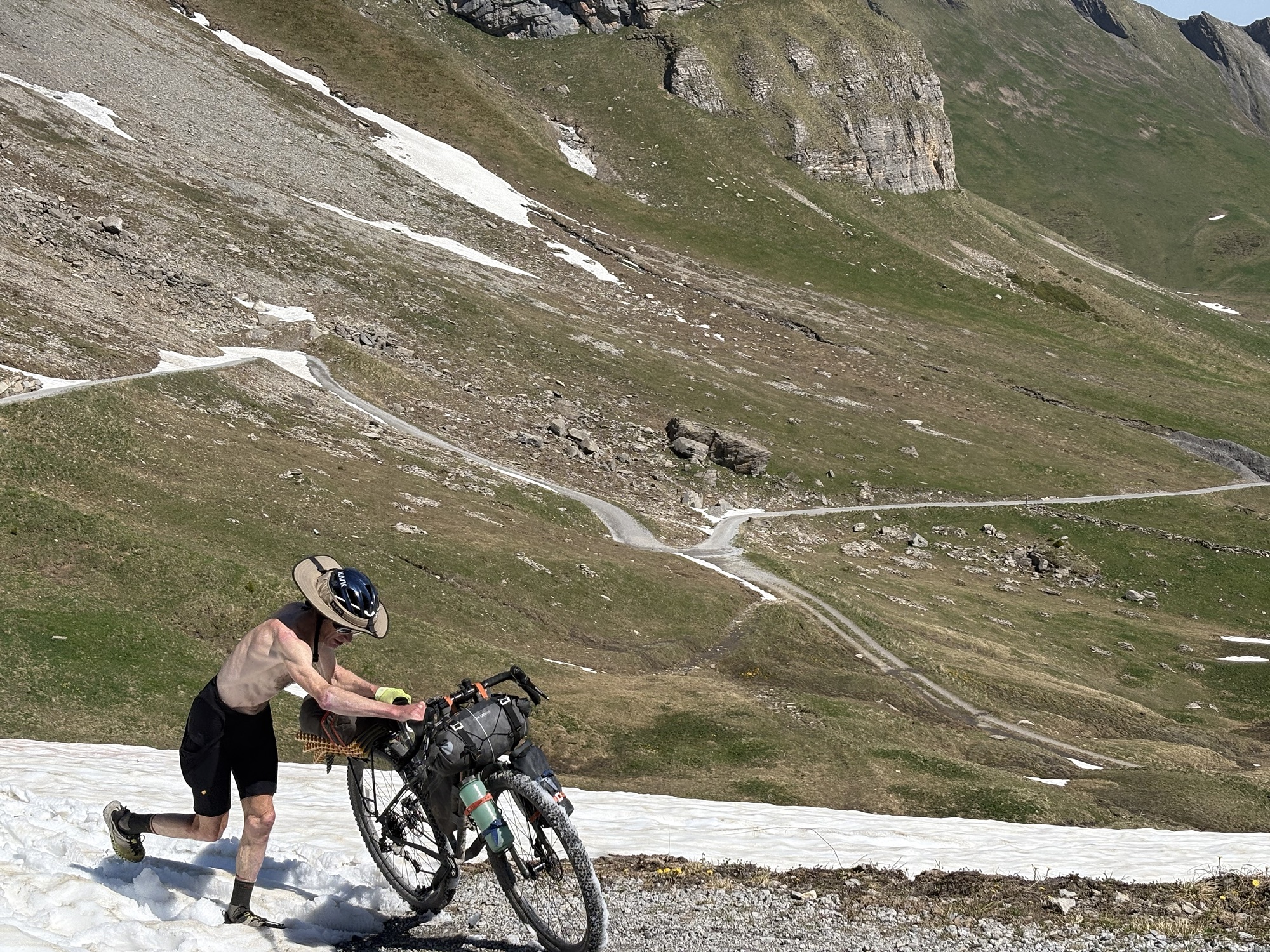
but within a few hundred feet of the ridge the trail traversed a north facing series of chutes off a gnarly ridge that were still full of snow. We hiked across a couple of them, but a glimpse of the next few hundred meters of many more steep snow-filled chutes made it clear we weren’t making the ridge and the subsequent deliverance into the next valley, despite being so tantalizingly close.

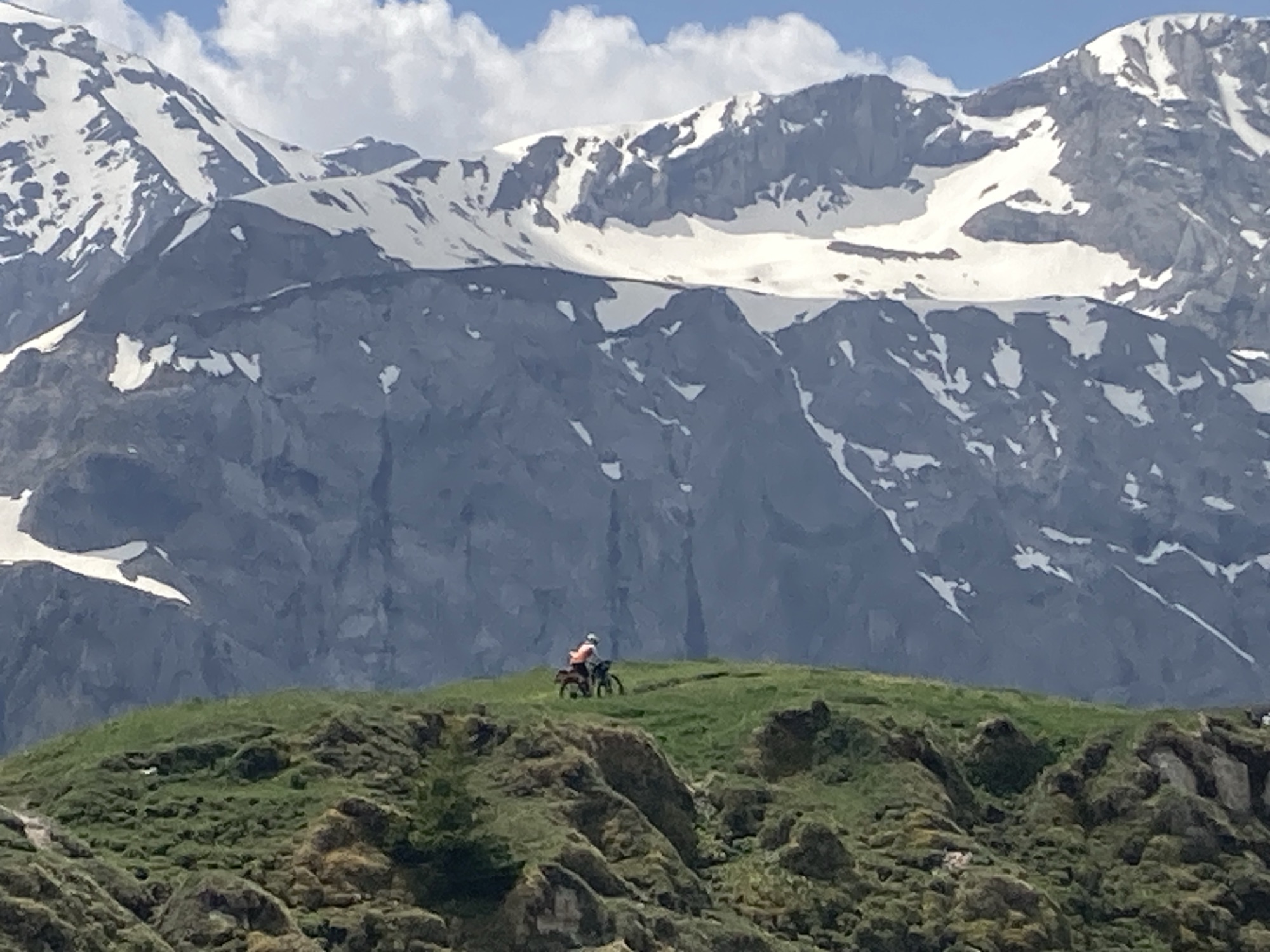

But Ash is the Route Wizardess and was able to figure out not only a loop to get us back down into our original valley,
she figured out a great alternative route to take us downvalley, around, and back up to the route, and as it turned out it went through the fun(ish) tourist town of Gruyere, which is a cool medieval town but is mostly famous for its fondues!


The other detour was a road that was closed for forest work; I was tempted to go through it with a combination of “the better to ask forgiveness” idea and the arrogance/ignorance of an American tourist:

but Ash wisely talked me out of that and again figured out an alternative route that was a little longer but was great.
The Hope 1000 continues to deliver big climbs and descents right to the very end:

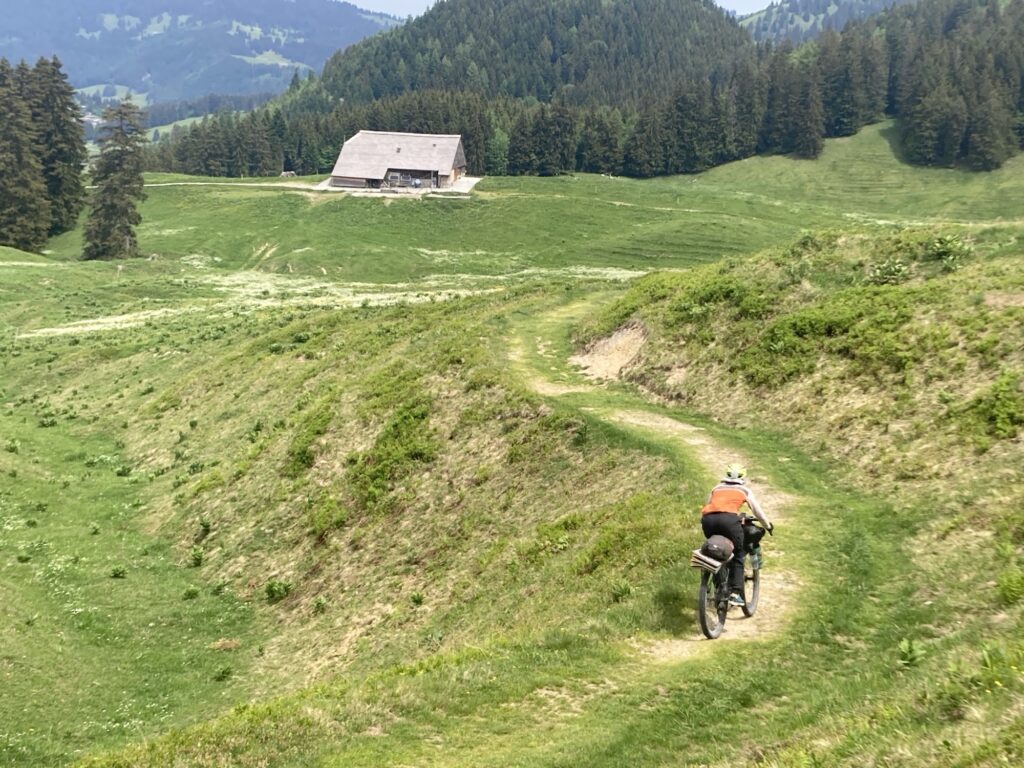
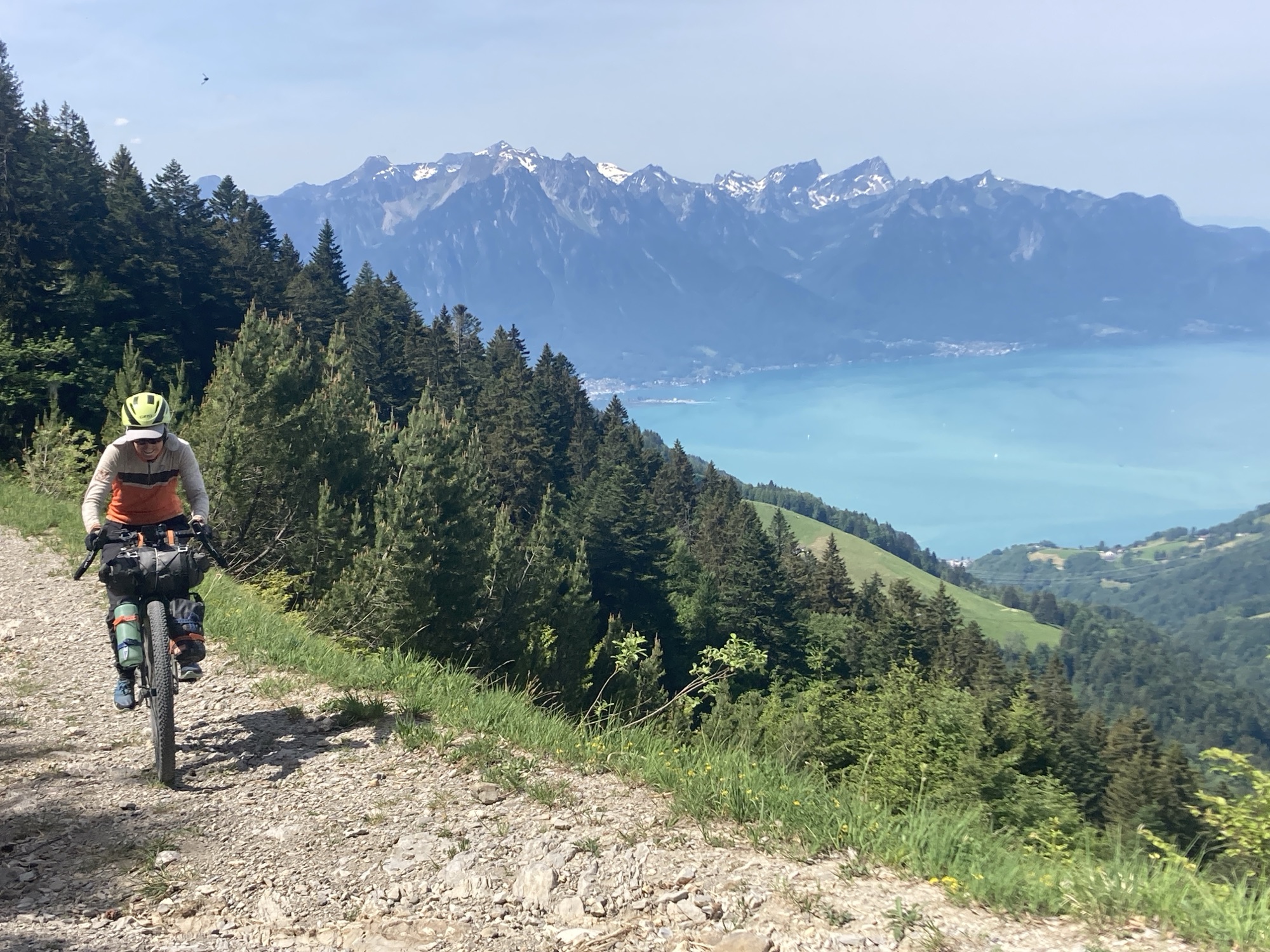
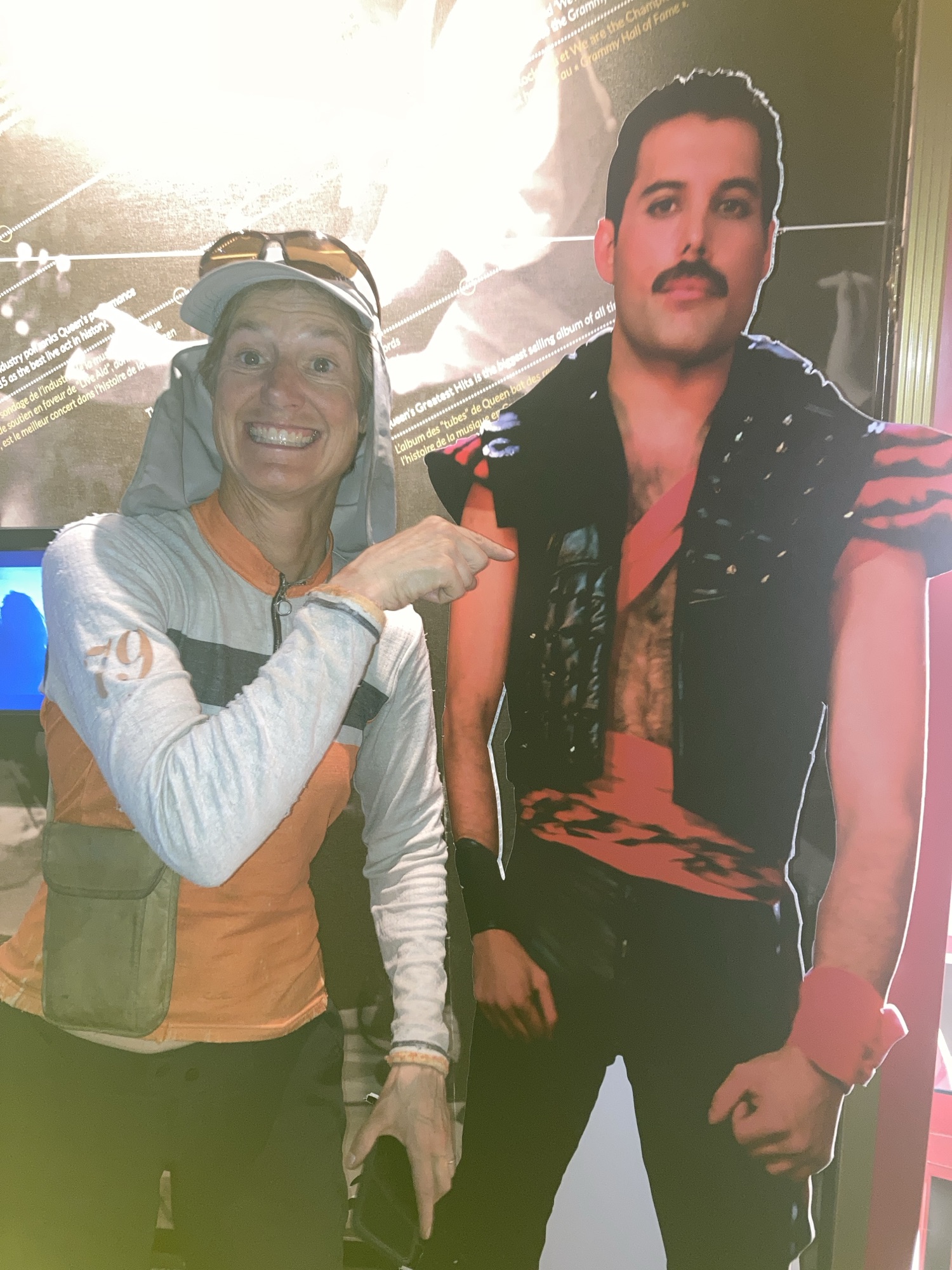
And the tour ends at the very prominently-displayed statue of…..Freddie Mercury
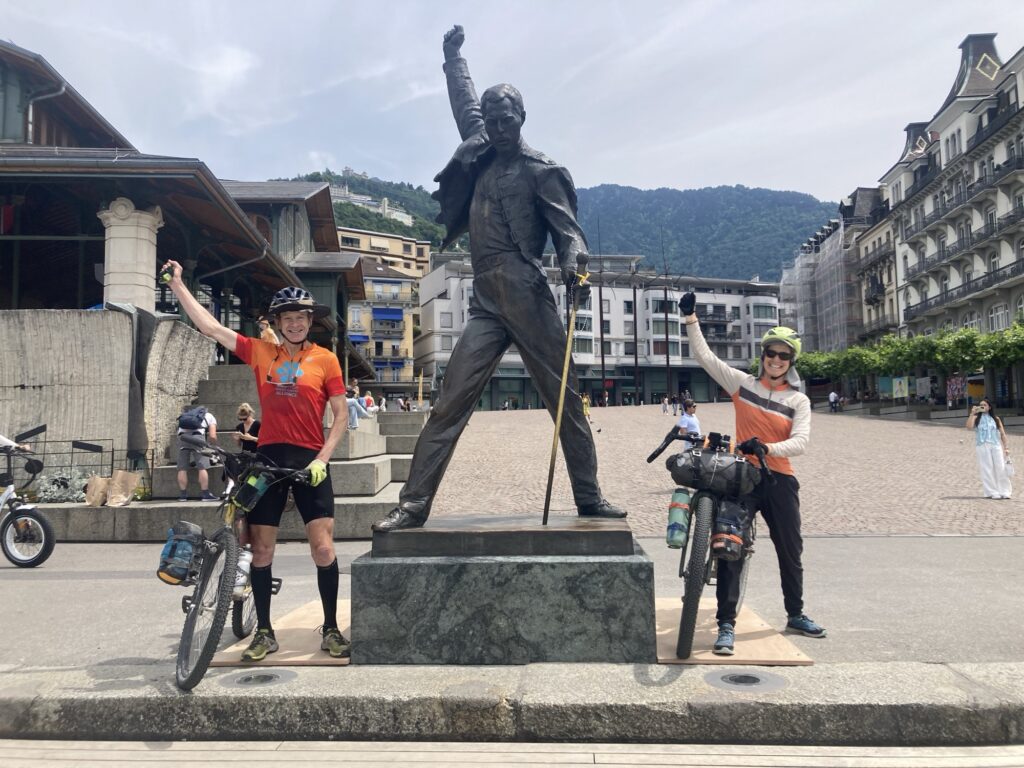
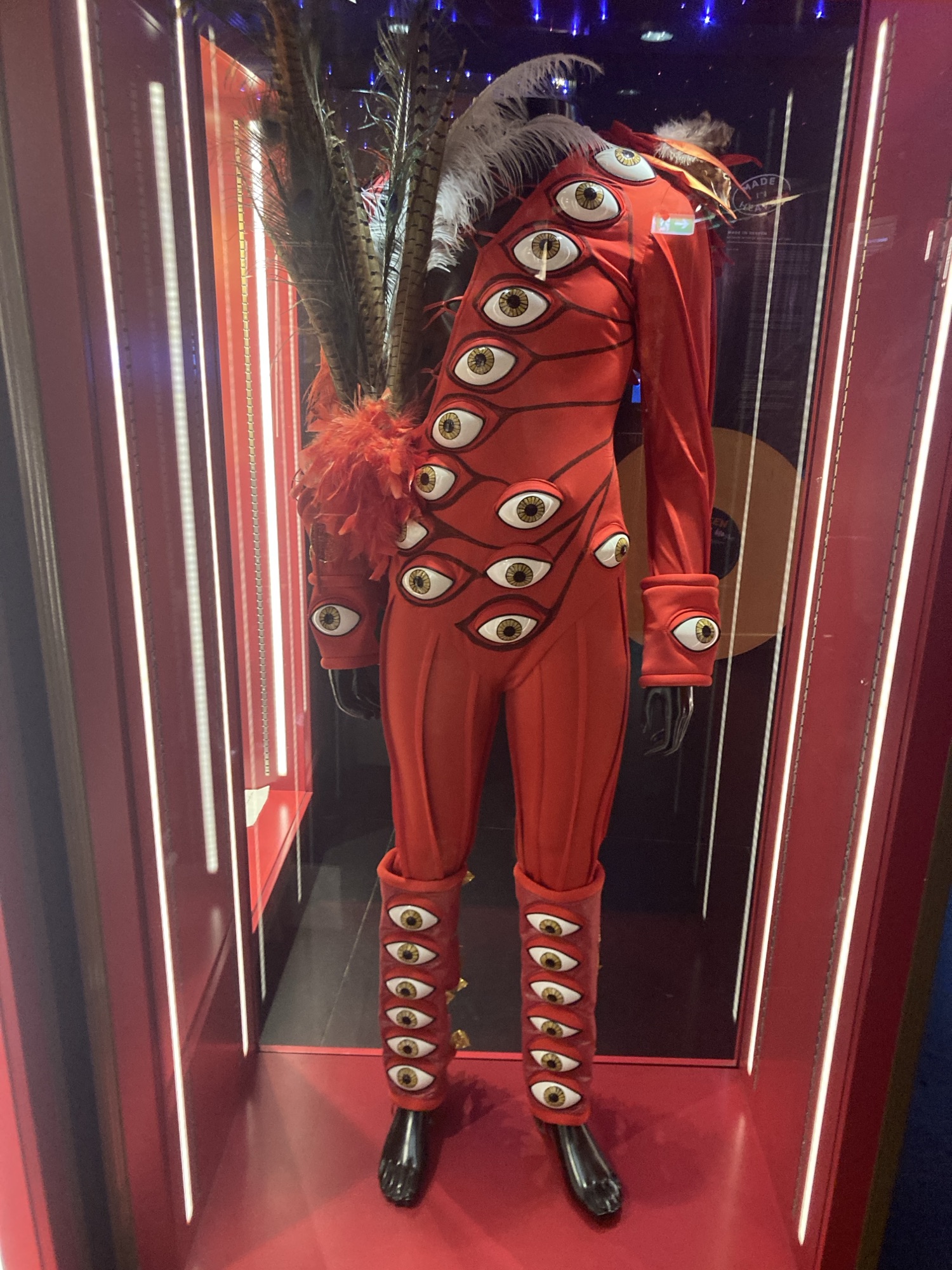
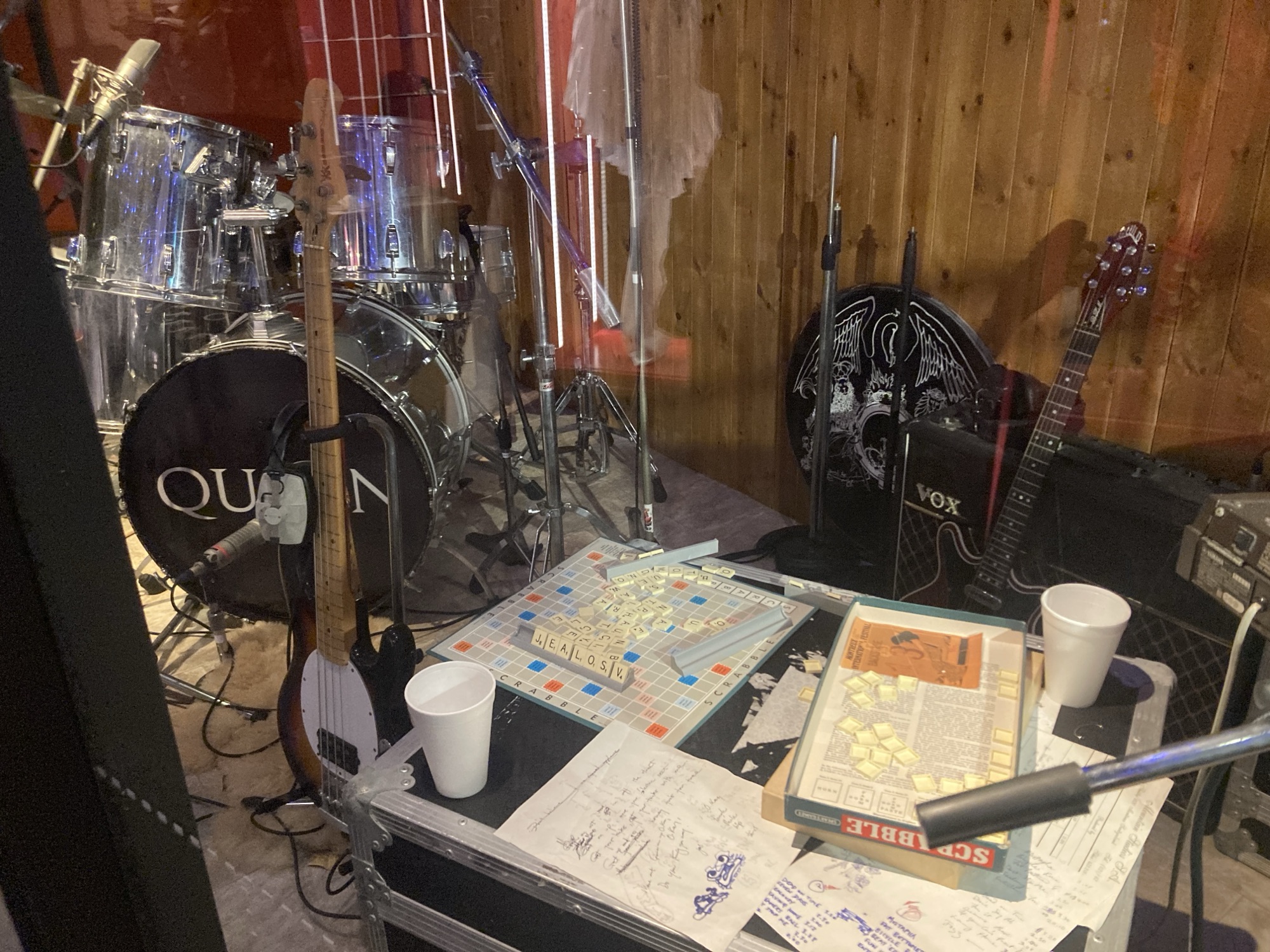
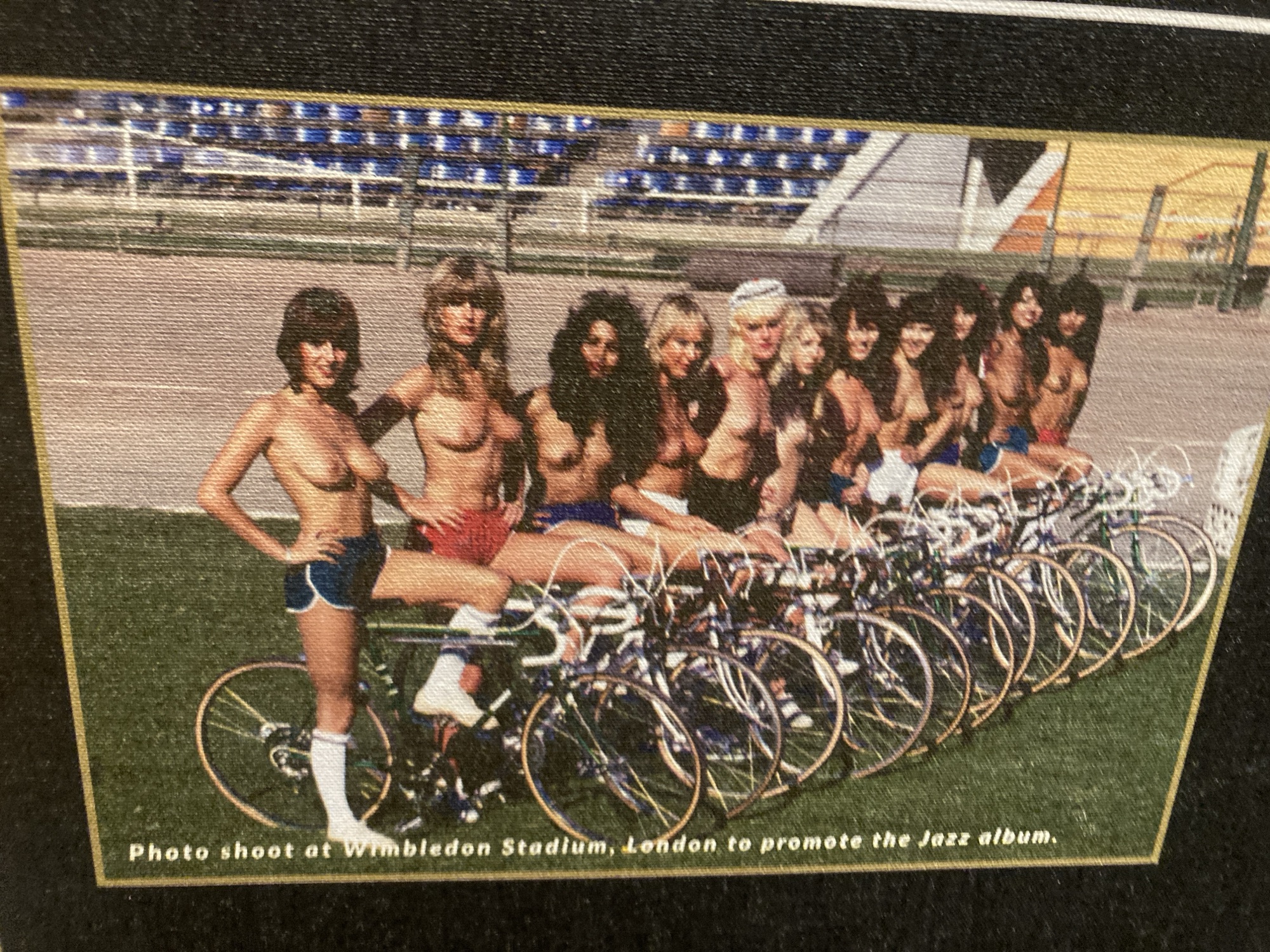
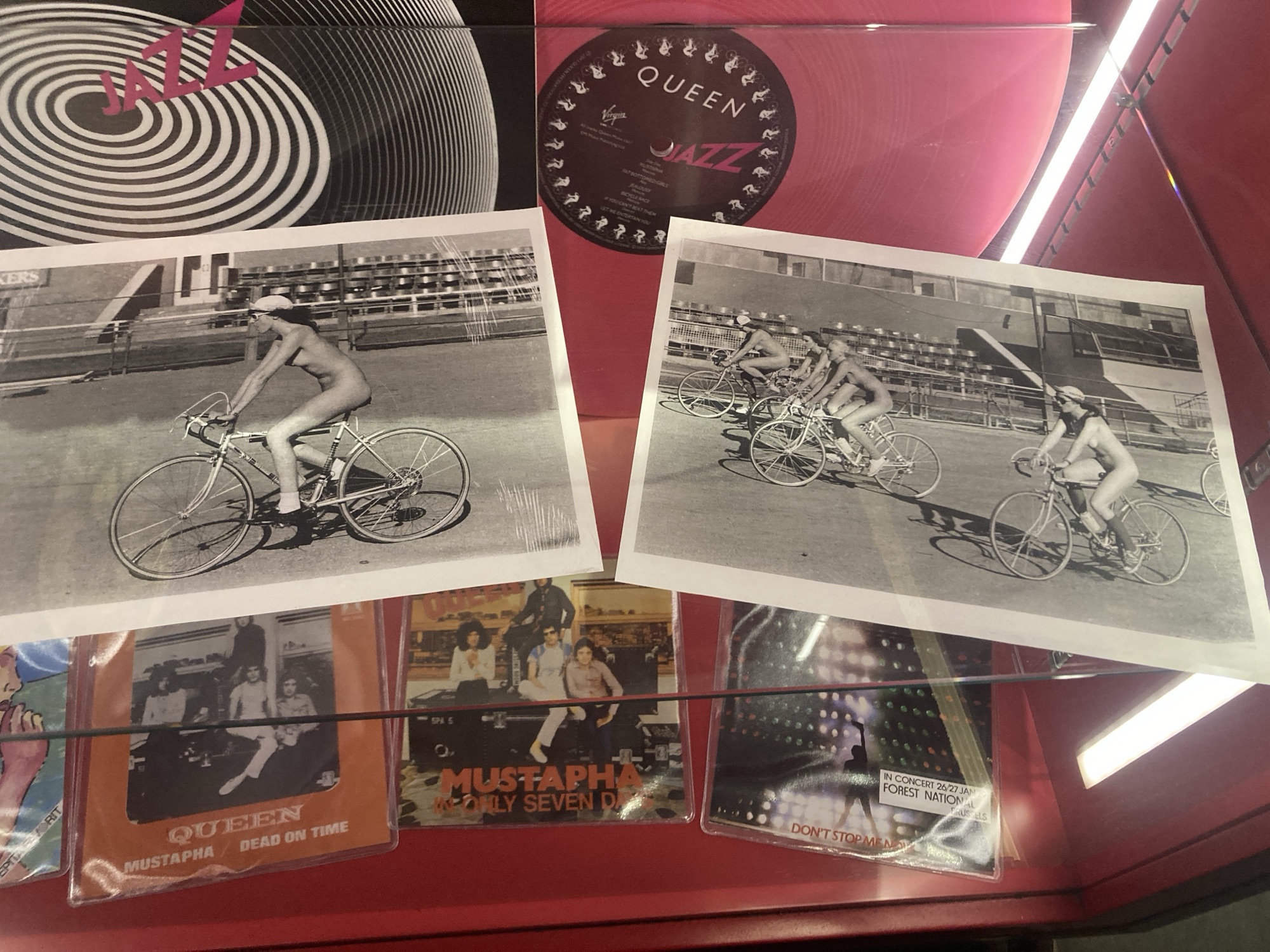
Turns out that the lads of Queen were quite taken by Montreaux and bought a full recording studio that was inside a casino and recorded a ton of songs and albums there, including a session with David Bowie that resulted in the classic “Under Pressure.” The casino created a great little museum for Queen, which featured their drums, guitars, Freddie’s craziest outfits, scraps of paper with lyrics scribbled on them, and the actual recording studio that had incredible sound with a sound board that you could manipulate Queen songs with; super fun! But the mood gets somber as they describe Freddie’s last few months when thy all knew he was dying and all of them worked hard on recording as much as they could before he was gone.



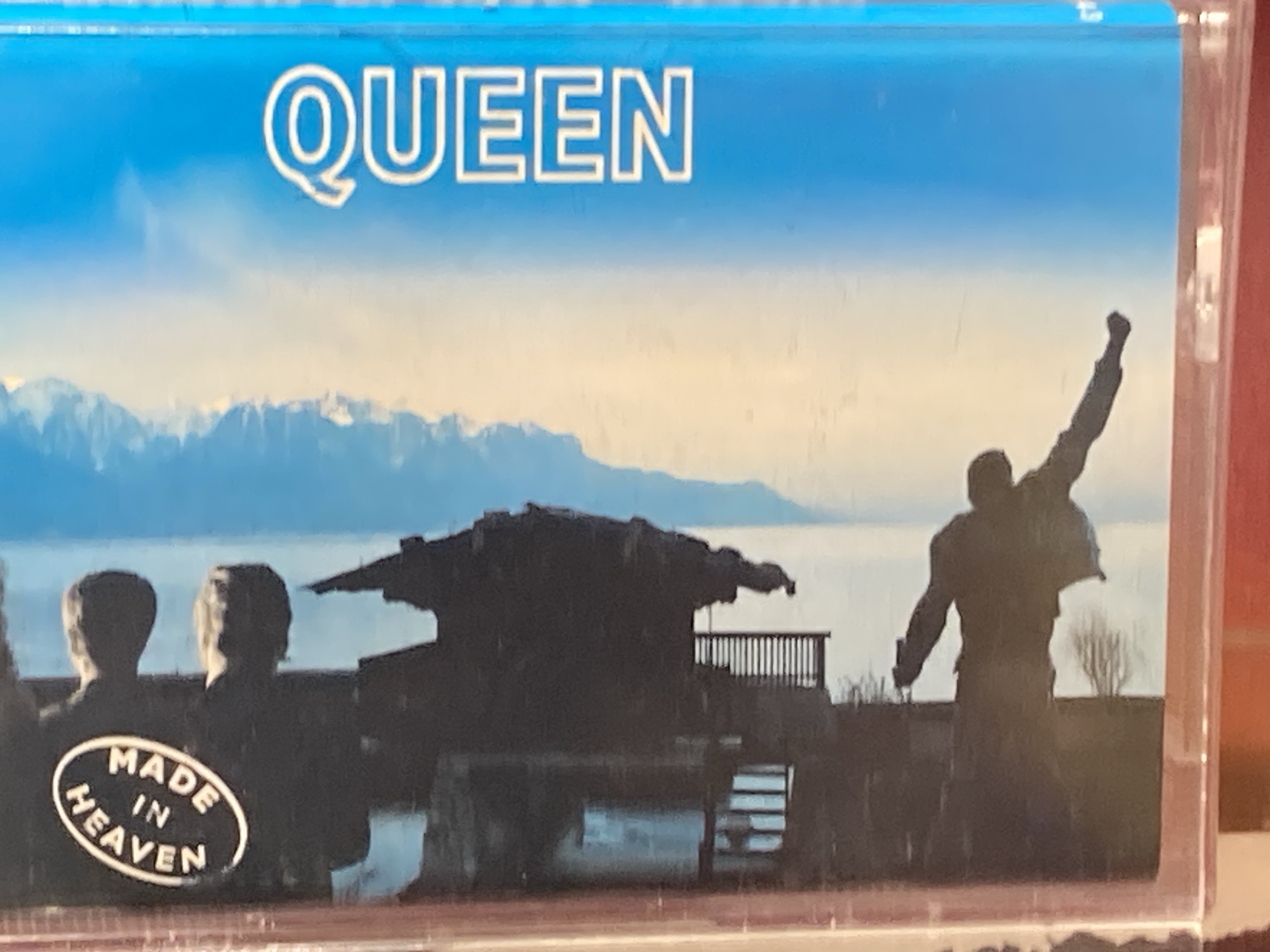
If you’re into Queen, be sure to check out Benson Boone and (Queen guitarist ) Brian May doing “Bohemian Rhapsody” at the Coachella music fest a while ago; amazing.
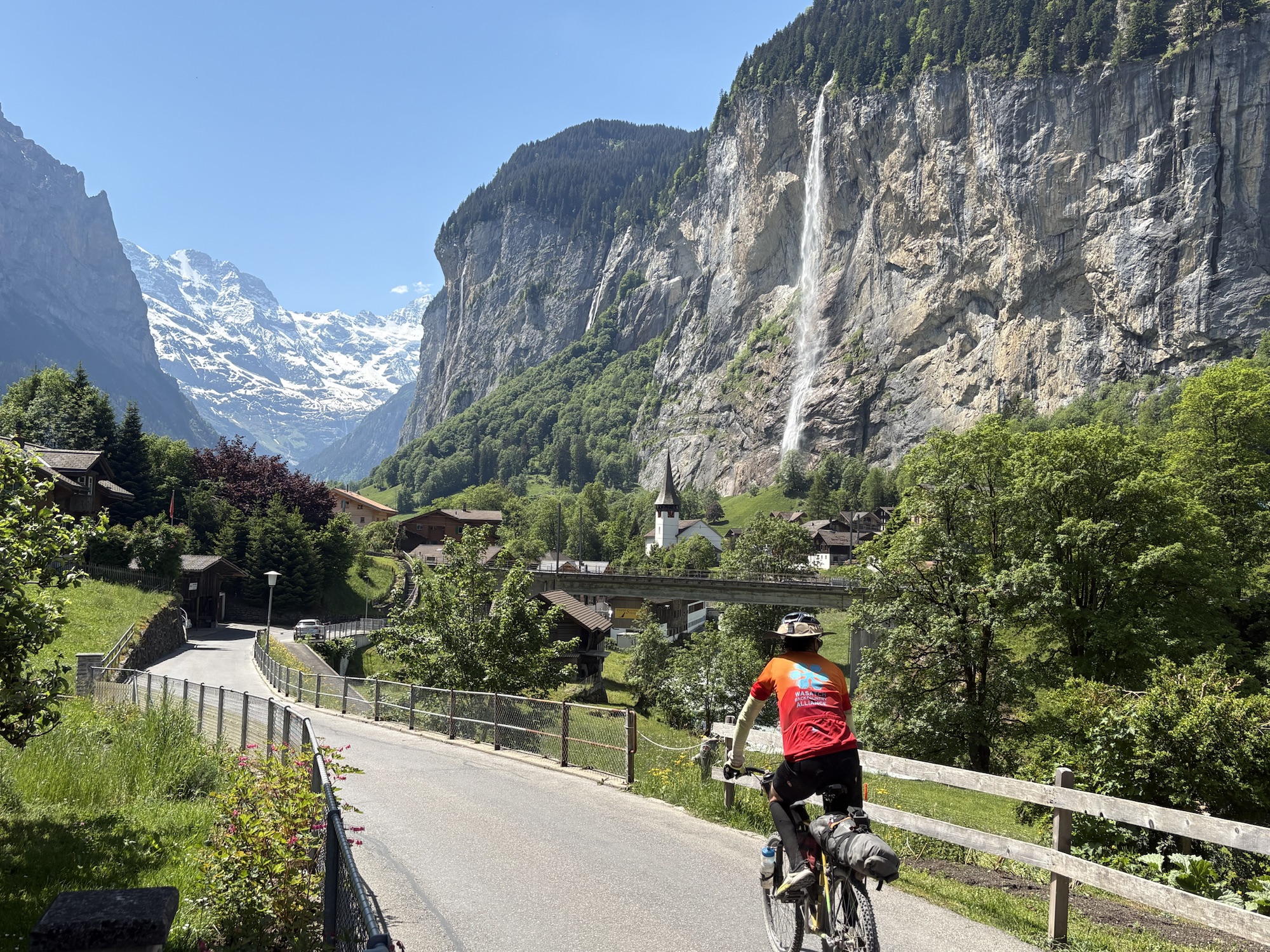
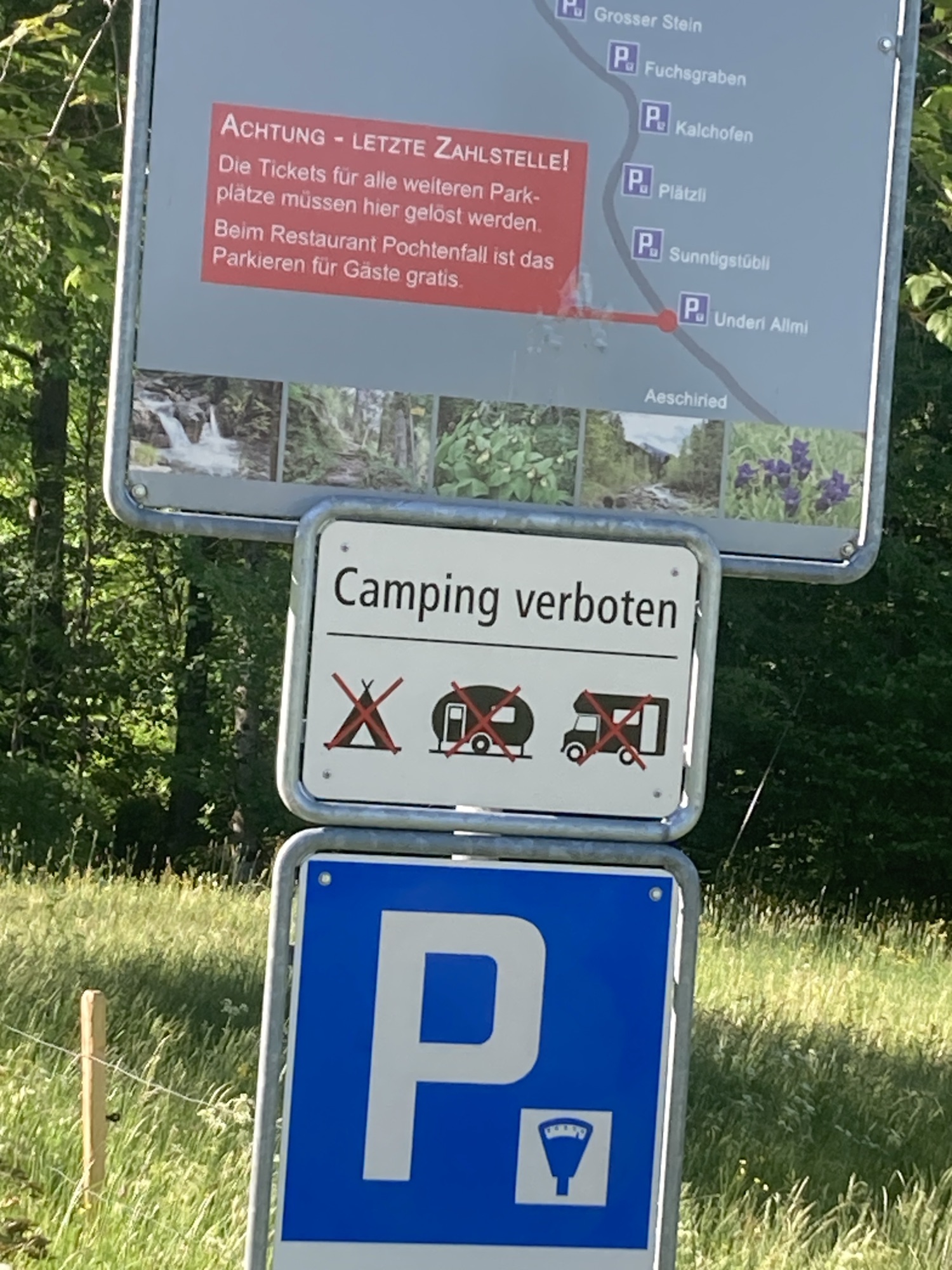
Overall the Hope 1000 lived up to our high expectations: the riding was difficult but doable with a lot of climbing and not too much pushing, water and food was plentiful, we ditched our camping gear because we didn’t want the weight on the big climbs and as per our Germany trip it was hot and we didn’t want to try to figure out technically-illegal wild camping, and the views and quality of riding were absolutely tremendous.




.
For anyone who wants to give it a go, here is the stage by stage description that Willi and/or Leal did: https://www.komoot.com/collection/1310768/hope-1000-bikepacking-switzerland-in-11-stages?t_s=referral&t_cid and Ash has all the gpx files that Willi sent her. A bike computer is very helpful for the many, many obscure turns and bouncy terrain that might bounce off a bar-mounted phone, mellow mtb tires are fine, we were on rigid steel bikes that were fine, and make sure to have good small climbing gears and minimize your gear weight. And Switzerland is the most expensive country in the world; it’s important to understand/acknowledge that from the start and either be okay with spending a lot of money on lodging and food, be willing to carry the gear to camp, or do a trip in another country. But it’s worth it!
Amazing. Thanks for the great photos and text.
My hardtail bikepacking rig is coming together!
NIce Nico! Lets put that thing to some good use together!
Ash just reminded me that the Hope 1000 race is in progress. the first rider came in in 3.5 days, averaging over 175mi and 25,000 feet of vert per day! I doubt he enjoyed Swiss pastries and nice BnB’s though!
Switzerland is such an interesting country (and thanks for the passages from the book), Stunning landscape; amazing hiking and biking trails and, of course, yummy cheese and beer☺️ First went to Grindelwald in 1975 with your uncle Arno, Aunt Selma and cousin John, and then again in ’84 (and to Wengen and surrounding area in fall of ’23). Such an amazingly beautiful place! So glad you two had such a great experience!