Long ago I did a bike tour that was generally a partial length of Germany; from the (surprisingly hilly!) southern end of Holland to the Rhine and up that (down on a map; the Rhine flows north from the Swiss Alps to the North Sea) to a random spot where I had a friend from college. It was early Fall, and I was kinda hoping that he might be interested in driving a couple of hours to Munich’s Oktoberfest and could give me a ride (I wanted to get to the Alps before the weather turned), and sure enough as soon as I arrived he said “How about I drive both of us to Munich, we can go to the Oktoberfest, and you can ride from there!” Sho nuff; great idea! That visit to Munich – and the Oktoberfest – is a worthy story unto itself, but that’s for a later post. But basically, we were in the ‘hood, it had been a long time since I’d been in Germany, it’s a huge, varied country, had a recently-published new bikepacktouring route, and Ashley had never been to Germany before, so….let’s go!
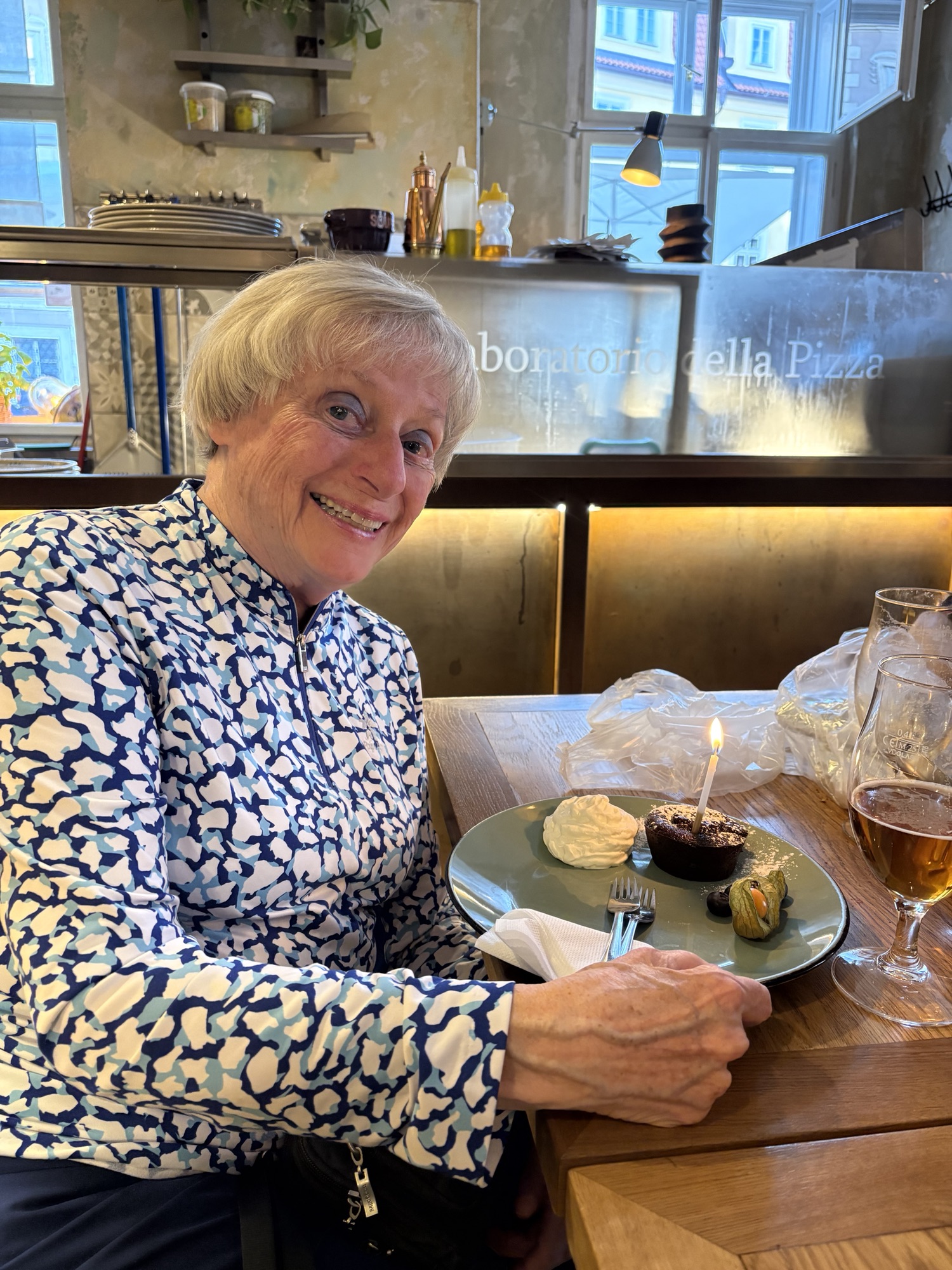
As I’ve mentioned before in these little blog posts, with the age of the interwebs and mapping apps bikepacktouring has fundamentally changed a lot; when I was riding I was using the great Michelin maps that had color-coded roads (I believe the white ones were the best) and those were fine for general road riding on known roads. But of course there were some limitations: basically, most of Western Europe is an incredible maze of roads and it can be challenging to link them up into a cohesive “route”, and the equally-pervasive small gravel roads, dirt double tracks, farm roads, and rideable singletrack trails that linked some of those mazey roads were not shown. So while I had a nice time riding through Germany and was blissfully ignorant of all the super nice, small, quiet, nearly-car free roads that snaked through the countryside, now…..it’s possible to ride all that. For this trip – where we had ended up in Prague, Czech Republic for a few days with Ash’s mom Deb and her (and our!) pal Betty
Once we realized we were going to be in Prauge we sniffed around for routes, and quickly saw that bikepacking.com had a “Trans-Germany” route; perfect! We wanted to see a lot of Germany, let’s utilize that route to trans-it as much as possible!
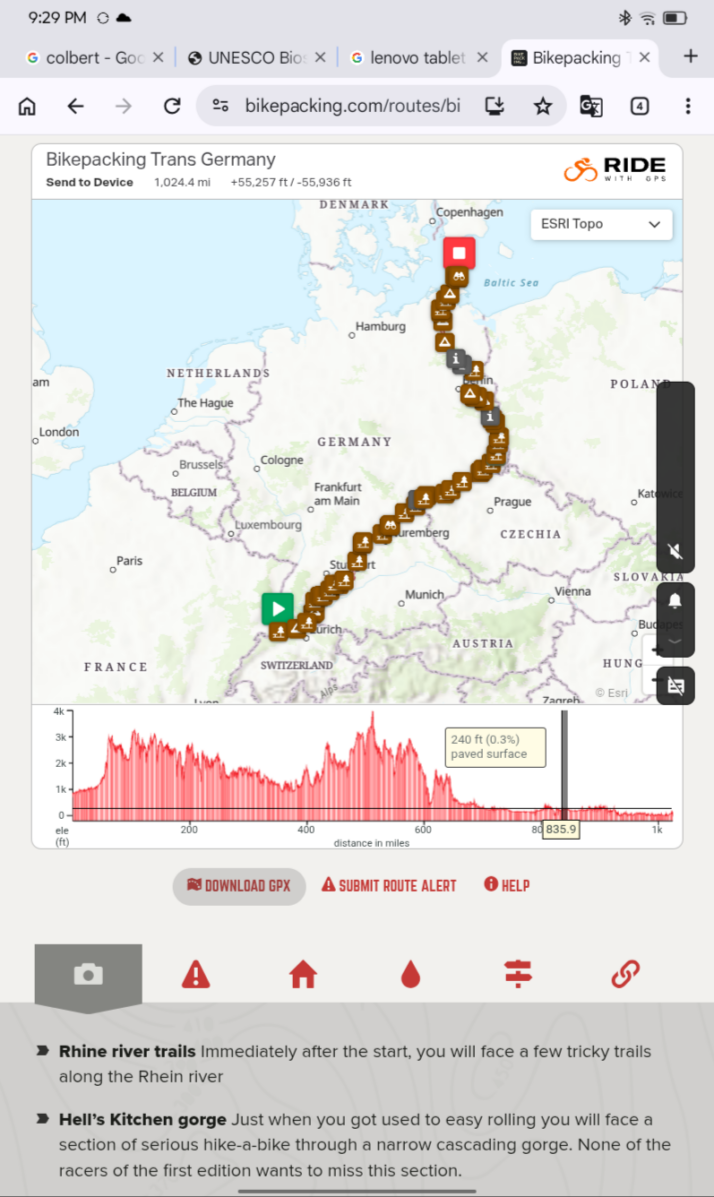
Basically, the route as developed and posted is just about 1000 miles, stretching from the 3-corner zone of France, Germany, and Switzerland northeast to the eastern border with Czecia (as we think it is typically known as) and then due north to the Baltic Sea. Northern Germany appears to be kinda the Midwest of Germany – ie flat – and because we like the variety that hilly/undulating terrain offers we rode north from Prague to meet the Trans-Germany Bikepack route (TGB) about the time it flattened out and then rode it southbound.
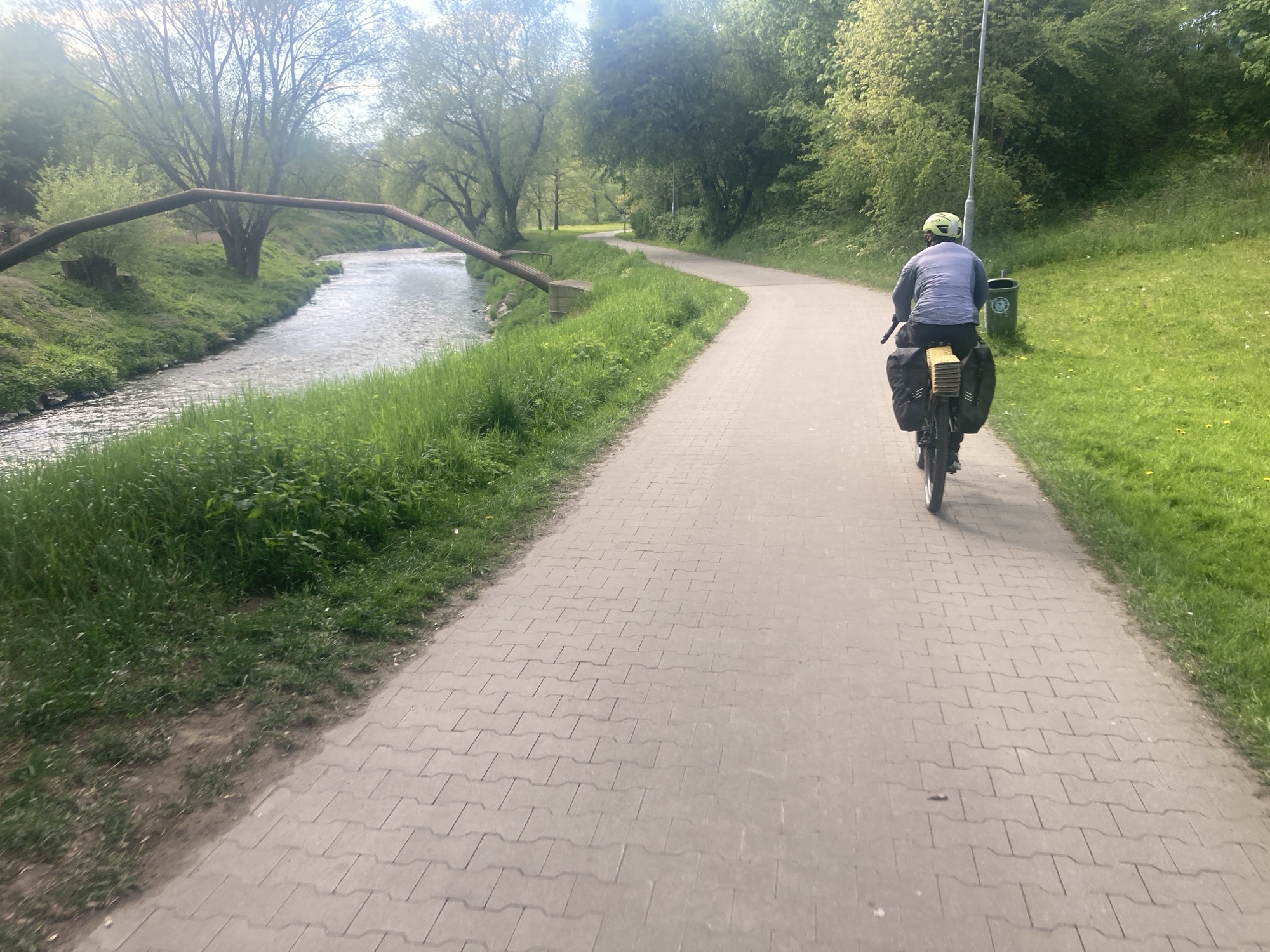
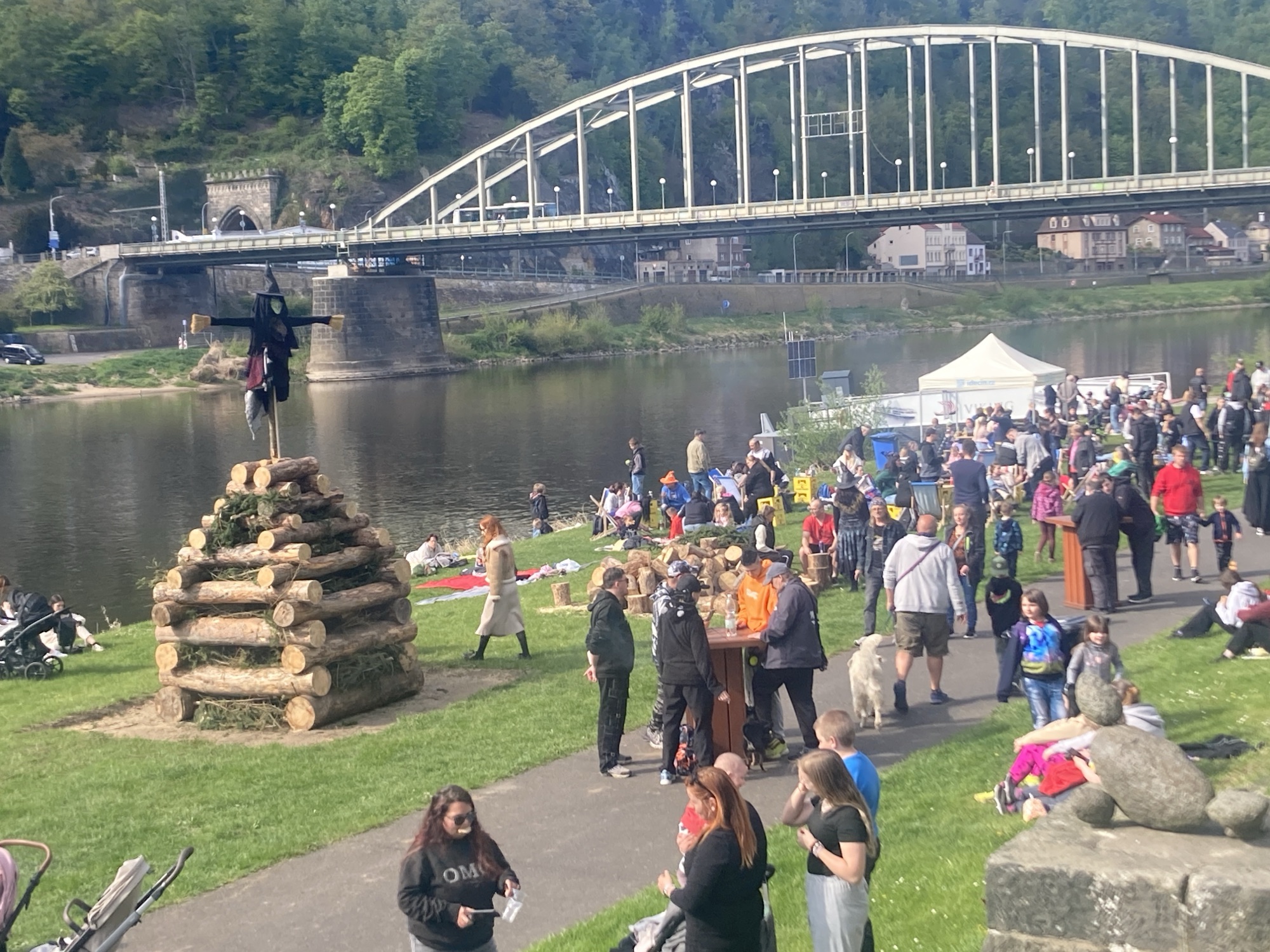
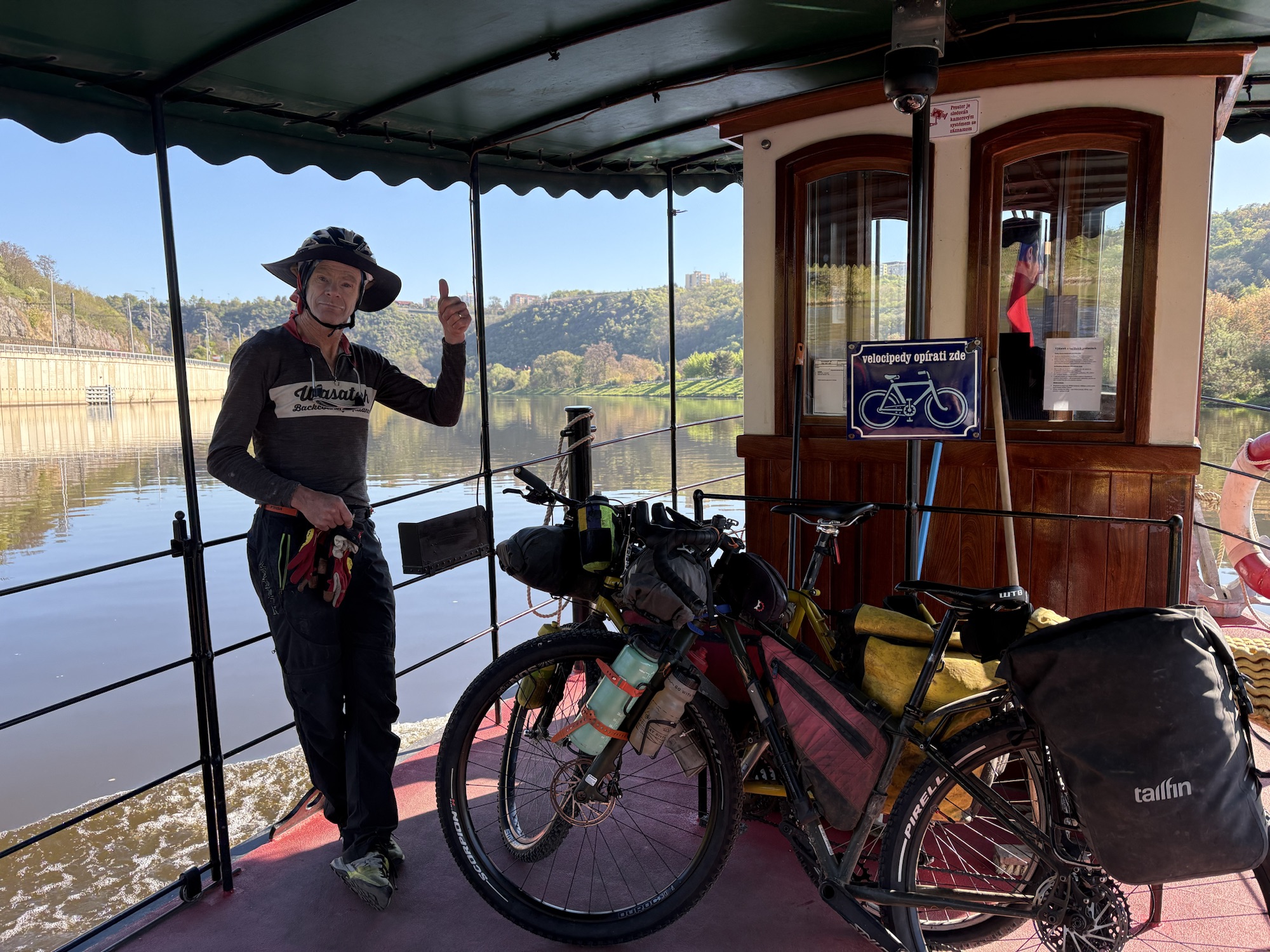
So after an incredibly easy, nice cycling exit of Prague along the Vitava river:
we headed due north towards the border, which was quite close to the fairly major German city of Dresden, “found” the TGB, turned left, and headed south. We happened to catch it in a place called “Saxonian Switzerland” – a very nice hilly (not mountainous) area with some cool karst limestone crags:
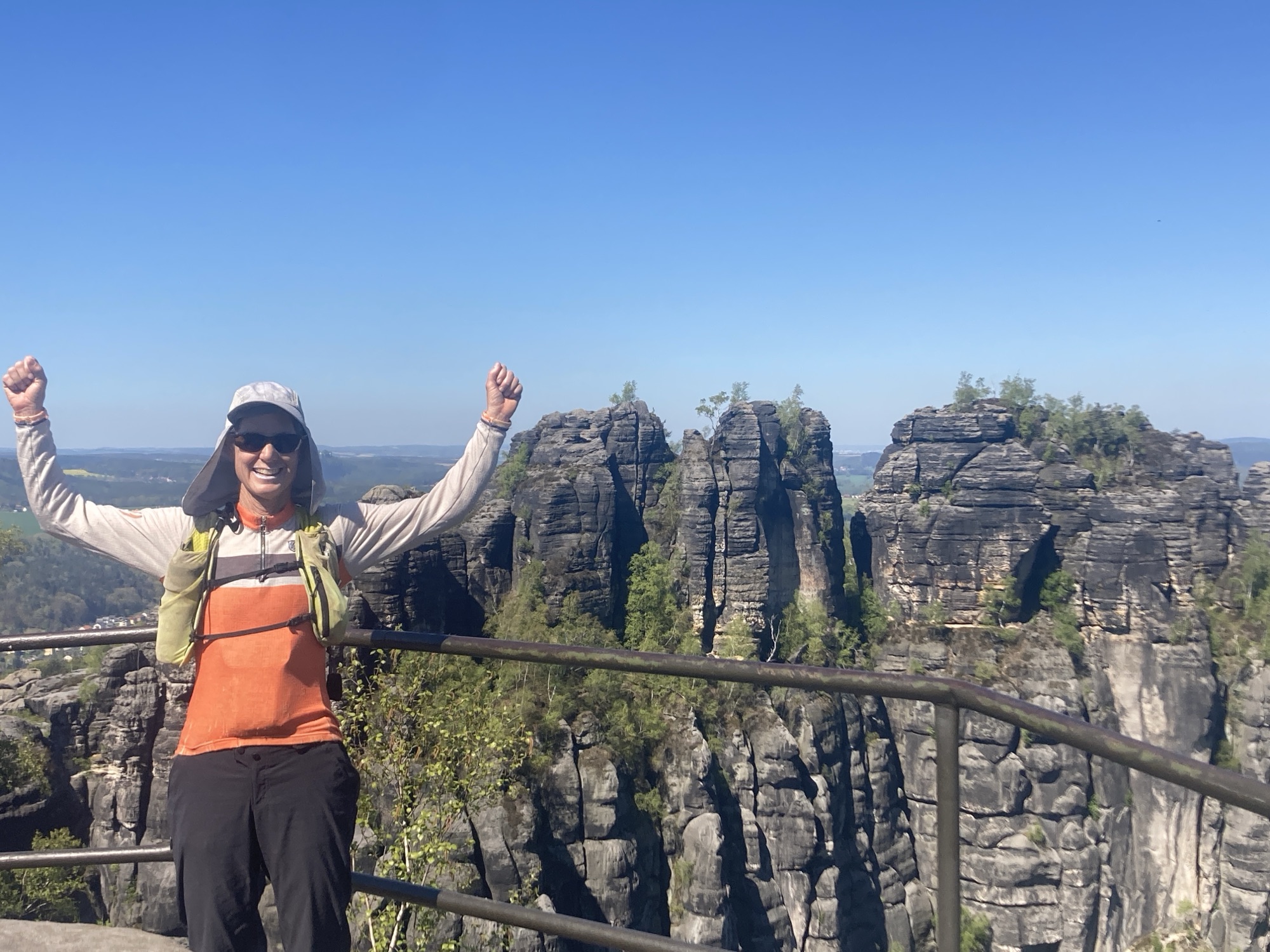
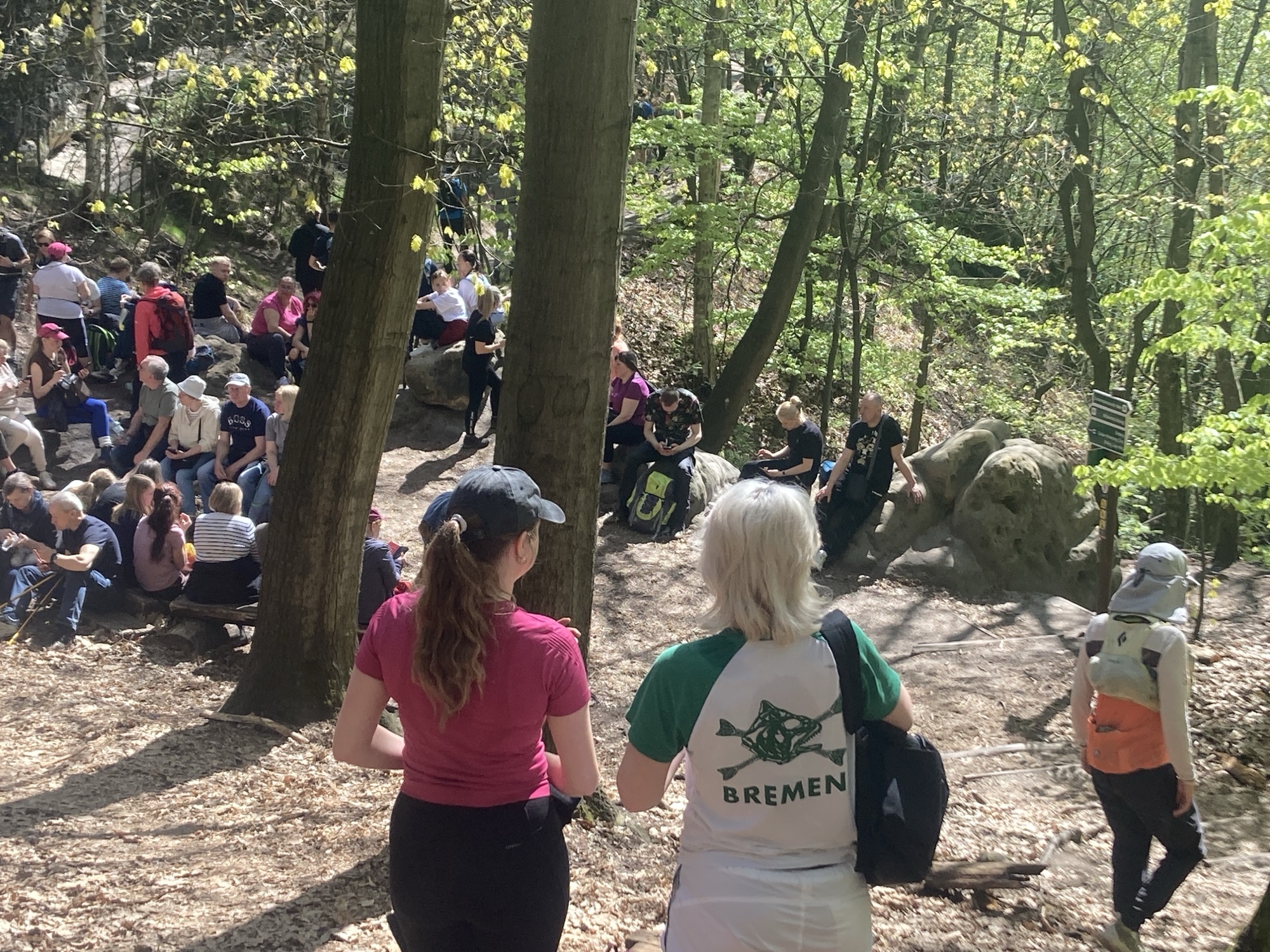
In reading about it we realized that there are quite a few places in Europe (and the US) that unabashedly swipe the “Switzerland” label for their own beautiful natural areas; it’s ironic to us because as I write this we are in Grindelwald, which lies at the foot of the sky-splitting, 6000-foot north face of the Eiger, and, um….it isn’t much like the Saxonian crags! But that’s fine; still beautiful…..
And despite its diminutive stature relative to the Alps in Southern Germany, Austria, and Switzerland, “hilly” manifested itself right away for us as we left the flat Vitava river. Though we never got above 1500 feet, we went up and down and back up again plenty, so we got our fill of climbing!
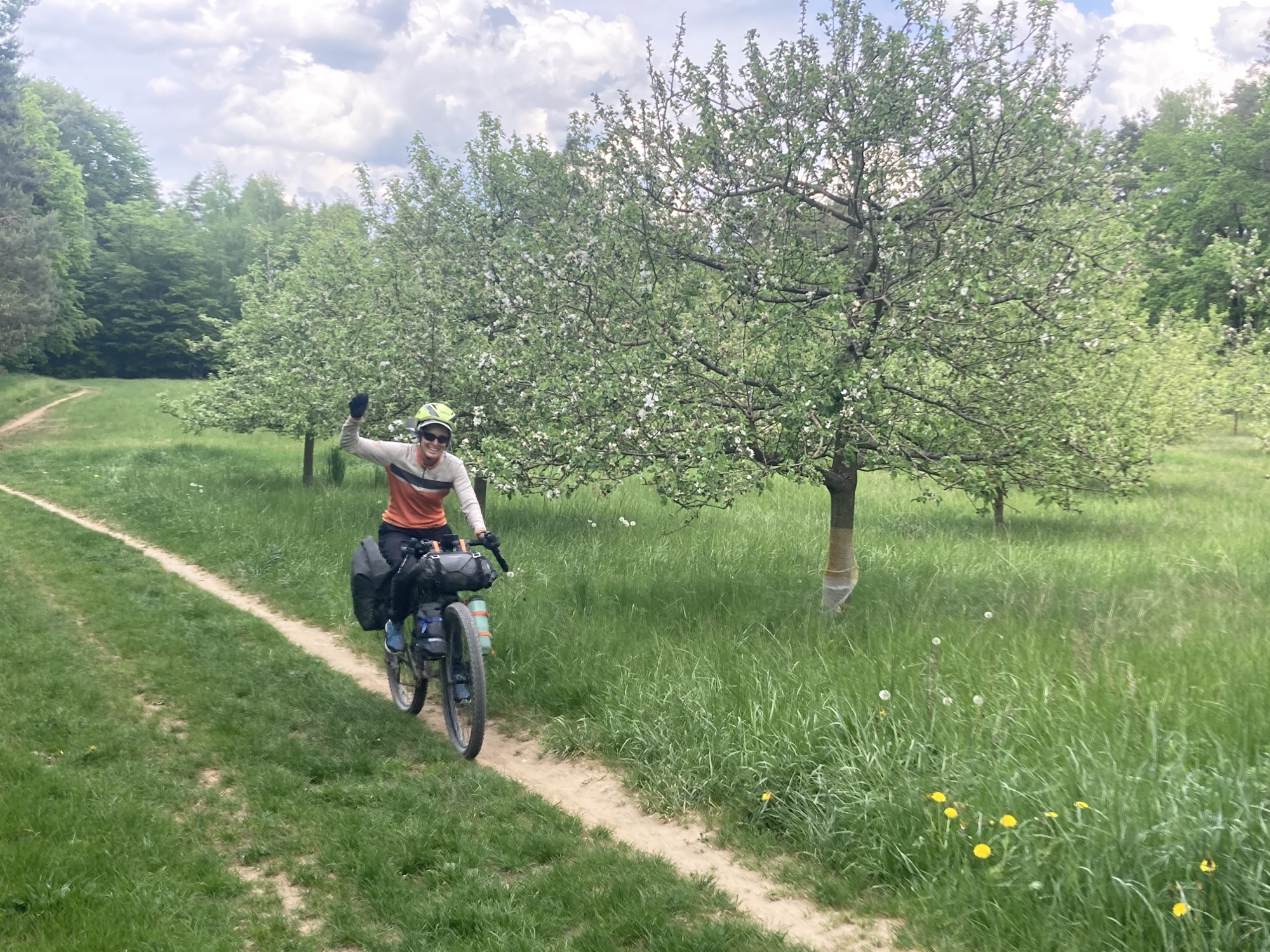
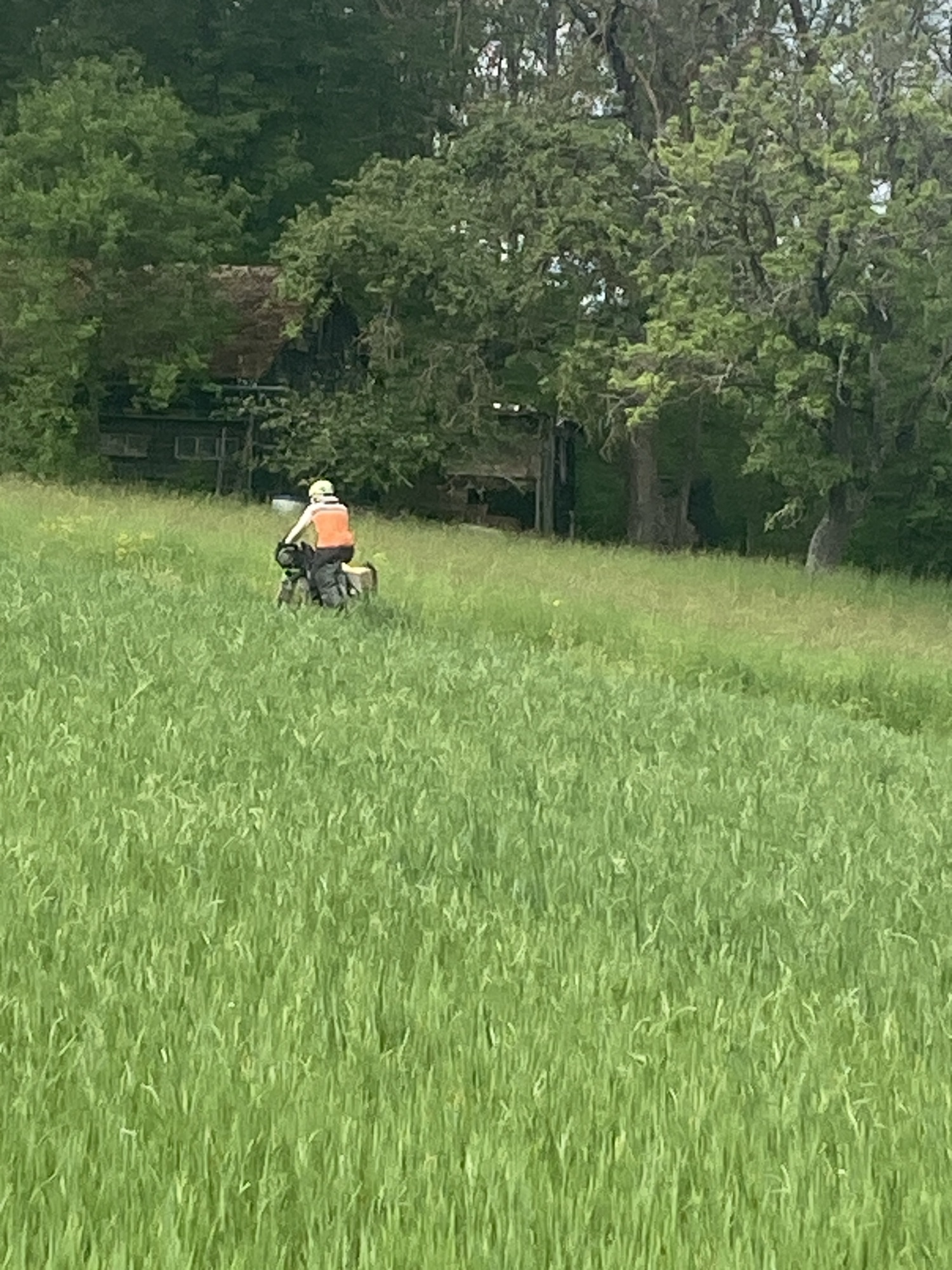
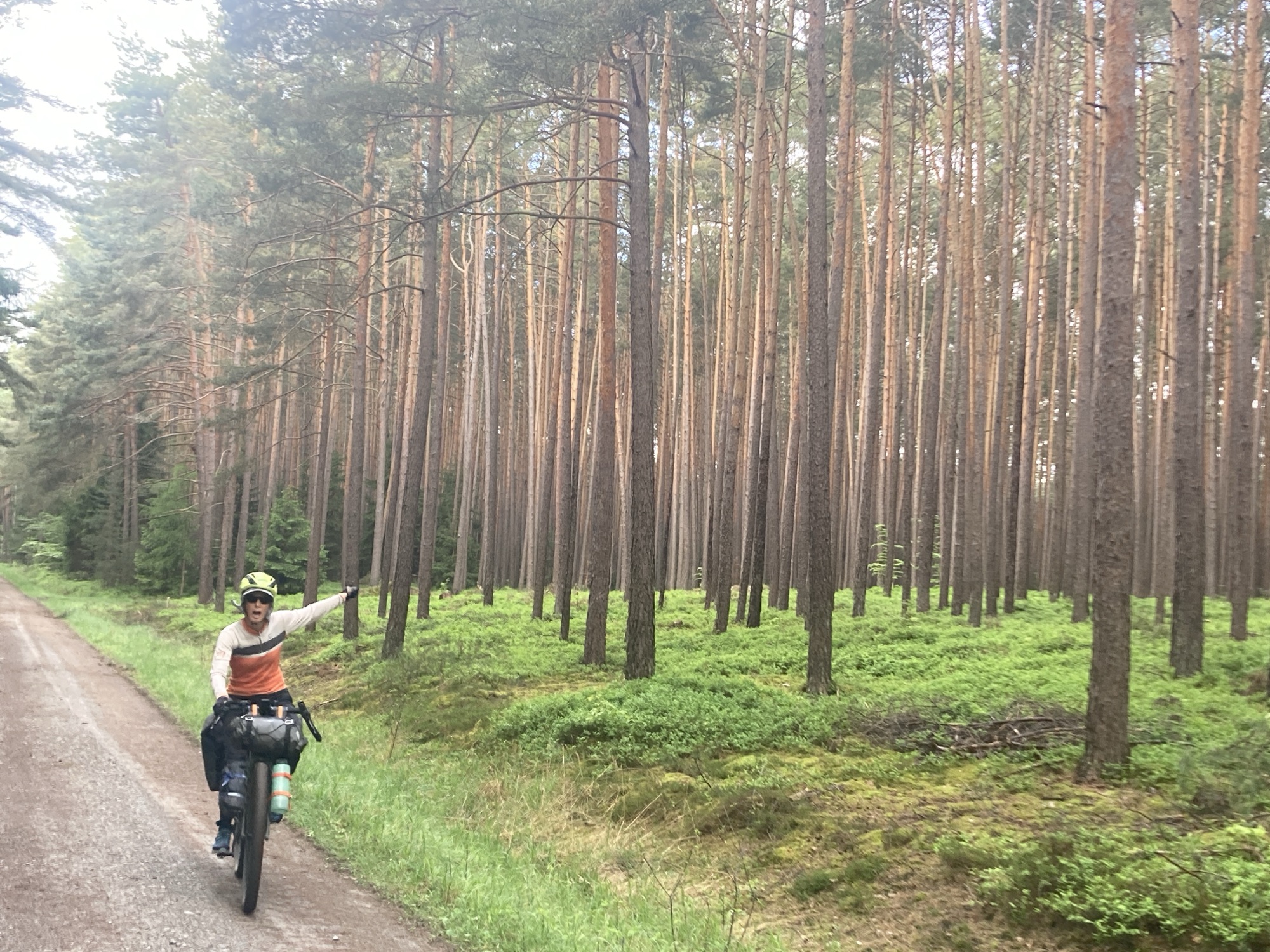
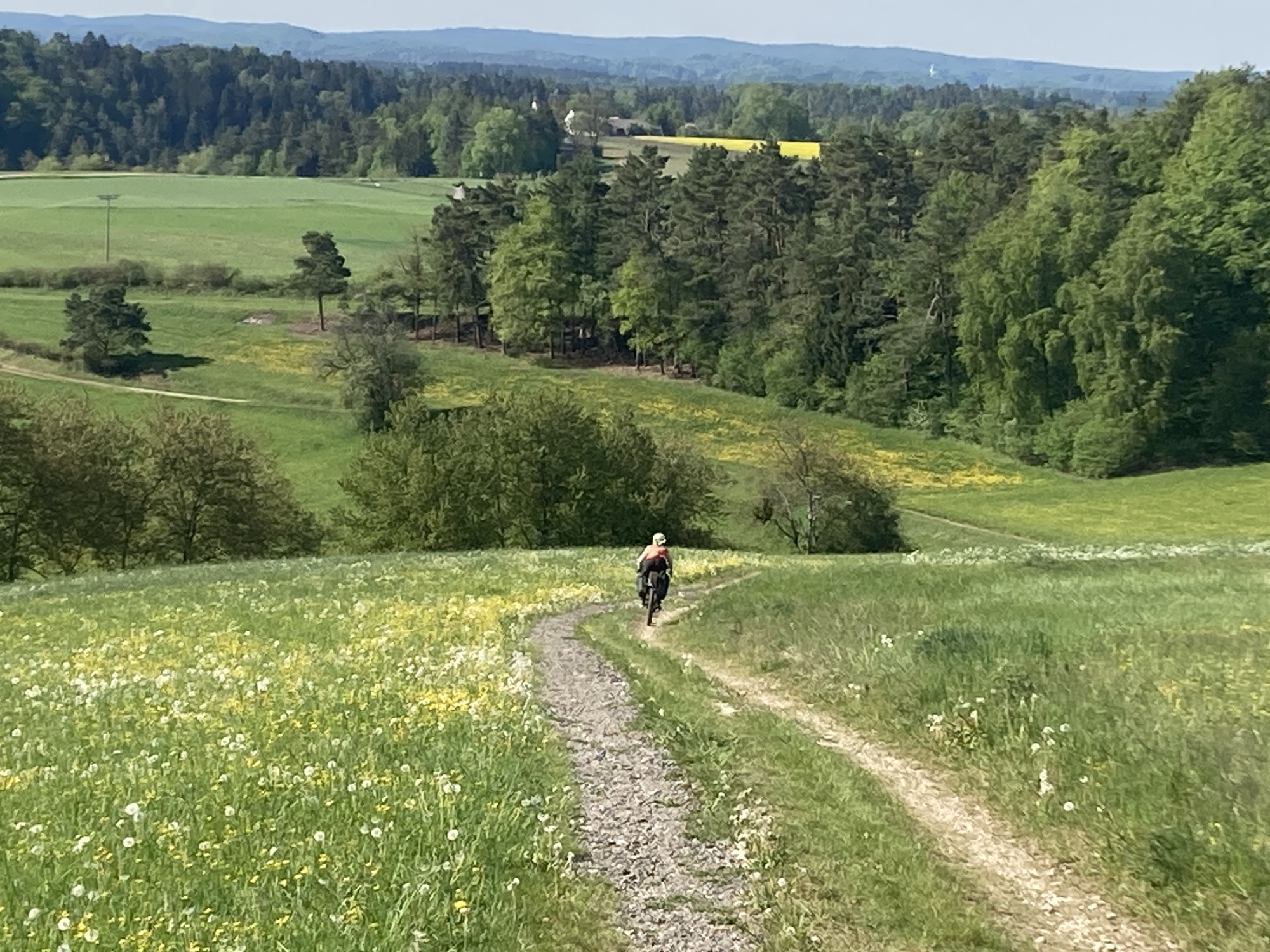
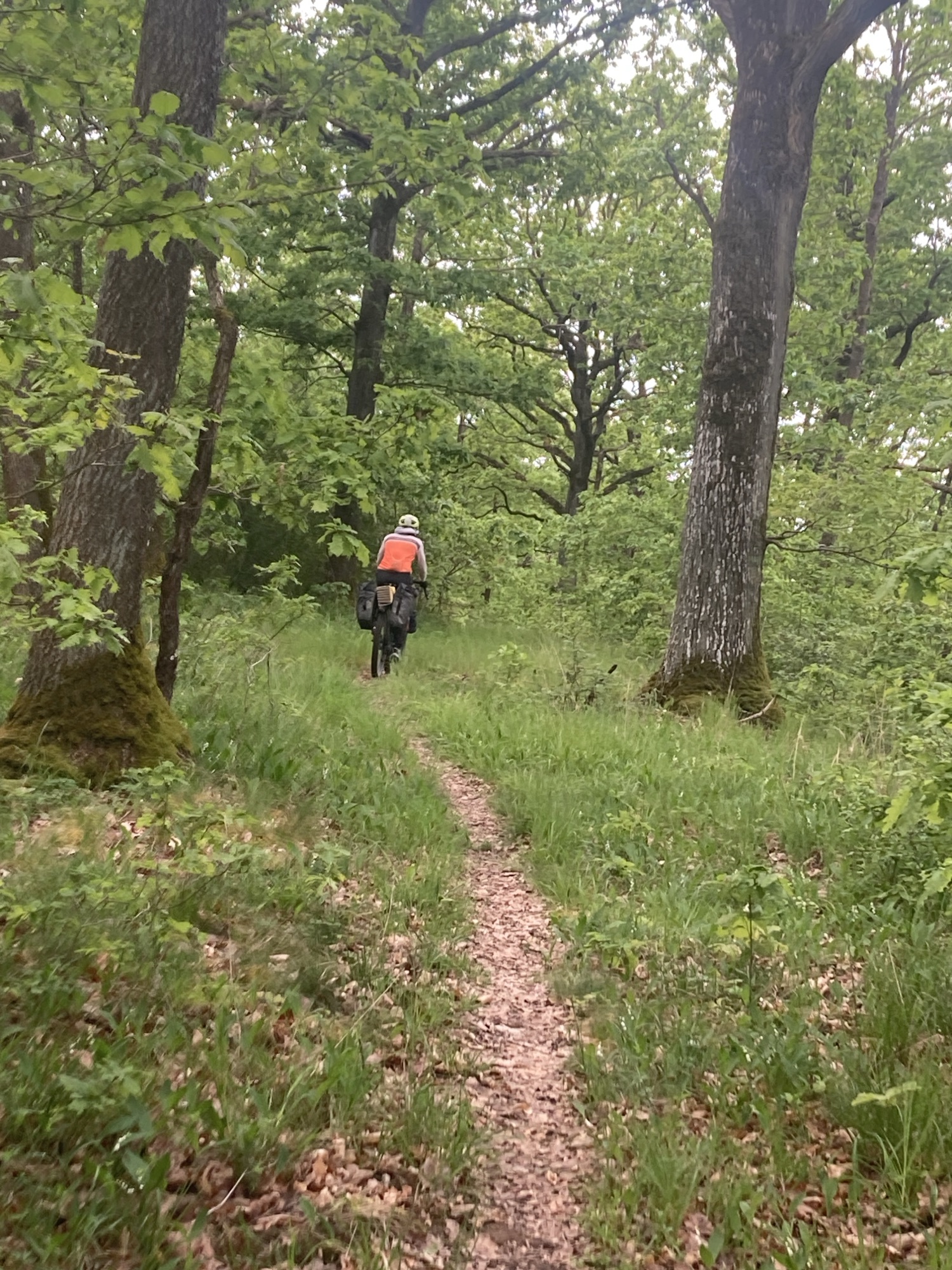
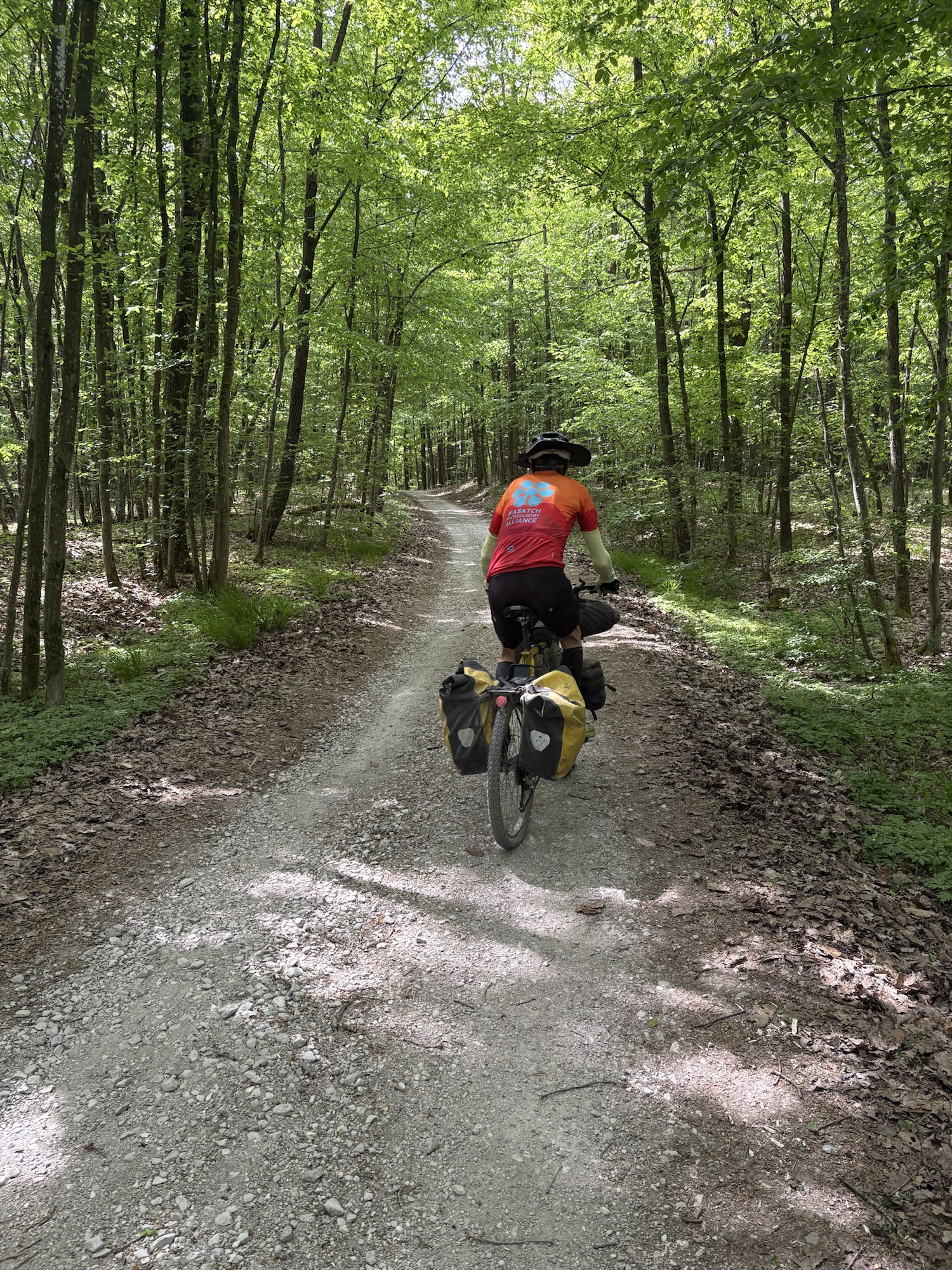
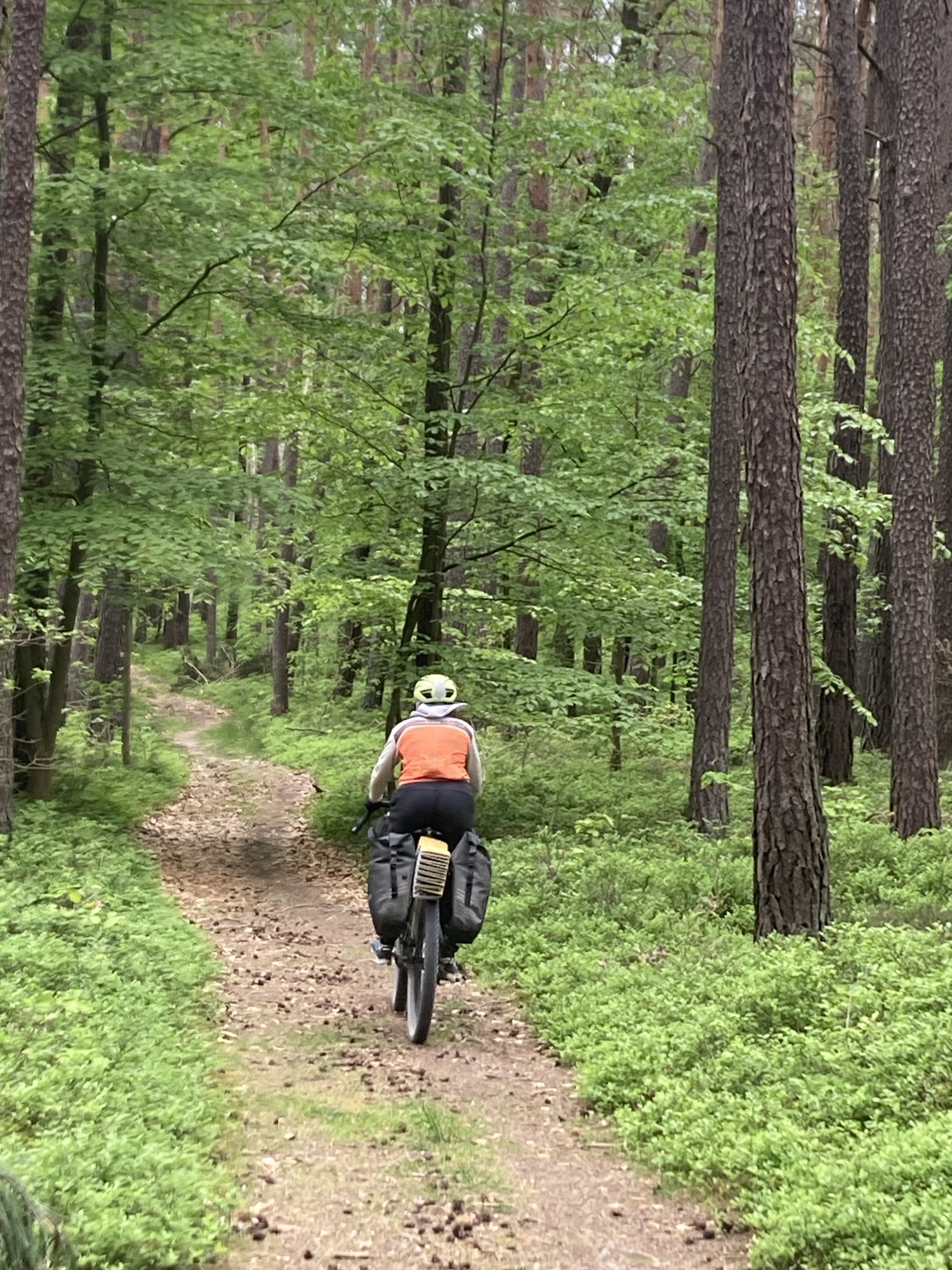
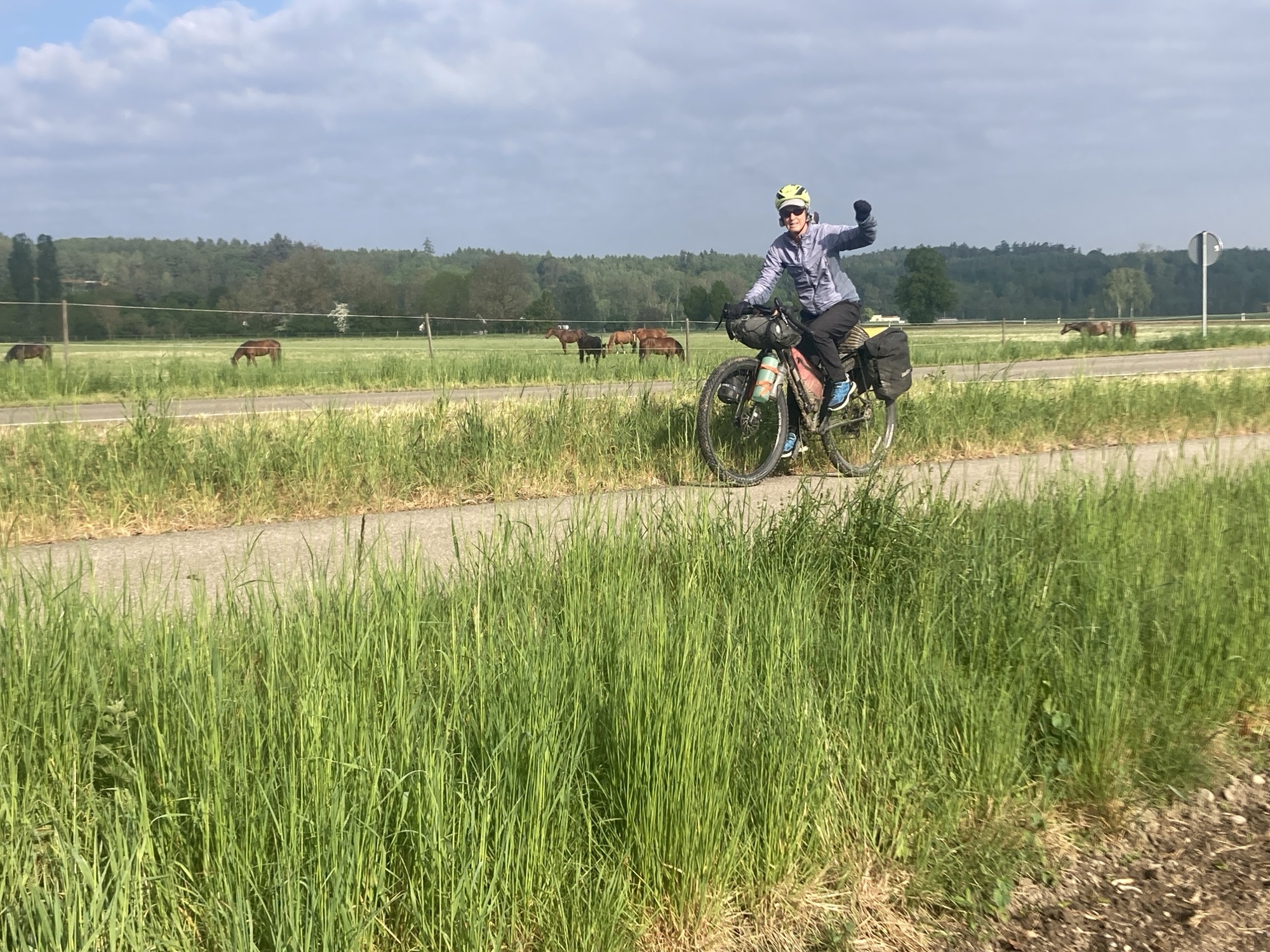
As we rode, the TGB revealed itself to us in fairly subtle ways: other published routes we have done have had sorta marquee aspects to them: criss-crossing the Continental Divide of the Great Divide Route, huge climbs, descents, and iconic mountains in the Switzerland-crossing Hope 100, which we’re on now, Cascade-crest-dancing on the Oregon Timber Trail. However, the TGB section that we did doesn’t really have many of The Cool Things, it just had many, many kilometers of lovely, quiet, virtually car-free riding in beautiful woods and open farmland on tiny paved roads, gravel and dirt double tracks, and singletrack trails linking them together:


and routing through innumerable quaint, sleepy villages:
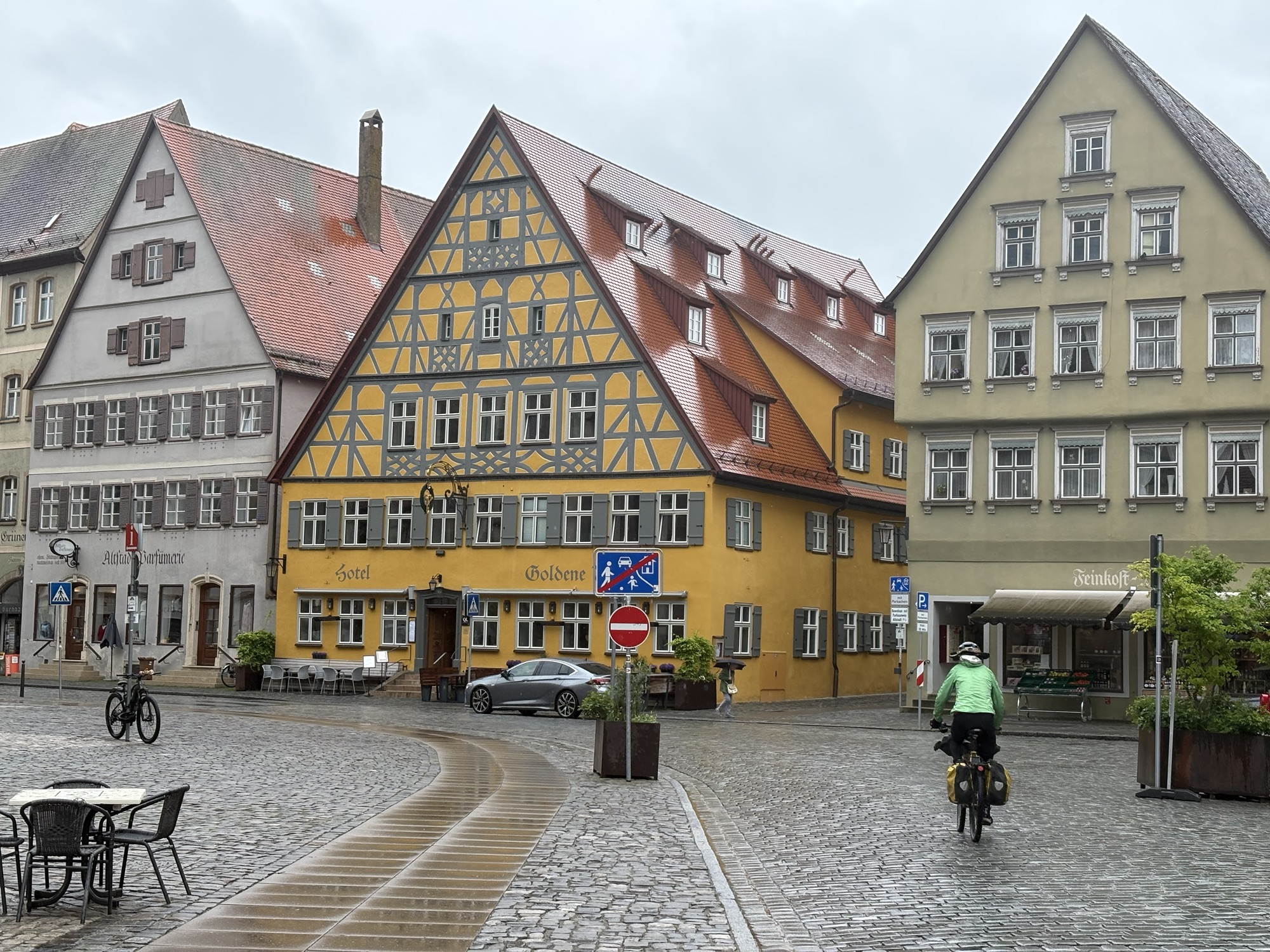
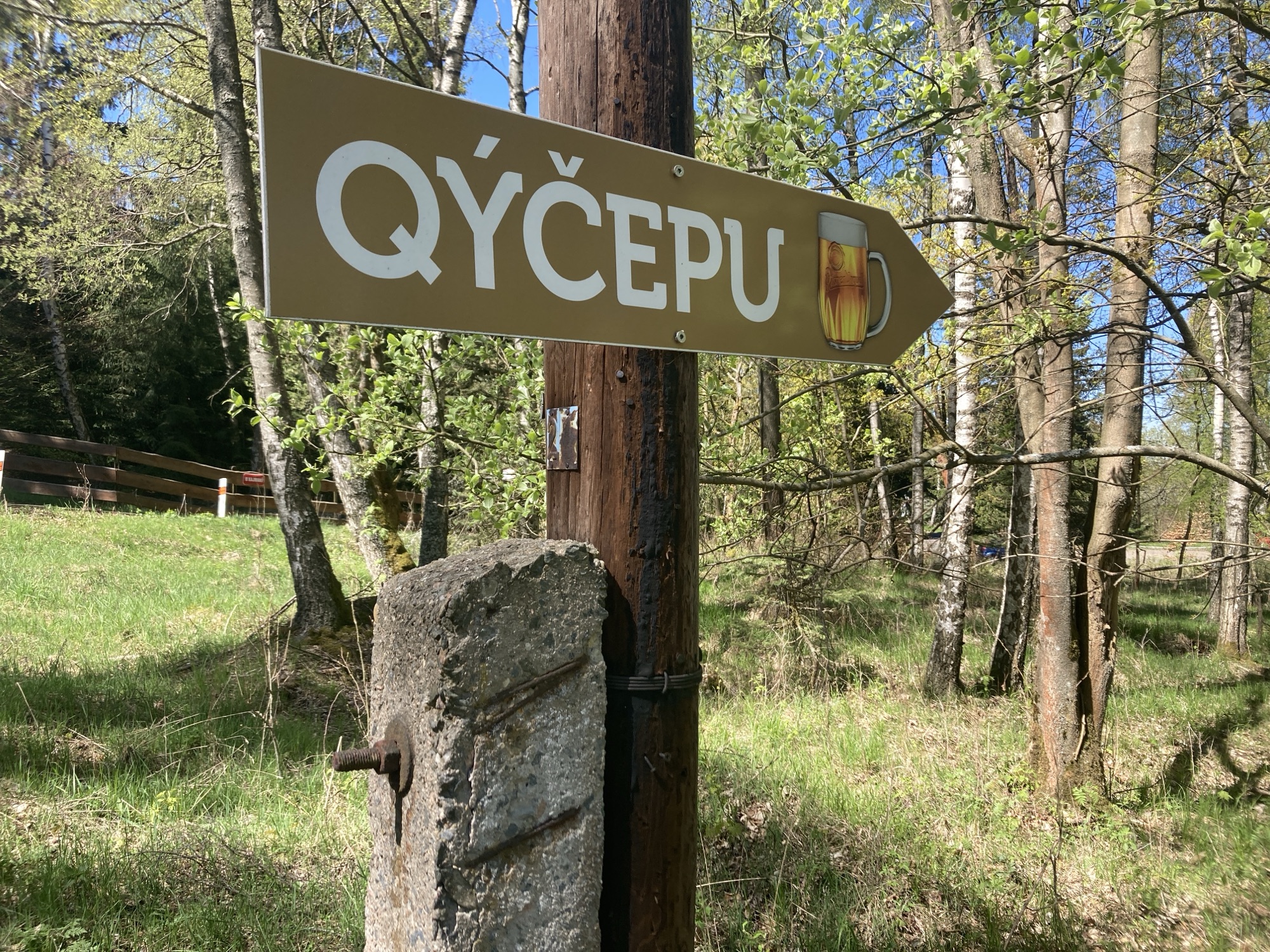
It got me to thinking: why bikepacktour? As Americans, we are fascinated with all the really old stuff of Western Europe: churches, castles, abbeys and monasteries, kings, queens, dukes, and popes, wars and their heros. That’s why people from all over the world take buses into cities and dutifully follow tour guides around trying to take in the plentiful, rich history of these places. But bikepacktouring focuses less on the history and more on moving slowly through what’s happening today, to the people who are very much alive and well instead of their wildly-bearded ancestors from 1348 and 1783 and 1876. In short, bikebacktourers see life as it is today, and do so via sublime, idyllic riding.
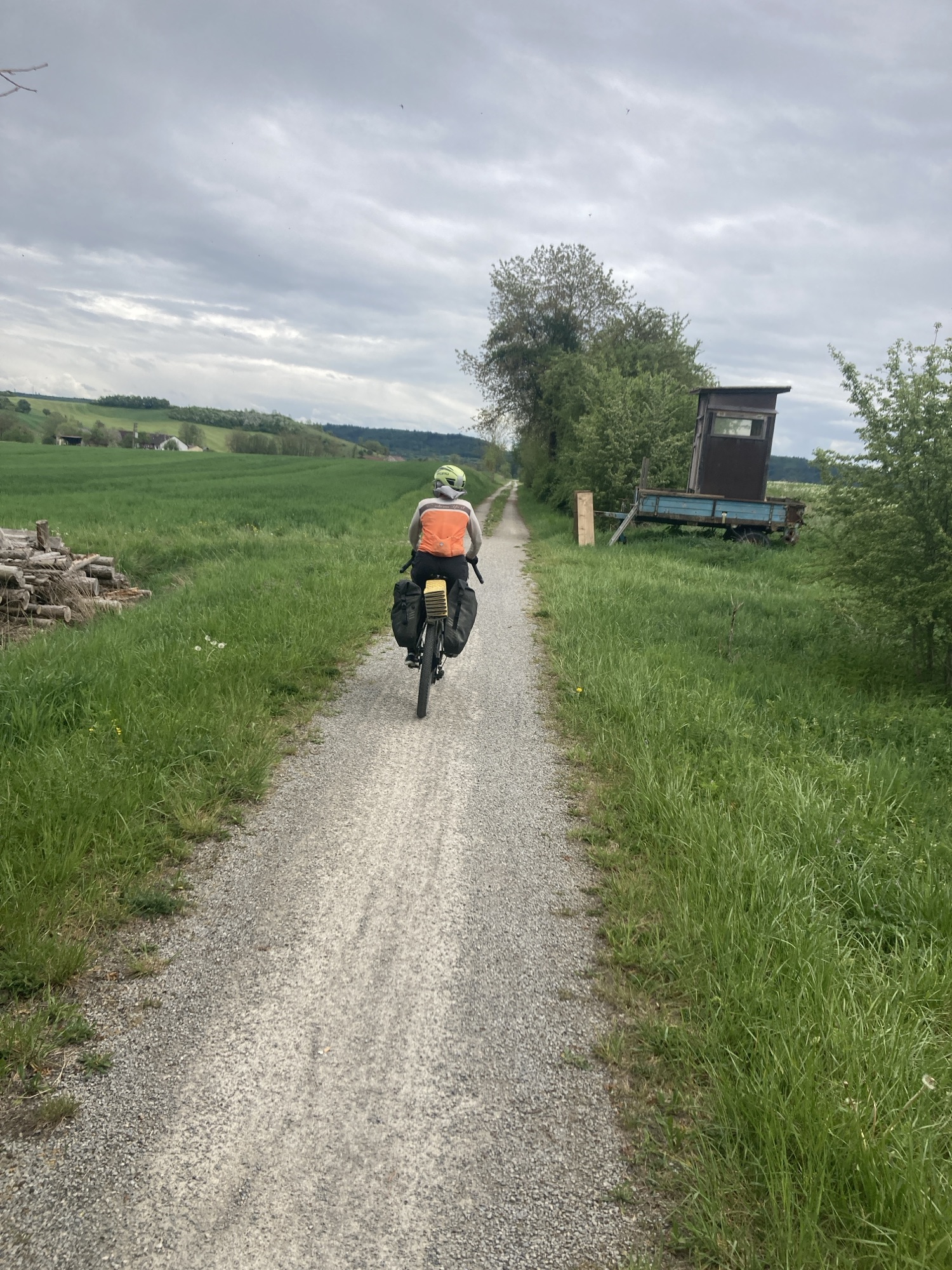
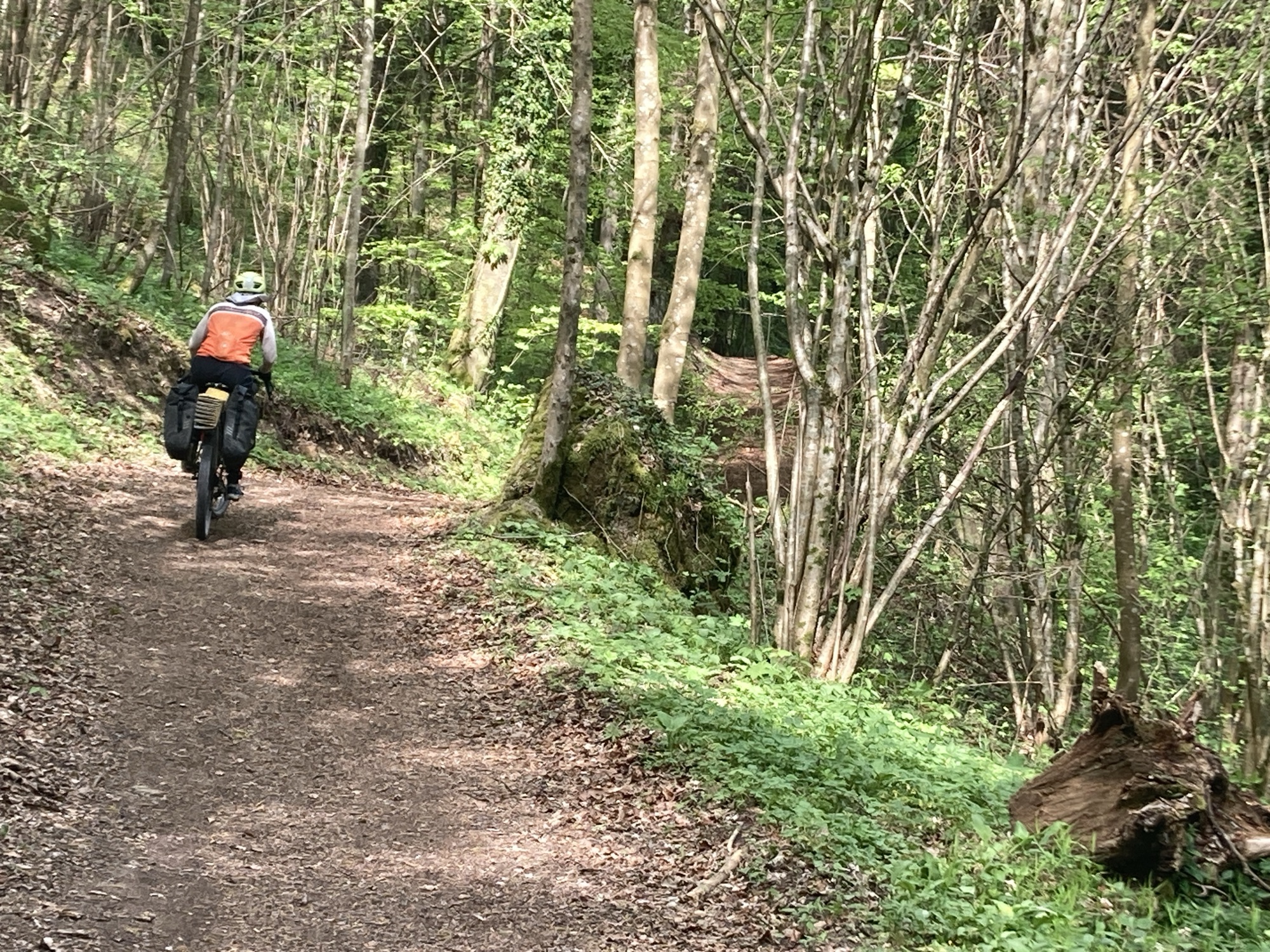
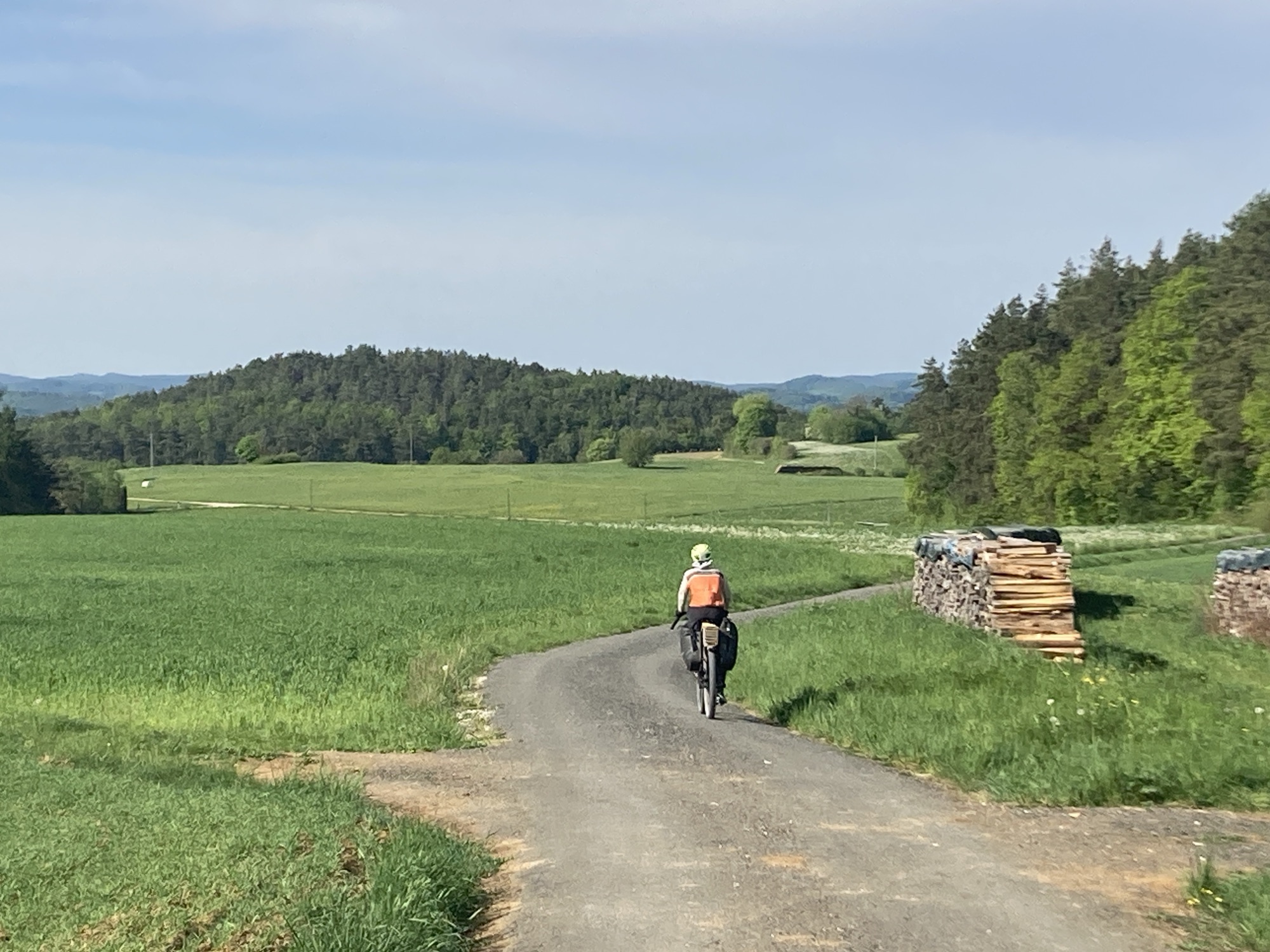
If you’re into cycling and bikes, you know that “gravel” bikes have been A Thing now for a few years. Salt Lake City has very little convenient gravel riding, but not too far in any direction there are lots of gravel roads. In Germany there are approximately 1.45 zillion kilometers (we are in Europe, after all) of gravel tracks, and while the US Forest Service – the world’s greatest roadbuilder by a long ways – has created vast networks of logging roads in the Western US, the German woods and fields have – on a more intimate level – its own amazing maze of roads and trails. Which is where the bikepacking.com route comes into play; while I don’t necessarily need or want to be spoon-fed adventures, having locals – or as I like to call them: “friends I don’t know” have gone to incredible lengths to identify the ways through the maze to keep the riding a-maze-ing.
Yes, we are simply following The Blue Dot on the bike computer and/or phone, but to try and navigate either by reckoning in the deep dark woods or even with a decent map and even keep track of where you are, much less where you want to be going would be incredibly time consuming and frustrating. So we rely on our “friends” for their efforts. And the effort that goes into these big trans-country routes is astounding; we were on obscure, unmarked trails and double tracks in deep woods that only a savvy, exploration-oriented local would know, but this network of connected obscure trails goes for hundreds of miles! How does it all get linked together? Again, an enthusiastic community of bikepacking friends.
The section that we did goes down the border between Germany and Czecia bouncing back and forth between the countries, and eventually we started trending to the southwest. Which meant that we were spending a lot of time in the former East Germany and would eventually cross into the former West Germany. The bikepacking.com website made some reference to the Iron Curtain and that we’d be able to get a better understanding of what that encomppassed, but the truth is that we saw no evidence of…anything along that “line?” And it was a distinct line: at dinner one night we met some former East Germans who pointed out that the 1990 Berlin Wall coming down was just a small (but significant) snapshot of what was happening with the rest of The Wall:
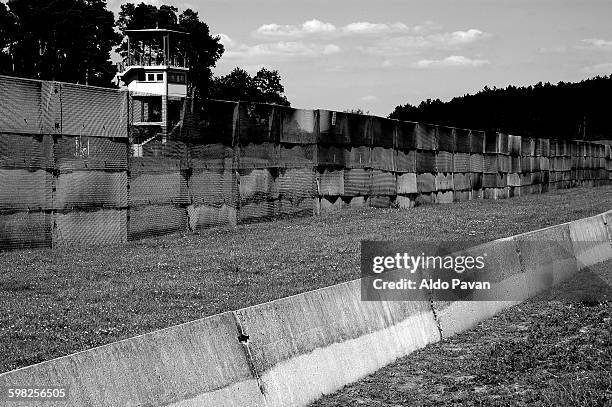
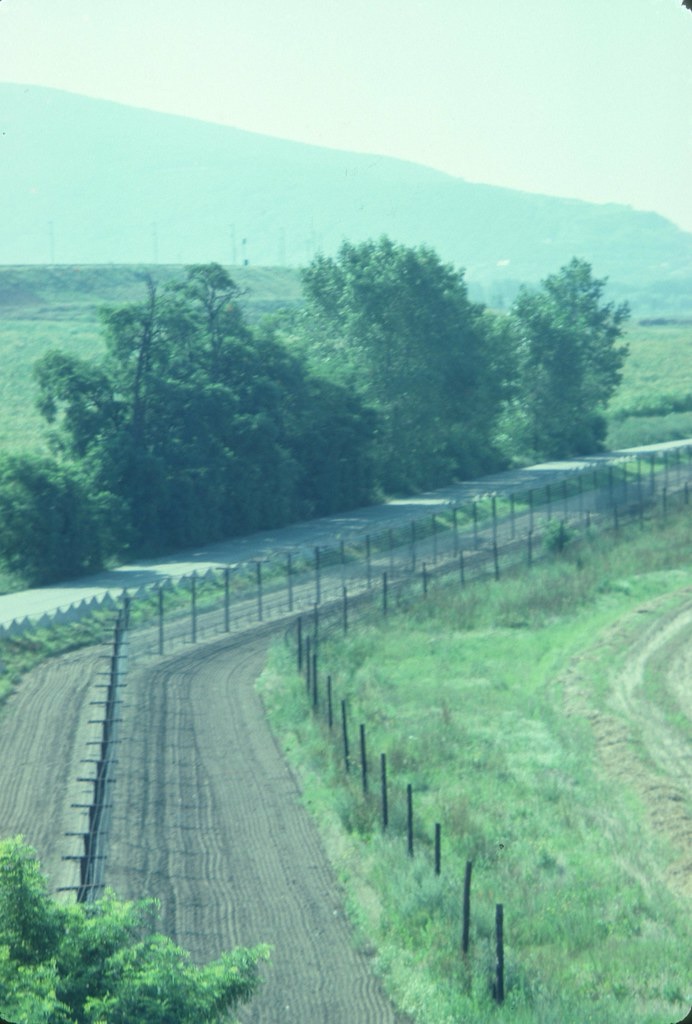
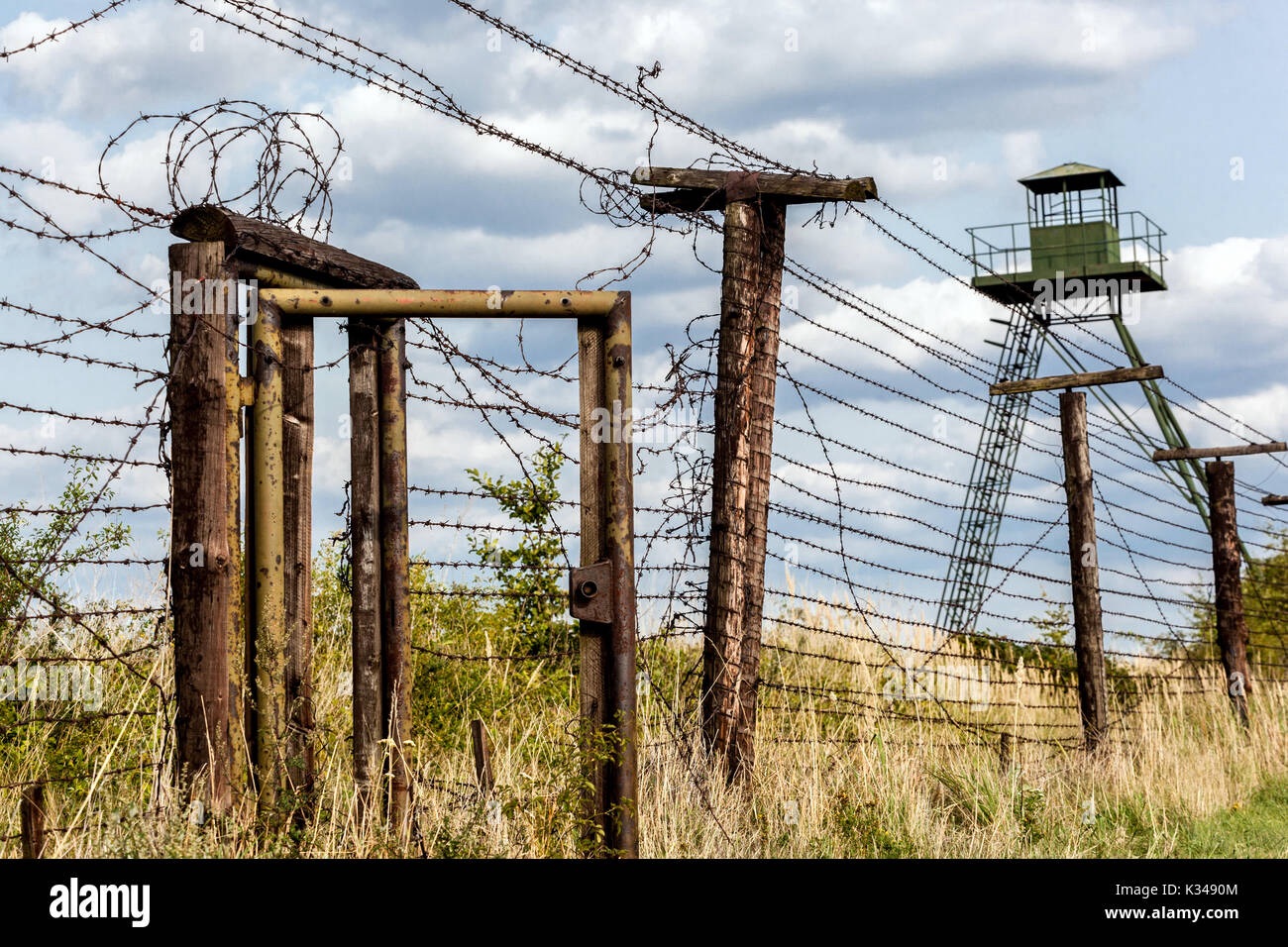
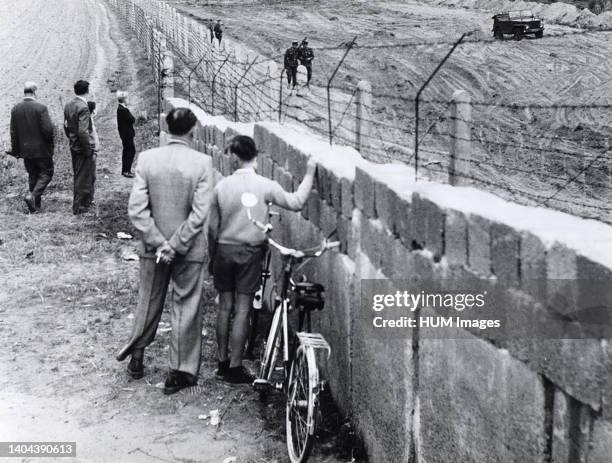
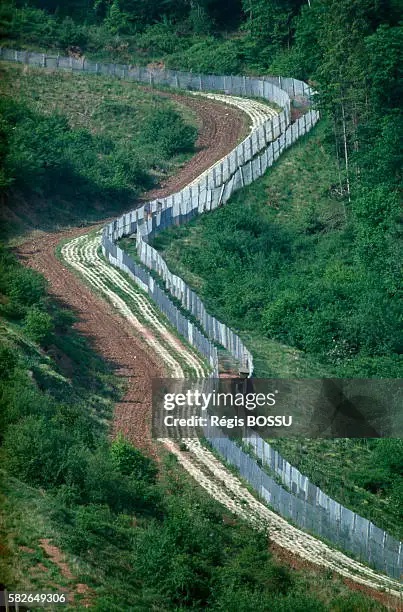
It stretched for something like 1200 miles! And was heavily guarded, even in pretty rural areas.
So weird to see that lovely countryside – on both “sides” (that we didn’t see) and think about how communities were so similar, yet so divided.
Interestingly, the “East” Germans we met were in high school at that time and didn’t really know any better, and they were having a fine life as “communists” with plenty to eat, a decent education, etc. But when it all changed, it was quite traumatic; for them and their communities integrating two economies and culturers that had evolved over 45 years into vastly different entities, and with one basically being fully subsidized at a very basic subsistence level it was quite traumatic for the Easterners when that subsidy was suddenly taken away, and those who could afford to leave immediately left the East for the West, so it was a big brain and labor drain. It took quite a while for actual integration to become valuable to the Easterners, and while the folks we met are doing fine now in their 50’s, they were quite aware of the long road to get there.
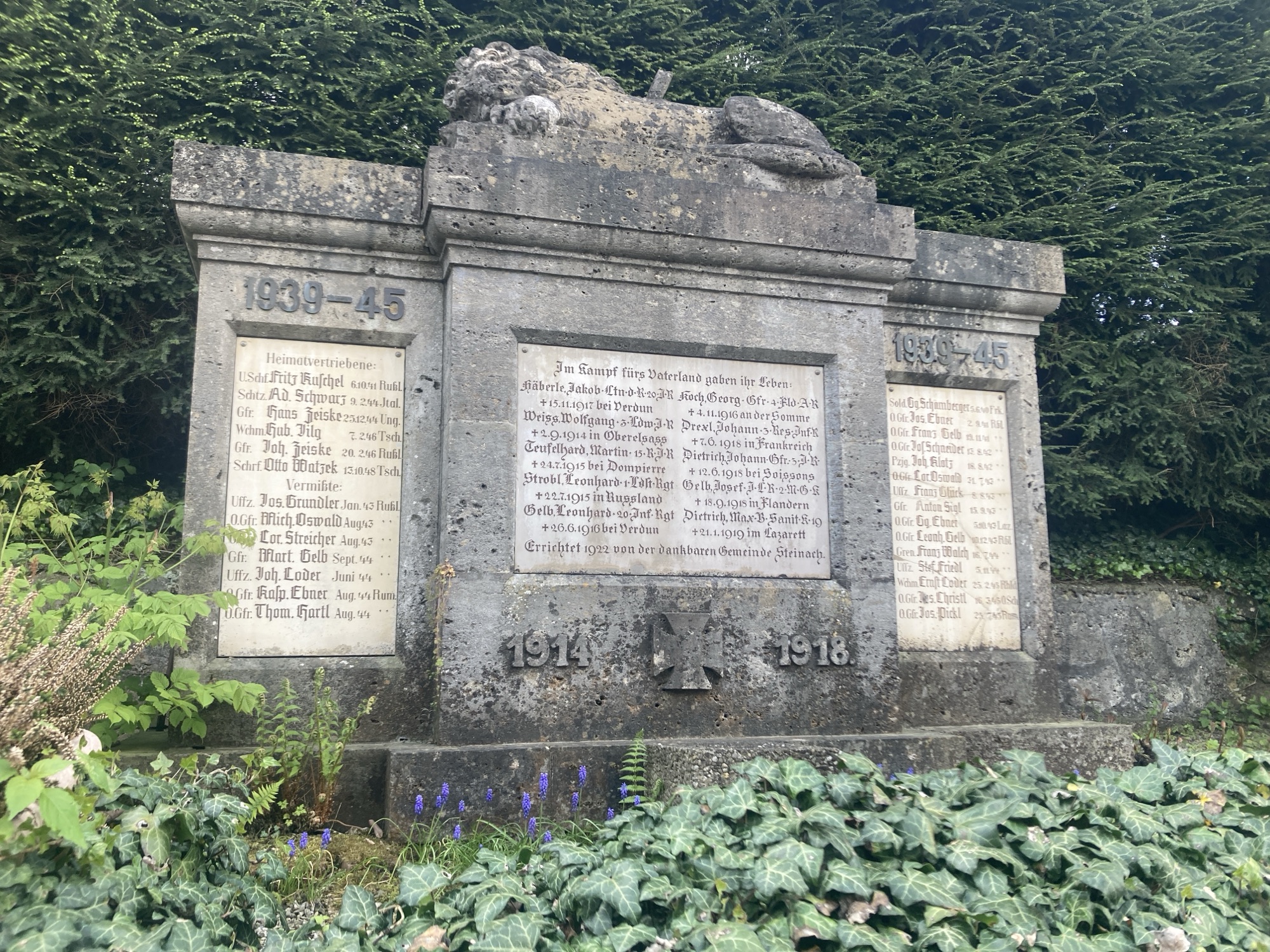
Another interesting thing about Germany is that there are very few war memorials. In France, Austria, Italy, the UK, etc many villages have at least small monuments with the names of the local lads who were killed during each of the wars. Germany has very few. For sure, they were the “bad guys”, but just like the Allies, very young men were yanked out of their youth and told to go out and kill and/or be killed for philosophical differences, and just like the youth in Allied country villages, their loss was felt acutely by their families and communities.
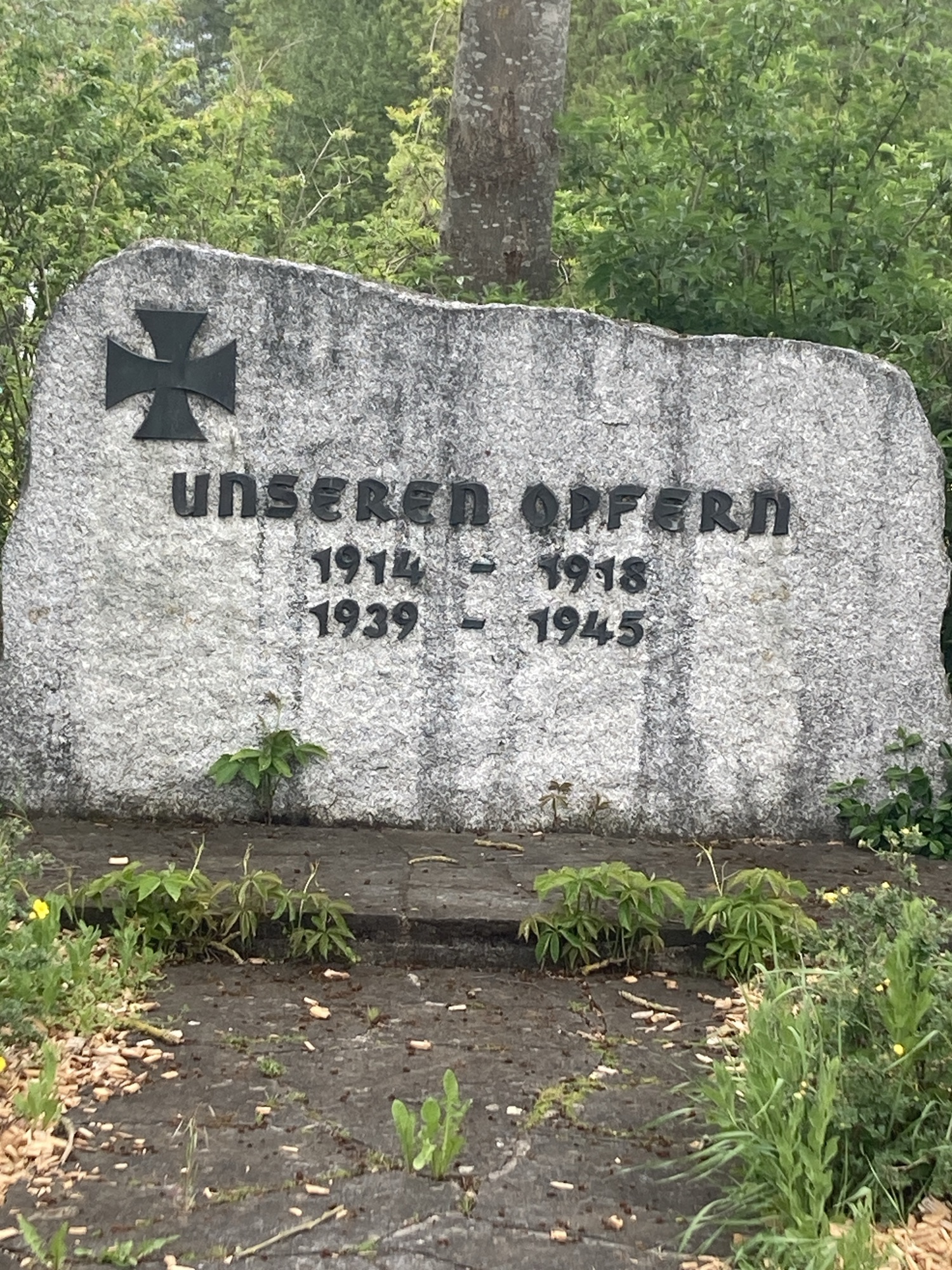
In a coupla weeks in Germany we only saw a couple of these m
In lieu of riding the whole rest of the route to the southwest corner of the country, we kinda needed to get to Munich, so at a point where the Trans-Germany route intersected the “Romantic Road”, a near-300 mile route that links up 30 “quintessential” villages; according to Wikipedia it was “created by promotion-minded travel agents in the 1950’s” and it turned out that their vision was correct: something like 20 million people travel to//through at least parts of this loose route (by car) every year. And indeed, the villages are charming and very old
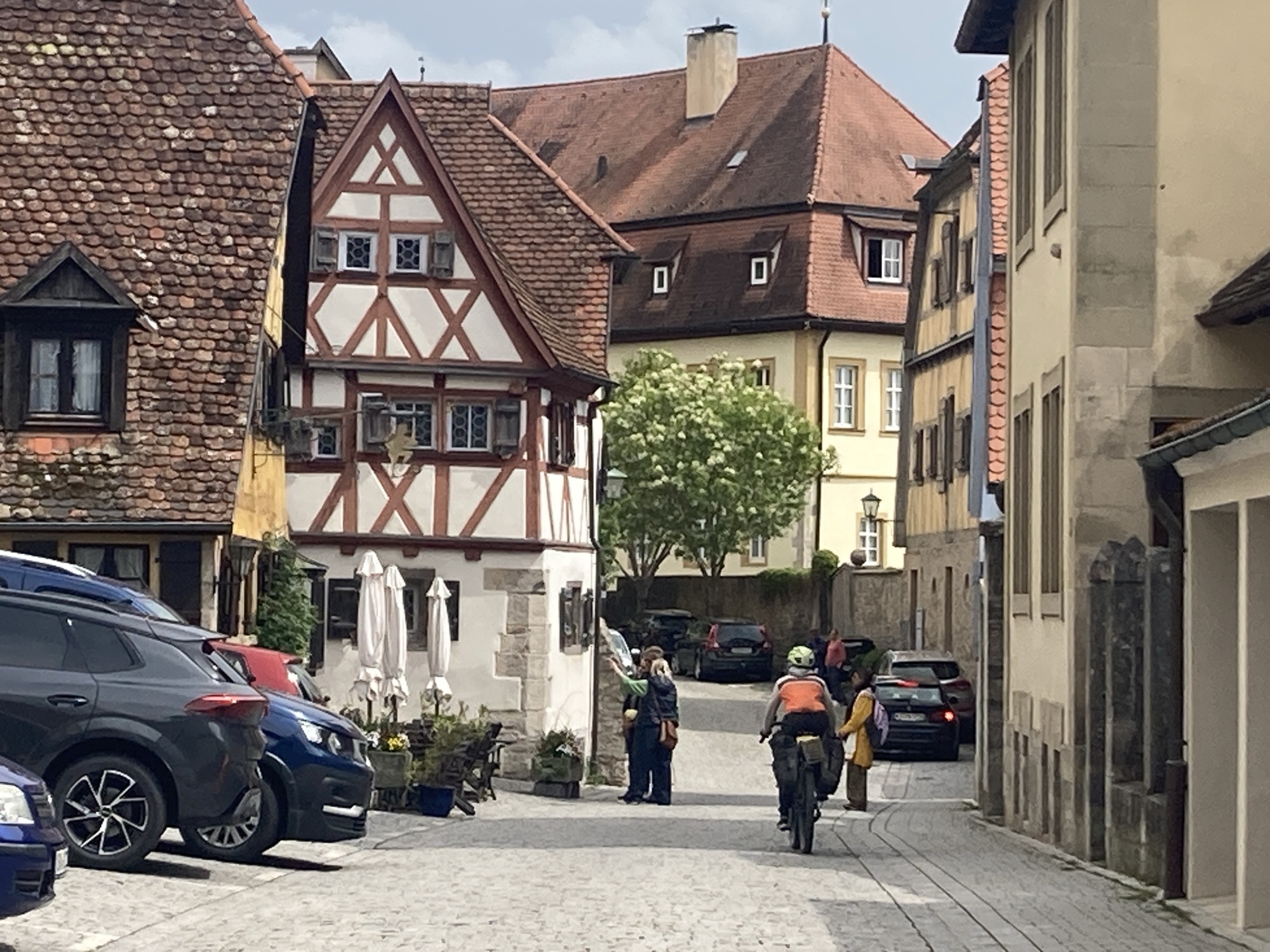
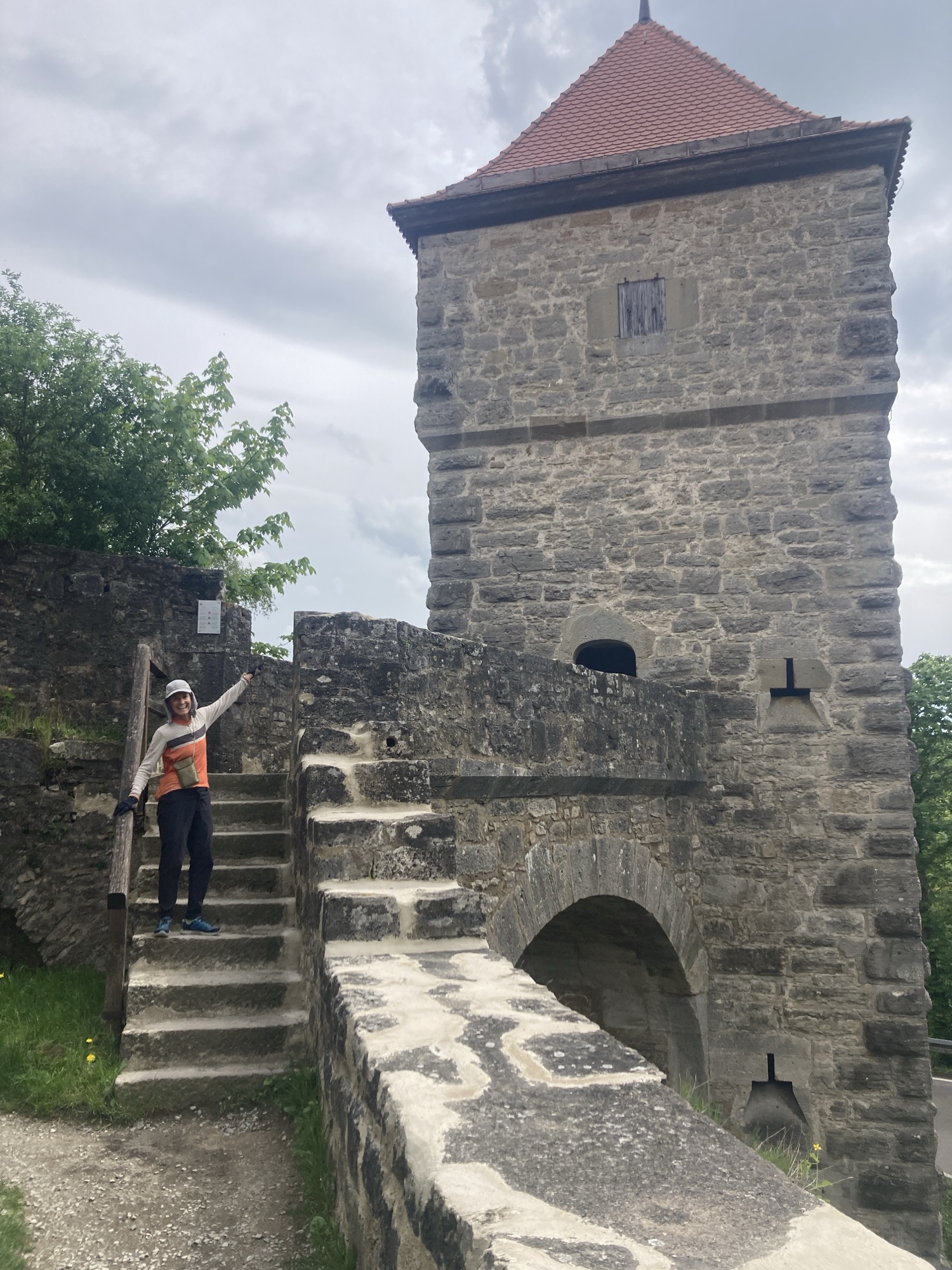
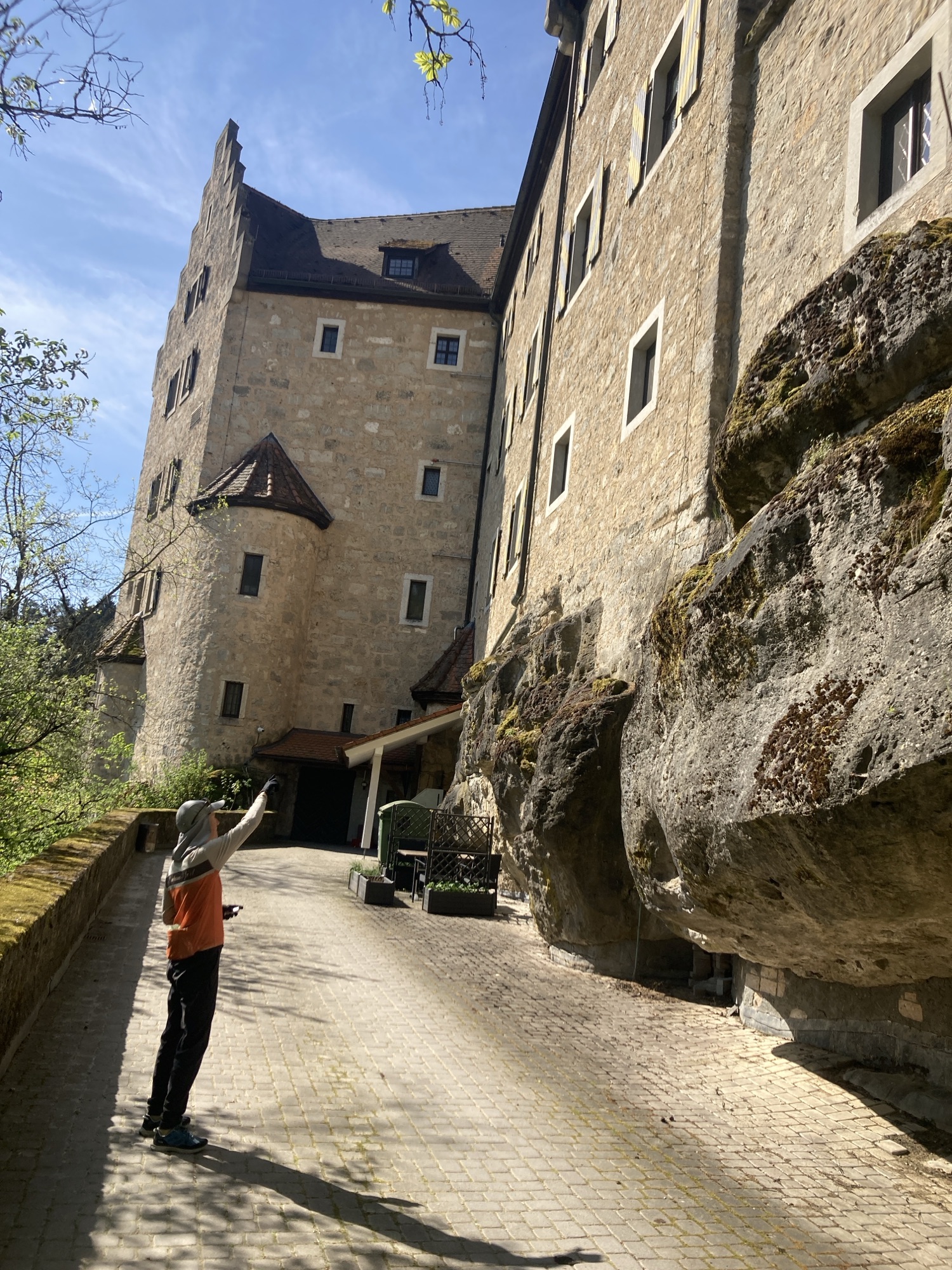
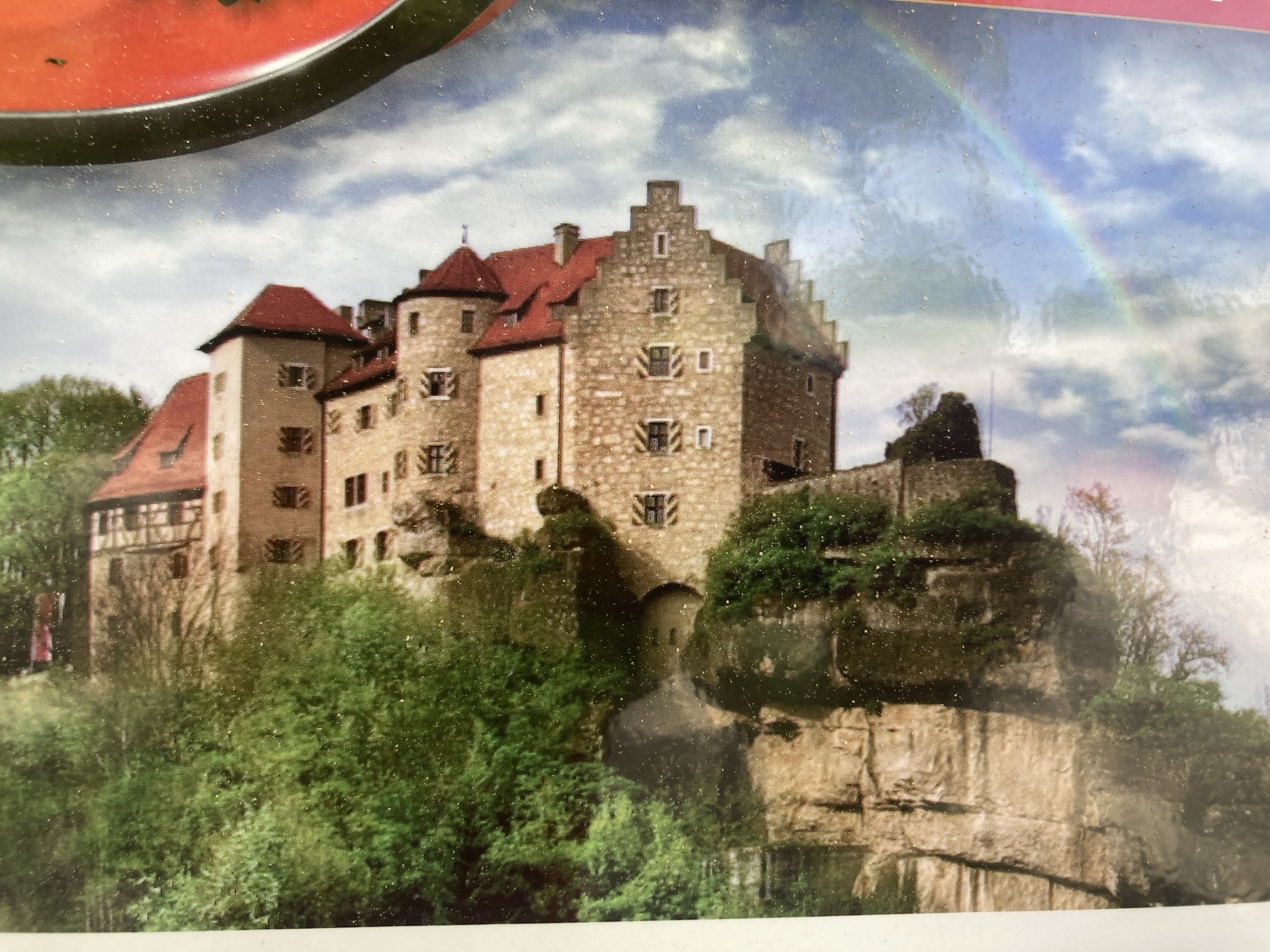
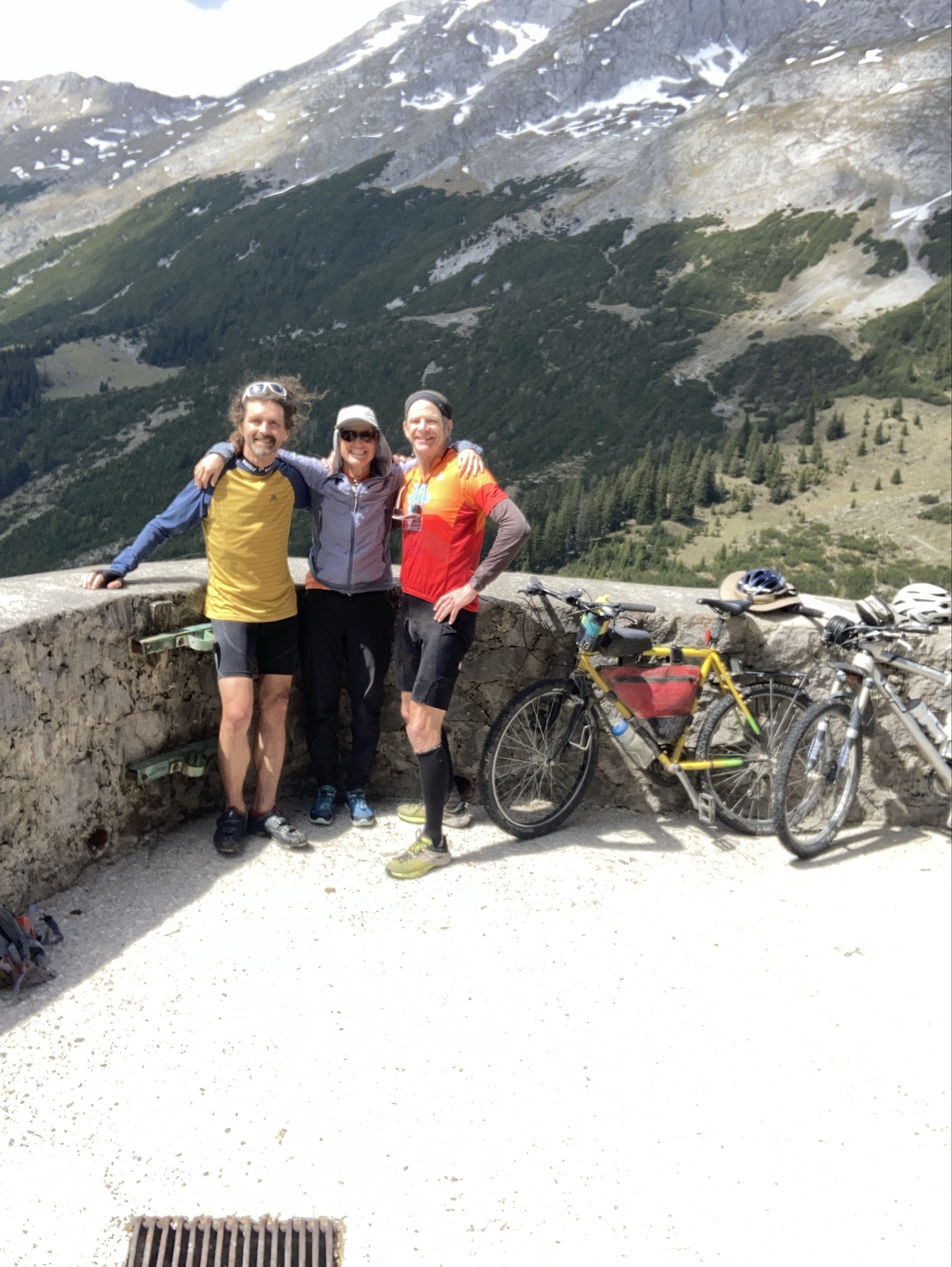
We loosely used the Romantic Road to work our way south towards Munich, where I had found an Ear, Nose, and Throat doc to drill out excessive bone growth in my ear, but we were a bit early for that so we went a bit further to visit Chris and Lorenz Leiter; a father/son team whom Colter and I were racing “against” (with!) in the Pierra Menta and their lovely wife/mom Andrea. They live at the foot of the Bavarian Alps, and we spent a couple of great days riding, hiking, and learning about Germany with them before getting a train to Munich.
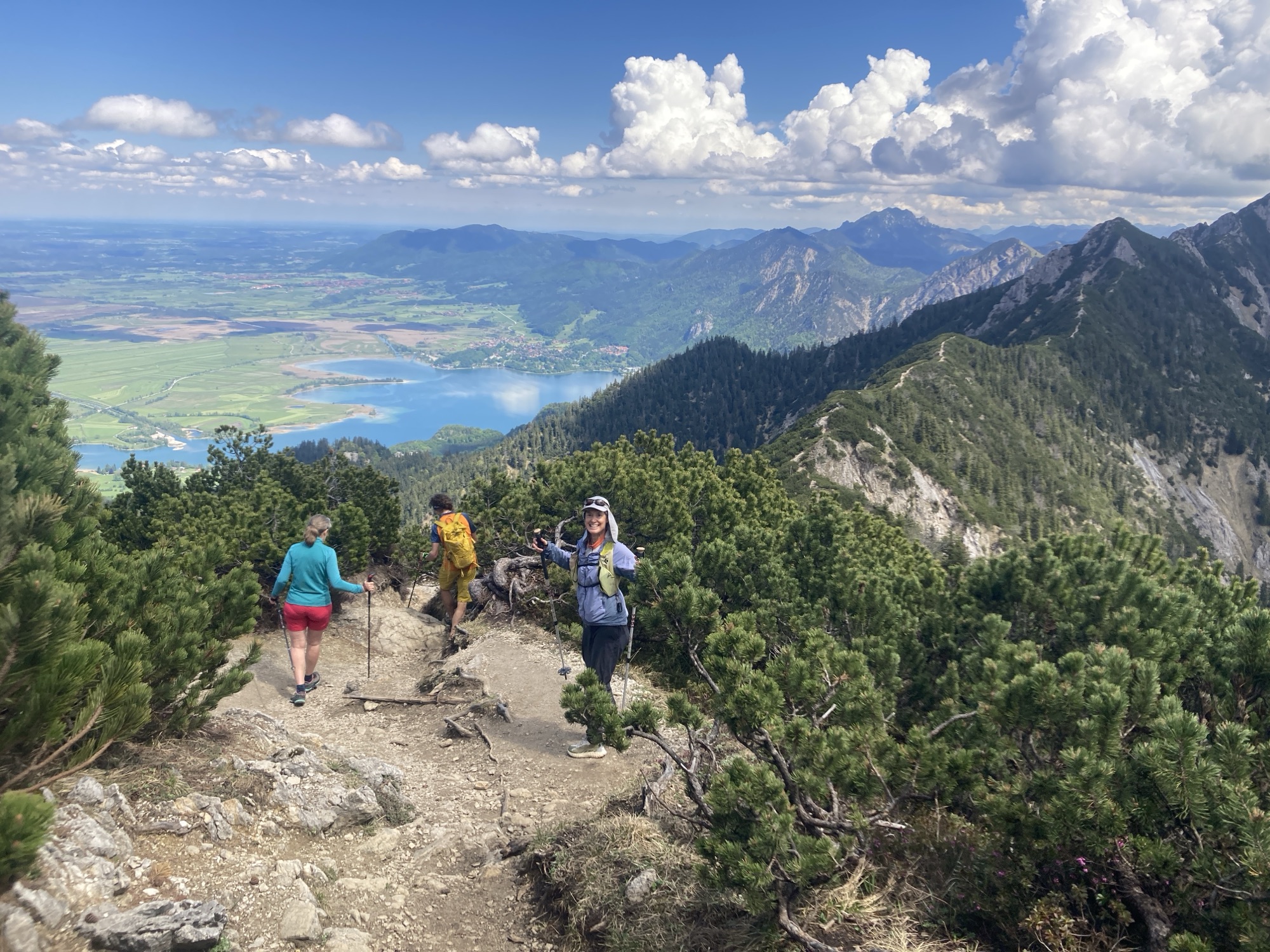
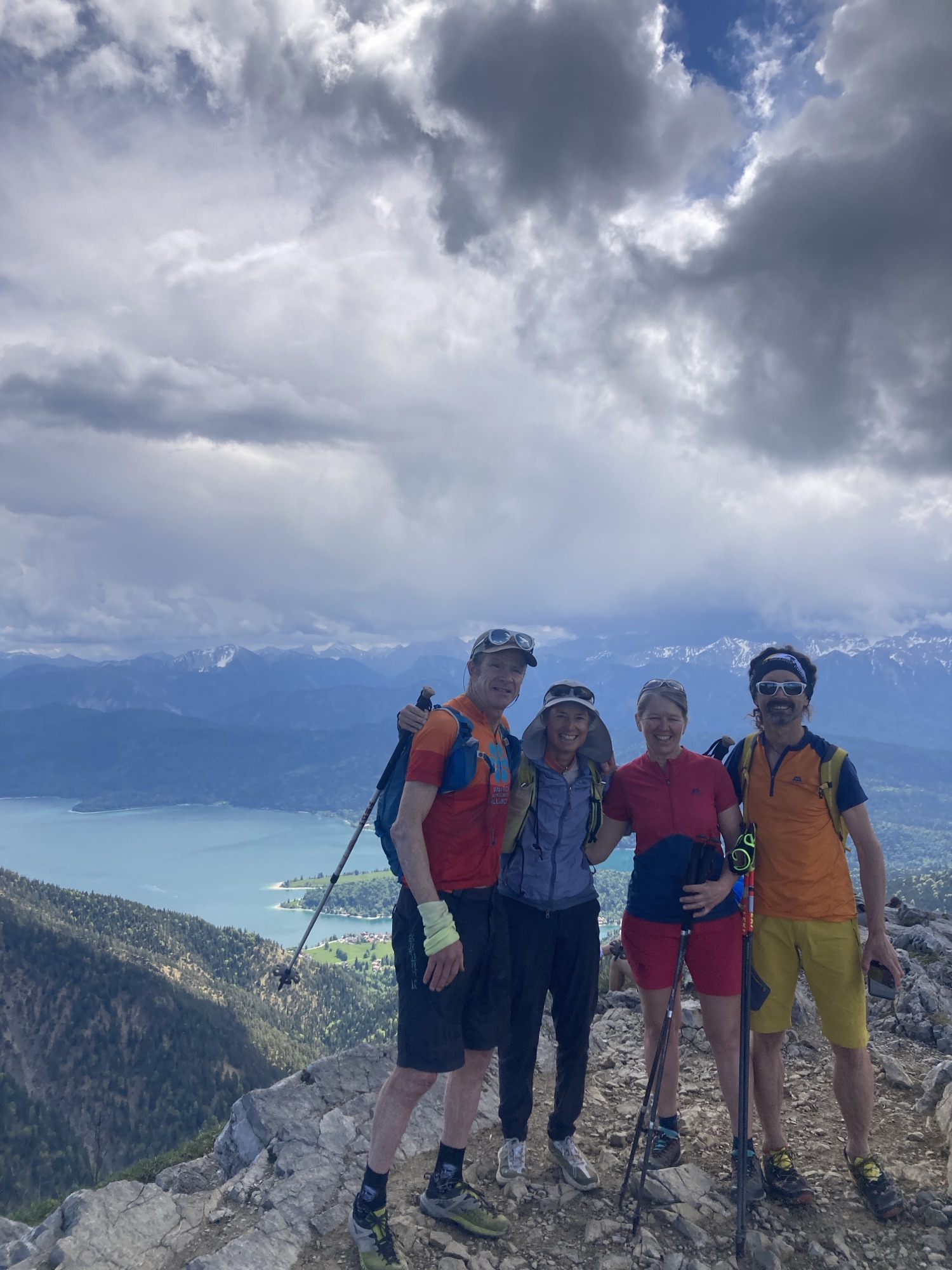
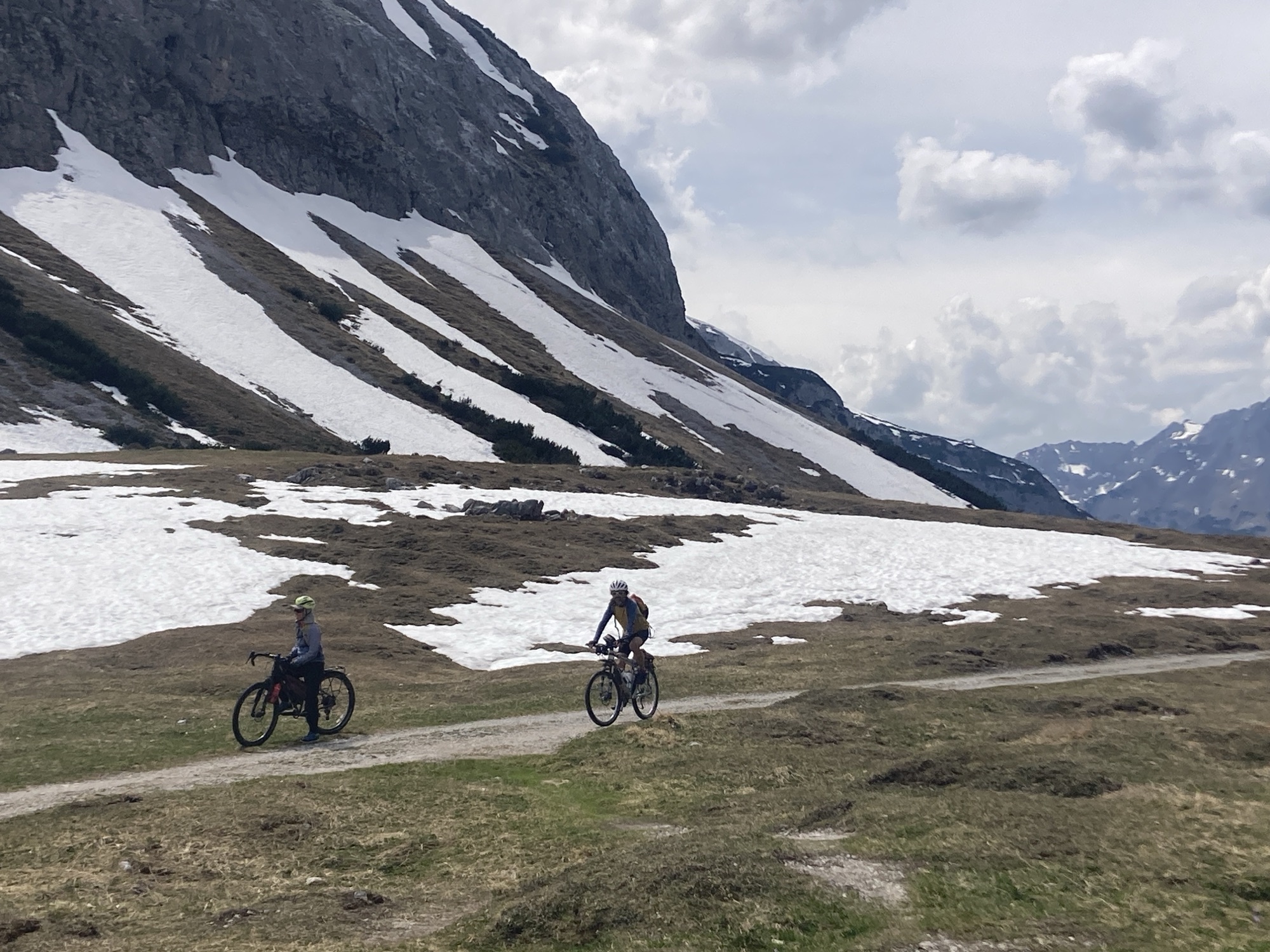
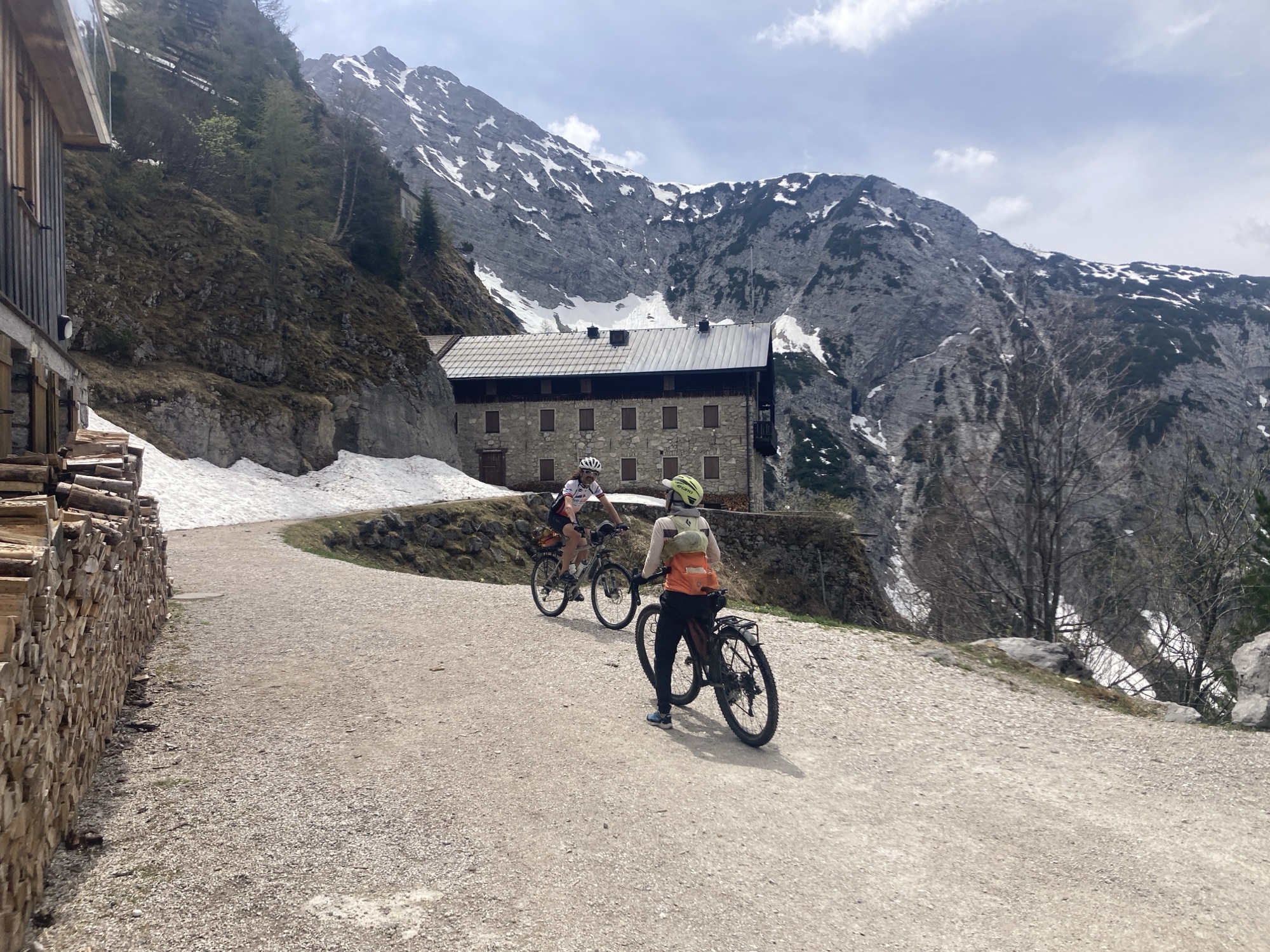
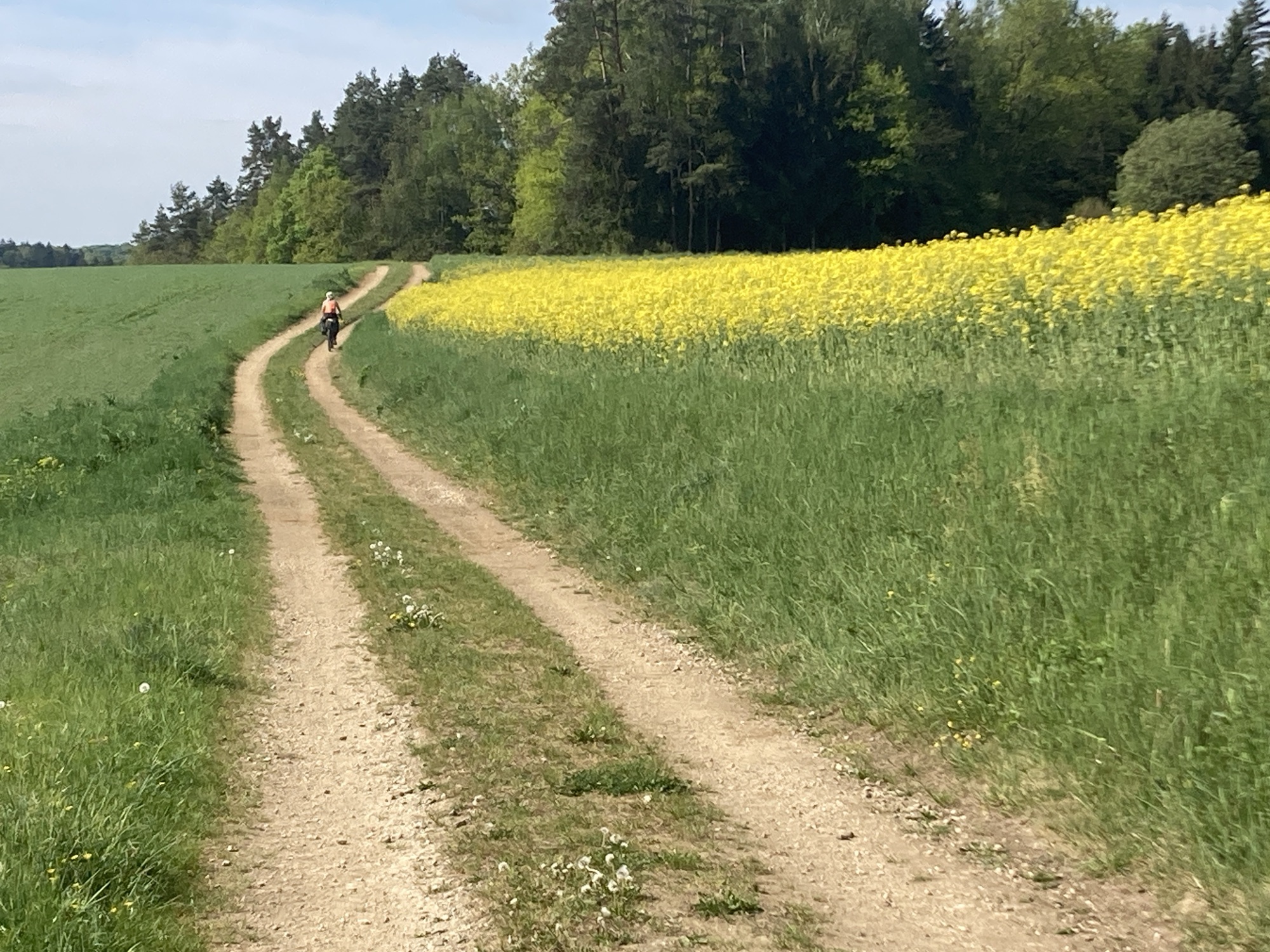
When we veered off the Trans-Germany route and onto the Romantic Road we changed our mapping tool to Komoot, which as I’ve mentioned before, is a great app for setting up bike routes (maybe that’s partly how the trans-country bikepackers start their routes, but they gotta ground-truth them to ensure they are good to go!) and the terrain in the rest of Bavaria (the big state that houses Munich and stretches south into the mountains and the Austrian border) was great rolling forest and farmland as well.

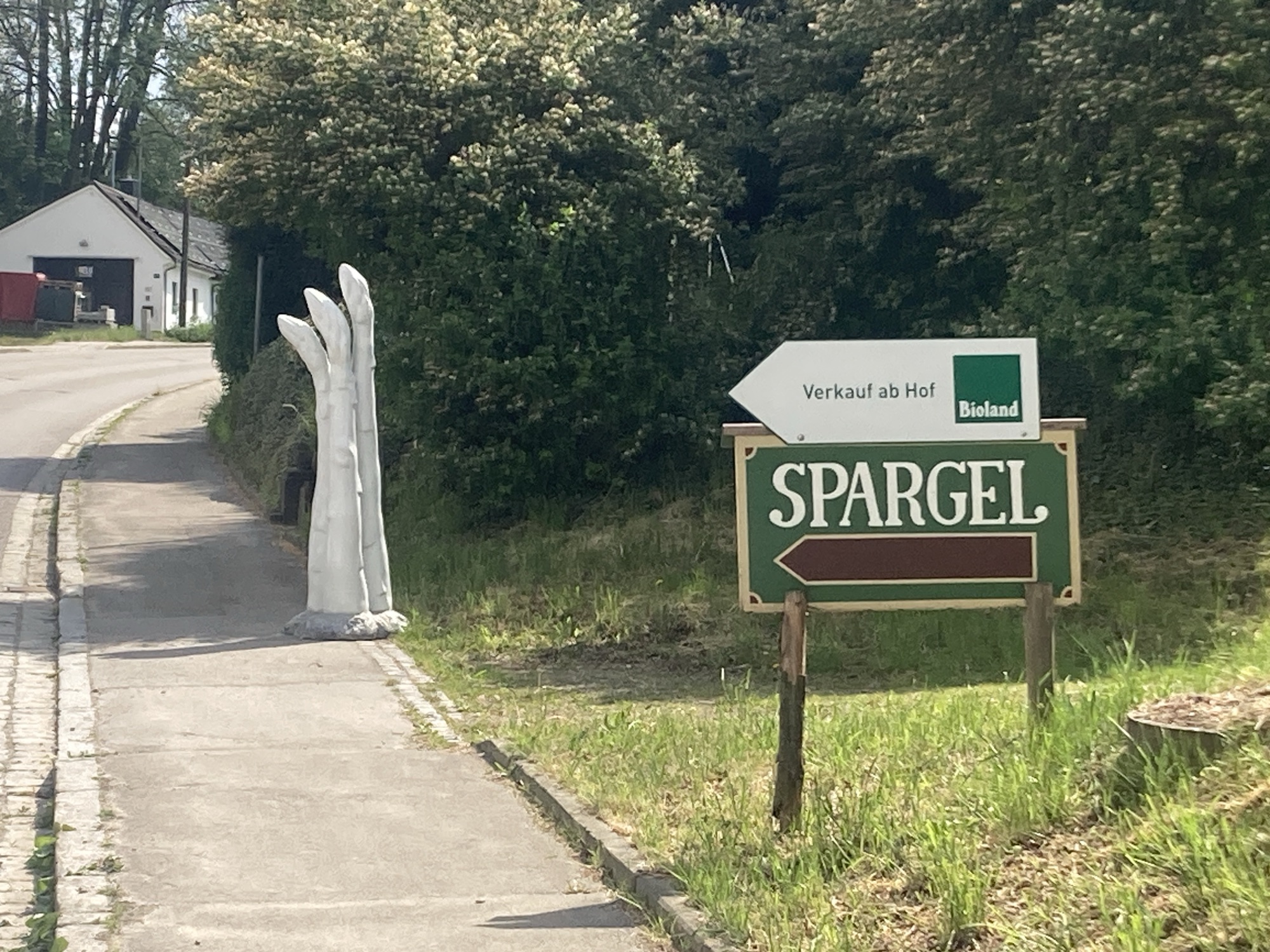
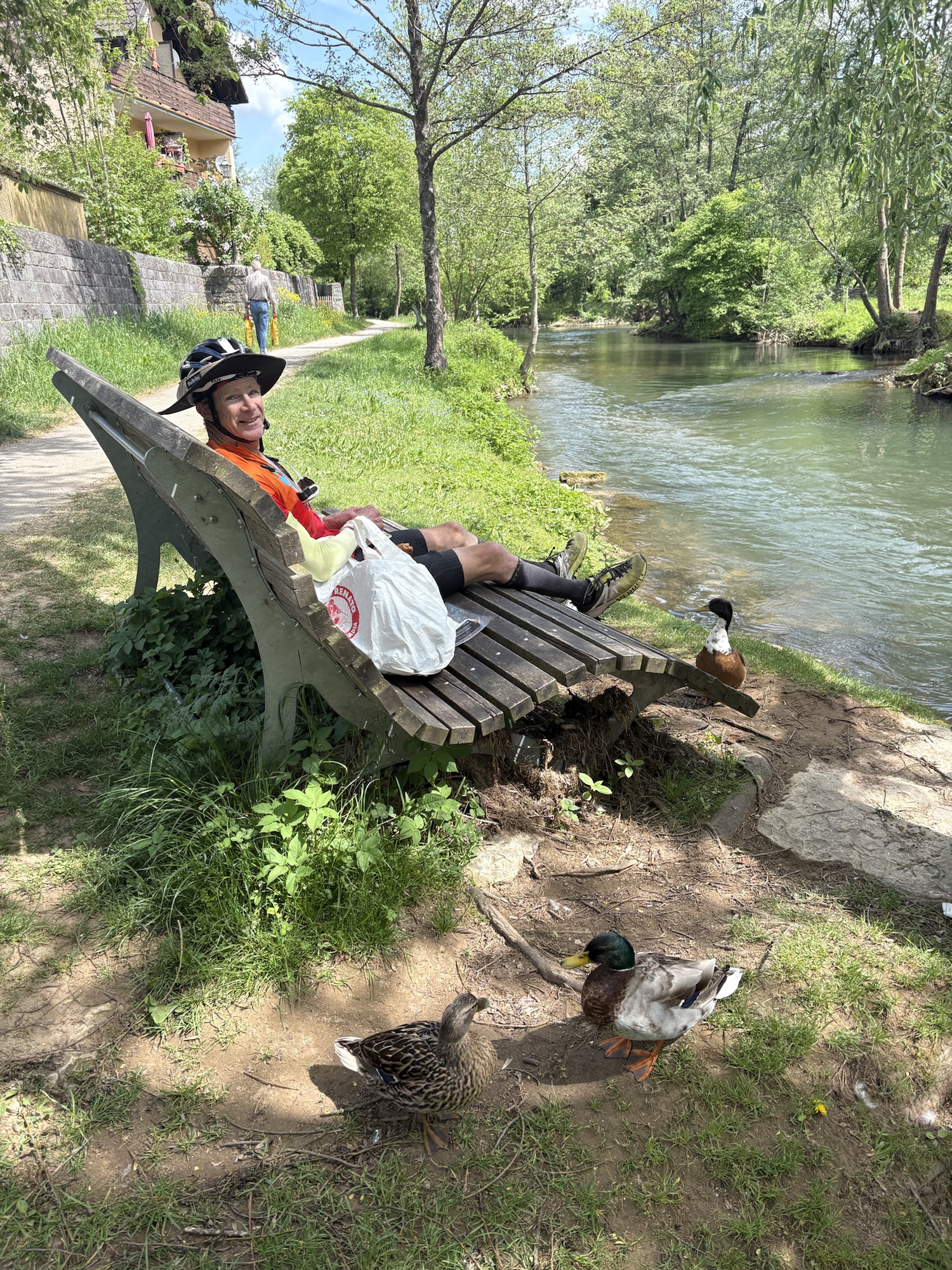
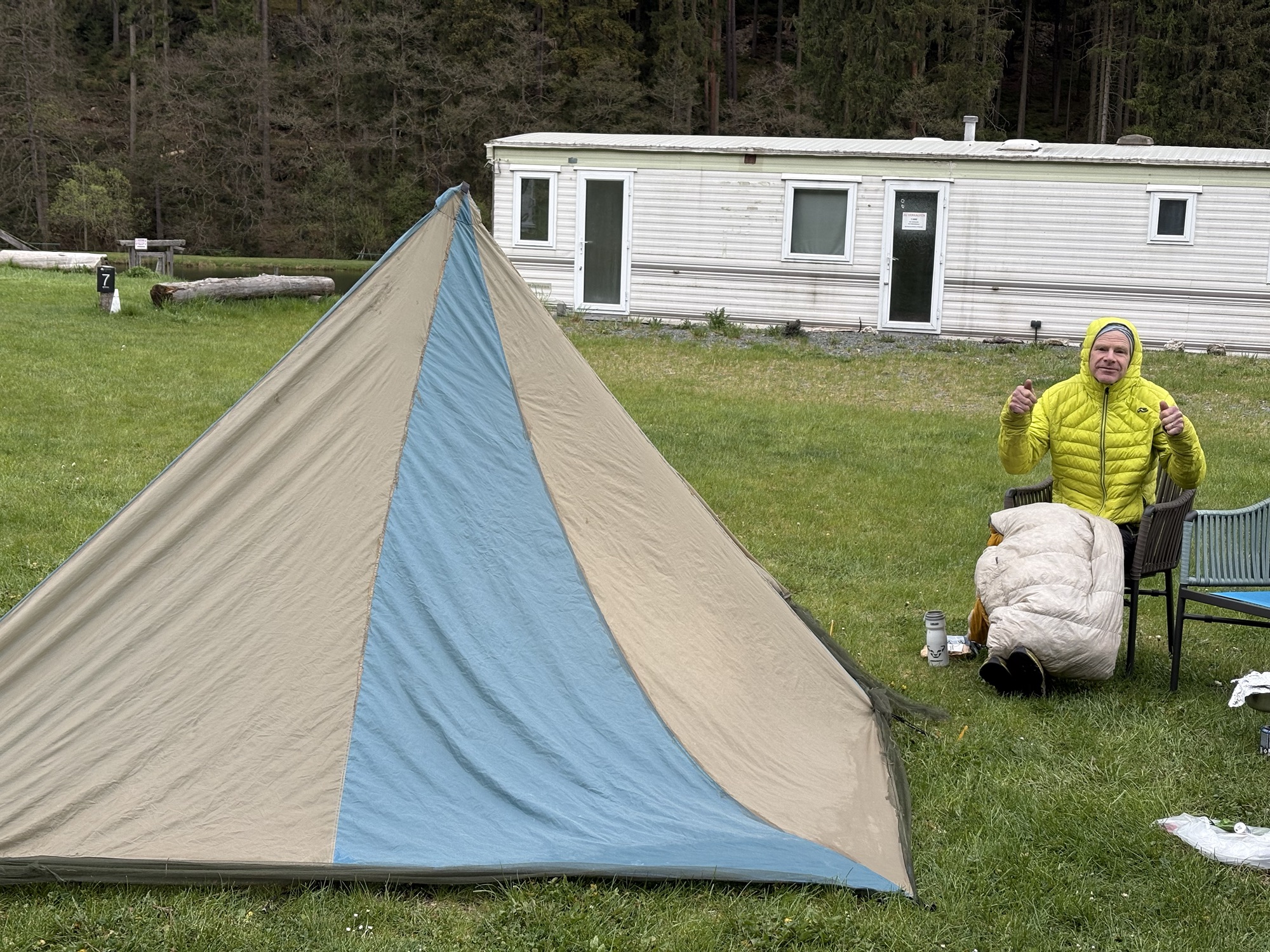
While we had camping gear with us, we ended up not using it much; formally, “wild camping” is not allowed in Germany (nor any other European country besides Scotland and Norway, which are almost too boggy and hummoky to camp anyway!) but it can be done, and there are plenty of places to do it. When asked about wild camping the locals say “well, roll in late and leave early and you’ll be fine”; the only problem is that we rarely roll in late and rarely get going early! There are a good number of campgrounds, but many are RV parks and are sub-optimal.
However, hotels are plentiful and fairly affordable; usually in the 70-90 Euro per night range which always come with a hearty breakfast spread. And while it didn’t surprise us, all of the hoteliers’ first question is “do you need to plug in your bike?” E-bike bikepacking is very much a thing in Europe now, and the trans-Germany and Bavaria in general are very conducive to using an ebike; we are always heartened by seeing so many more folks of all stripes out enjoying bikepacktouring than in the years of yore, and the increase is mostly due to the proliferation of e-bikes.
While we only really did about a third or half of the proper Trans-Germany route, if what we did is any indication of the rest it’s a stellar route and dare I say on a continent of great entry-level foreign bikepacktouring this one – and greater Bavaria – may be “the best” place to start, with easy access via Munich and the incredible network of bike-friendly trains that zip you to the start, finish, or any point between. We loved it!
Lovely. Seeing the back of your jerseys riding into the distance is quite nostalgic.
Love the “humanity” throughout this post. Really, you always write about (thriving in it and dependent on it) but it struck me this read. “Friends” creating routes … lovely.
Funny even to be calling out “humanity” yet, it seems so dear today.
Thanks for sharing yourselves.
What an incredible trip, and from a completely different perspective than for most of us who travel Europe by more conventional modes! You’ve give us wonderful, fascinating stories – thank you for sharing Tom & Ash’s Excellent Adventures!!
Hey Annie – As you know, we are huge fans of bike touring in general, and as I mentioned I think the e-bike thing has transformed the activity! It seems that there are a lot more folks of all ages and sizes who are not necessarily “cyclists” as we normally think of but are just keen travelers who ilike the freedom, slower speed, and exercise that a bike – electric or leg-powered – represents. we should talk before you your next trip to ye olde continente!
Hey Annie – As you know, we are huge fans of bike touring in general, and as I mentioned I think the e-bike thing has transformed the activity! It seems that there are a lot more folks of all ages and sizes who are not necessarily “cyclists” as we normally think of but are just keen travelers who like the freedom, slower speed, and exercise that a bike – electric or leg-powered – represents. we should talk before you your next trip to ye olde continente!
Life looks good, Tom and Ash! So happy your rolling adventure continues. XOXO
More Inspo!
Nice summary! Look like VT!
it’s a good warmup for our fall VT extravangaza!
Buon viagio
Tom,
Love reading about your adventures and vicariously living the bike packing life with you both! How different Germany looks today compared to my first visit in the 60s. 😍