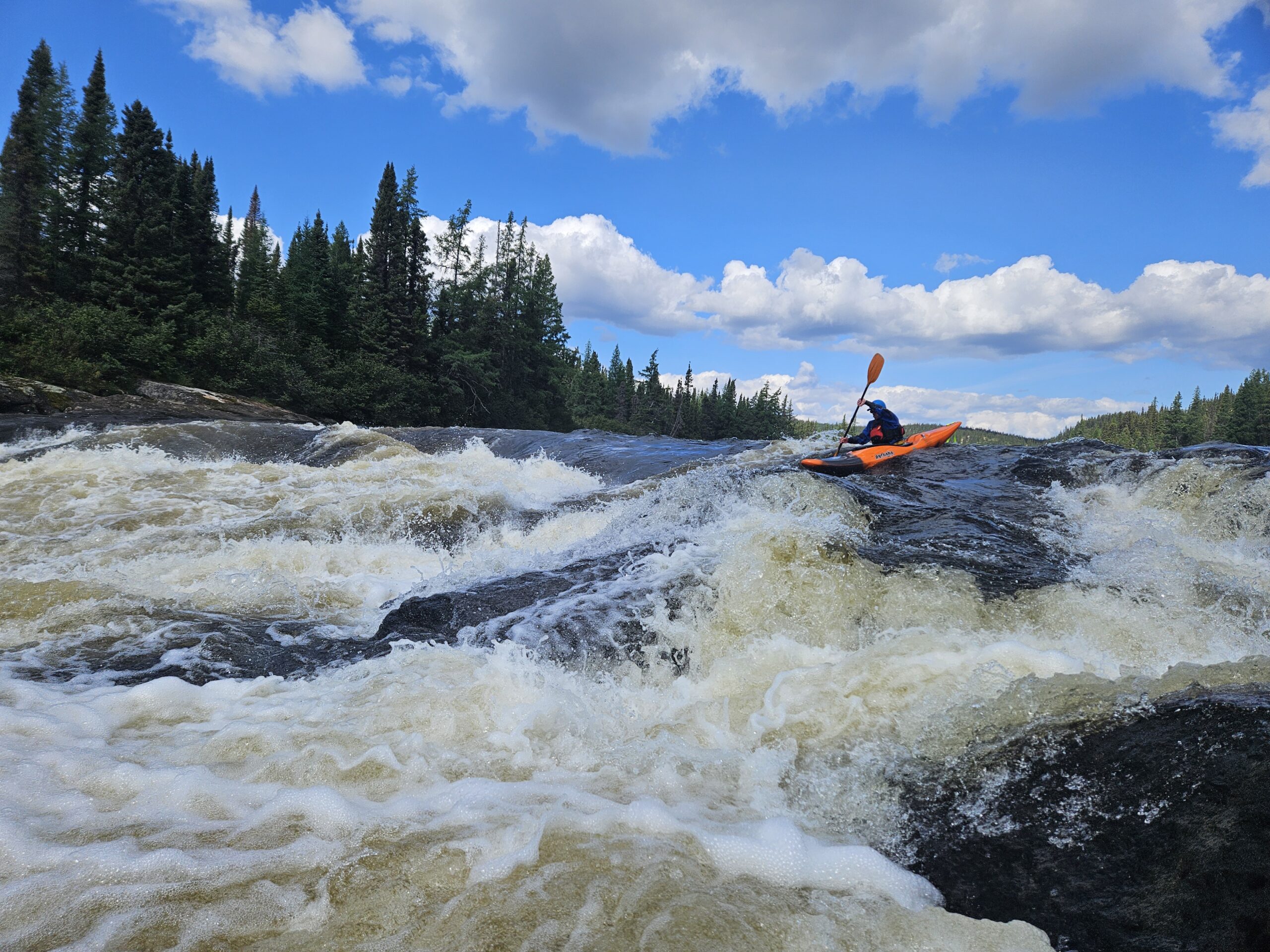
When it comes to adventuring in fun, wild places, Quebec doesn’t quite hold the same stature as, say the Alps, Himalayas, Alaska, Western US, its transcontinental compatriot British Columbia, etc. It’s understandable; the highest point is only just over 5000 feet (not even as high as New Hampshire’s 6k+ Mount Washington, and the high point is a mountain in the farthest north of the province) and much of it is pretty much inaccessible jungle. However, it is actually the same size as Alaska and has the distinction of having 3% of the world’s freshwater in over one million lakes and 4500 rivers. With all that water, it doesn’t take too much elevation relief for some of the rivers to have plenty of rapids. And the Magpie river has plenty.
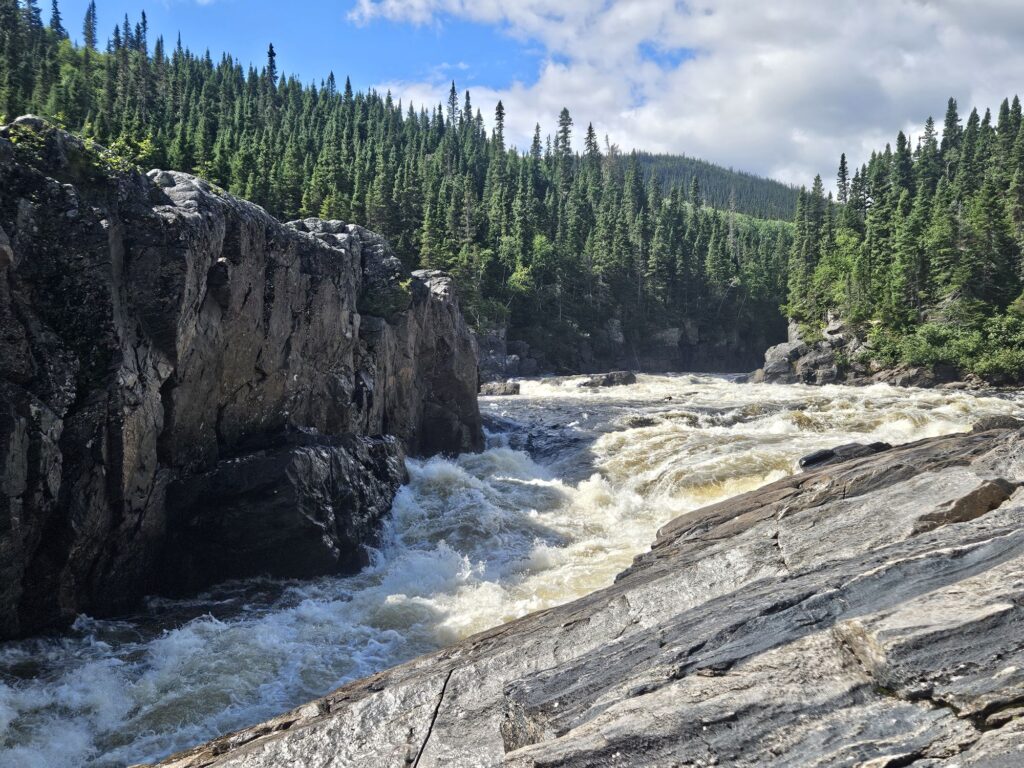
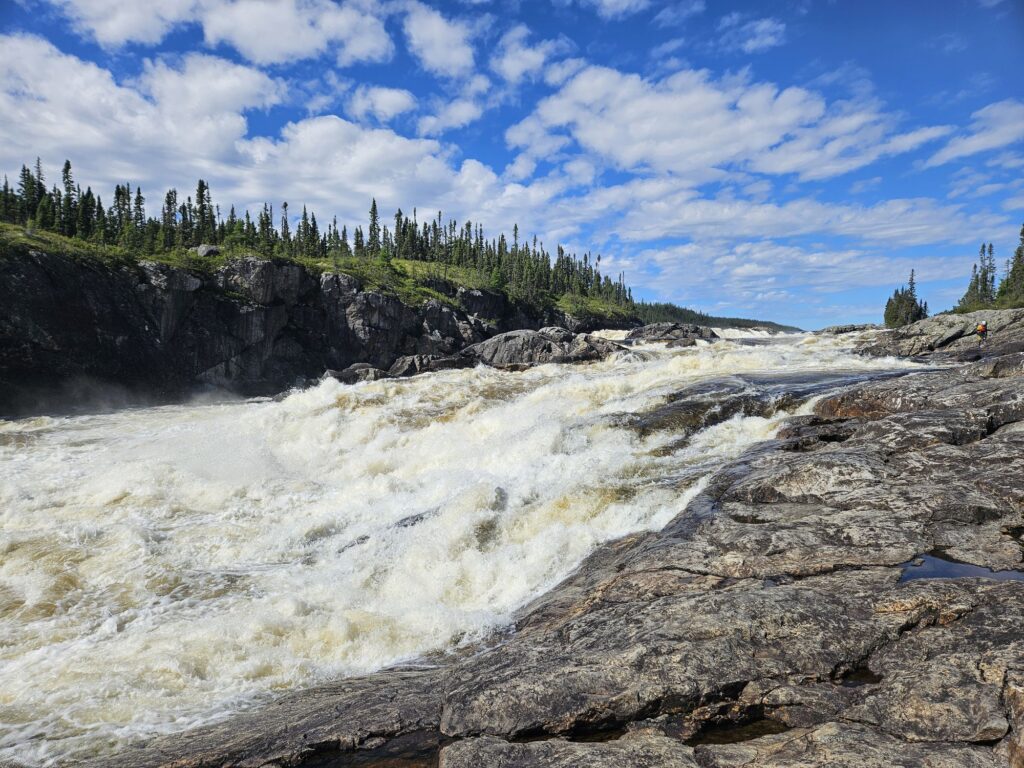
The Magpie is in southeastern Quebec, downstream (east) from Montreal and Quebec City and a tributary of the mighty St. Lawrence river (which is the prime river draining the Great Lakes). To get there from the US is a journey itself: I flew to Boston, bused to Greg and Sue Hanlon’s place in New Hampshire, then commenced a 14 hour drive up towards Newfoundland and Labrador.
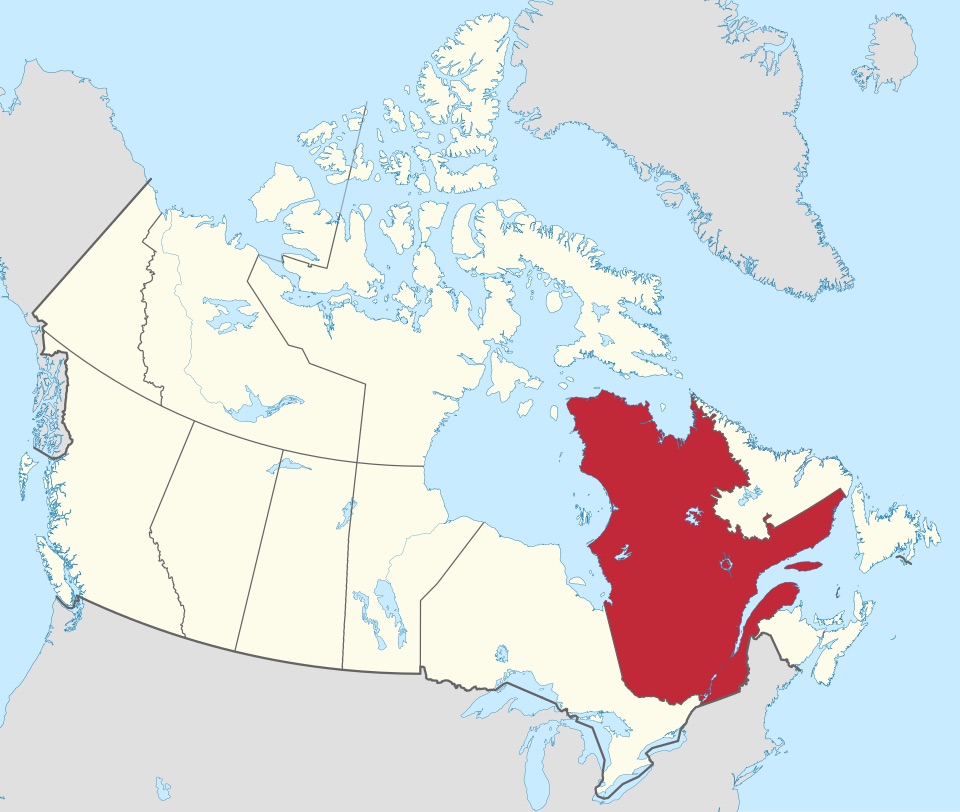
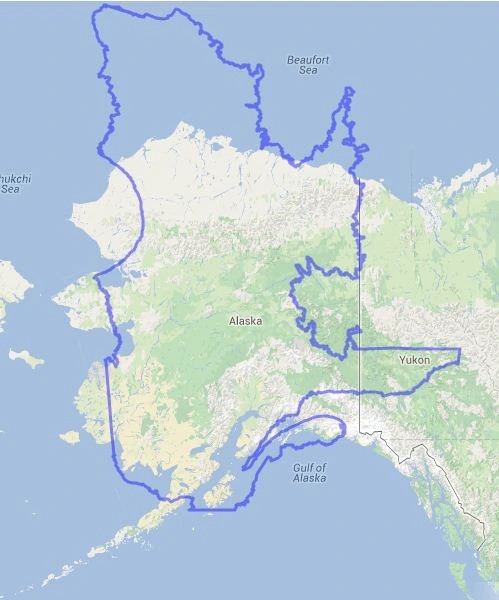

In 2009 I made the same journey up that way to paddle the Romaine river; another notable tributary (just to the right of the Romaine in the above image) that was characterized by a lot of flatwater punctuated by huge rapids.

This trip was memorable for me because I was pretty intimidated by the big rapids and felt like I was barely hanging on, and because there was a lot of helicopter traffic and major construction because Hydro Quebec was building a series of dams and it was a “last descent” since the river tragically is now just a series of lakes.

On the other hand, the Magpie is not only still undammed but in 2021 was granted “personhood status”, which actually gave it legal rights. As reported in National Geographic “it’s part of a global, Indigenous-led campaign echoing the ‘rights of nature’ movement to provide concrete protections for the natural landscape.” In this case, it’s to enable natural flow, maintain its extraordinary biodiversity, and create protection from pollution and industrial development. It was first proposed for the Klamath river on the Oregon/California border in 2019 and was an important catalyst for the removal of four dams on the Klamath. Pretty cool deal.
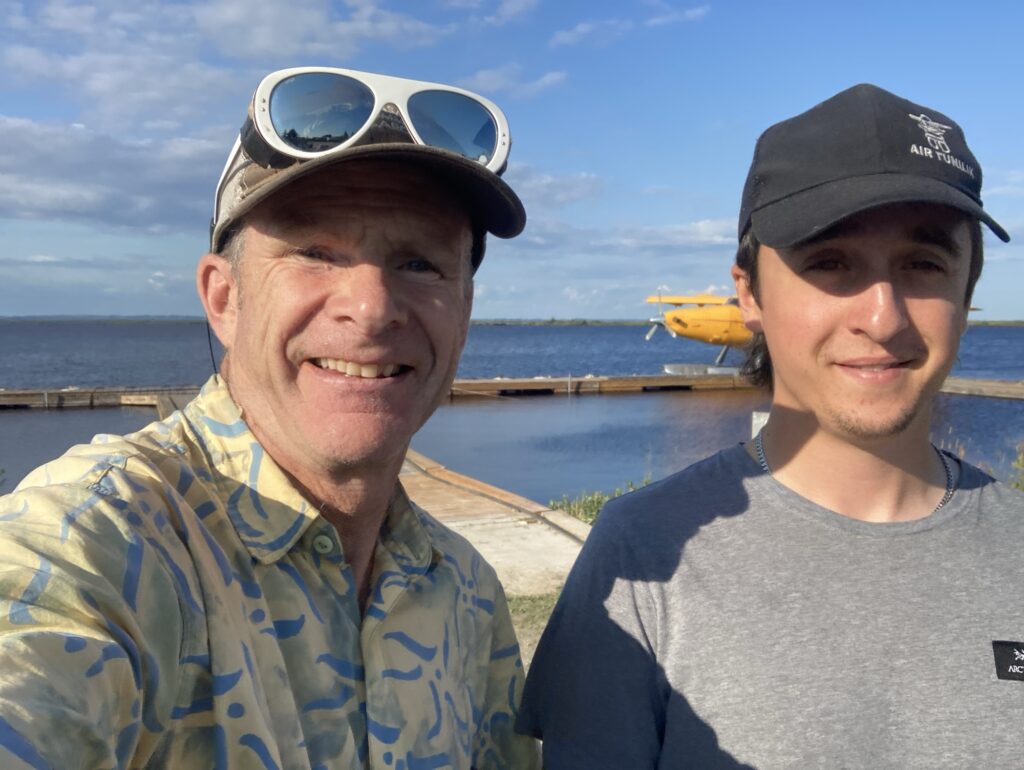
We had a strong group of five: Father/son team of Greg and Sawyer Hanlon, longtime Vermont paddler Mike McDonald, and Jackson/Teton paddler/skier Jon Wiedie, who – in the small world of adventurous kayaking – met Mike, me, and Greg all independently of each other.
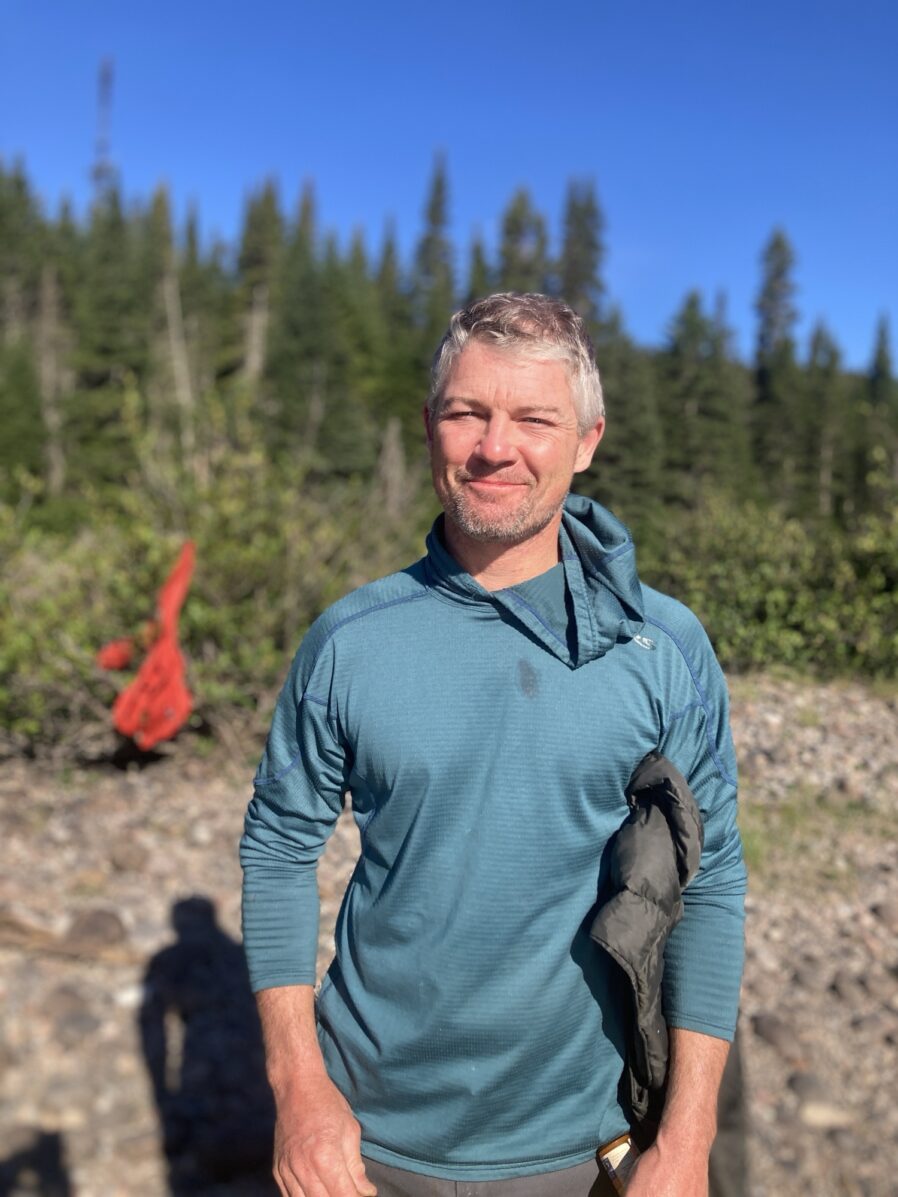

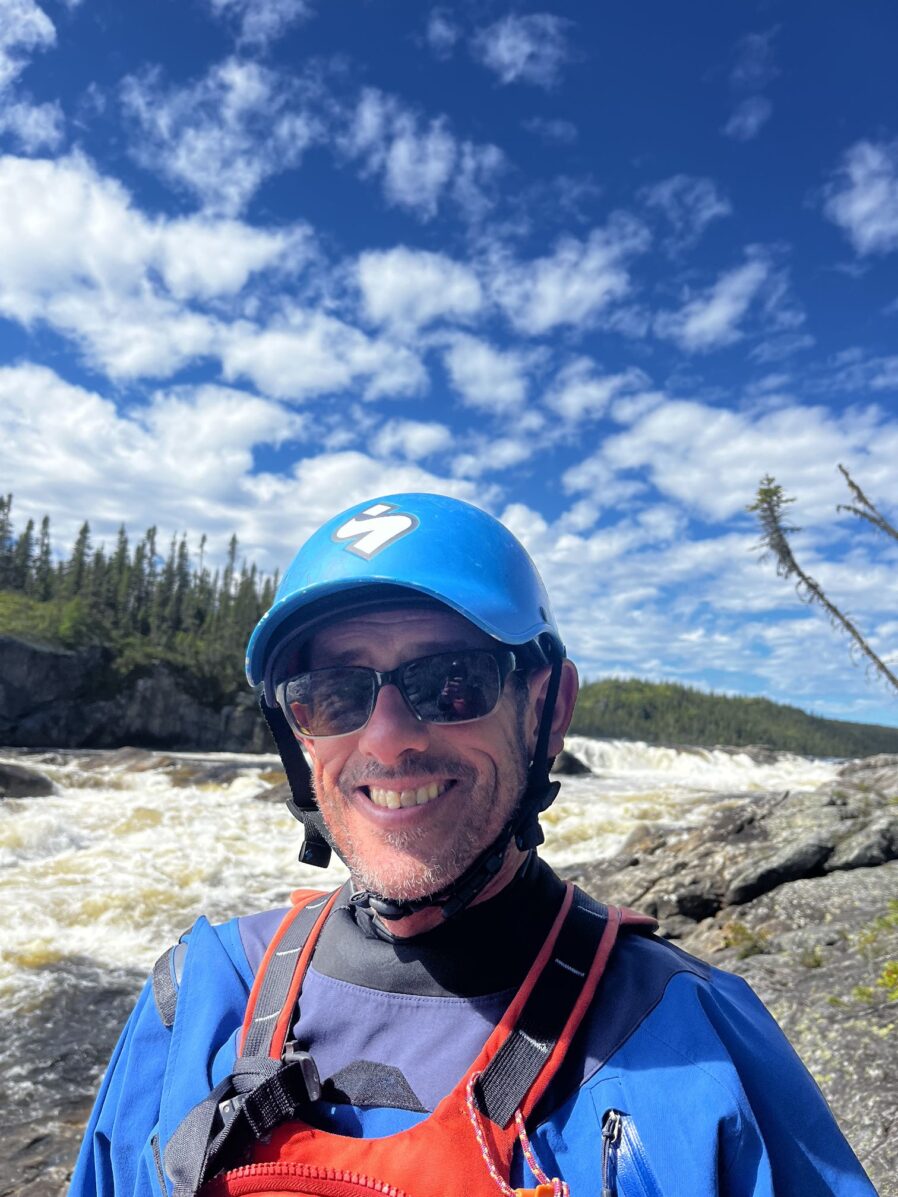
At the end of our long drive we met our flyboys and were able to load their super cool old Otter plane with five boats (hardshells, not packrafts) and five dorks, and we were off!
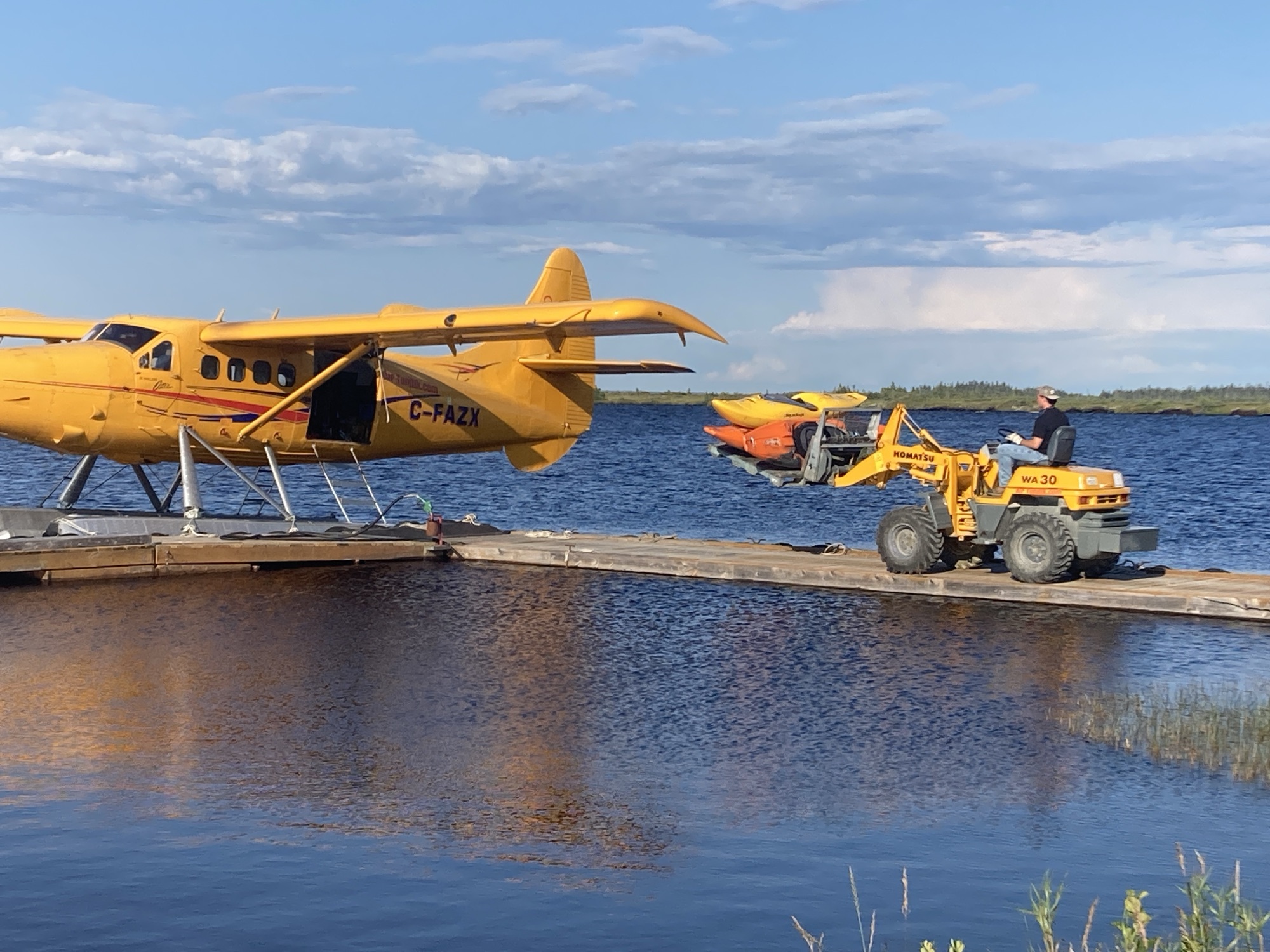
From a few thousand feet one gets a quick sense of indeed how much water is in Quebec:
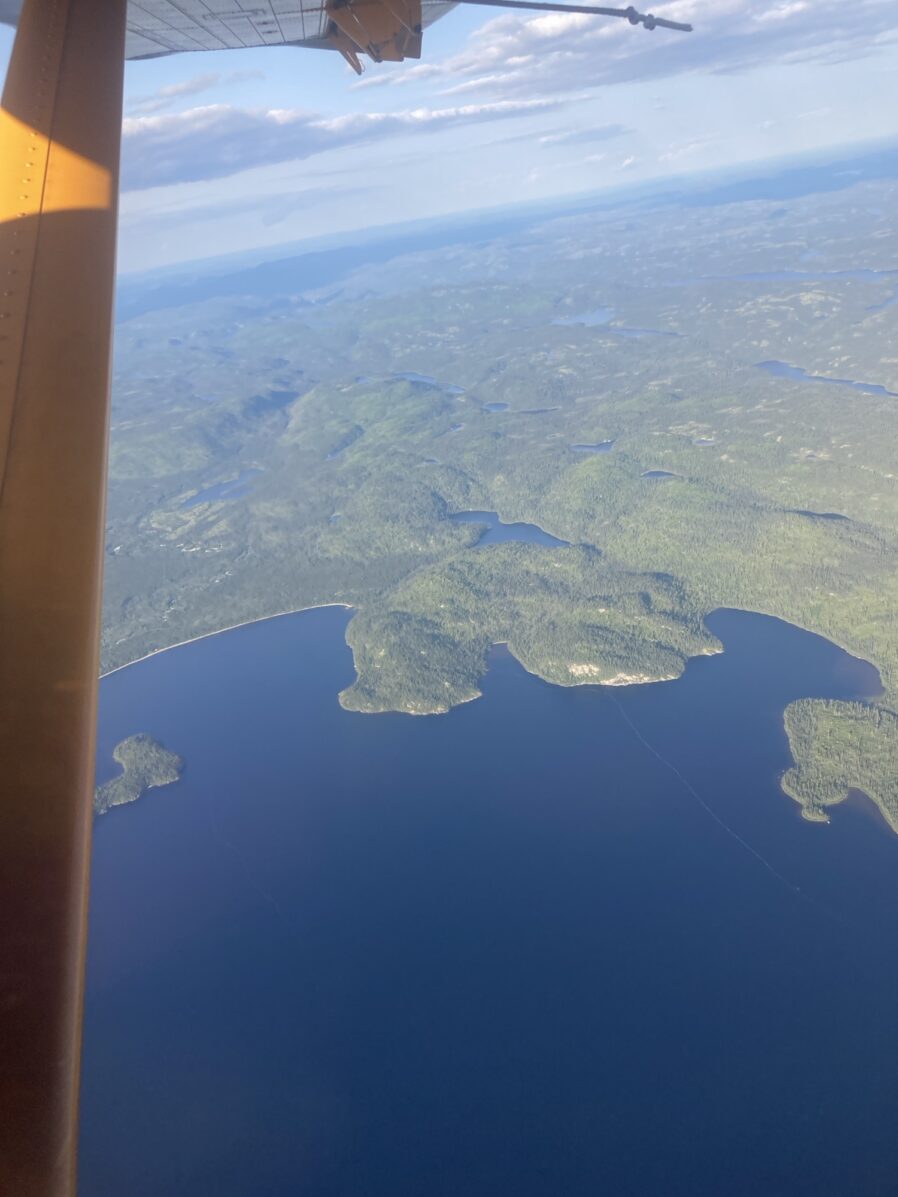
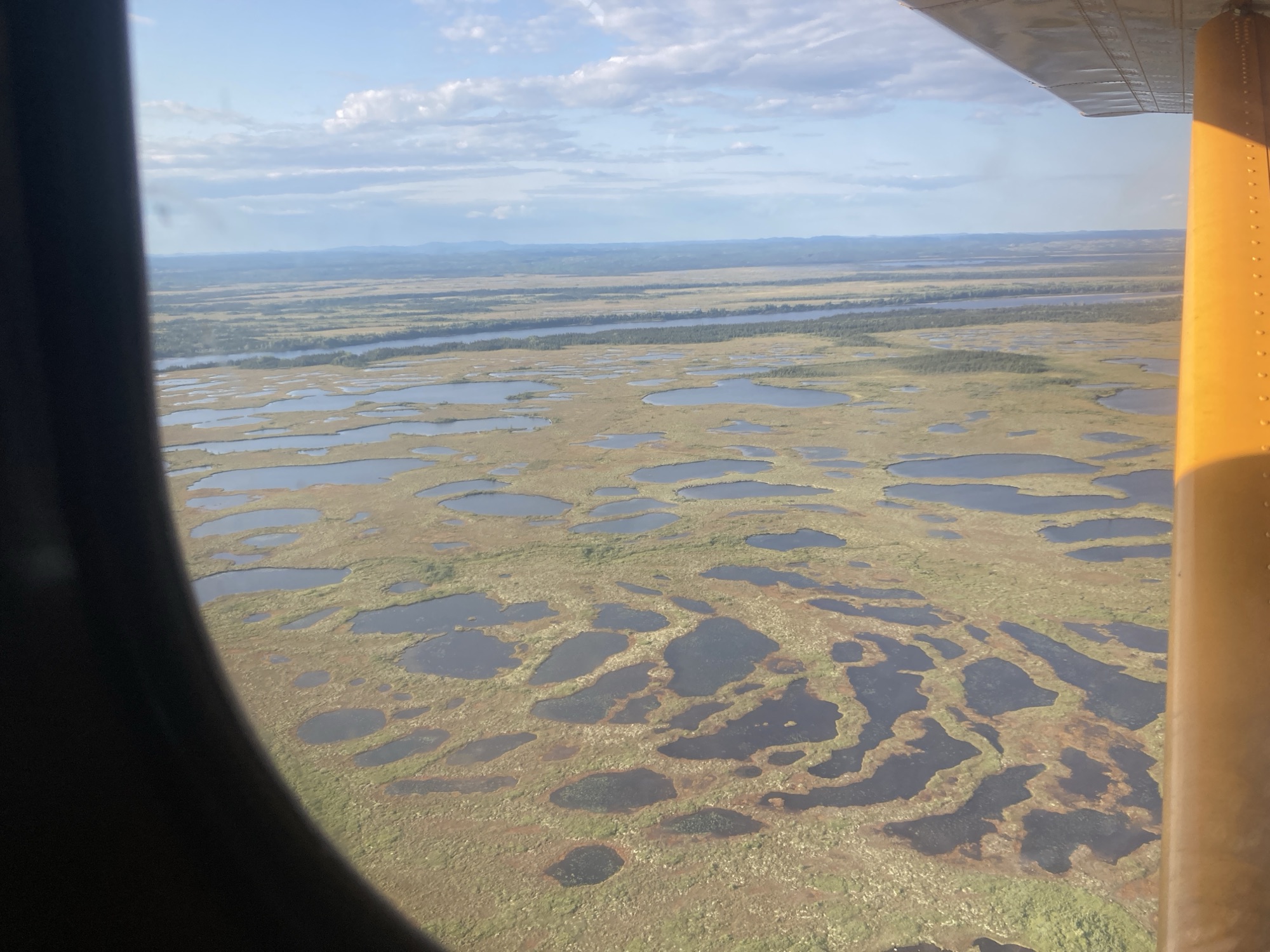
After an hour of humming along in the plane (while the pilot scrolled Instagram; I guess there’s not too much worry of heavy traffic!). Considering the flight, the boreal forest (rolling hills with heavy vegetation and lots of short trees), and the lack of anything manmade for the hour we were in the air it was reminiscent of our Alaska trips. As such, we got a bit of the “drop shock” – the feeling we get when the plane takes off to leave us on our own deep in the wilderness.
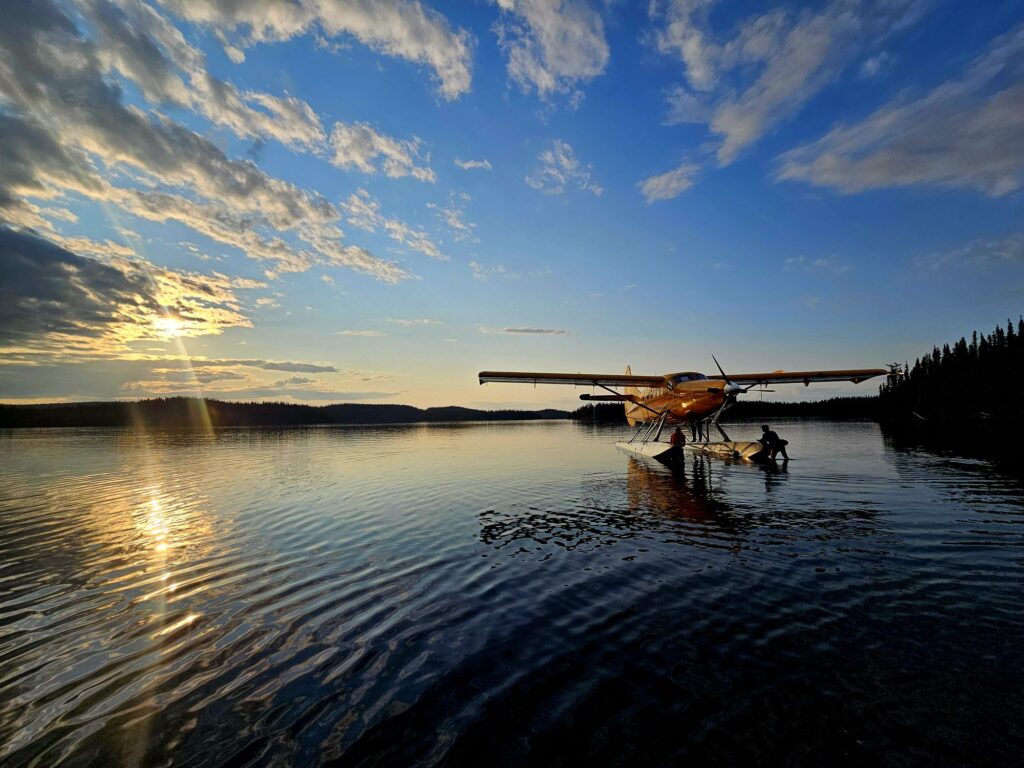
The Alaska feel was accentuated by the bear tracks on the beach where we landed:
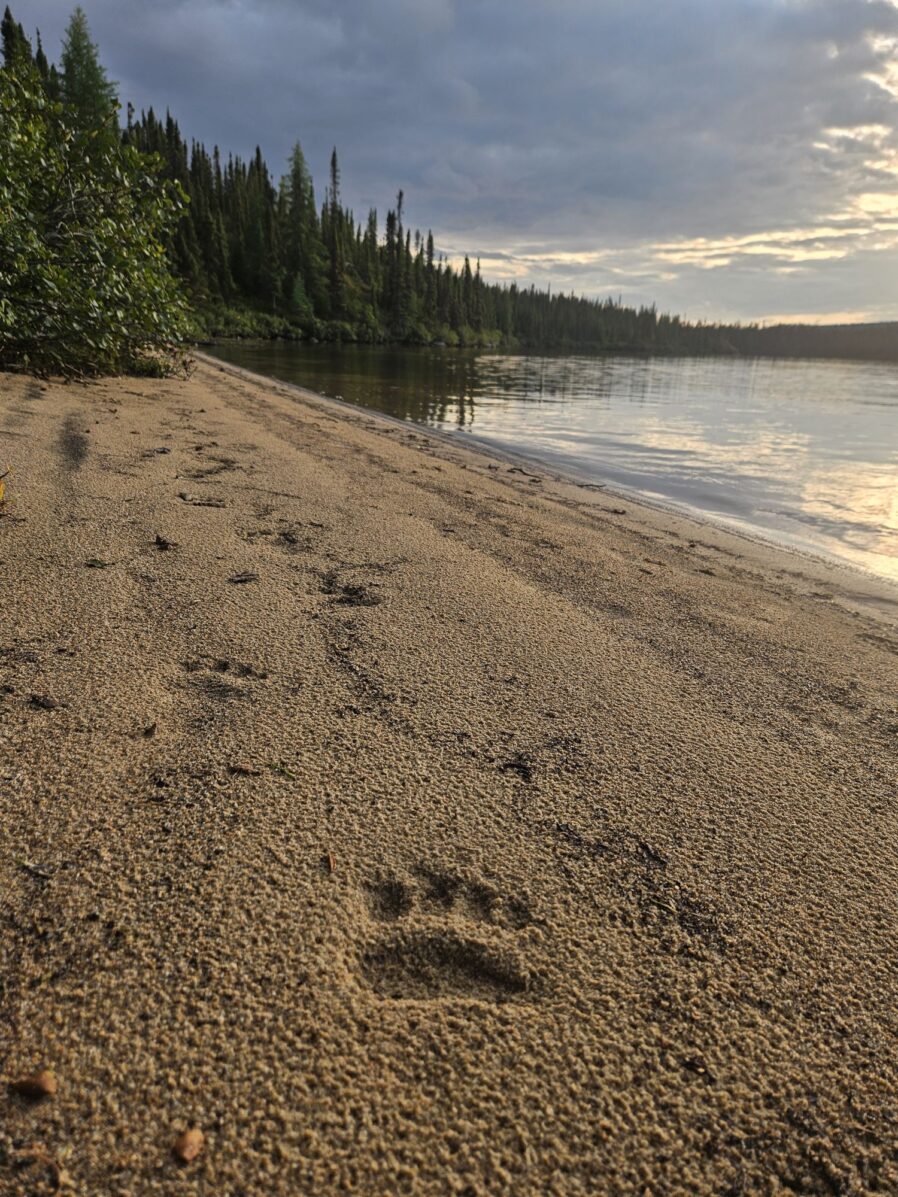
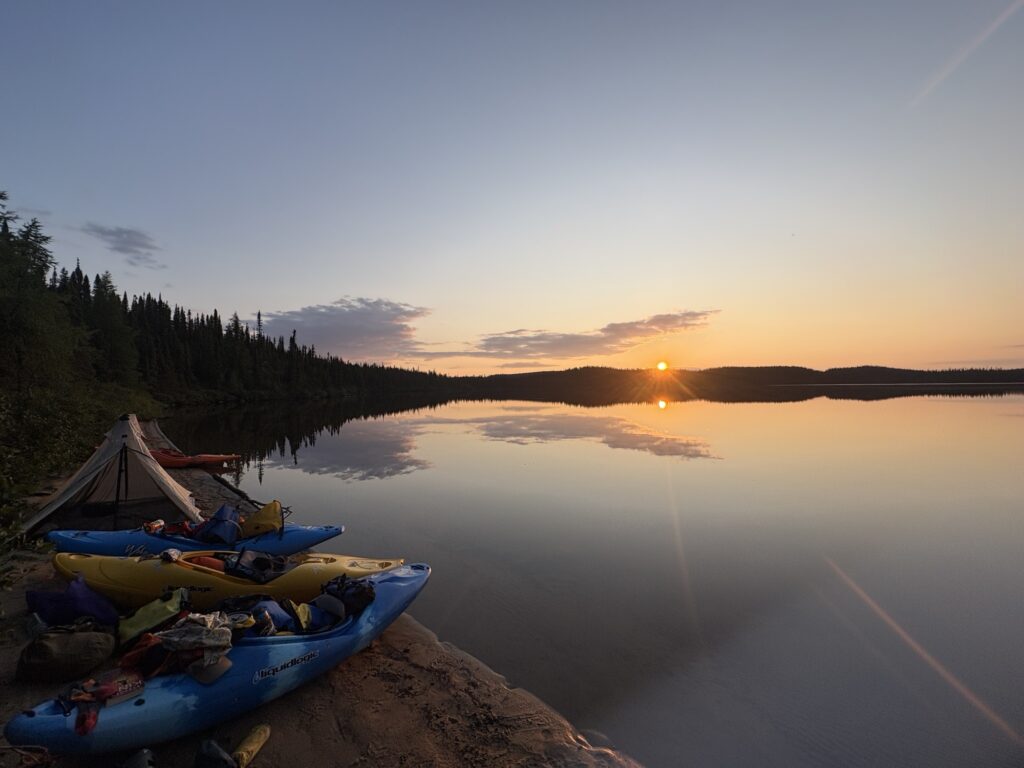
We scratched out a nice campsite at that lake (which drained into an unnamed creek that flowed into the West Fork of the Magpie) and were serenaded by the haunting sounds of a coupla loons as the sun set; not a big deal for the New Englanders who have loons all over the place, but super cool for me (question: how did the term “loony” come about to describe being crazy? They are very cool and normal birds….)
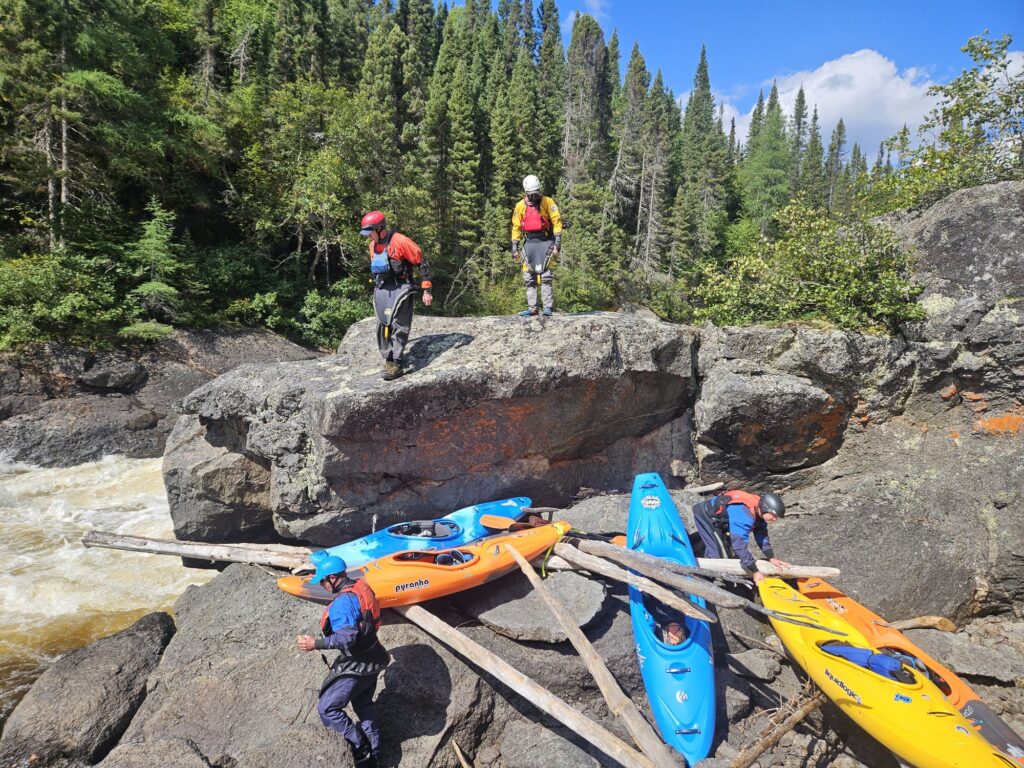
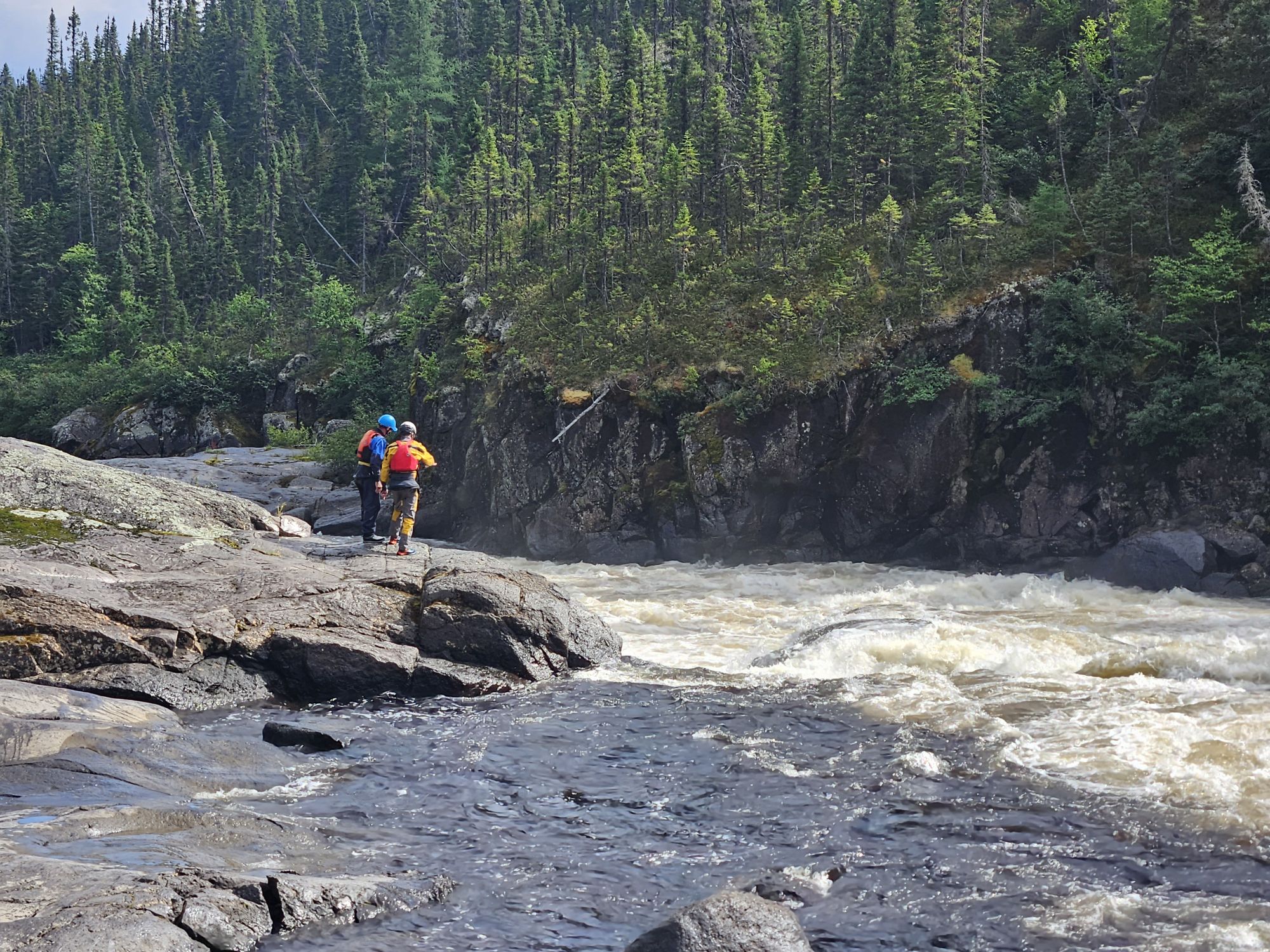
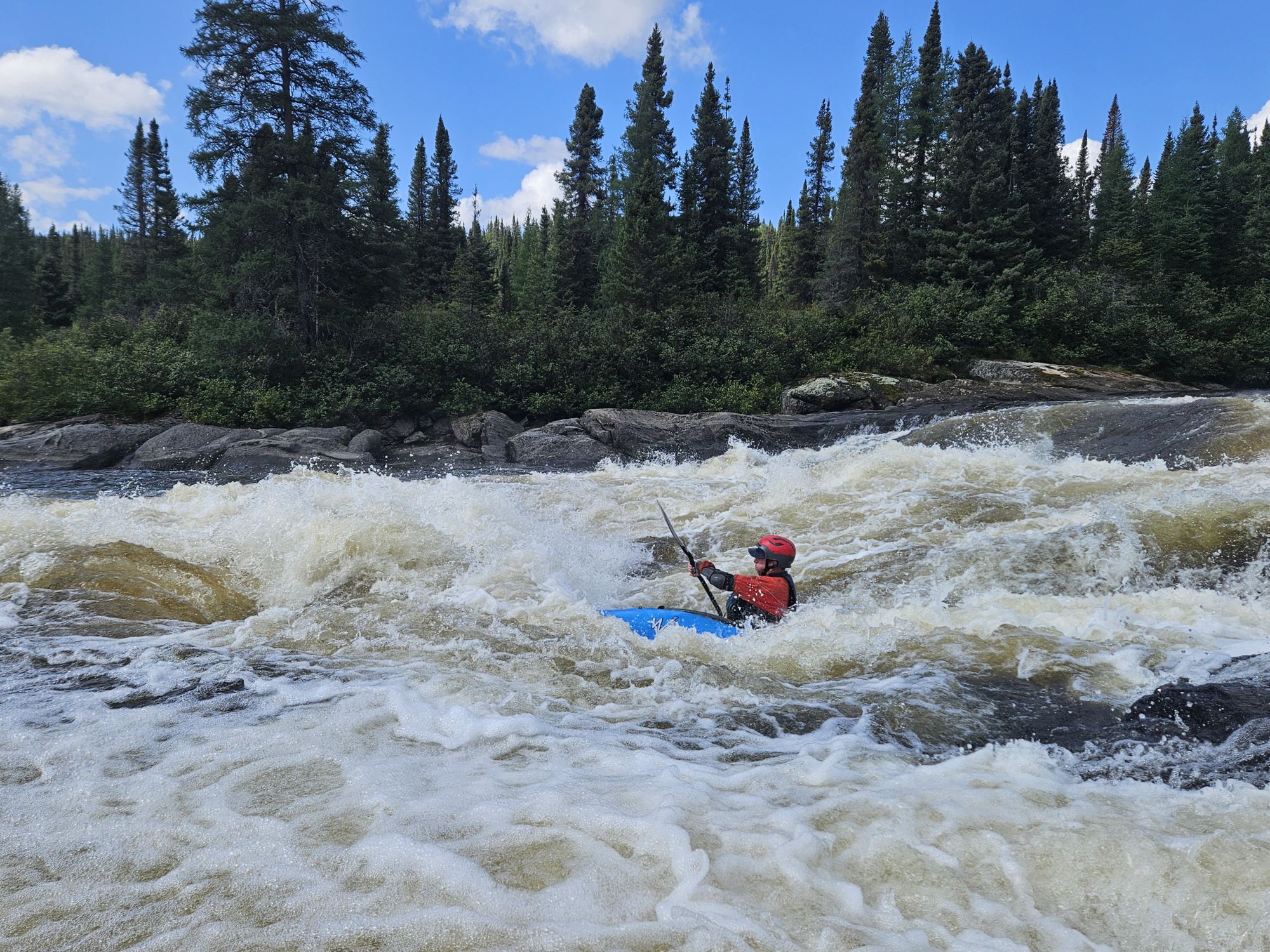
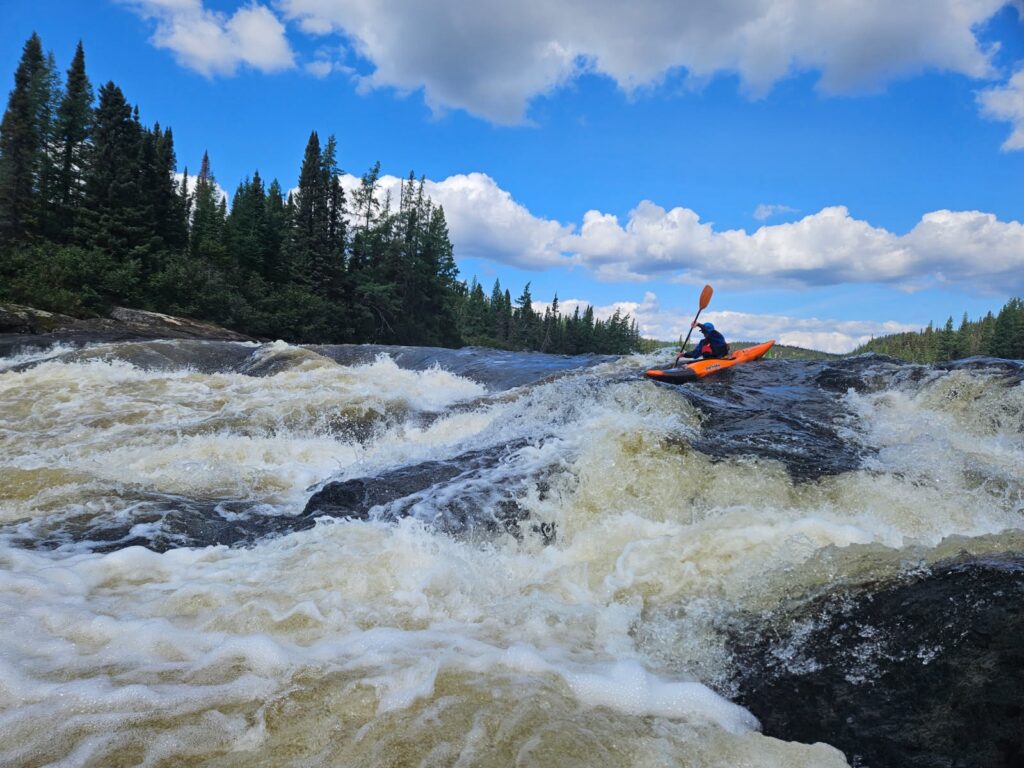
In the morning we slid down the creek to the medium-volumed (maybe a coupla-thousand cfs) West Magpie, and the rapids started up quickly. Greg had done the Magpie before but it had been a long time and his details were fuzzy, but he did say that he remembered a common characteristic of the river were ledge drops with big holes, which was accurate. We kept a sharp eye out for them because sometimes they were camouflaged by the horizons that matched the river downstream, so we carefully bobbed and weaved our way around the ledges and paddled hard through those that we couldn’t or were boofable/punchable (to “boof” is to use water or rock to bounce the front of the boat up so that you kinda fly over the hole and land flat with momentum in the boil beyond).
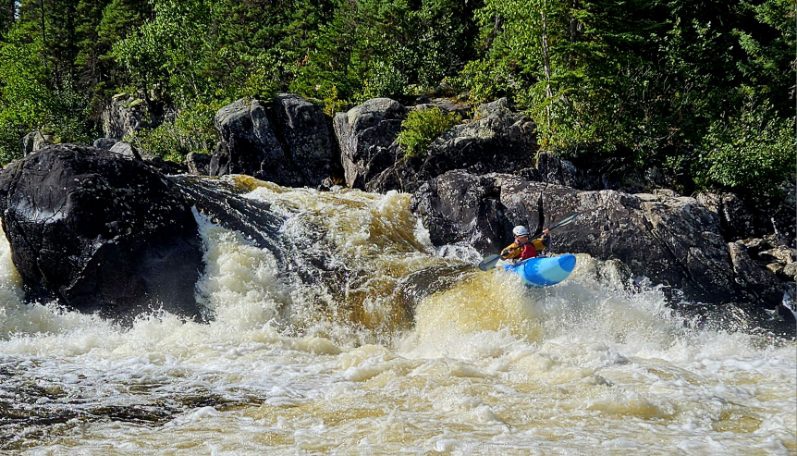
We knew the West Fork had the majority of the whitewater (versus the main stem that lay below) and we were pretty careful; there were some portages:
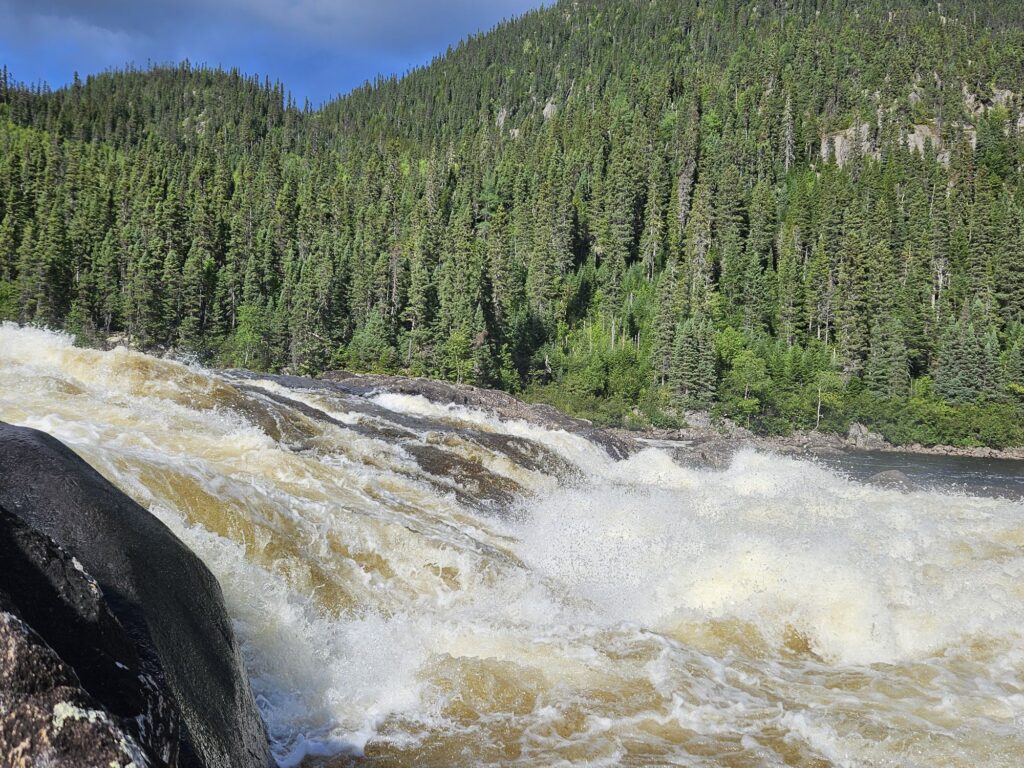
given how “out there” we wanted to be a bit extra cautious.
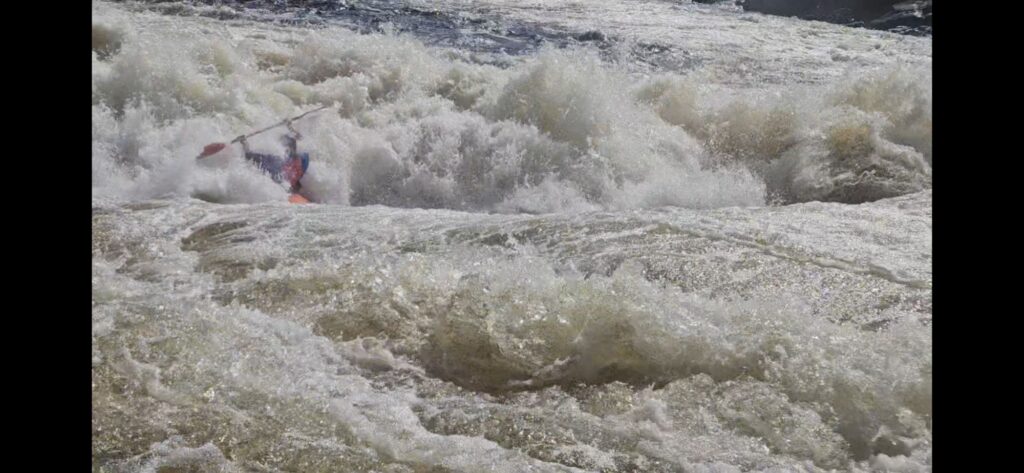
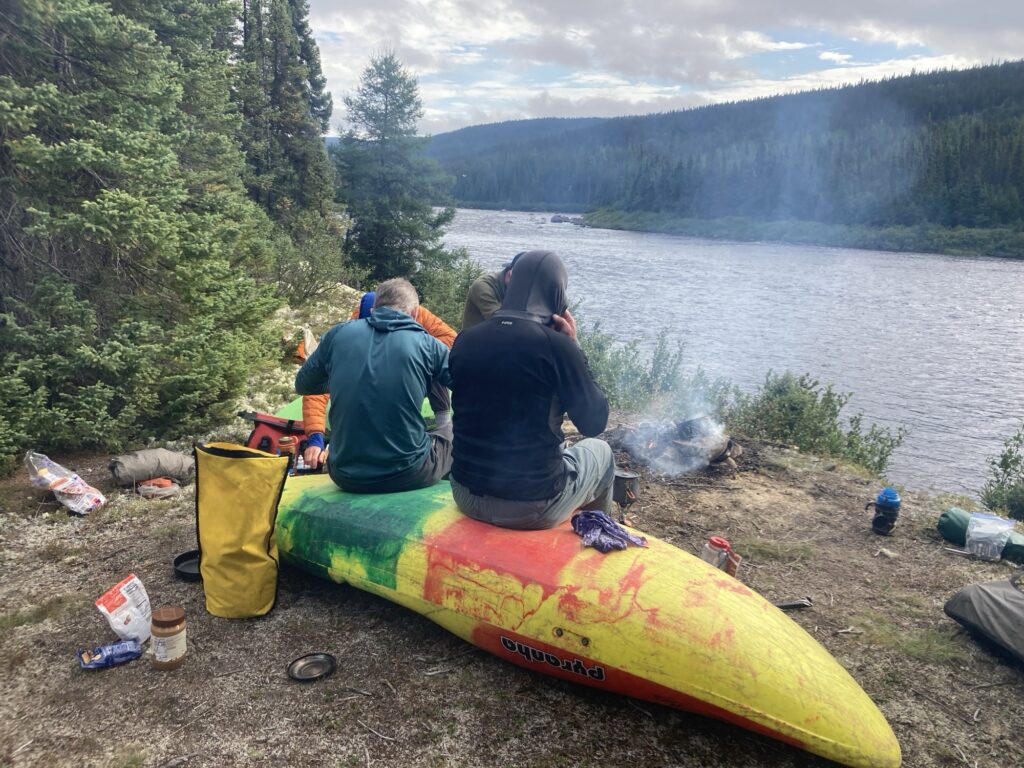
We had some incentive too: in 2000 Mike had done the same trip and near the bottom of the West Fork he got caught in a gigantic ledge hole and the subsequent long and powerful class 4+ swim not only beat the shit out of him but also tore off one of his neoprene booties. That wouldn’t have been that big of a deal…..provided he still had his boat, but his boat took off downstream and was never seen again. Mike had to bash/limp through the forest for a full day, then for the flatwater sections downstream stood on the backs of his two friends’ boats, then spent two more days alone at a ramshackle cabin while his pards paddled out and finally were able to send a plane to get him. At least Mike was terrorized by a marauding black bear! So at least for Mike, doing the Magpie lo these many years hence was a bit of a tour of redemption.
A bit of an aside about bugs. With such a vast supply of standing water it’s no surprise that bugs are A Thing up north. But surprisingly not too many mosquitoes; oh no. Black Flies rule up there. I knew that black flies were notorious there from the Romaine adventure, but time dulls the memory intensity. I made a critical mistake in not having my headnet readily available for the portages on the first day and didn’t quite realize that the “gnats” that were visible were chomping black flies that scoff at Buffs.
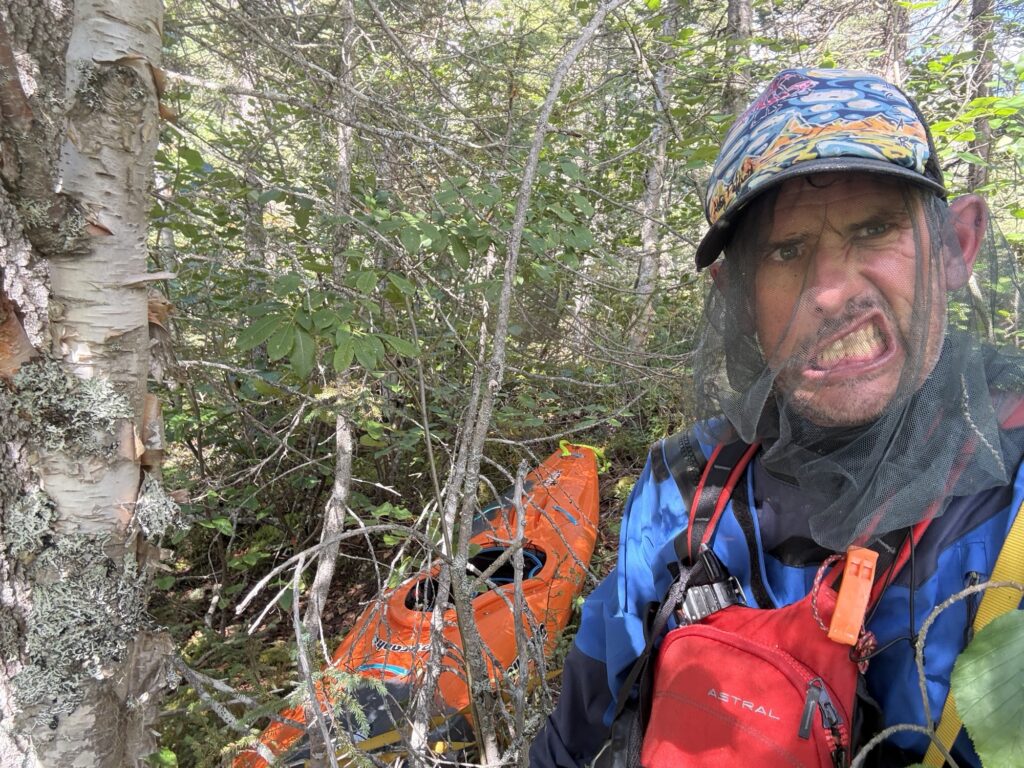
They are so small and voracious that they can sneak in through any small conduit to your skin, and despite having microscopic jaws their bite regularly produces blood in addition to an itchy, bright red dot. Despite busting out my trusty Tyvek suit at camp
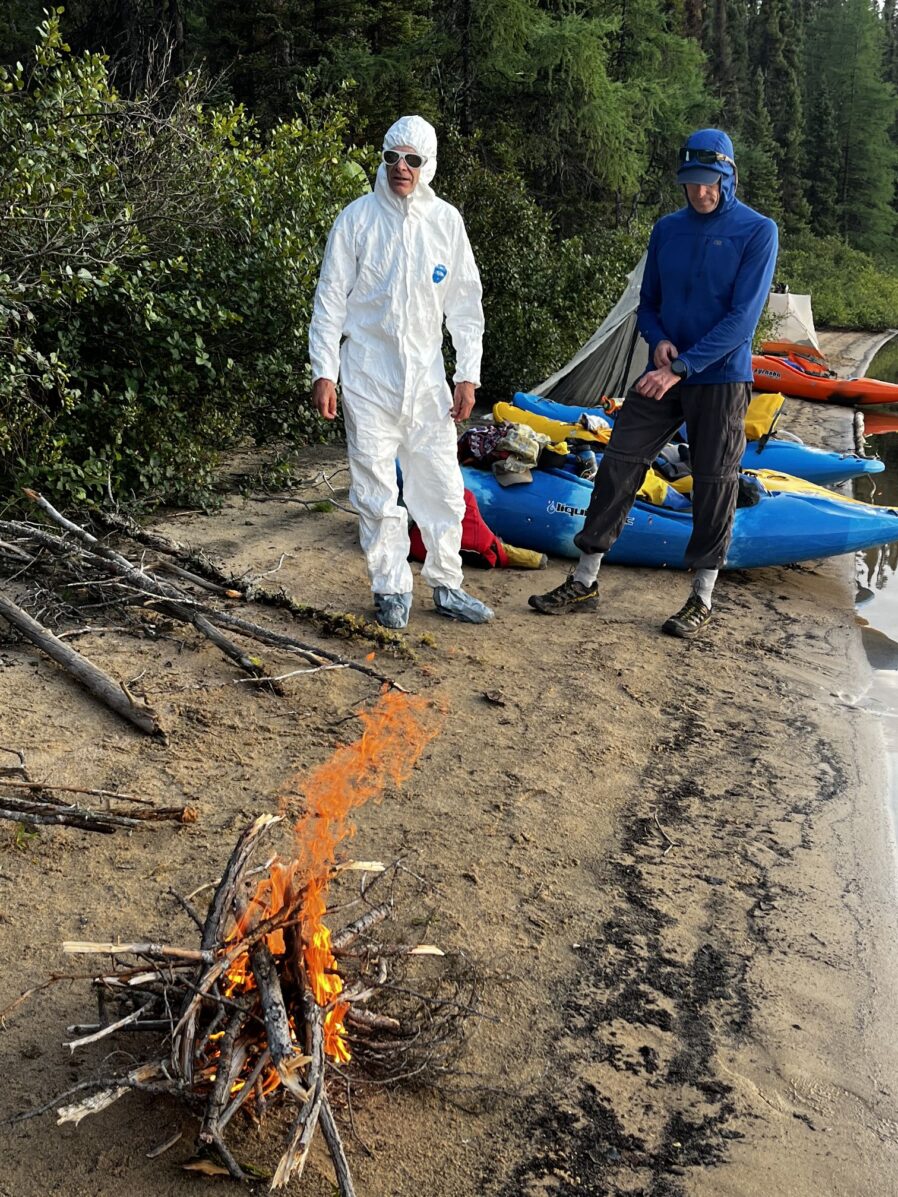
and finally donning a headnet I got hammered:
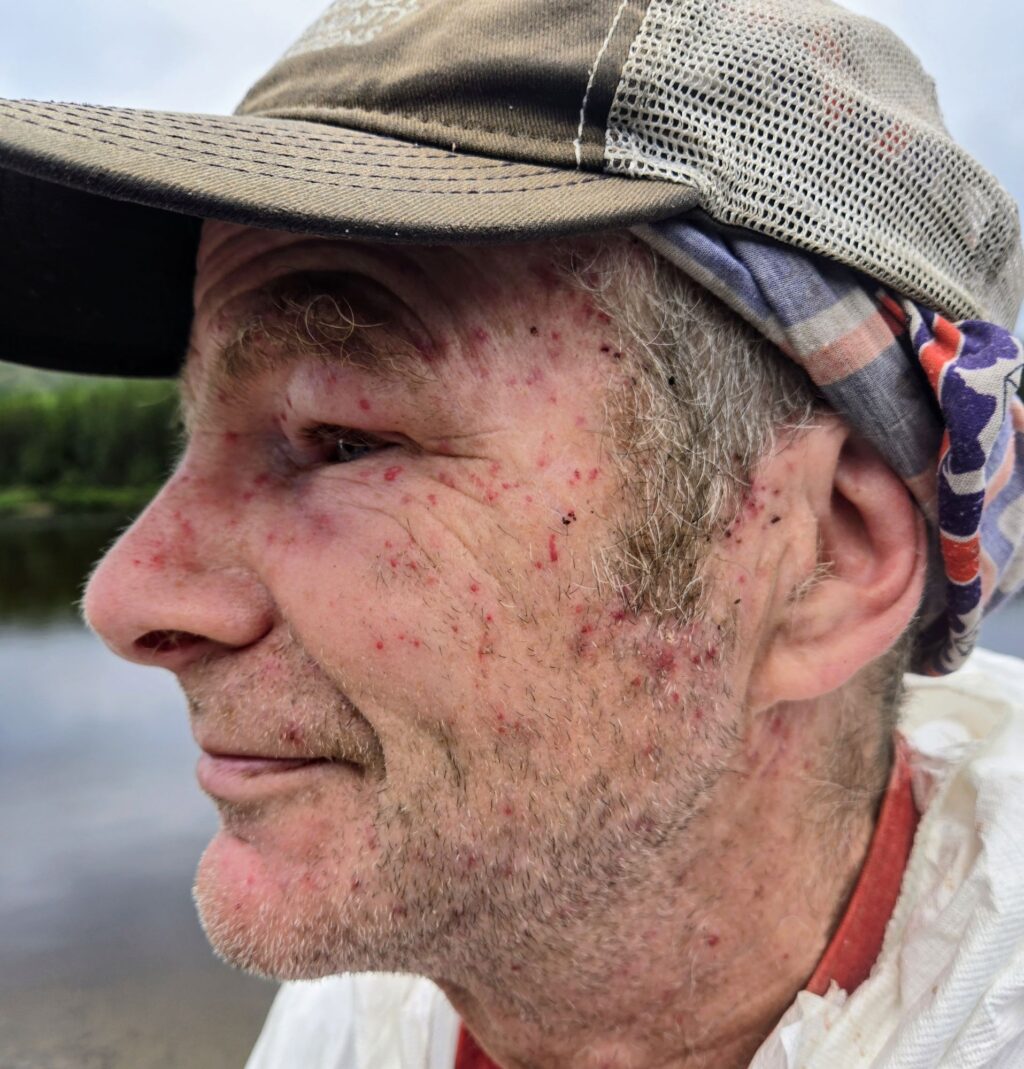
Black Flies seem to drink Deet for breakfast, laugh at headnets, and tell mosquitoes to Watch and Learn
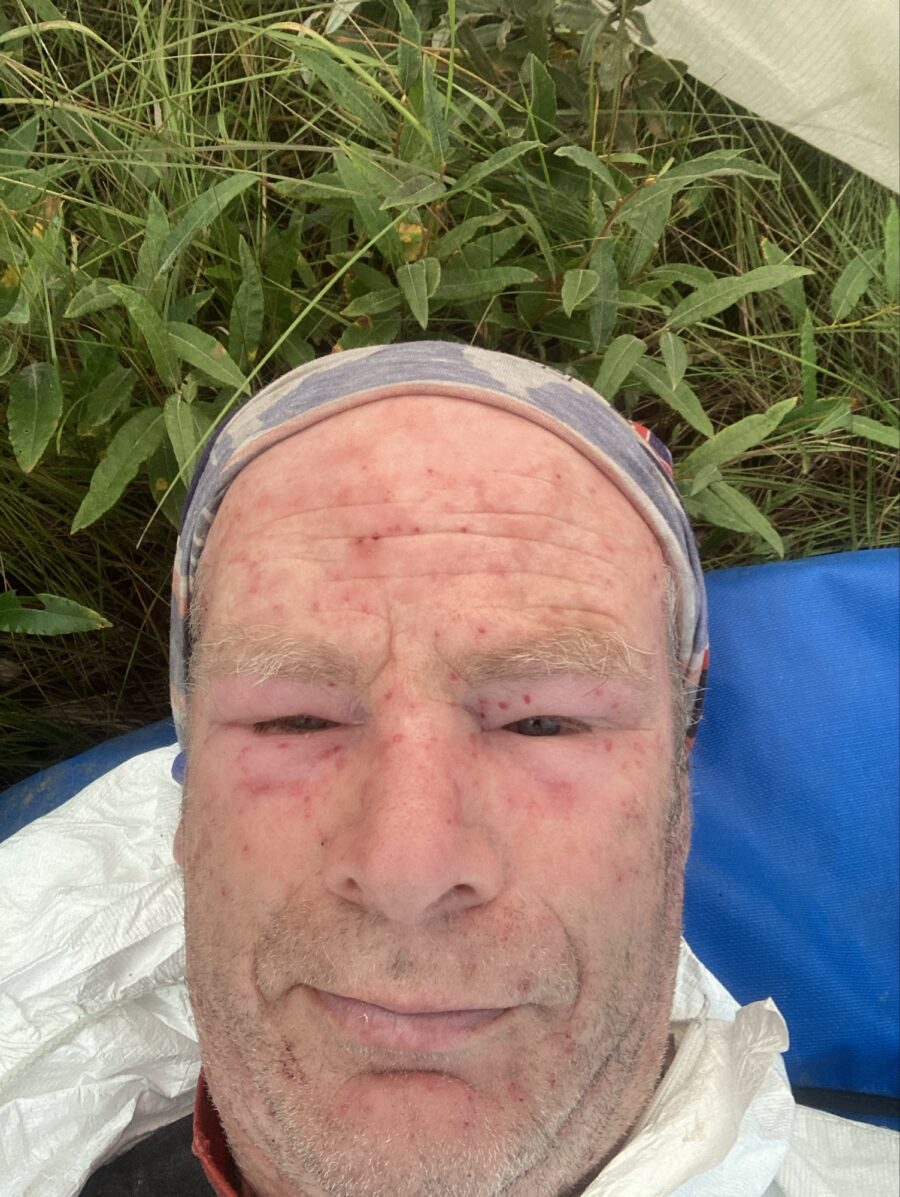
I had tossed in some Benadryl cream and pills even though I’m “not allergic to anything” except, apparently, a zillion black fly bites:
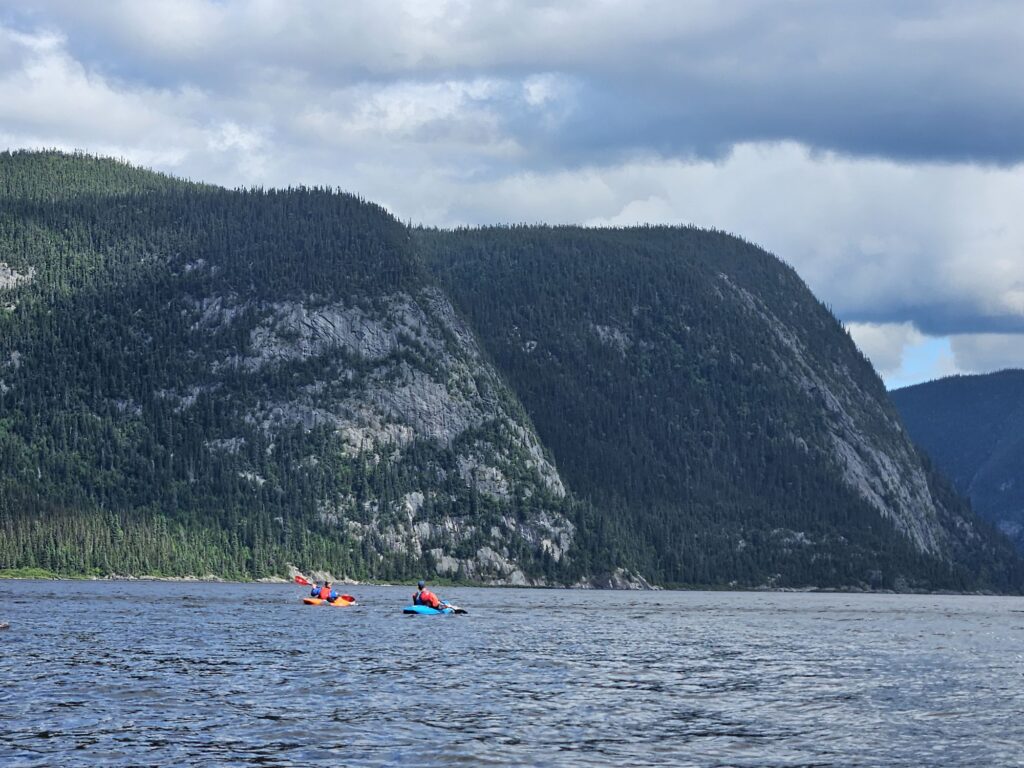
We made it through the West Fork just fine, then hit the crux: the lake. Many rivers have sections of flatwater; even if they have swift whitewater (the Colorado through the Grand Canyon has much more flatwater than rapids) but not many have real lakes. Magpie Lake is Real. 27 miles long. In anticipation of that I said “My shoulders get immediately sore just thinking about it!” but the reality was that my shoulders got a lot more sore actually doing it! Of course, “kayaking” takes many forms and sea kayaking is likely way more popular than river kayaking, but sea kayaks are long, sleek, and fast and river boats are none of those, so it felt quite slow.
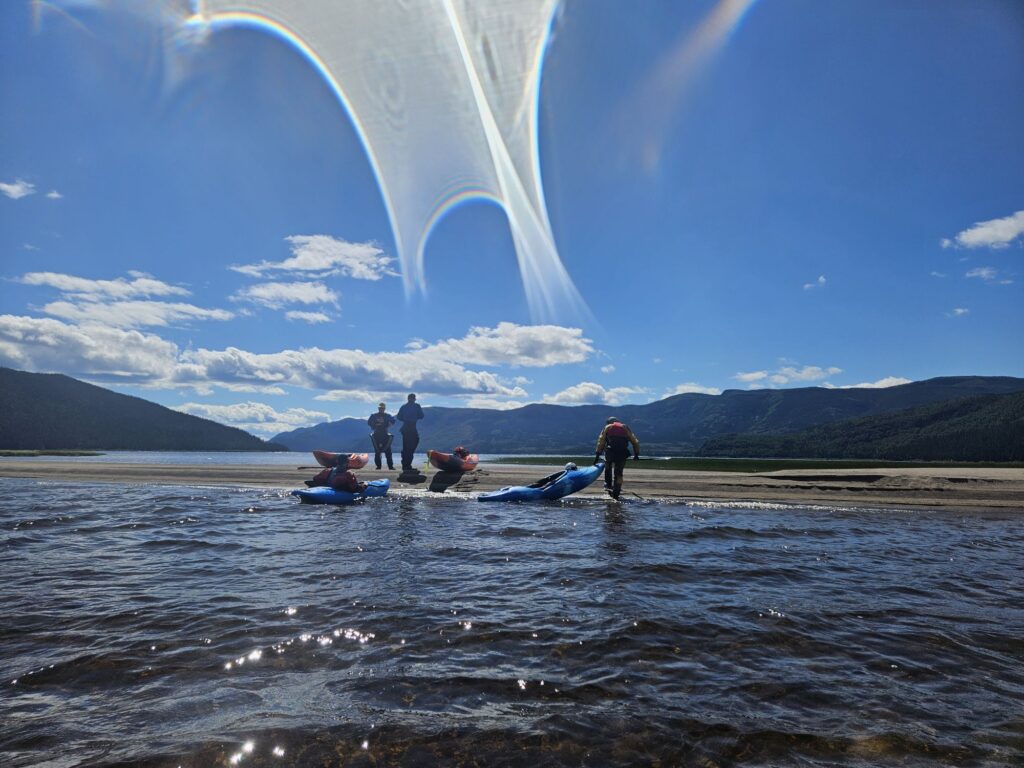
But it was beautiful:
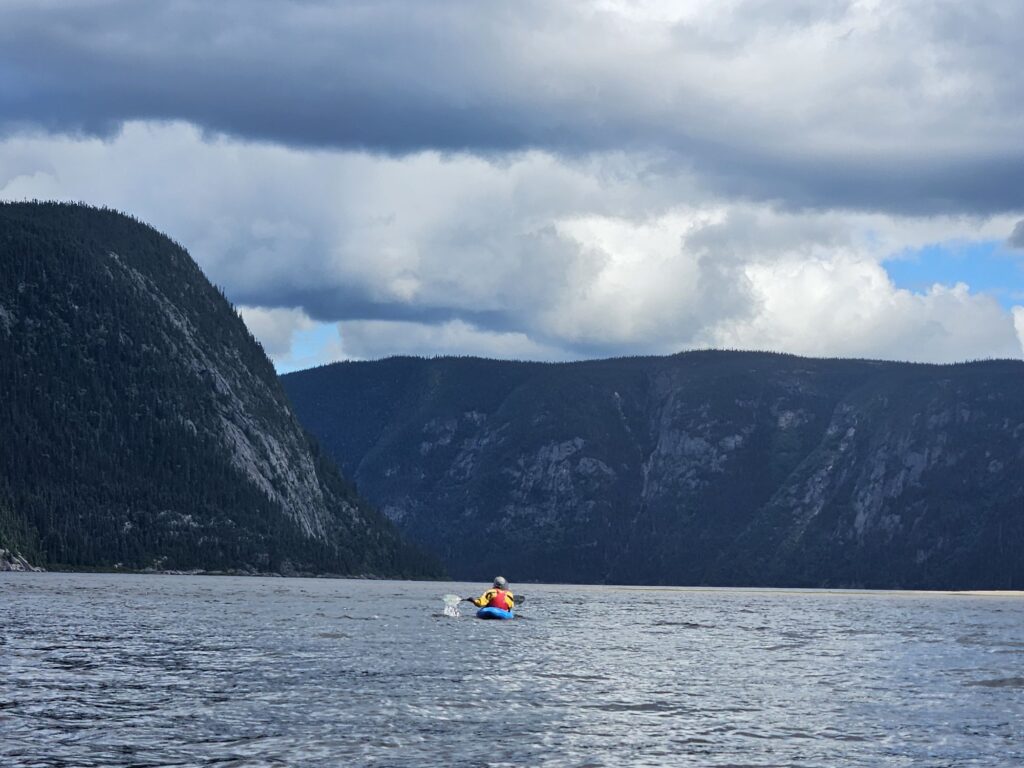
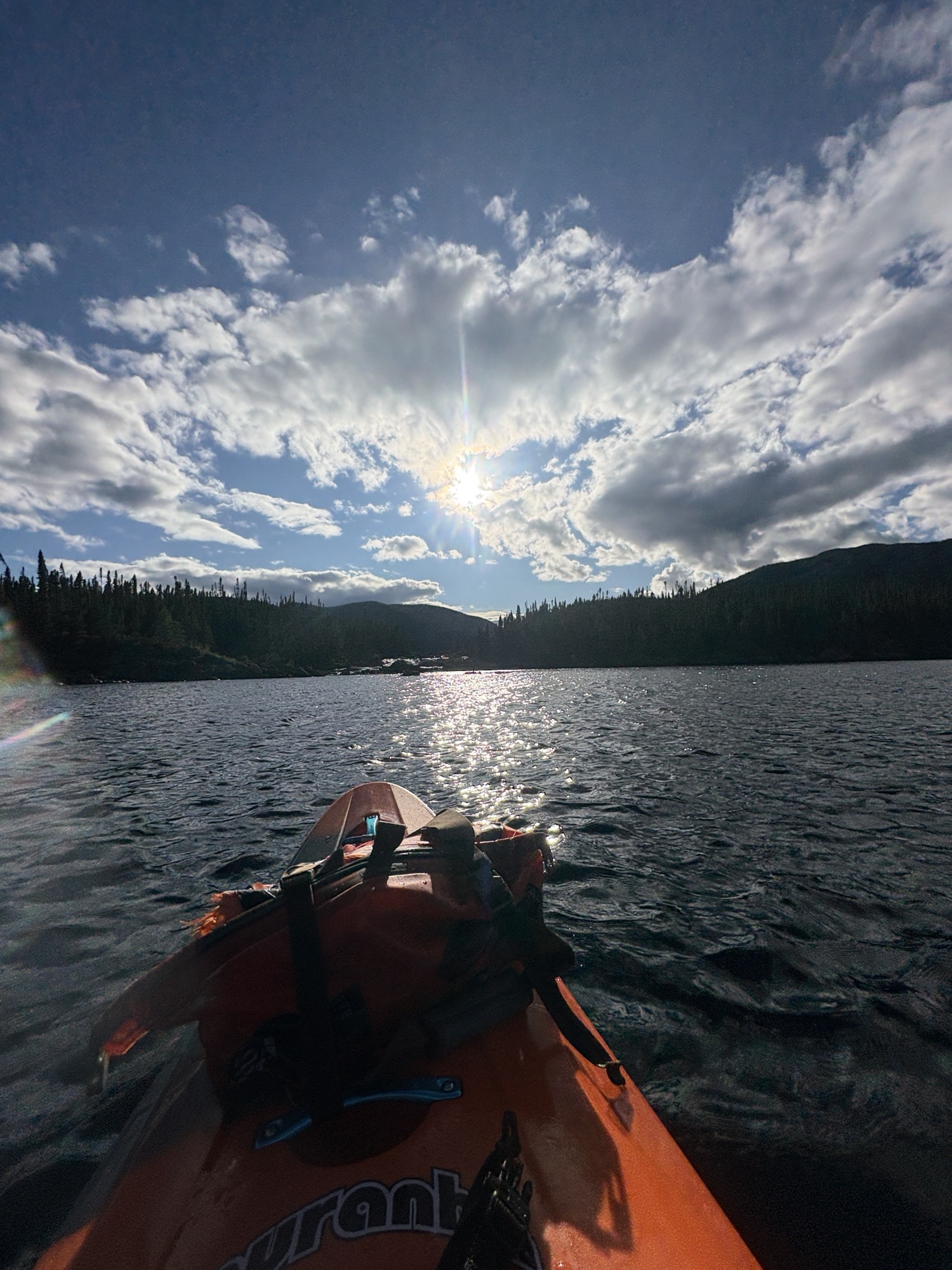
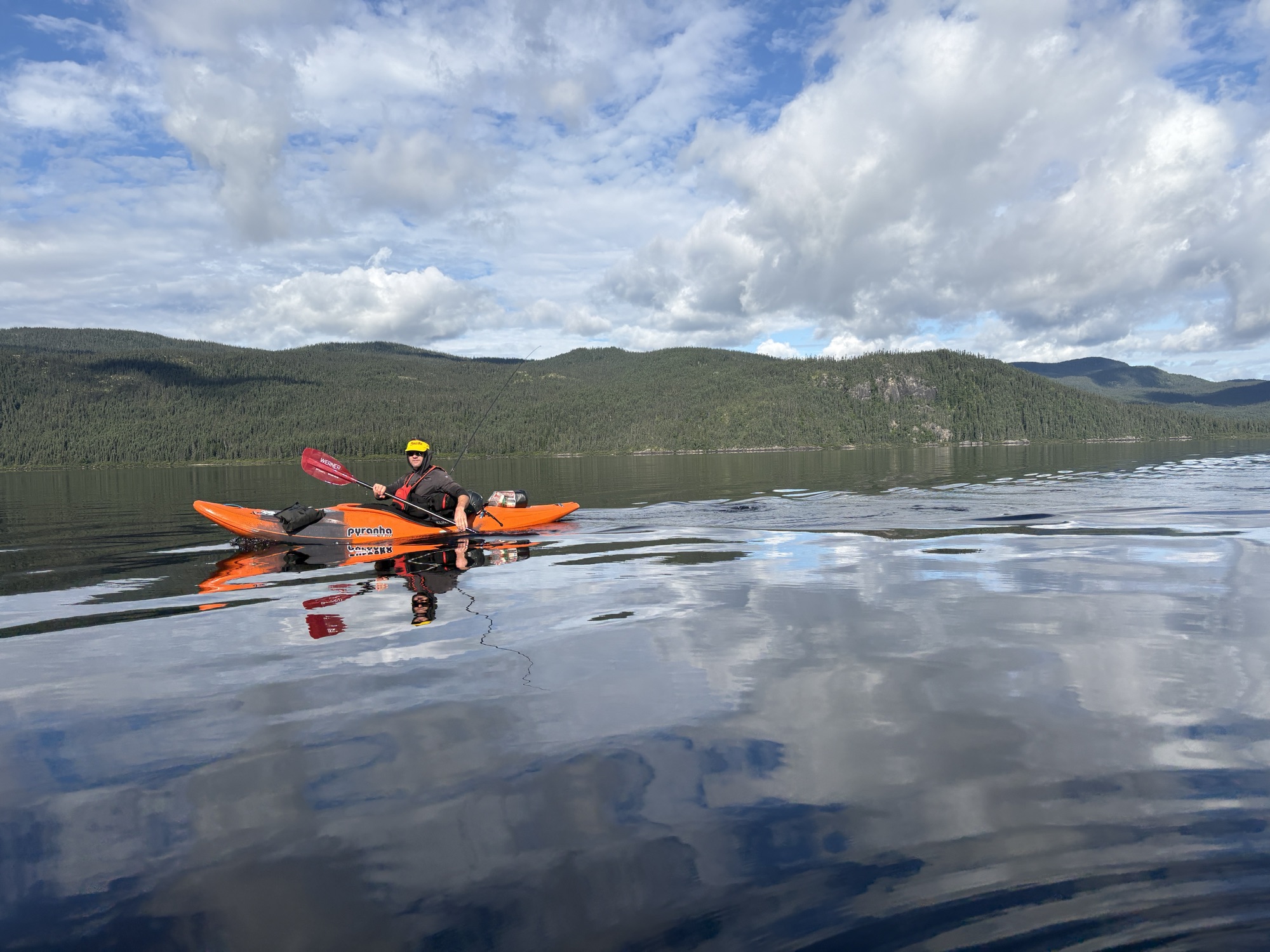
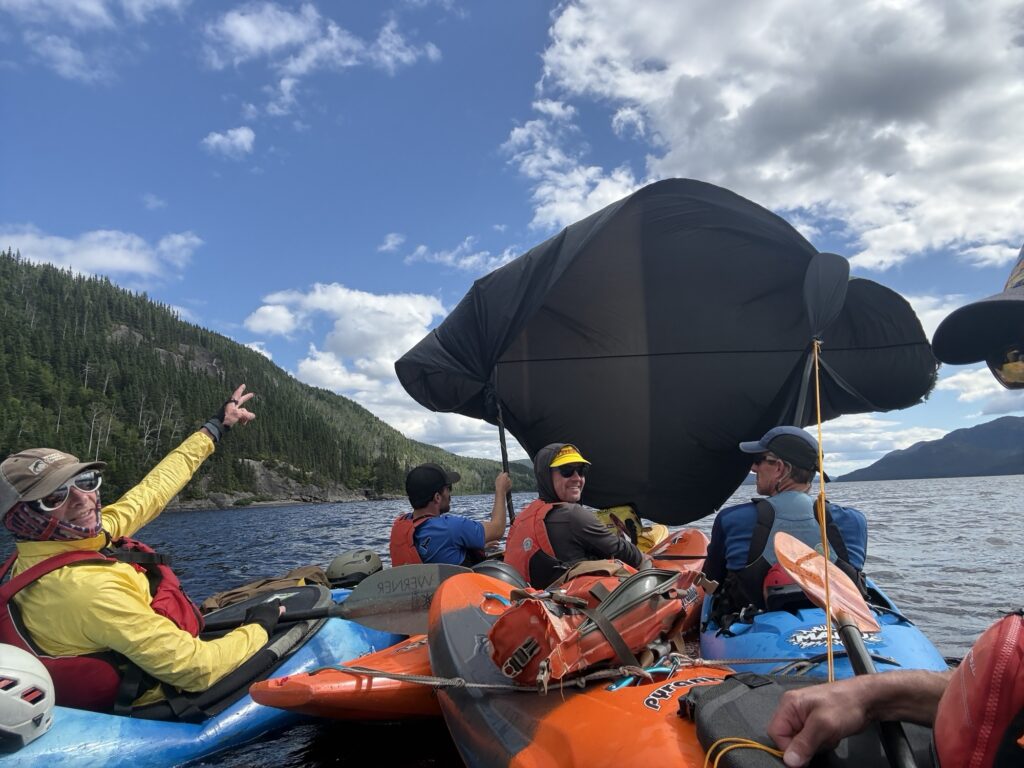
we had some favorable winds that allowed us to futz around with a bit of tarp-sailing:
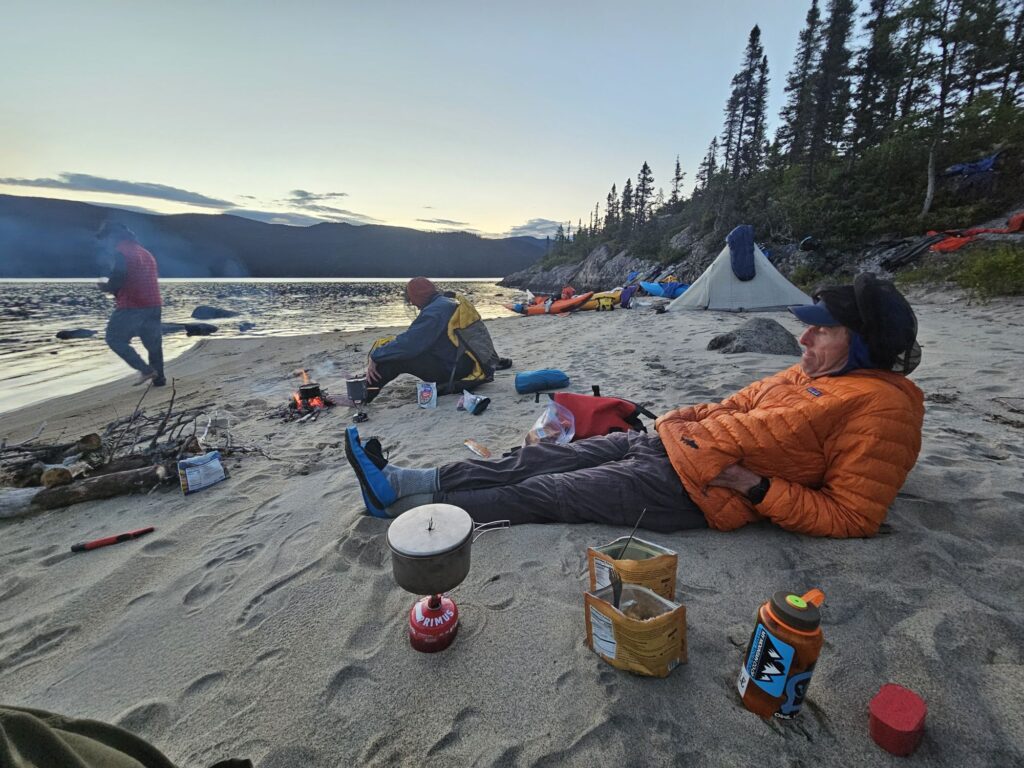
and as with any slow endurance activities we just plugged along at a sustainable pace with once-in-a-while breaks to do two-thirds of the lake one day and the third third the next morning.
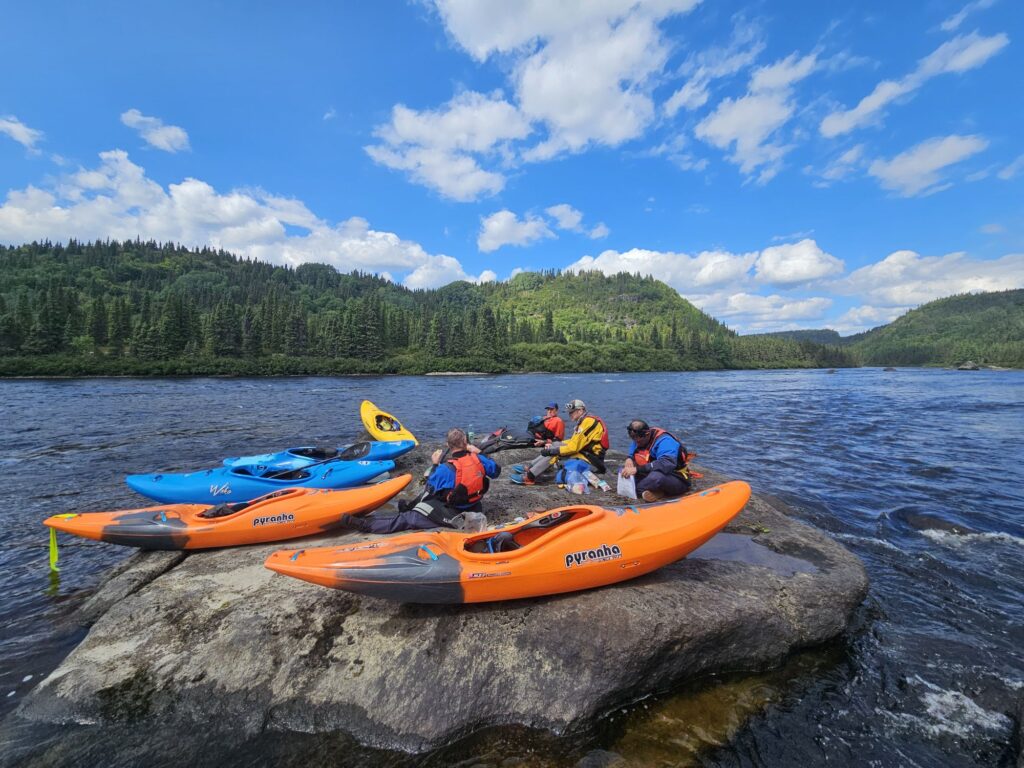
Finally we noticed that the trees starting going past us again and felt a bit of a tug of current, so we paddled to a mid-river granite crag safe from all but the most intrepid black flies
And headed down the main Magpie.
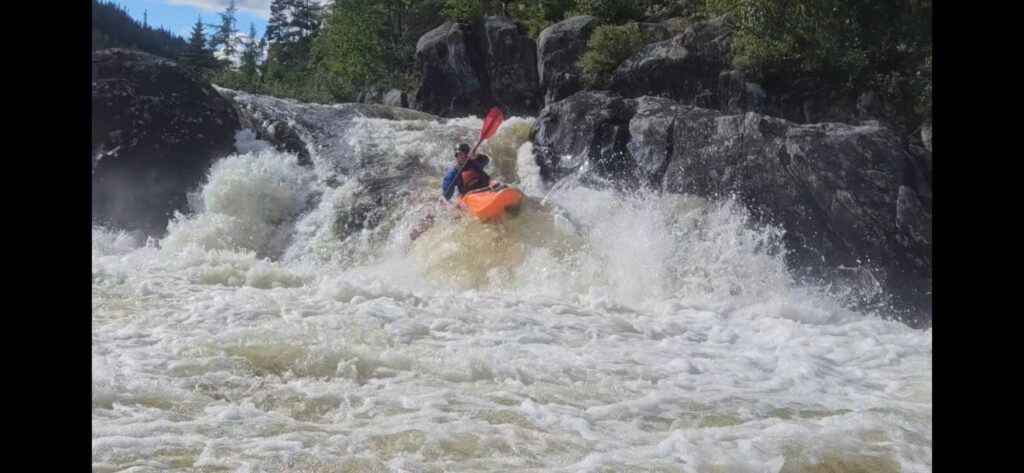
This section is run commercially a few times a year, so we anticipated that the whitewater was mellower and it was….sort of. There was plenty of class 4/4+ (in addition to a goodly number of long/fun 2s and 3s) and with the added volume (now in the 6-8000 cfs) the big ledge holes were even that much better. A little less portaging (a couple of rapid entrances for a better setup for the burly stuff below) and a couple of fun sneaks led us down to The Big Stuff. First was a class 6 rapid that leads into a vertical-walled canyon littered with class 5’s:
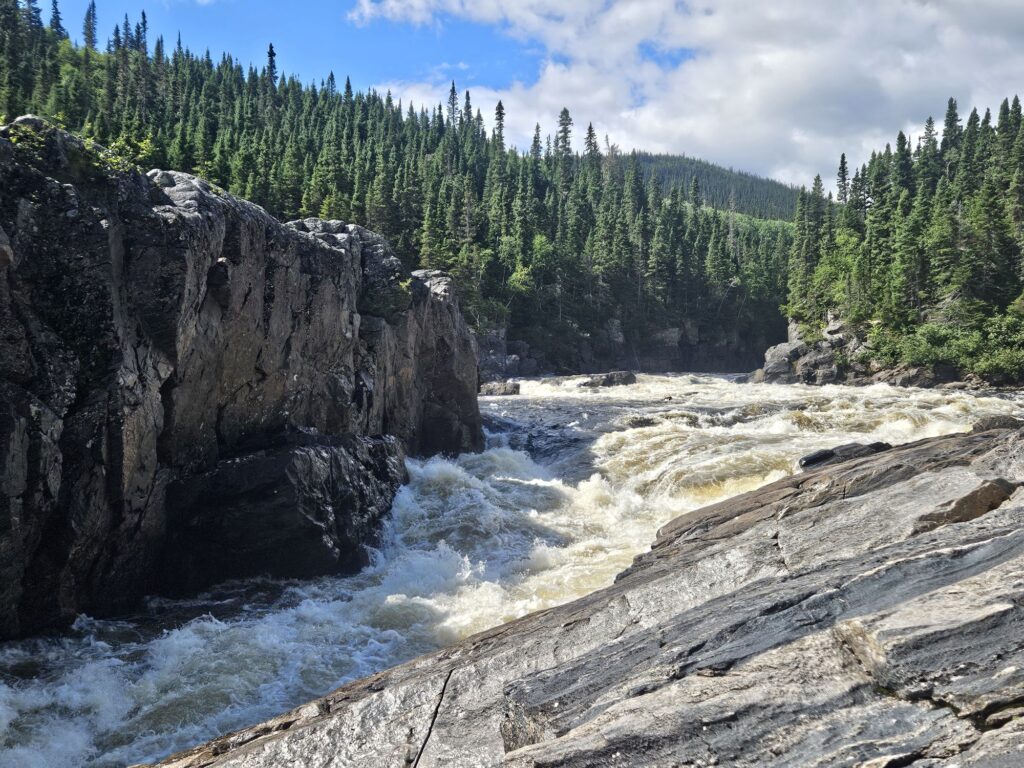
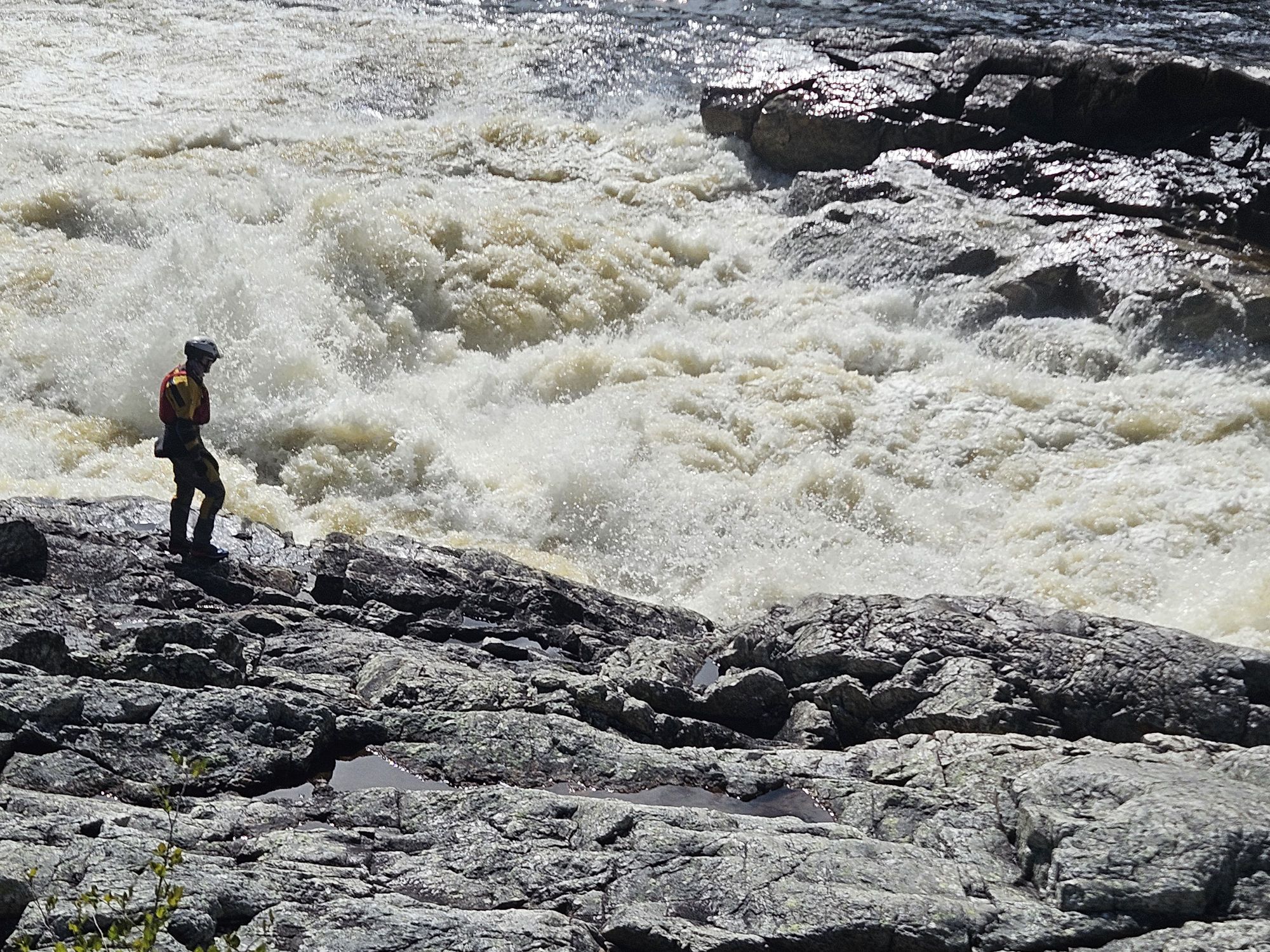
Fortunately, there was a nice ATV track for the long portage:
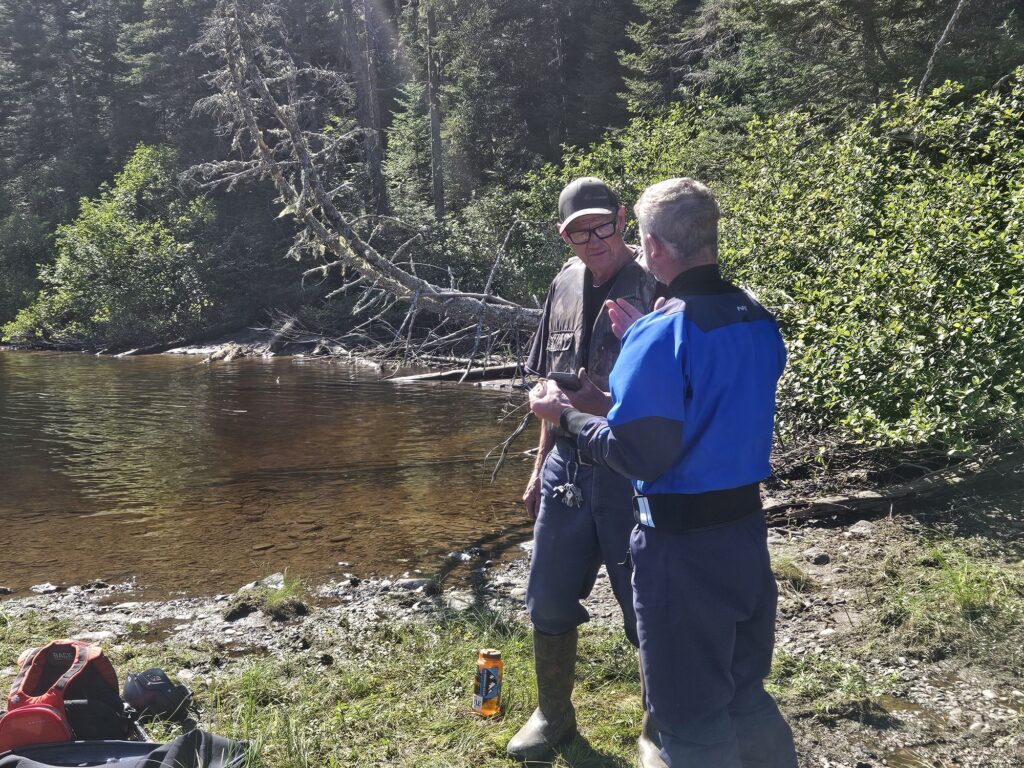
nice and draggable for our heavily-laden boats.
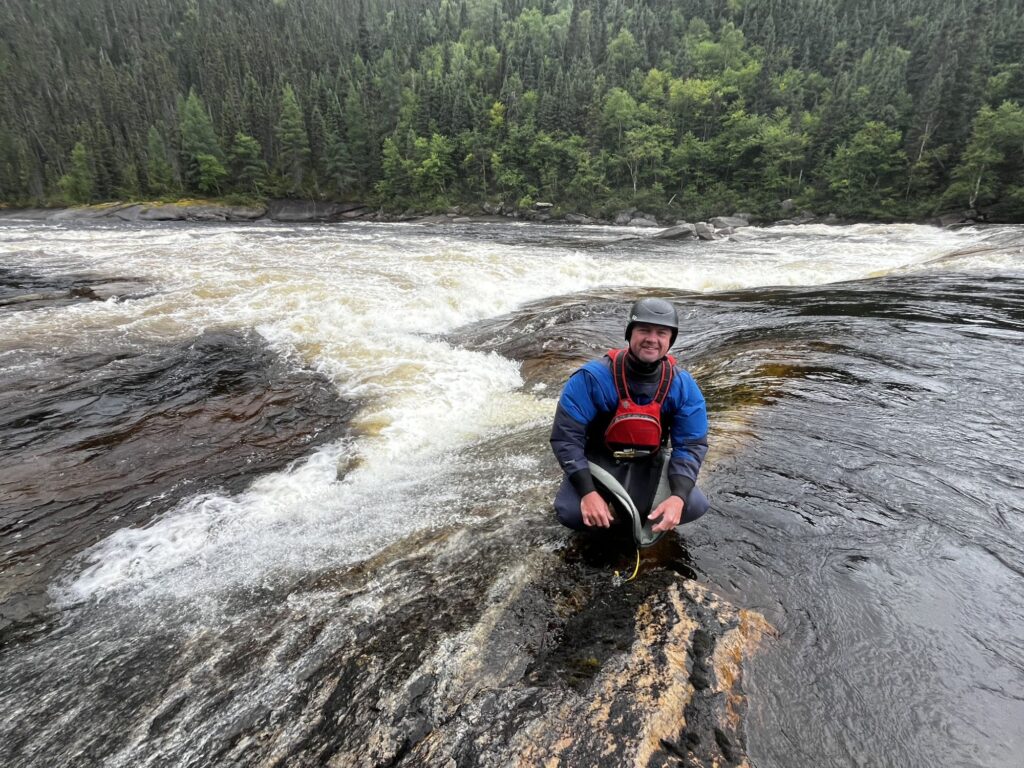
shortly thereafter we got to the 90 foot Magpie Falls:
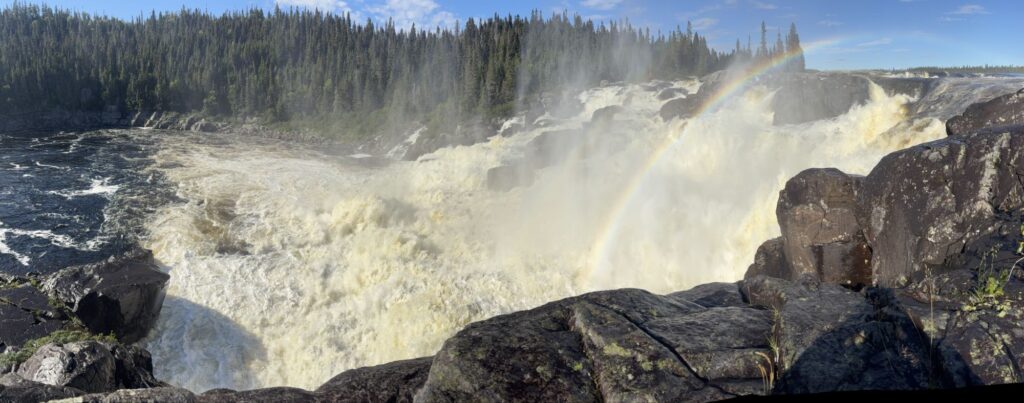
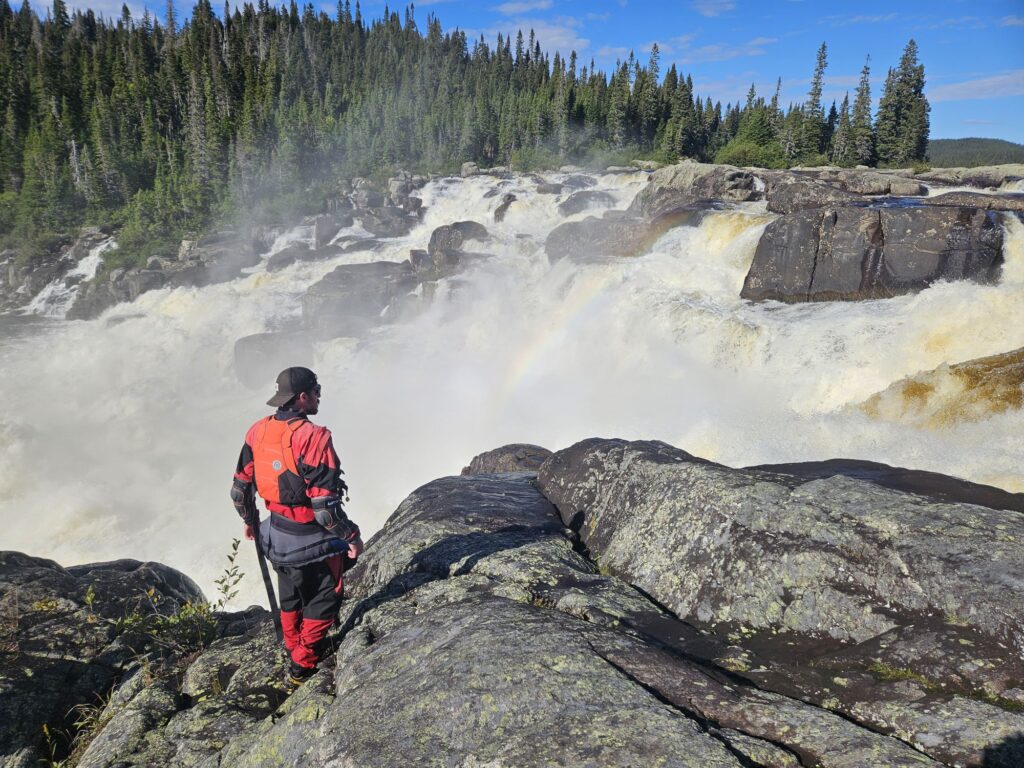

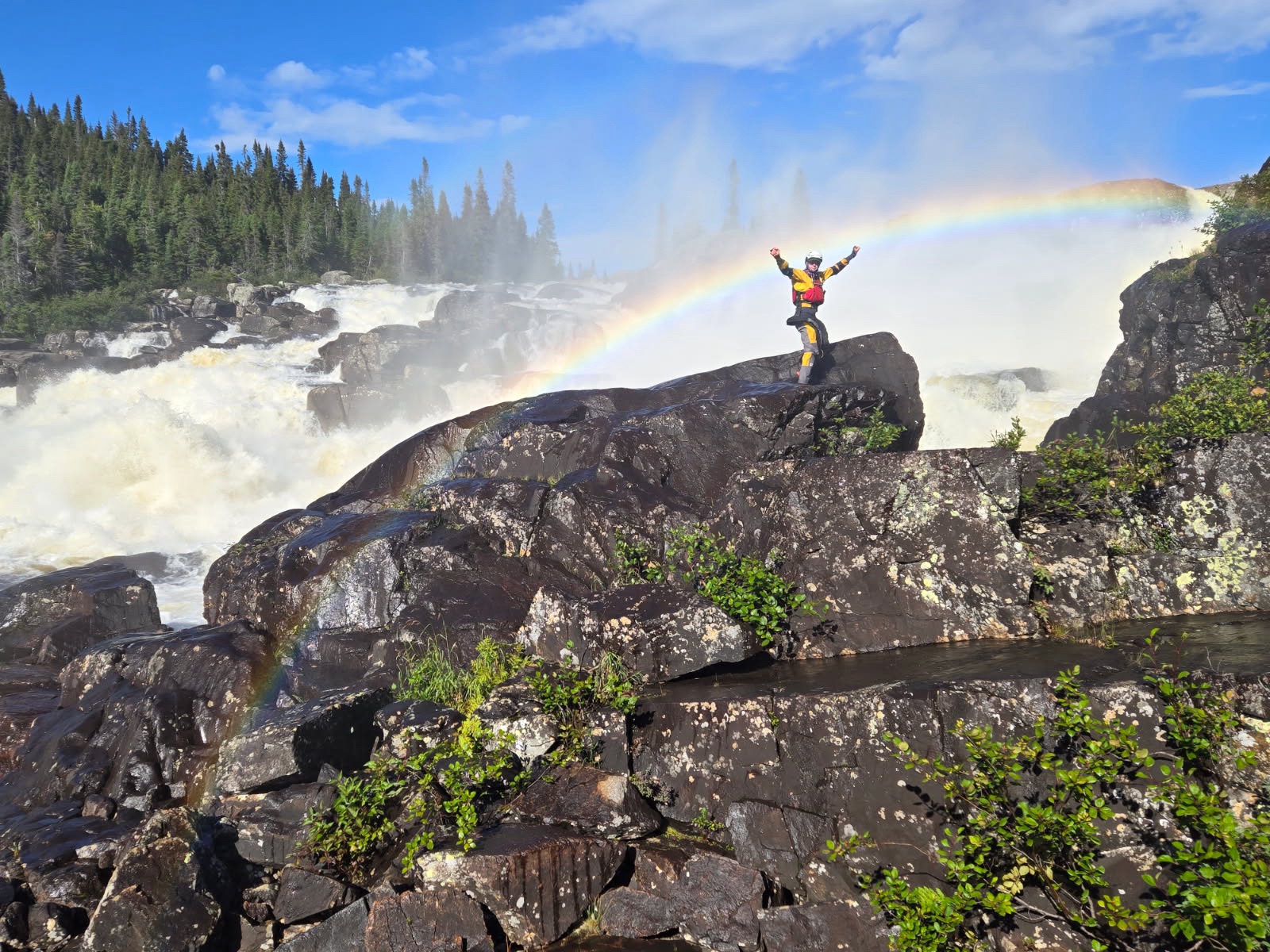
The rock I am standing on has the coefficient of friction of water on ice; I was being very careful getting up there.
We saw a couple with a little fluffy dog (that they were holding tightly in their arms so that Fluffy wouldn’t chase a fly onto the misty/mossy slabs that ramped down to the falls) so we knew that the end was near.

Canada doesn’t have any formal ly-designated Wilderness areas (the US Wilderness Act of 1964 is – I believe – unique in the world) but wow it has plenty of wilderness, and as always it’s both intimidating and exhilarating to be deep in it. Thanks so much to Greg, Mike, Sawyer, and Jon for being hilarious, strong, interesting, safe, and competent pards; an essential ingredient for any great trip.
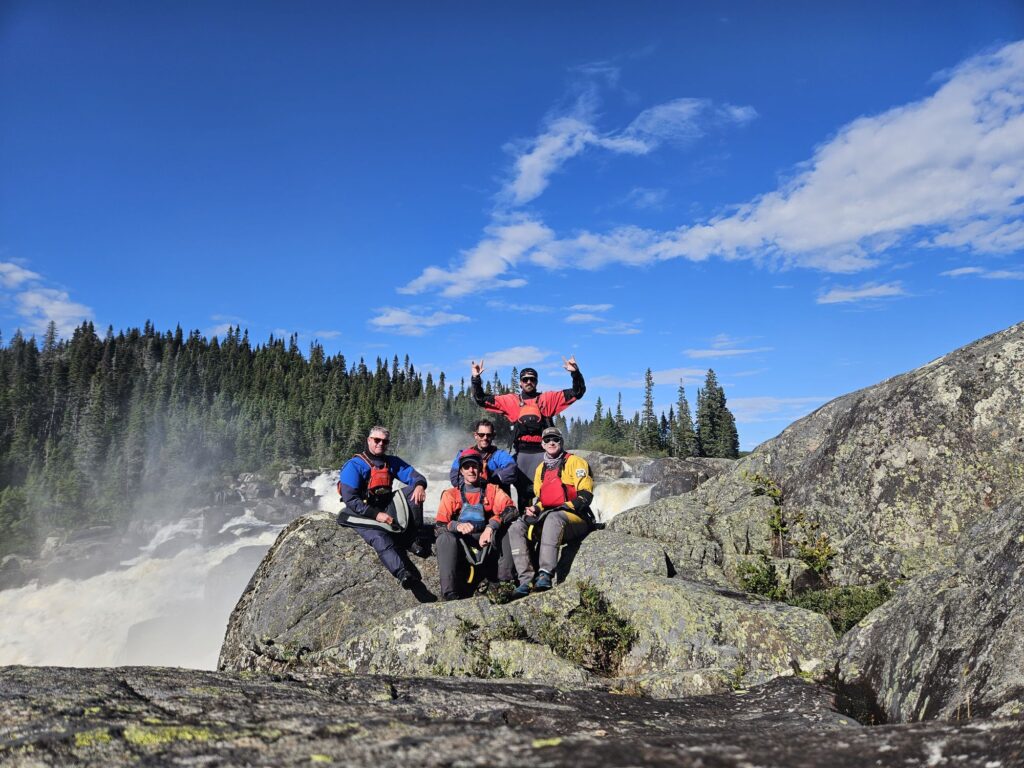
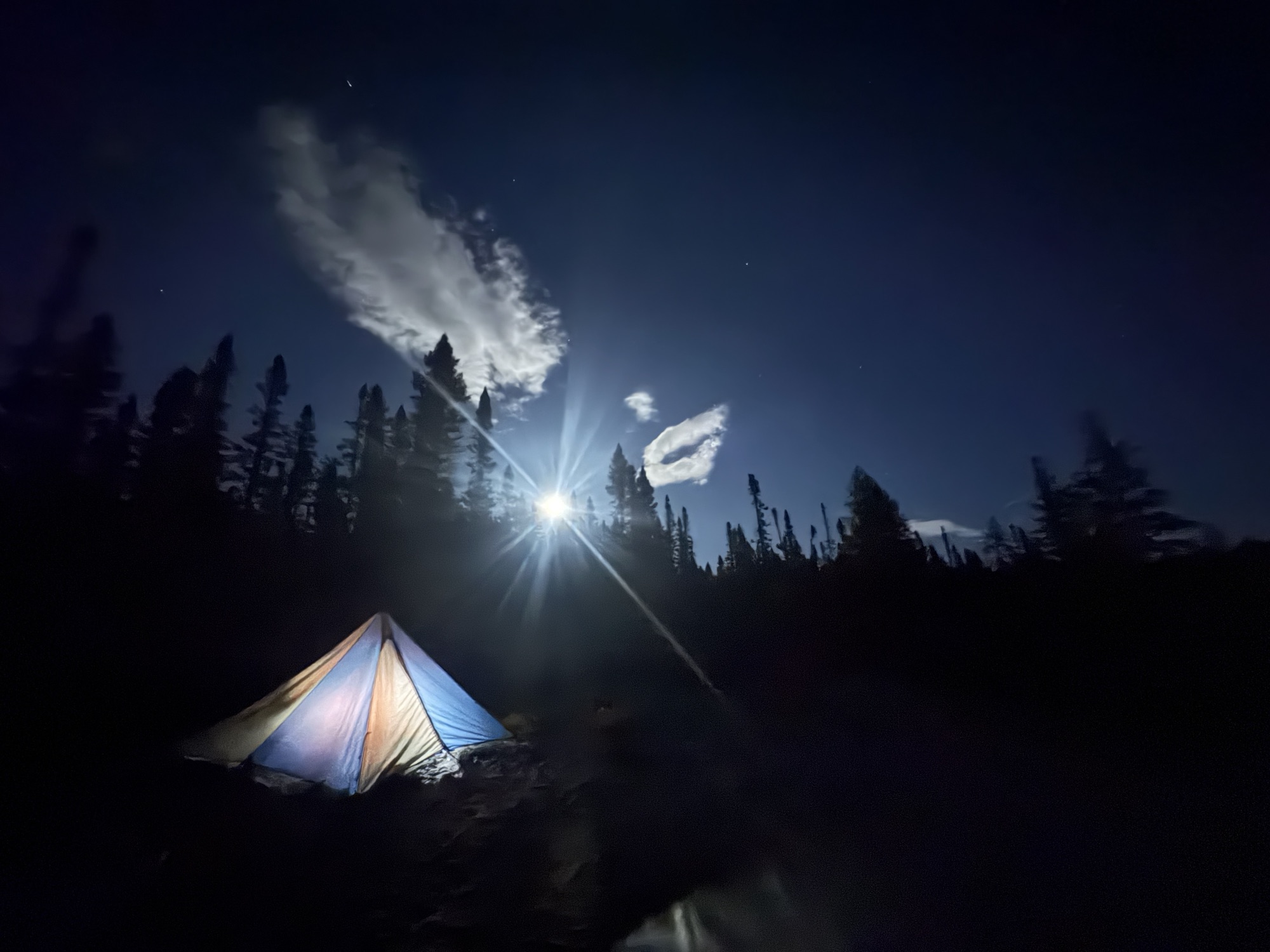
Thanks to Sawyer for most of these pics and Greg, Mike, and Jon for some of the goodies as well, and for a good video that Sawyer put together check out this one:https://youtu.be/bmmLtIv_6Qg?is=rhGnkUfzEvIdHjXr
Great write-up. Awesome rapids. Wonderful wilderness. Terrible biting flies. Glad you guys had a great trip!!
Glad I was viewing beautiful photos and not having to deal with Black Flies. Dud, you were unrecognizable after your bazillion bites! Thanks for sharing. I had no idea Quebec was that big and that wild.
You really captured Quebec in this one! It’s amazing that anything up there is good enough to put yourself back in the bug zone, but it actually is. I simultaneously have FOMO and relief for not being there at the same time.
Tom,
This was such a great post. I love that you show maps as to where you are. It is a lesson in itself. Fascinating how the map of Alaska looks almost identical to where you were.
Your pictures are fantastic. Gave me/us the readers such an insight as to where you were.
You are quite the adventurer Tom. Thank you for letting us all be a part of it.
Love you.
Ps…the pictures you texted me….i thought your swollen face was from hitting the bottom of the river…the bugs did a number on you for sure!
Thanks for another great journey and sharing the experience in a way that has humor and exhilaration. Great footage of the river and black fly consequences. Appreciate being able to share a trip like that from the couch
Nice going.
Thanks for another great adventure story Tom!
Great rally to the northeast! I loved reading about the Magpie adventure and seeing the photos. Glad Greg and Sawyer were there for the FUN (no judge needed for this entry, right?). And way to conquer the mighty blackfly beast!!! This is very deserving of extra exclamation points. 😉